
Navigation
Author: Dao Hua Marriage and Family Law FirmDate: 2026-06-29Reads:times
Marriage and Family Affairs Dispute (Mediation/Litigation) Practical Expert
Ten years of focus on; marriage and family legal services for bulk property matters
Dowell Law Firm, Dowell Family Law and Matrimonial Lawyers Team, Tang Yunhong, LawyerTop 10 Recommended Divorce Lawyers in ShenzhenTop Ten Recommended Inheritance Lawyers, Professional divorce and inheritance litigation lawyers in the Guangdong-Hong Kong-Macau Greater Bay Area, renowned lawyers for large family properties, extensive successful cases, particularly skilled in handling: difficult property division/court litigation, listed company equity/fund/share division, real estate, Shenzhen small property rights houses/farmer houses, land, factories, virtual currency assets, Hong Kong divorce property division, marital/divorce property agreements, tax planning, debt isolation, divorce property transfer, cross-border inheritance, will notarization, wills/inheritance disputes litigation, will drafting and validity determination, old city renovation and demolition, civil and criminal overlap, cross-border collaboration, etc. Service areas: Guangdong, Shenzhen, Futian, Hong Kong, Macau, overseas, Guangzhou, Zhongshan, Zhuhai, Foshan, Huizhou, Dongguan.

One, Case Review
Tang Moumou and Peng Moumou were acquainted in their early years, and both were in the continuation of their marriage with non-parties in 1990. Peng Moumou's first marriage was only dissolved through court mediation in October 2000, and he subsequently registered for marriage again, with this marriage relationship continuing to this day; Tang Moumou's first marriage ended in April 1992.
Tang Moumou claims that he and Peng Moumou lived together continuously from 1990 to 2014, forming a long-term cohabitation relationship. During the cohabitation, Tang Moumou invested in the construction of the residential land house in Haizhu District, Guangzhou in 2001. The house was built in 2003 and rented out for management. Therefore, he requests confirmation of his ownership of 50% of the residential land house, and also claims the corresponding compensation and resettlement rights. During the lawsuit, Tang Moumou voluntarily withdrew his claims related to the demolition compensation.
Peng Moumou denied the existence of a cohabitation relationship between the two parties, believing that the relevant evidence has flaws. The procedures and expenses related to the homestead and the house were all borne by himself, and the house should be owned by the individual. There was a huge difference between the two parties over the fact of cohabitation and the ownership of the house. After failing to reach a consensus, Tan Moumou filed a lawsuit with the court. [Case number: (2024) Yue 01 Minzhong 5200].
Case outcome
The first-instance court, considering the evidence submitted by both parties, their marital status, and relevant legal provisions, made the following determination: The evidence submitted by Tan Moumou is flawed and cannot form a complete evidence chain, neither proving the existence of a long-term cohabitation relationship between the two parties nor proving that he invested in the construction of the house in question. Moreover, both parties had legal spouses for many years, and even if the cohabitation fact is true, such behavior constitutes an improper relationship between men and women that violates public order and good customs. Considering the objective facts that the registration of the residential land use rights and the payment records for the house's various fees are all in the name of Mr. Peng, the first-instance judgment rejected all of Tan Moumou's claims.
The second-instance court, after reviewing all the evidence and the trial process, confirmed that the first-instance court's determination of facts was clear and the application of law was correct. The second-instance court also clarified that scattered unilateral statements, written materials with formal defects, and testimonies of witnesses who did not appear in court cannot serve as valid evidence for recognizing a long-term cohabitation relationship; in conjunction with the judicial interpretation on the time limit for a factual marriage, neither party constitutes a factual marriage. The final judgment was to reject the appeal and uphold the original judgment.
Chapter 3: Experience in Handling Cases
(1) Dao Hua lawyer believes
In the process of handling marital and family disputes, it is not uncommon for parties to file claims regarding cohabitation relationships and property ownership. This case fully presents the court's approach and standards for adjudicating such cases, which has strong reference value for the handling of similar cases. Civil litigation follows the statutory rules of evidence, and the party claiming rights shall submit a complete and mutually verifying chain of evidence. In this case, the evidence presented by Tan Moumou has issues such as formal defects and weak proof effectiveness, and has not reached the statutory standard of proof, which is also the direct reason why its claims cannot be accepted.
Disregarding the issue of evidence, the parties spent most of their time in a marriage with non-participants. The act of cohabiting with someone else while married is itself an improper relationship between a married person and another, which goes against public order and good customs. The law holds a negative attitude towards such cohabitation relationships. In this case, the parties claim that they constitute a de facto marriage and assert property rights accordingly. However, in light of the current judicial interpretations on marriage and family matters, February 1, 1994, is the statutory time limit for recognizing a de facto marriage, and a de facto marriage requires that neither party has a legally valid spouse at the time. This case clearly does not meet this condition. Moreover, the establishment of bigamy in fact also requires a prior marriage or de facto marriage as a basis, so this case does not constitute bigamy in fact. This also clarifies the common misconception that long-term cohabitation is directly equivalent to bigamy in fact.
The establishment of property claims often relies on the identification of basic identity relationships and investment facts. The claimant's request for property division is based on the establishment of a cohabitation relationship and the individual's investment in building the house. Due to the inability to establish the cohabitation relationship, and also because they failed to provide evidence to prove the fact of investing alone in building the house, the corresponding claim for property division lost factual support and ultimately did not receive support from the court. On a comprehensive review of the case, each judgment viewpoint of the court was strictly made in accordance with the law, both upholding the basic principles of the marriage system and adhering to the principle of evidence-based judgment in civil litigation.
(2) Daohua Lawyer Reminds
The number of domestic disputes arising from the identification of cohabitation relationships and the division of real estate properties is continuously increasing. Many parties, due to their negligence in preserving evidence in the early stage and unclear understanding of legal concepts related to marriage, find it difficult to obtain legal support for their legitimate claims, and such disputes are also gradually becoming common difficulties in the field of domestic affairs. Proper evidence preservation and division of rights and responsibilities in daily interactions and economic transactions can reduce contradictions and differences from the source and comprehensively safeguard personal legitimate rights and interests.
When there are situations such as cohabitation, joint investment in purchasing or constructing real estate, it is necessary to systematically organize and properly preserve written materials, payment receipts, communication records, and other types of evidence, clearly defining property ownership and investment ratios, and eliminating the practice of relying solely on oral agreements to determine rights and obligations. At the same time, it is also essential to accurately distinguish the legal boundaries between extramarital cohabitation, de facto marriage, and legal marriage, fully understand the legal consequences corresponding to different forms of interaction, and consciously comply with the relevant legal provisions of marriage and family as well as social public order and good customs.
The People's Courts always adhere to the principle of evidence-based adjudication in handling such cases. Facts claims lacking effective evidence are difficult to gain judicial support. Faced with domestic disputes where personal relationships and property rights are intertwined, relying solely on individuals to handle litigation is prone to insufficient evidence and legal application errors, which may affect the course of the case. In complex domestic cases involving issues such as cohabitation recognition and property division, it is particularly necessary to engage professional family law lawyers. The Daohua Marriage and Family Law Team has long been committed to the field of marriage and family law, familiar with the judicial recognition rules of cohabitation relationships, actual marriages, and bigamy, proficient in the key points of dividing and disposing of immovable properties such as courtyard houses, skilled in sorting out evidence chains and formulating litigation strategies, and can provide systematic legal solutions for individual cases, helping parties to properly resolve disputes and fully protect their legitimate rights and interests.
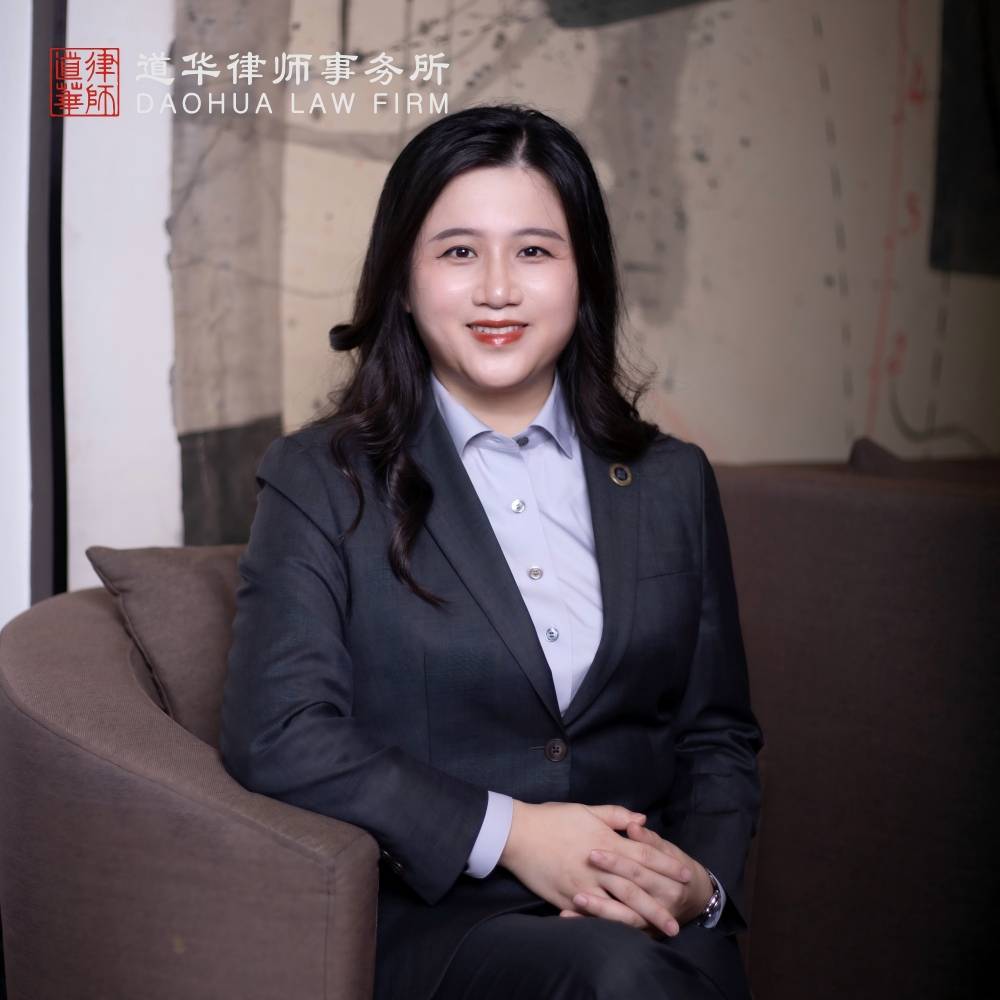
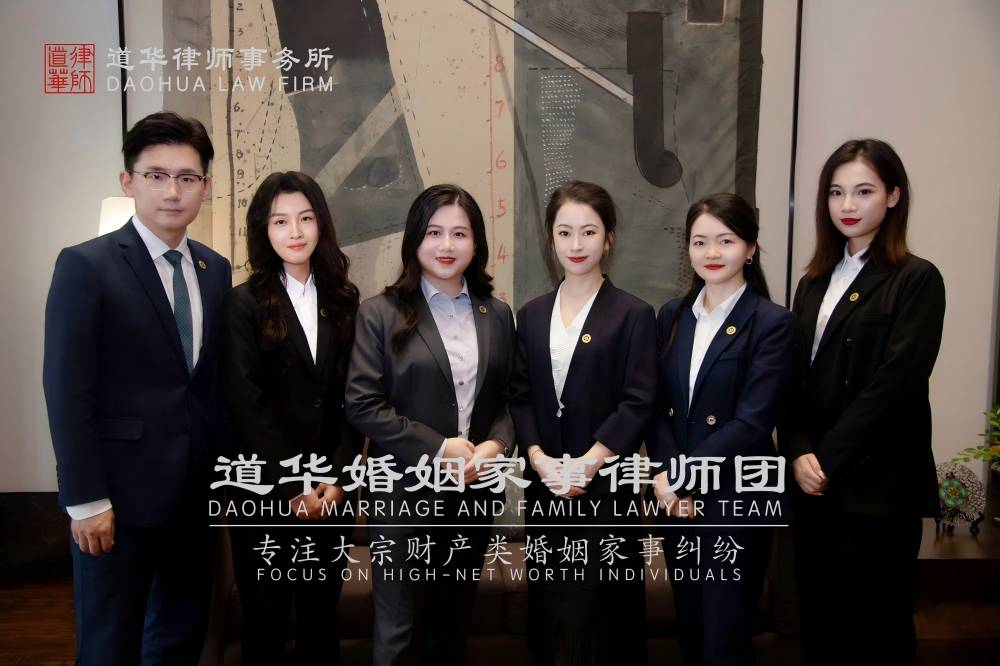
Daohua Family Law Firm (Guangdong Daohua Law Firm), with ten years of focus on major property family law services, divorce and inheritance family disputes (mediation/trial) practical experts, is one of the influential brands of professional legal services in the Guangdong Greater Bay Area [Shenzhen local], and is also a benchmark lawyer team for mediation and trial in the field of cross-border divorce and inheritance.
Tang Yunhong lawyerThe team has handled over 1,000 cases related to marriage inheritance, involving tens of billions of yuan in amounts, and major properties such as listed company equity, Shenzhen small property rights houses, land, and factories.Divorce property divisionWith rich successful trial cases in dispute resolution areas such as inheritance litigation, will drafting, and family property inheritance, especially skilled in handling cross-border property divorce lawsuits, inheritance disputes, and other industry difficult issues, using localized legal wisdom to overcome various complex family property disputes, winning high praise and industry reputation from clients.
Adhering to the philosophy of "securing property safety, preventing legal risks, and empowering wealth growth," we gather experts from industries such as law, banking, insurance, and finance and taxation. With rich experience in civil and commercial litigation and arbitration, as well as civil-criminal intersections and tax planning, we provide a comprehensive package of solutions for high-net-worth individuals (including those from Hong Kong, Macau, and foreign nationals) for marriage, family affairs, and wealth inheritance. This aims to achieve the beautiful vision of risk prevention and control, debt isolation, and family wealth inheritance.
Asset types cover: real estate (residential property, small property rights houses, land, factories, etc.), movable property (vehicles, antiques, paintings, gold jewelry, etc.), various property rights (cash deposits, equity, debts, relocation compensation, fund investments, virtual property, intellectual property rights, etc.). The team systematically compiles professional achievements such as "Compilation of Successful Cases of Dao Hua Marriage and Inheritance" and "Legal Practice of Family Wealth Transmission", to meticulously protect clients' property rights and interests, and to safeguard the inheritance of family wealth with meticulous service!
Statement:The information or articles published on this website are for exchange purposes only. The names of individuals/companies mentioned in this article are pseudonyms, and the amounts/dates of case information have been processed for confidentiality. The content of the article is created by the author and does not represent legal opinions or suggestions provided by Guangdong Daohua Law Firm or other lawyers. The information contained in this article is provided for general information purposes only, and Guangdong Daohua Law Firm is not responsible for making timely modifications or updates to this article. Decisions made by readers based on all or part of the content of this article and the consequences thereof shall be solely responsible by the individuals involved. The author and Guangdong Daohua Law Firm shall not be held liable. If any content of this article is to be reproduced or cited, please indicate the source. If you need legal opinions or legal services, please contact our lawyers.
No registration required, quick appointment, expert lawyers provide customized legal service solutions
 Consultation Appointment:400-829-6880
 Private Space:18126123723
 Law Firm: Guangdong Daohua Law Firm
 Email:DAOHUALAWMF@163.com
 Address:810, Rongchao Economic & Trade Center, 4028 Jintian Road, Futian District, Shenzhen (Next to Civic Center)

18126123723
Follow us anytime, anywhere


