
Navigation
Author: Dao Hua Marriage and Family Law FirmDate: 2026-06-25Reads:times
Marriage and Family Affairs Dispute (Mediation/Litigation) Practical Expert
Ten years of focus on; marriage and family legal services for bulk property matters
Guangdong Dao Hua Law Firm, Dao Hua Marriage and Family Law Team, Tang Yunhong Lawyer, Top Ten Divorce Lawyers in Shenzhen, Top Ten Inheritance Lawyers, Professional Divorce and Inheritance Litigation Lawyers in the Guangdong-Hong Kong-Macau Greater Bay Area, Famous lawyers for large family properties, numerous successful cases, especially skilled in handling: difficult property division/court litigation, listed company equity/fund/share division, real estate, Shenzhen small property rights houses/farmer houses, land, factories, virtual currency assets, Hong Kong divorce property division, marital/divorce property agreements, tax planning, debt isolation, divorce property transfer, cross-border inheritance, will notarization, will/inheritance disputes litigation, will drafting and validity determination, old city renovation and demolition, civil and criminal overlap, cross-border collaboration, etc. Service areas: Guangdong, Shenzhen, Futian, Hong Kong, Macau, overseas, Guangzhou, Zhongshan, Zhuhai, Foshan, Huizhou, Dongguan.

One, Case Review
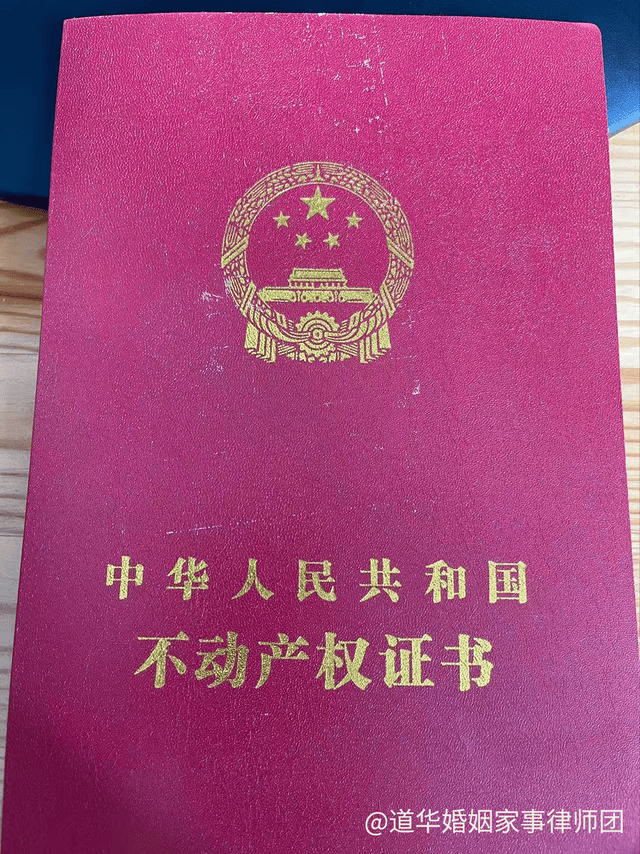
The heir Huang Yue and his spouse Yuan Xinping purchased a property in Yuexiu District, Guangzhou during their marriage, which is considered joint property. Yuan Xinping passed away in April 2010 without leaving a will or a legacy and maintenance agreement. Peng Yun, as the biological daughter of Yuan Xinping, is entitled to the inheritance rights by law. In June 2015, Huang Yue and Lu Guangxian signed a "Legacy and Maintenance Agreement" and had it notarized, agreeing that Lu Guangxian would take on the obligations of raising, caring for, and burying Huang Yue, and Huang Yue would gift all the involved properties to Lu Guangxian. In January 2019, Huang Yue passed away, and Lu Guangxian was responsible for handling the funeral arrangements, and registered the involved properties in his own name according to the legacy and maintenance agreement.
Peng Yun believes that Lu Guangxian did not actually fulfill the obligation of support and the agreement of inheritance and support is invalid, and therefore sued to the court, requesting to confirm the invalidity of the agreement and restore the property to its original state. Lu Guangxian claims that the agreement has been notarized and he has fulfilled all his obligations of support, and should obtain all the property. [Case number: (2021) Yue 01 Minzhong 22688]
Case outcome
The first-instance court ruled that the property involved in the case is the joint marital property of Huang Yue and Yuan Xinping. After Yuan Xinping's death, Peng Yun legally inherited a quarter share of the property, while Huang Yue retained three-quarters of the share. Huang Yue has no right to dispose of the share belonging to Peng Yun, therefore, the inheritance and guardianship agreementPartially effective, partially invalidThe court also believes that Lu Guangxian has fulfilled his obligations under the agreement by taking care of Huang Yue's daily life, accompanying him, and arranging for his burial after death, and there is no invalidity. Based on this, the court ruled that Lu Guangxian is entitled to three-quarters of the property involved in the case according to the agreement, and rejected Peng Yun's lawsuit requesting the restoration of the original state.
Peng Yun and Lu Guangxian both appealed, but the second-instance court reviewed the case and ruled to dismiss the appeals, upholding the original judgment.
Chapter 3: Experience in Handling Cases
(1) Dao Hua lawyer believes
Combining the judgment approach of this case with practical experience in domestic inheritance, this is a representative case of inheritance and guardianship agreement validity disputes in reality. It involves core issues such as the recognition of agreement validity, unauthorized disposition, standards for the performance of guardianship obligations, and the validity of notarial documents, and has strong guiding significance for similar domestic cases.
The agreement for inheritance support, as an important method in our inheritance system, has priority over statutory inheritance and testamentary inheritance. As long as the agreement is a true expression of the parties' intentions and does not violate mandatory legal provisions, it can be legally recognized as valid even if not notarized; in this case, the agreement was additionally legally notarized, further proving the authenticity and legality of the agreement. In this case, Huang Yue and Lu Guangxian signed the agreement at the notary office, with clear expressions of intent and clear rights and obligations. Lu Guangxian also took actual care of the elderly's life and was responsible for the posthumous burial, fully fulfilling the obligation of support. Based on this, the court determined that the agreement was legal and valid, in line with the general judgment rules for inheritance cases.
Many people have misunderstandings in practice, believing that almsgiving must involve the caregiver "financially supporting" in order to fulfill their obligations, and even deny the act of care on the grounds that the elderly have their own property and income. In fact, judicial practice has already clarified that the core of almsgiving is life care, spiritual companionship, illness care, and posthumous burial, not just monetary payment. As long as the caregiver provides long-term and stable care for the elderly's diet and living, medical care, and proper handling of funeral matters, it still constitutes a full fulfillment of the almsgiving obligations, even if the elderly use their own property to bear the expenses.
The most crucial judgment rule in this case is that the inheritance support agreement can only dispose of the personal lawful property of the donor and has no right to dispose of the property shares of others. The property involved is the joint property of the couple, and after Yuan Xinping's death, legal inheritance has occurred. Peng Yun has the right to enjoy the corresponding share. Huang Yue has no right to gift the entire house to Lu Guangxian. Therefore, the part of the agreement that disposes of Peng Yun's share is invalid, and it only takes effect on the property share that Huang Yue himself holds. This "partly valid, partly invalid" determination respects the true intention of the donor while also protecting the rights and interests of other lawful heirs.
It can be seen from the overall judicial logic that the court, in handling disputes over inheritance and support agreements, not only attaches importance to the effectiveness of the agreement and the fulfillment of the support obligations, but also strictly examines the boundaries of property rights, will not ignore the issue of unauthorized disposition just because the agreement has been notarized, and will not arbitrarily deny the due rights of the caregivers who have long taken care of the elderly, thus achieving a balance between legal rules and family reason.
(2) Daohua Lawyer Reminds
The inheritance and guardianship agreement is an important way for lonely elderly people, those without children, or elderly with children who cannot take care of them, to arrange for their later years and their posthumous property. However, in reality, there are many disputes caused by irregularities in the signing of the agreement, unauthorized disposition of property, and unclear identification of guardianship obligations, and improper handling can easily lead to family conflicts and long-term litigation.
Before signing the inheritance and support agreement, it is essential to clarify the ownership of property. For jointly-owned property between husband and wife, only the portion under one's own name can be disposed of; it is not permissible to dispose of the property of the spouse, children, or others together. Otherwise, it will directly result in the partial invalidity of the agreement and may affect the subsequent transfer of property rights.
The fulfillment of the obligation to support is not solely determined by the amount of money paid, but more importantly by daily care, companionship, nursing, medical treatment, and funeral arrangements. It is recommended to retain care records, medical treatment records, expense receipts, and neighborhood proof to avoid disputes in the future regarding whether the obligation to support has been fulfilled. In order to make the agreement content more standardized and the expression of intent more credible, and to reduce the risk of subsequent disputes over effectiveness, it is advisable to simultaneously handle notarization procedures when signing a legacy support agreement, in order to fix the rights and obligations of both parties through notarization and reduce the risk of subsequent disputes from the source.
For heirs, if they find that there are situations such as unauthorized disposition, fraud, coercion, or the caregiver failing to fulfill their obligations in the inheritance support agreement, they should promptly assert their rights through legal channels to safeguard their legitimate inheritance share. For caregivers, after fulfilling their care obligations, they should promptly assert their right to inherit within the statutory period after learning of the inheritance, to avoid rights being impaired due to delay.
Disputes over inheritance and support agreements involve multiple complex issues such as property ownership, care and support, and family relationships, and the handling standards directly affect whether the elderly's wishes can be realized, whether the efforts of the caregivers are respected, and whether the rights and interests of the legal heirs can be guaranteed. The Daohua Marriage and Family Law Firm has long been dealing with complex family cases such as the recognition of the validity of inheritance and support agreements, the division of property shares, disputes over care obligations, and the inheritance and transfer of real estate, and is familiar with the judicial standards and the practical procedures of notarization and registration. In the event of issues such as the signing of inheritance and support agreements, disputes over validity, property disposition, and inheritance disputes, it is necessary to involve a professional team for timely handling to more securely realize the elderly's wishes, protect the legitimate rights and interests of all parties, and maintain family harmony.
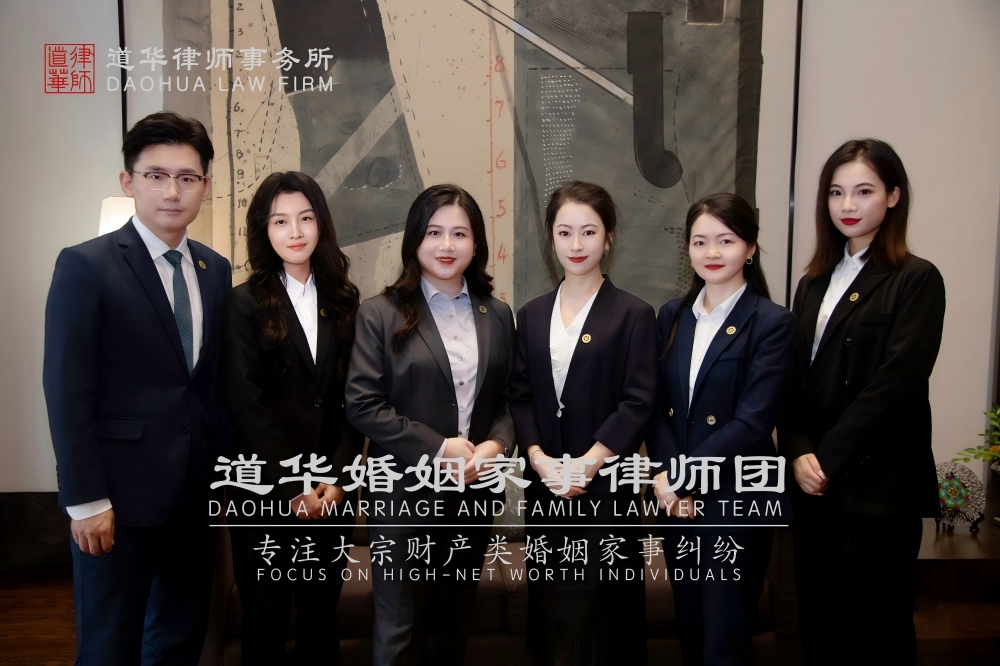
Daohua Family Law Firm (Guangdong Daohua Law Firm), with ten years of focus on major property family law services, divorce and inheritance family disputes (mediation/trial) practical experts, is one of the influential brands of professional legal services in the Guangdong Greater Bay Area [Shenzhen local], and is also a benchmark lawyer team for mediation and trial in the well-known cross-border divorce and inheritance field.
The Tang Yunhong Law Firm has handled over 1000 cases related to marriage and inheritance, involving tens of billions of yuan in amounts. The firm has extensive successful litigation experience in the fields of dispute resolution for the division of large properties such as listed company equity, Shenzhen small property rights houses, land, and factories, as well as inheritance disputes, will drafting, and family property inheritance. It is particularly skilled in dealing with complex and difficult cases in the industry, such as cross-border property divorce litigation and inheritance lawsuits, and has won high praise and industry reputation for its localized legal wisdom in overcoming various complex domestic property disputes.
Adhering to the philosophy of "securing property safety, preventing legal risks, and empowering wealth appreciation," we gather experts from industries such as law, banking, insurance, and finance and taxation. With rich experience in civil and commercial litigation and arbitration, as well as civil-criminal intersections and tax planning, we provide a comprehensive package of solutions for high-net-worth individuals (including those from Hong Kong, Macau, and foreign nationals) for marriage, family affairs, and wealth inheritance. This aims to achieve the beautiful vision of risk prevention and control, debt isolation, and family wealth inheritance.
Asset types include: real estate (residential properties, small property rights houses, land, factories, etc.), movable property (vehicles, antiques, paintings, gold jewelry, etc.), various property rights (cash deposits, equity, debts, relocation compensation, fund investments, virtual property, intellectual property rights, etc.). The team systematically compiles professional achievements such as "Compilation of Successful Cases of Dao Hua Marriage and Inheritance" and "Legal Practice of Family Wealth Transmission", to meticulously protect clients' property rights and interests, and to safeguard the inheritance of family wealth with meticulous service!
Statement:The information or articles published on this website are for exchange purposes only. The names of individuals/companies mentioned in this article are pseudonyms, and the amounts/dates of the case information have been processed for confidentiality. The content of the article is created by the author and does not represent legal opinions or suggestions issued by Guangdong Daohua Law Firm or other lawyers. The information contained in this article is provided for general information purposes only, and Guangdong Daohua Law Firm is not responsible for making timely modifications or updates to this article. Decisions made by readers based on all or part of the content of this article and the consequences arising therefrom are solely the responsibility of the individuals involved. The author and Guangdong Daohua Law Firm assume no liability. If any content of these articles is to be reproduced or cited, please indicate the source. If you need legal advice or legal services, please contact our lawyers.
No registration required, quick appointment, expert lawyers provide customized legal service solutions
 Consultation Appointment:400-829-6880
 Private Space:18126123723
 Law Firm: Guangdong Daohua Law Firm
 Email:DAOHUALAWMF@163.com
 Address:810, Rongchao Economic & Trade Center, 4028 Jintian Road, Futian District, Shenzhen (Next to Civic Center)

18126123723
Follow us anytime, anywhere


