
Navigation
Daohua Family & Marriage Law Team
Practical Expert in Family & Marriage Disputes (Medigation/Litigation)
Ten Years of Focus · Legal Services for Family & Marriage Matters Involving Bulk Property
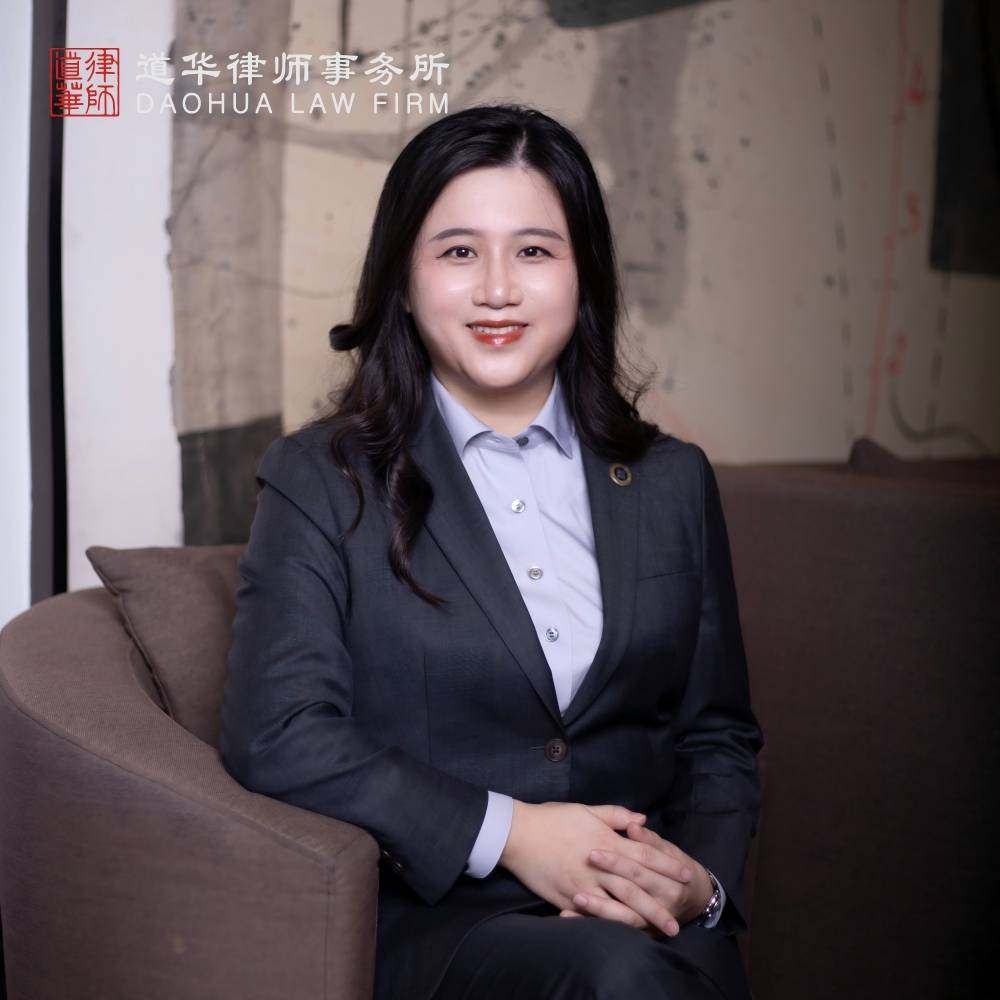
Guangdong Daohua Law Firm, Daohua Family & Marriage Law Team, Attorney Tang Yunhong – recommended among the top ten divorce lawyers in Shenzhen and among the top ten inheritance lawyers. As a professional divorce and inheritance litigation lawyer in the Guangdong-Hong Kong-Macao Greater Bay Area, and a renowned lawyer for large‑asset family matters, she has a substantial track record of successful cases. She is particularly experienced in handling: complex property division / court litigation; division of listed company equities / funds / stocks; real estate; Shenzhen small‑property‑rights housing / village housing; land; factories; virtual asset properties; Hong Kong‑related divorce property division; marital / divorce property agreements; tax planning; debt isolation; divorce property transfers; foreign‑national inheritance; will notarisation; will / intestate inheritance dispute litigation; will drafting and validity determination; urban renewal and demolition; civil‑criminal crossover; and cross‑border coordination. Service areas: Guangdong, Shenzhen, Futian, Hong Kong, Macao, overseas, Guangzhou, Zhongshan, Zhuhai, Foshan, Huizhou, Dongguan.

Abstract: On 20 July 2026, the renowned Hong Kong actor Patrick Tse (born Xie Jiayu) passed away at the age of 89. According to multiple Hong Kong media reports, as early as October 2025, Mr. Tse engaged Hong Kong professional lawyers to draft his will and completed notarisation. The total value of his estate exceeds HK$100 million. His estate distribution plan has attracted widespread attention: 90% of the estate is placed in a family trust, with beneficiaries being his grandsons Lucas (Tse Hoi‑chun) and Quintus (Tse Hoi‑nam), and managed by his former daughter‑in‑law Cecilia Cheung on their behalf; the remaining 10% is divided equally between his son Nicholas Tse and daughter Jennifer Tse, each receiving 5%. This arrangement not only touches public sentiment but also involves multiple legal issues, including testamentary freedom, trust structure design, and cross‑border succession.
Attorney Tang Yunhong, Chief Counsel of the Daohua Family & Marriage Law Team at Guangdong Daohua Law Firm, offers a legal analysis of this case.
I. The Relationship between the Principle of Testamentary Freedom and Intestate Succession
The most eye‑catching legal question in this case is: Is it lawful for Patrick Tse to leave 90% of his estate to his grandchildren and only 10% to his own children? The answer is yes – entirely lawful under Hong Kong law.
Hong Kong follows the "testamentary freedom" principle. Under Hong Kong's Wills Ordinance (Cap. 30), any person aged 18 or above and of sound mind may, in accordance with the Ordinance, make a will disposing of property to which he or she is beneficially entitled at the time of death. The will must be in writing and signed by the testator in the presence of two or more witnesses present at the same time. As long as the will meets the formalities and the testator was competent, his or her wishes must be respected. Where a valid will exists, the intestacy rules and shares are superseded.
Moreover, many netizens' first reaction is: Why did Faye Wong not receive anything? And why not his ex‑wife Deborah Lee or his former girlfriend Coco? The answer is simple. Although Faye Wong and Nicholas Tse have a stable relationship, they are not legally married; legally, she is not even a "daughter‑in‑law" and falls outside the statutory succession scope. Moreover, since Patrick Tse had a will that made no provision for her, she is not involved. Similarly, ex‑wife Deborah and ex‑girlfriend Coco are both "former" partners, not legal spouses, and have no statutory inheritance rights.
It should be noted that this case is governed by Hong Kong law, which differs from the Mainland's Civil Code succession rules, but that does not affect the legal assessment of this case. All beneficiaries under Patrick Tse's will are financially independent, and Hong Kong itself does not have a forced‑heirship (reserved share) system; therefore, there is no room for disputing the will's validity.
The second noteworthy legal issue is: How is leaving property to grandchildren characterised in law?
Under the Mainland legal framework, grandchildren are not statutory heirs. Article 1127 of the Civil Code provides that the first‑order statutory heirs are spouse, children, and parents; grandchildren are not included. Therefore, bequeathing property by will to grandchildren is legally a "legacy" (bequest) – i.e., under Article 1133(3) of the Civil Code, "donating personal property to individuals other than statutory heirs."
An important difference between a legacy and testamentary succession lies in the acceptance procedure. Article 1124(2) of the Civil Code states: "The legatee shall, within sixty days after becoming aware of the legacy, make a declaration of acceptance or renunciation; if no declaration is made within that period, the legacy shall be deemed renounced." This is the most easily overlooked procedural risk under Mainland law – many people assume that if the will says something is theirs, it is theirs, without realising that they must make an affirmative acceptance within the statutory time limit.
However, Patrick Tse's arrangement is not a simple legacy but a "testamentary trust." Under the Trust Law, a trust is a legal relationship whereby the settlor, based on trust in the trustee, entrusts his or her property rights to the trustee, who manages or disposes of the property in the trustee's own name according to the settlor's wishes, for the benefit of the beneficiaries or for a specific purpose. A testamentary trust is a trust established through the legal act of a will – it takes effect upon the testator's death. Article 1133(4) of the Civil Code explicitly provides that "a natural person may create a testamentary trust in accordance with the law." A testamentary trust is jointly governed by the Civil Code and the Trust Law; it is a mortis causa act (taking effect upon the testator's death) and a formal act (requiring compliance with the formalities prescribed by the Civil Code and the Trust Law regarding validity of wills and trusts).
Under the Trust Law, a trust must have definite trust property, and such property must be lawfully owned by the settlor. To create a testamentary trust, the succession law requirements regarding wills must be observed. The creation of a testamentary trust must be in writing and must state the trust purpose, the settlor and trustee information, the scope of beneficiaries, the trust property, and the form and method by which beneficiaries obtain trust benefits. A testamentary trust also requires trust registration; otherwise, it does not take effect as a trust. – In other words, the law does not set a minimum amount, but focuses on the nature of the assets.
By placing 90% of his estate into a dedicated family trust through his will, designating his two grandsons as beneficiaries, and having Cecilia Cheung as the custodian – this structure fully conforms to the basic framework of a testamentary trust.
III. Legal Functions of the Trust Structure – From "One‑Off Delivery" to "Ongoing Management"
The core value of a testamentary trust lies in solving three major problems that ordinary wills cannot address.
First, asset isolation. Articles 15 and 16 of the Trust Law provide that trust property is independent from the settlor's other property and also separate from the trustee's own property. This means that even if Cecilia Cheung personally encounters debt disputes or remarries, the trust assets are unaffected. The trust property belongs neither to the daughter‑in‑law nor to the son, and cannot be divided in divorce or debt proceedings.
Second, anti‑squandering mechanisms. A trust can impose multiple layers of constraints, such as age thresholds, purpose restrictions, and prior approval for large expenditures. The grandchildren, being minors, cannot directly control large sums of cash; they can only receive regular education and living expenses according to the trust terms. This is the legal embodiment of the saying, "A parent's love for a child is planning for the long term."
Third, long‑term continuity and privacy protection. A trust can span generations, enabling long‑term wealth transmission. Moreover, trust terms are not publicly disclosed; compared to wills, which must go through probate proceedings, trusts offer greater privacy.
IV. Key Differences between Mainland and Hong Kong Succession Law
This case offers Mainland legal practitioners a window into the differences between the two jurisdictions' succession regimes.
Testamentary freedom vs. forced heirship. Hong Kong adopts an absolute "testamentary freedom" principle – a will may completely exclude statutory heirs; the Mainland, however, has a "forced heirship" (reserved share) system. Under Mainland law, if a will fails to reserve a necessary portion for a statutory heir who lacks labour ability and has no source of income, that part may be held invalid.
Intestate succession order. The Mainland's first‑order statutory heirs are spouse, children, and parents; Hong Kong's Intestates' Estates Ordinance gives the surviving spouse priority – if the deceased leaves a spouse and children, the spouse takes the first HK$500,000 and all non‑land personal assets, and the remaining estate is then shared equally between the spouse and children.
The 60‑day period for legacies. As mentioned, Mainland law requires the legatee to explicitly accept the legacy within 60 days of knowledge, otherwise it is deemed renounced. Hong Kong law does not impose such a restriction.
Complexity of cross‑border succession. Under Hong Kong conflict of laws rules, immovable property succession is governed by the law of the place where the property is situated, while movable property succession is governed by the law of the deceased's domicile. If Patrick Tse also held properties or assets in the Mainland, different laws would apply to each.
V. Practical Takeaways for Wealth Succession
Putting aside the public debate on "favouritism," Patrick Tse's estate arrangement offers several legal insights worthy of consideration for high‑net‑worth families.
First, plan ahead – do not wait until serious illness. Patrick Tse completed will notarisation and trust establishment about one year before his death. The worst mistake in wealth succession is "too late" – dying suddenly without a will, leaving everything to intestacy, completely unable to reflect personal wishes. Second, combine a will with a trust. A will alone can only solve "to whom" to give, but not "how," "when," or "how to prevent squandering." A trust is the core tool for achieving long‑term, orderly succession. The combination of "will + trust" balances flexibility and security. Third, choose a suitable custodian. The choice of custodian directly affects whether the trust's purpose is achieved. Patrick Tse chose Cecilia Cheung as custodian based on long‑term observation and trust in her character and capability. Fourth, be mindful of differences between the two legal systems. Families with cross‑border assets must pay particular attention to differences in succession regimes across jurisdictions. What is valid in Hong Kong may not be fully valid in the Mainland, and vice versa. Fifth, communicate during life to reduce post‑death disputes. In the Anita Mui case, family members repeatedly litigated to challenge the will's validity. Communicating the allocation logic with family members during life, helping them understand the reasons and considerations, can greatly reduce inheritance disputes after death.
Patrick Tse's estate arrangement is not merely a story of "favouritism," but a professionally designed wealth succession plan. It demonstrates the full exercise of testamentary freedom in disposing of personal property, illustrates the practical application of the "will + trust" combination in intergenerational transfers, and raises thought‑provoking legal issues such as the validity of conditional clauses and differences between succession regimes in different jurisdictions.
Wealth succession is never a simple distribution of property – it is a plan that transcends life and death. Legal instruments are cold, but what lies behind them is the most simple and profound love and responsibility for future generations. For legal practitioners, the value of this case lies not in the gossipy numbers, but in the professional reflections it provokes on testamentary freedom, trust structures, cross‑border succession, and other substantive issues – these are the areas truly worthy of continuous in‑depth cultivation.
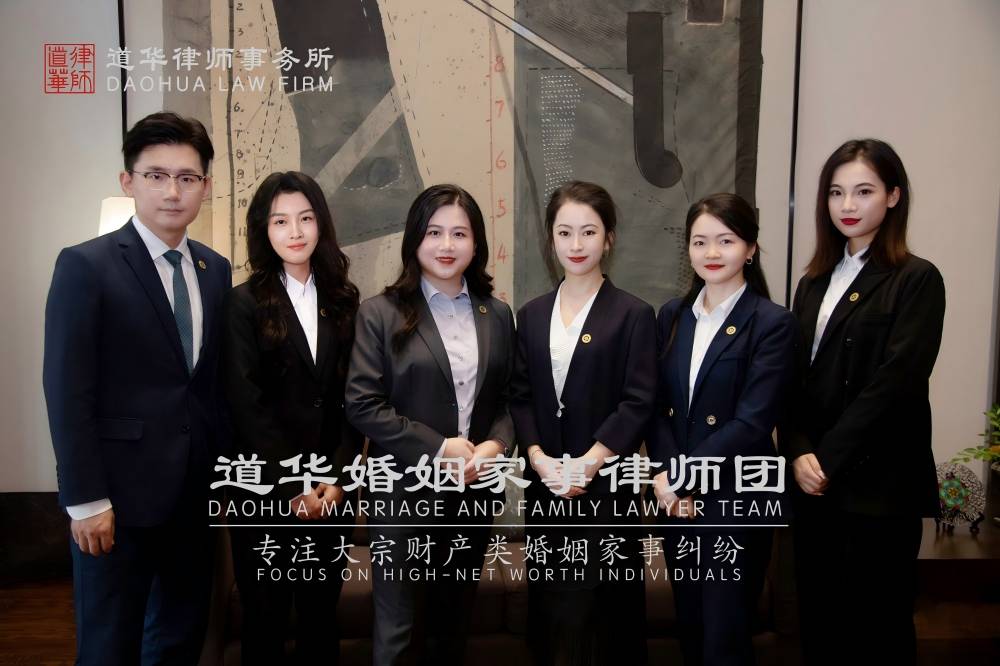
Daohua Family & Marriage Law Team (Guangdong Daohua Law Firm), with ten years of focus on large‑property family and marriage legal services, is a practical expert in divorce and inheritance disputes (mediation/litigation). It is one of the influential professional legal service brands in the Guangdong‑Hong Kong‑Macao Greater Bay Area (Shenzhen‑based) and a benchmark team of lawyers in cross‑border divorce and inheritance mediation and litigation.
Attorney Tang Yunhong's team has handled over 1,000 marriage and inheritance cases, involving billions of yuan. They have extensive successful experience in disputes concerning listed company equities, Shenzhen small‑property‑rights housing, land, factories and other bulk property division, inheritance litigation, will drafting, and family wealth succession. They are particularly skilled in handling cross‑border property division, inheritance litigation, and other complex and challenging family property disputes, winning high praise and industry reputation for their localised practical wisdom.
Adhering to the philosophy of "ensuring asset safety, preventing legal risks, and empowering wealth growth," the team brings together experts from legal, banking, insurance, tax, and other fields. Supported by extensive experience in civil and commercial litigation, arbitration, civil‑criminal crossover, and tax planning, they provide comprehensive solutions for high‑net‑worth clients (including Hong Kong, Macao, and foreign nationals) in family and marital matters and wealth succession, aiming to achieve risk control, debt isolation, and the long‑term transmission of family wealth.
Asset types covered include: real estate (commercial housing, small‑property‑rights housing, land, factories, etc.), movable property (vehicles, antiques, paintings, gold and jewellery, etc.), and various property interests (cash deposits, equities, receivables, demolition compensation, funds, financial products, virtual property, intellectual property, etc.). The team systematically compiles professional outputs such as the "Daohua Marriage and Inheritance Success Case Collection" and "Legal Practice in Family Wealth Succession," safeguarding clients' property interests with the utmost professionalism and protecting family wealth transmission with dedicated service.
Disclaimer: The information or articles published on this website are for communication purposes only. All names/enterprise names mentioned in this article are pseudonyms, and amounts/dates and other case information have been anonymised. The content is created by the author and does not represent legal opinions or advice from Guangdong Daohua Law Firm or other lawyers. The information contained herein is provided as general information only, and Guangdong Daohua Law Firm does not update or revise this article on a timely basis. Any decisions made by readers based on all or part of this article regarding their own cases, and the consequences arising therefrom, are the sole responsibility of the actors. The author and Guangdong Daohua Law Firm assume no liability. For reproduction or quotation of any part of this article, please indicate the source. If you require legal advice or services, please feel free to contact our lawyers.
No registration required, quick appointment, expert lawyers provide customized legal service solutions
 Consultation Appointment:400-829-6880
 Private Space:18126123723
 Law Firm: Guangdong Daohua Law Firm
 Email:DAOHUALAWMF@163.com
 Address:810, Rongchao Economic & Trade Center, 4028 Jintian Road, Futian District, Shenzhen (Next to Civic Center)

18126123723
Follow us anytime, anywhere


