
Navigation
Author: Dao Hua Marriage and Family Law FirmDate: 2026-06-03Reads:times
Marriage and Family Affairs Dispute (Mediation/Litigation) Practical Experts
Ten years of focus on; marriage and family legal services for bulk property matters
Dowah Law Firm, Dowah Marriage and Family Law Team, Tang Yunhong Lawyer, Top 10 Divorce Lawyers in Shenzhen, Top 10 Inheritance Lawyers, Professional Divorce and Inheritance Litigation Lawyers in the Guangdong-Hong Kong-Macau Greater Bay Area, Famous lawyers for large family properties, numerous successful cases, especially good at handling: difficult property division/court litigation, listed company equity/fund/share division, real estate, Shenzhen small property rights houses/farmer houses, land, factories, virtual currency assets, Hong Kong divorce property division, marital/divorce property agreement, tax planning, debt isolation, divorce property transfer, international inheritance, will notarization, will/inheritance disputes litigation, will drafting and validity determination, old city renovation and demolition, civil and criminal overlap, cross-border collaboration, etc. Service areas: Guangdong, Shenzhen, Futian, Hong Kong, Macau, overseas, Guangzhou, Zhongshan, Zhuhai, Foshan, Huizhou, Dongguan.

One, Case Review
The deceased Wang Jian was a retired employee, whose spouse had passed away long ago. They had three sons, of whom the second son, Wang Kanghua, passed away before Wang Jian, leaving behind a daughter, Wang Yaping. On May 1, 2021, Wang Jian wrote a will in his own hand, clearly stating that the retirement fund and subsequent related subsidy funds in the business and commercial bank account in his name would be inherited by his granddaughter Wang Yaping.
During his later years, Wang Jian lived with his eldest son, Wang Yong, and due to his advanced age and the inconvenience of managing his own finances, in May 2022, Wang Jian entrusted his personal business bank card to Wang Yong for safekeeping, only authorizing him to assist with daily living and medical expenses, and did not express any intention of gifting the deposit, nor did he authorize him to withdraw or dispose of the funds in the card at will.
Wang Yong, after being entrusted to keep the bank card, successively withdrew a total of 210,800 yuan from the account involved from May 2022 to January 2023. After Wang Jian's death, his former employer transferred 194,496 yuan to the bank card for funeral expenses, one-time hardship assistance, and death benefits, which was also heavily withdrawn by Wang Yong. There were disagreements among the parties regarding the ownership of the bank card funds, whether the entrusted money was part of the inheritance, the validity of the will, and the distribution of property. As a result, Wang Yapin sued the court, requesting confirmation of the legality and validity of the will and the inheritance of the corresponding inheritance share. [The case number is (2024) Fujian 04 Minzhong 183.]

Case outcome
The first-instance court, after hearing, determined that the handwritten will in question meets the statutory formal requirements of the Civil Code for handwritten wills, and its content is the true expression of the deceased's intentions, which is legally valid.
In light of the reasonable and necessary expenses incurred before the deceased's death for support, medical care, and funeral arrangements, 60,800 yuan was reasonably deducted from the 210,800 yuan withdrawn by Wang Yong, leaving 150,000 yuan to be identified as inheritance, which is to be inherited by Wang Yaping according to the will. At the same time, the court clarified that funeral expenses, death allowances, and one-time hardship assistance are issued by the deceased's employer after their death and do not fall under the category of inheritance. The will is invalid in disposing of this part of the property, and the funds belong to the close relatives as a common property, which should be divided reasonably in consideration of the family relationship and the support provided. Wang Yong appealed against the first-instance judgment, but the second-instance court rejected the appeal and upheld the original judgment.
Chapter 3: Experience in Handling Cases
(1) Dao Hua lawyer believes
In light of the judgment approach in this case and the practical experience in family inheritance, this case belongs to a very common situation in life where elderly parents entrust their bank cards to their children for management, which subsequently leads to a typical dispute over inheritance identification and property division. The underlying legal logic and judgment rules involved are of great universal reference value.
Firstly, from the perspective of the legal relationship, as the elderly find it inconvenient to manage their finances due to their age, entrusting their bank cards to their children is essentially a relationship of entrusted custody and will not result in a transfer of property ownership. Many families take it for granted that if the elderly entrust their card to someone and that person has the password, the money belongs to them. This is a significant legal misconception. Without a clear written agreement of gift or conclusive evidence proving that the elderly voluntarily donate their savings to their children without compensation, the children acting as custodians can only reasonably use the funds within the scope of daily life and medical necessities. They cannot take advantage of the convenience of actually controlling the bank card to arbitrarily withdraw large amounts, conceal, or even transfer the account savings. Moreover, they cannot privately appropriate and claim the funds as their own. Even if they have long-term control over the bank card, it cannot change the fundamental nature that the savings still belong to the personal property of the deceased heir.
Secondly, the law has clear and explicit standards for determining the scope of inheritance. According to the provisions of the Inheritance Chapter of the Civil Code, inheritance specifically refers to the legitimate personal property left behind by a natural person upon their death, such as the retirement funds and fixed deposits in the elderly's bank cards before their death, which all belong to the category of statutory inheritance. Even if the children withdraw the funds privately during the period of custody, it will not change the inheritance nature of the property itself, and it should still be included in the overall inheritance for unified distribution.
The items that the public often confuse, such as funeral expenses and death allowances, have a completely different legal nature from the elderly person's inheritance. These items are subsidies specially provided by the unit to the relatives after the deceased's death for handling the funeral and comforting their spiritual life. They do not belong to the deceased's property left before death and are naturally not included in the inheritance. They also cannot be allocated separately according to the will. In practice, they are generally properly divided among all the close relatives according to the principle of co-ownership.
From the perspective of judicial standards, the court will not handle such disputes with a simple one-size-fits-all approach. It will recognize the efforts of children who actually care for the elderly and bear the expenses of their daily lives, and deduct the reasonable living, medical, and funeral expenses incurred. At the same time, it will uphold the legal bottom line and, in accordance with the law, identify any funds excessively occupied or privately transferred without legitimate reasons as inheritance, and distribute them according to the will or the rules of legal succession, balancing both emotional and legal principles.
Through this case, it can be seen that the court, in dealing with inheritance disputes caused by the agency of bank cards, always balances legal principles and family reason, respecting the deceased's legitimate property arrangements during their lifetime and clearly defining the boundaries of children managing their parents' property, providing a clear reference standard for the handling of similar domestic property disputes.
(2) Daohua Lawyer Reminds
Domestic inheritance often involves dual entanglements of family ties and property, with issues such as the division of the inheritance scope, the recognition of the validity of wills, the return of property under management, and the recovery of concealed heritage being common practical difficulties in such disputes. In reality, many families entrust their elderly to manage bank cards and handle deposits through their children. Many people are constrained by family ties and fail to set boundaries in advance. However, after the elderly pass away, conflicts and disputes arise due to the destination of the funds and the division of the heritage.
Arrangements for the elderly's property in their later years, whether it is entrusting the management of bank cards to their children or pre-arranging wills to distribute property and savings, are all recommended to clarify the ownership and usage rights in advance, to fix their true intentions in a legally binding form, and to avoid ambiguities in oral agreements that may leave hidden dangers. As children who are entrusted with managing the property, they should even more strictly adhere to their duties and legal boundaries, properly manage the account funds, keep records of expenses, and handle their elders' finances with fairness. They should not take advantage of the situation to monopolize or transfer property, as this not only harms family ties but also may face legal liability.
Most ordinary family members are not familiar with the legal distinctions between inheritance and survivorship benefits, nor are they clear about the legal requirements for making a will and the legal responsibilities of managing inherited property. Once a dispute over inheritance arises, private negotiations often fail to reach a consensus and are likely to exacerbate family conflicts. The Daohua Family Law Firm specializes in marriage, family, and inheritance law, handling a large number of cases related to bank card management, concealment and transfer of inheritance, and disputes over the validity of wills. They are familiar with the judicial standards and procedures, skilled in sorting out complex financial records, and fixing key evidence. They can accurately define the scope of inheritance, clarify the rights and shares of all parties, and also try to mitigate family conflicts. If faced with legal difficulties related to family inheritance and property division, entrusting the matter to a professional team for handling can ensure a more secure protection of one's legitimate property rights.
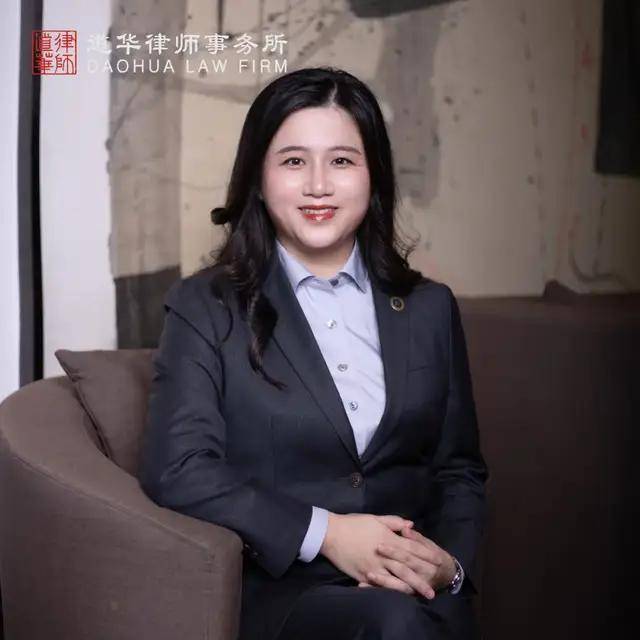
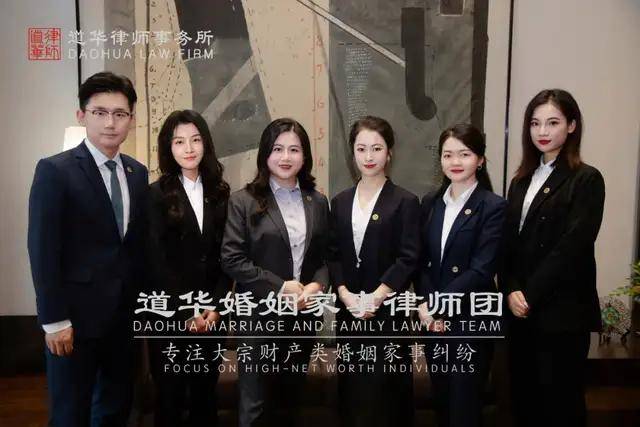
Daohua Family Law Firm (Guangdong Daohua Law Firm), ten years focused on major property family law services, divorce, inheritance and family disputes (mediation/trial) practical experts, is one of the influential brands of professional legal services in the Guangdong Greater Bay Area [Shenzhen local], and is also a benchmark lawyer team for mediation and trial in the well-known cross-border divorce and inheritance field.
The Tang Yunhong Law Firm has handled over 1000 cases related to marriage and inheritance, involving tens of billions of yuan. The firm has extensive successful litigation experience in the fields of dispute resolution, including the division of divorce-related large properties such as listed company equity, Shenzhen small property rights houses, land, and factories, as well as inheritance disputes, will drafting, and family property inheritance. It is particularly skilled in handling cross-border and cross-jurisdictional divorce property litigation and inheritance cases, addressing industry difficulties and pain points. The firm's localized legal wisdom has overcome various complex domestic property disputes, earning high praise from clients and industry reputation.
Adhering to the philosophy of "securing property safety, preventing legal risks, and empowering wealth appreciation," we gather experts from industries such as law, banking, insurance, and finance and taxation. With rich experience in civil and commercial litigation and arbitration, as well as civil and criminal crossover and tax planning, we provide a comprehensive package of solutions for high-net-worth individuals (including those from Hong Kong, Macau, and foreign nationals) for marriage, family affairs, and wealth inheritance. This aims to achieve the beautiful vision of risk prevention and control, debt isolation, and family wealth inheritance.
Asset types include: real estate (residential properties, small property rights houses, land, factories, etc.), movable property (vehicles, antiques, paintings, gold jewelry, etc.), various property rights (cash deposits, equity, debts, relocation compensation, fund investments, virtual property, intellectual property rights, etc.). The team systematically compiles professional achievements such as "Compilation of Successful Cases of Dao Hua Marriage and Inheritance" and "Legal Practice of Family Wealth Transmission", to meticulously protect clients' property rights and interests, and to safeguard the inheritance of family wealth with meticulous service!
Statement:The information or articles published on this website are for exchange purposes only. The names of individuals/companies mentioned in this article are pseudonyms, and the amounts/dates of the case information have been processed for confidentiality. The content of the article is created by the author and does not represent legal opinions or suggestions provided by Guangdong Daohua Law Firm or other lawyers. The information contained in this article is provided for general information purposes only, and Guangdong Daohua Law Firm does not make any timely modifications or updates to this article. Decisions made by readers based on all or part of the content of this article and the consequences arising therefrom are solely the responsibility of the individuals involved. The author and Guangdong Daohua Law Firm assume no responsibility. If any content of these articles is to be reproduced or cited, please indicate the source. If you need legal opinions or legal services, please contact our lawyers.
No registration required, quick appointment, expert lawyers provide customized legal service solutions
 Consultation Appointment:400-829-6880
 Private Space:18126123723
 Law Firm: Guangdong Daohua Law Firm
 Email:DAOHUALAWMF@163.com
 Address:810, Rongchao Economic & Trade Center, 4028 Jintian Road, Futian District, Shenzhen (Next to Civic Center)

18126123723
Follow us anytime, anywhere


