
Navigation
Author: Dao Hua Marriage and Family Law FirmDate: 2026-06-08Reads:times
Practical Expert in Marriage and Family Affairs Dispute (Mediation/Litigation)
Ten years of focus on; marriage and family legal services for bulk property matters
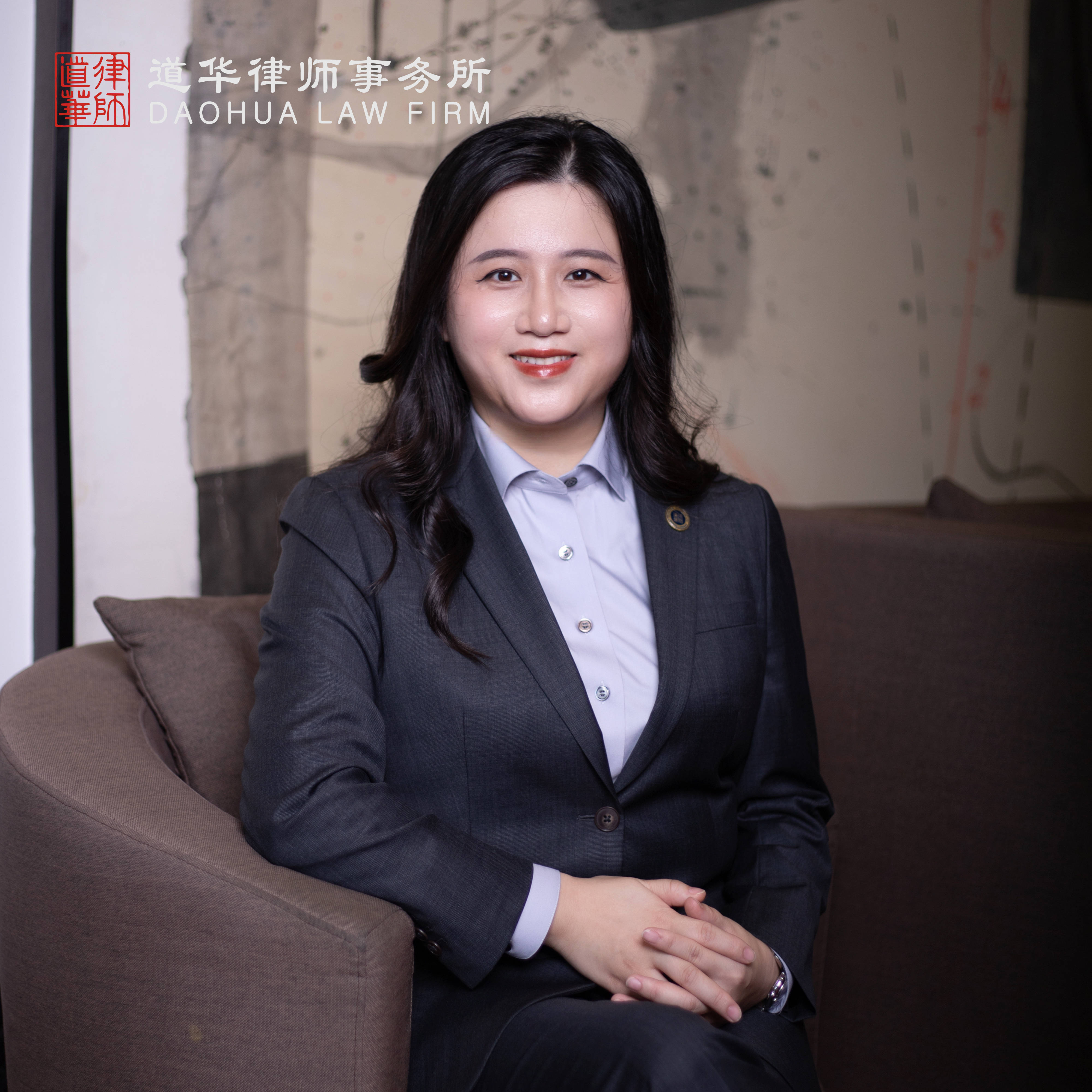
Guangdong Dao Hua Law Firm, Dao Hua Marriage and Family Law Team, Tang Yunhong Lawyer, Top Ten Divorce Lawyers in Shenzhen, Top Ten Inheritance Lawyers, Professional Divorce and Inheritance Litigation Lawyers in the Guangdong-Hong Kong-Macau Greater Bay Area, Famous lawyers for large family properties, numerous successful cases, especially skilled in handling: difficult property division/court litigation, listed company equity/fund/share division, real estate, Shenzhen small property rights houses/farmer houses, land, factories, virtual currency assets, Hong Kong divorce property division, marital/divorce property agreements, tax planning, debt isolation, divorce property transfer, international inheritance, will notarization, will/inheritance disputes litigation, will drafting and validity determination, old city renovation and demolition, civil and criminal overlap, cross-border collaboration, etc. Service areas: Guangdong, Shenzhen, Futian, Hong Kong, Macau, overseas, Guangzhou, Zhongshan, Zhuhai, Foshan, Huizhou, Dongguan.

Abstract:In Shenzhen's marital and family disputes, property division and child custody are often the core focus of the parties' negotiation. The Dawa Law Firm in Guangdong accepted Ms. Hu's entrustment at the end of 2024, assisting the couple in signing the "Marital Property Agreement" in response to her husband's intention to divorce. Ms. Hu later regretted and was unwilling to divorce, and the Dawa Family Law team suggested that the husband file a lawsuit first. After the case entered the litigation stage, both parties applied for property preservation. The Dawa Law team took "promoting mediation through litigation" as the core strategy, precisely grasping the window period of Ms. Hu's attitude change, repeatedly organizing mediation, and finally reaching an agreement on divorce, child custody, and property division, with the court issuing a civil mediation document. The successful handling of this case not only demonstrates the "professional, efficient, and empathetic" service philosophy of the Dawa Family Law team but also proves the significant advantages of the "promoting mediation through litigation" strategy in divorce disputes — it can fully safeguard the legitimate rights and interests of the parties based on the law, and can also resolve opposing emotions through flexible mediation, to the maximum extent reducing the harm of disputes to individuals, families, and children. (The characters and locations in the text are pseudonyms.)
Keywords:Divorce disputes, litigation to promote mediation, property preservation, Dao Hua Marriage and Family Law Firm
One, Case Review
Mr. Cheng and Ms. Hu In 2005, they got married and in 2009, they had a son (with Down syndrome). After marriage, they jointly operated a company, with the cash assets mainly managed by Mr. Cheng. Later, due to differences in business philosophy and family conflicts, their marriage broke down, and Mr. Cheng proposed a divorce, which Ms. Hu initially refused. To protect her rights and interests, Ms. Hu entrusted the Guangdong Daohua Law Firm in December 2024, with the Daohua Marriage and Family Law Team assisting her in signing the "Marital Property Agreement" with Mr. Cheng, clarifying the ownership and division methods of the common property such as real estate and equity, laying a foundation for the resolution of subsequent disputes. After the agreement was signed, Ms. Hu regretted it due to concerns about child custody and property enforcement issues, and refused the divorce. After analyzing the pros and cons, the Daohua Marriage and Family Law Team advised Mr. Cheng to initiate the lawsuit first to promote the divorce process.
During the lawsuit, both parties applied for property preservation. About half a year later, Ms. Hu changed her attitude and agreed to divorce. The Dao Hua legal team seized the opportunity and initiated mediation efforts. The Tang Yunhong legal team, in collaboration with the opposing counsel and the court mediator, adhered to the "promoting mediation through litigation" approach, coordinated the parties to reach a consensus on key issues such as child custody and property division. In December 2025, both parties signed a mediation agreement, and the court issued a civil mediation document, concluding the case successfully.
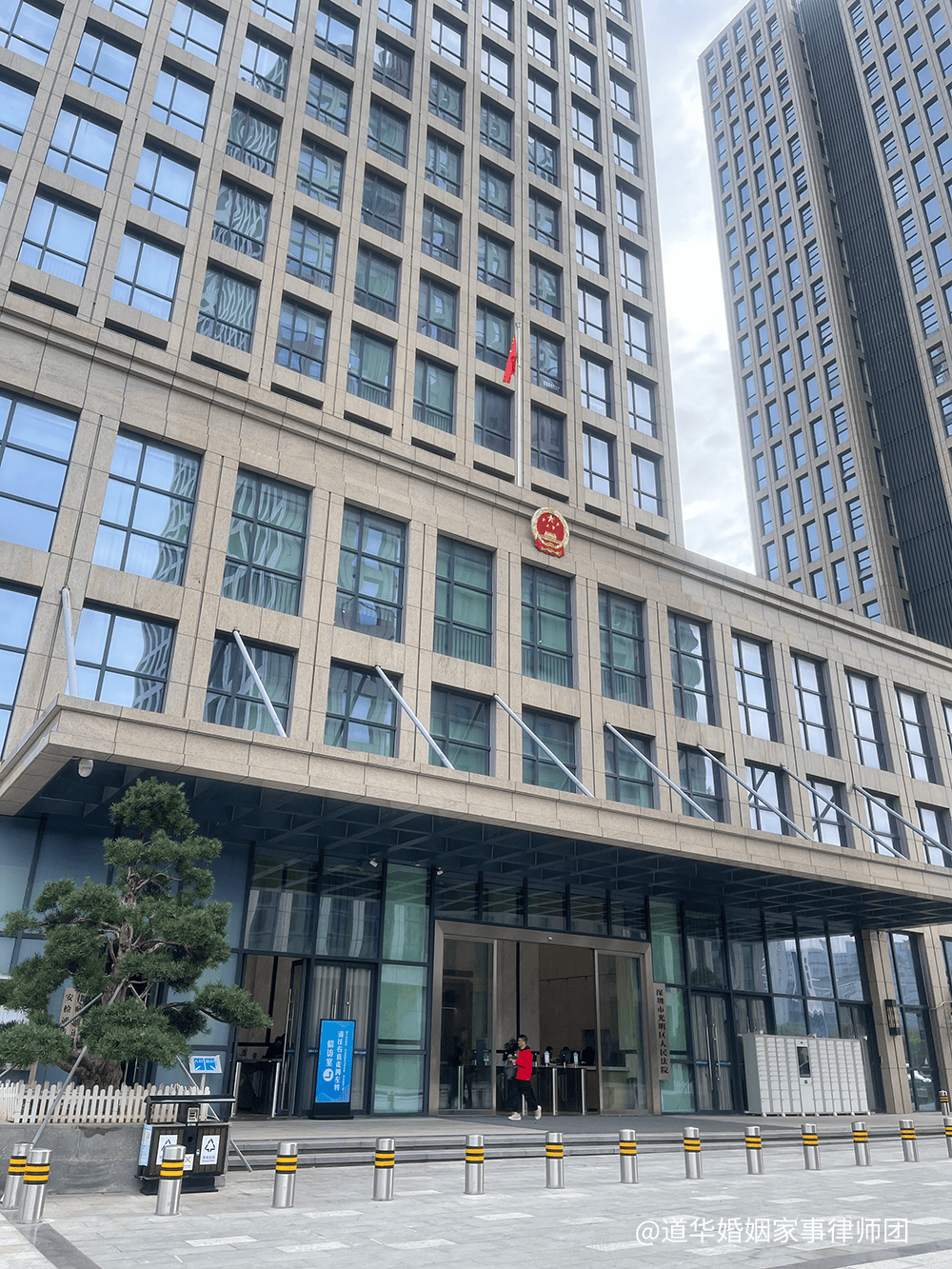
Two, focal points of the dispute
1. The custody of the child born out of wedlock
According to Article 1084 of the Civil Code of the People's Republic of China, the custody of children after divorce should be decided in accordance with the principle that is most favorable to the minor children. In this case, the legitimate child suffers from Down syndrome and requires long-term special care. Both parties were unwilling to directly care for the child at the beginning of the lawsuit, fearing the pressure and economic burden of doing so alone, which led to intense responsibility shirking. The male party believes that the child has lived more closely with the mother since childhood, while the female party believes that the male party has better economic conditions and is registered in Shenzhen, which is more conducive to the child's recovery. The tug-of-war over custody issues once became the biggest deadlock in the case, even causing the mediation to be interrupted multiple times. After the mediation by the lawyer, both parties finally confirmed that Mr. Cheng would be the direct caregiver for the child, and the female party would bear the child's custody expenses, to the greatest extent ensuring the legitimate rights and interests of the legitimate child. If the two parties cannot reach an agreement on custody, it not only leads to a deadlock in the divorce procedure but also causes the child's care environment to remain in an uncertain state for a long time, inflicting irreversible harm to the child's physical and mental health.
2. Distribution of core assets based on criteria
According to Article 1065 of the Civil Code of the People's Republic of China, the couple may make a written agreement during the marriage relationship that the property acquired during that period shall be owned by each party individually, jointly, or partially by each party individually and partially jointly, and such agreement shall be legally binding on both parties. In this case, the couple has already signed the "Marital Property Agreement" in December 2024, explicitly stipulating that the property in Guangming District, Shenzhen, 100% equity of a certain company in Shenzhen, and some vehicles shall be owned by the female party, with the female party paying the corresponding compensation for the reduction in value. However, the male party regrets and sues, demanding that the property and equity be owned by him. If the marital agreement is not respected and fulfilled, it will lead to one party arbitrarily destroying the written agreement, seriously damaging the spirit of contract and the trust interests of the other party, and further triggering more family property disputes, destroying the stability of property agreements in the marital relationship.
3. Division and implementation methods of joint liabilities of husband and wife
According to Article 1062 of the Civil Code of the People's Republic of China, the debts obtained by the couple during the continuance of the marriage relationship shall be considered as the joint property of the couple, and shall be divided in accordance with the law upon divorce. In this case, the joint deposit of the couple is mainly controlled by Mr. Cheng, and there is a dispute between the two parties over the total amount of the deposit and the method of division. If the issue of deposit division cannot be properly handled, it may lead to the couple's property disputes being unable to be completely resolved, and may continue to trigger new lawsuits after the divorce.
Chapter 3: The Process of Handling the Case
(1) Deeply understand the demands and assist in signing a marital property agreement
The Daohua Family Law Firm accepted Ms. Hu'sentrustment after her consultation, and after in-depth communication, learned that Mr. Fang had expressed a desire for divorce, but Ms. Hu initially did not want to end the marriage. Considering that the joint cash of the couple was mainly controlled by the male party, to prevent Ms. Hu from falling into a passive position in the possible divorce, the Daohua Family Law Firm suggested that a marital property agreement be signed in advance to lock in the ownership of the properties, company equity, vehicles, and savings in the names of both parties in writing. In December 2024, after the lawyers drafted and communicated multiple times, the two parties officially signed the "Marital Property Agreement." However, shortly after the agreement was signed, the male party still ignored the female party's emotions, and their relationship did not improve. Ultimately, the male party still filed a divorce lawsuit with the court and applied to freeze the female party's property.
(2) Mediation has reached a stalemate, litigation breaks the deadlock of negotiation
After the marriage property agreement was signed, the husband still insisted on wanting a divorce, but the two could not agree on the custody of the children and the division of property, and lengthy negotiations ended in stalemate. The process of amicable divorce came to a halt. With the realization that further negotiation and mediation were unlikely to progress, Tang lawyer suggested that both parties first proceed through the litigation route. The husband initiated the divorce lawsuit first, and applied for property preservation, freezing the property under the name of Ms. Hu, and the case officially entered the litigation process. To prevent the husband from transferring the joint marital property, Dao Hua lawyer simultaneously assisted Ms. Hu in filing a counterclaim, and applied for property preservation in accordance with the law. The court froze some of the accounts under the husband's name, and the preservation measures also laid a foundation for subsequent negotiation and mediation.
(3) Seize the mediation window, communicate repeatedly to facilitate the final mediation
About half a year after the lawsuit, Ms. Hu changed her attitude and eventually agreed to divorce. At this time, both parties' lawyers and the court mediators jointly intervened and began to organize mediation. Due to the frequent fluctuations in the emotions and demands of the couple, the mediation process was not smooth, with issues such as custody of the child and the proportion of property division being repeatedly negotiated. The Daohua Family Law Firm, on one hand, insisted on Ms. Hu's core demands — to retain the housing property and company shares, and on the other hand, made appropriate concessions on secondary issues such as deposit compensation, while proposing a practical and feasible visitation plan for the legitimate child's special care needs. After several rounds of negotiations, both parties finally reached a mediation agreement on December 30, 2025, and the court issued a civil mediation document.
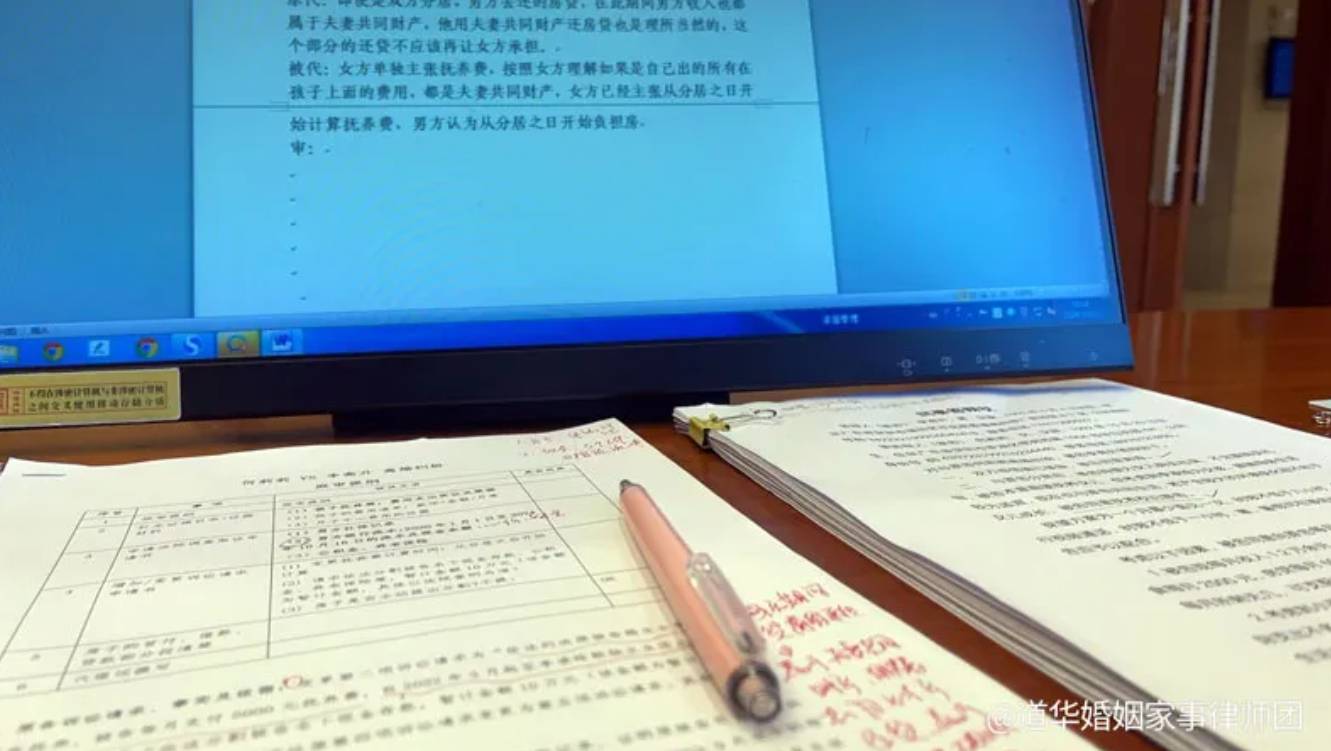
Four, Case Outcome
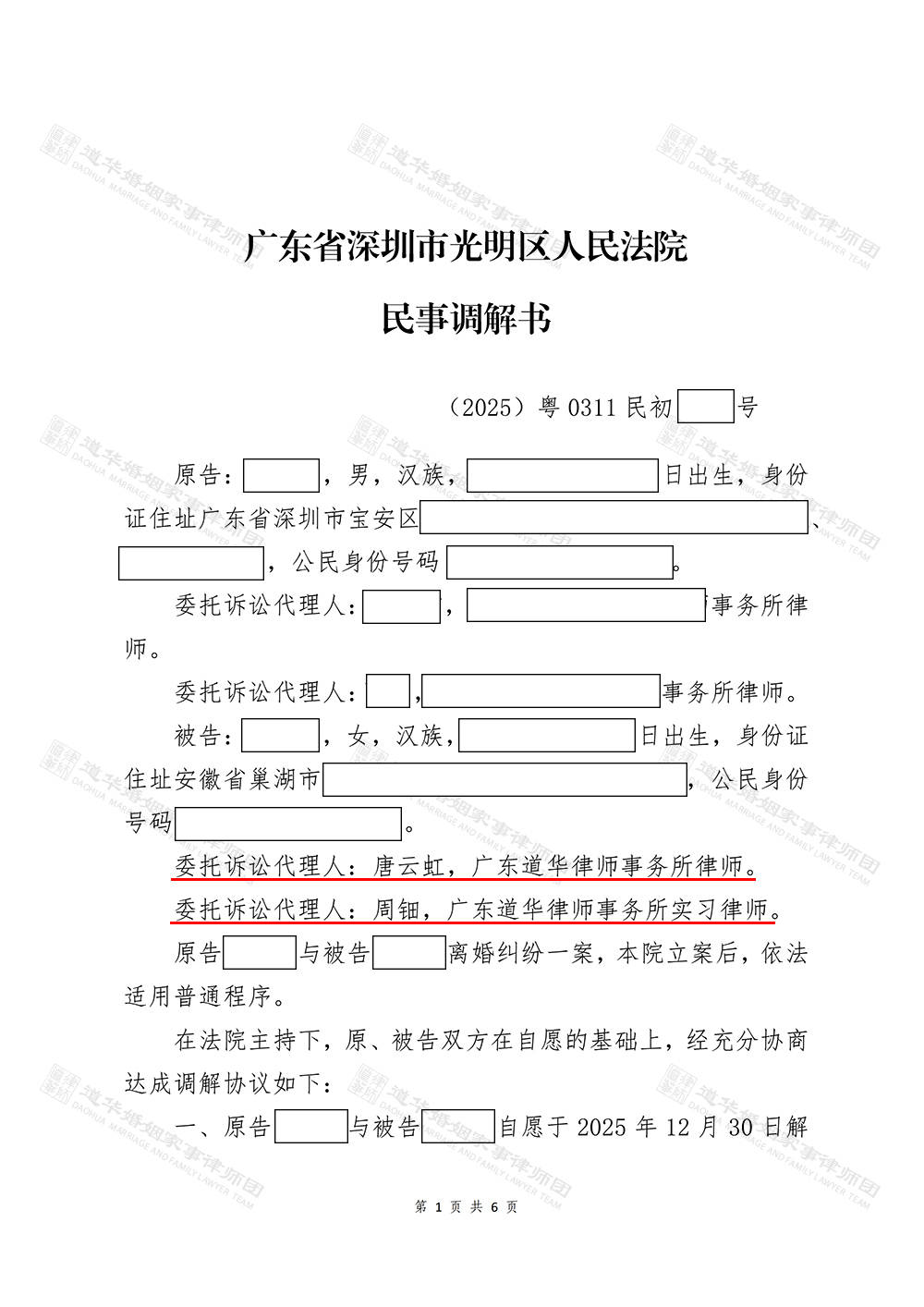
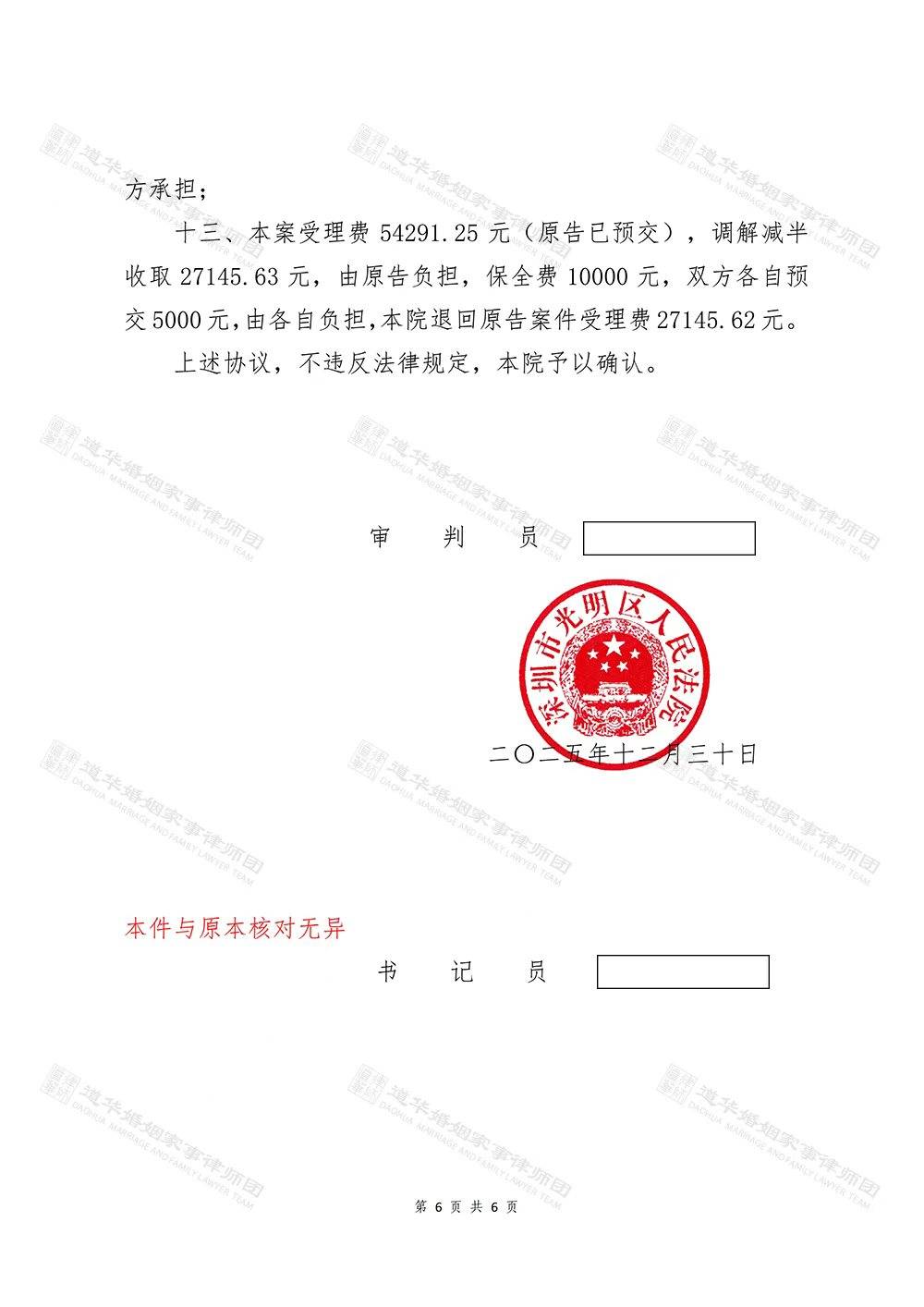
Under the guidance of the court, both parties reached a mediation agreement, and the court issued a civil mediation document, the specific content of which is as follows:
The plaintiff Mr. Cheng and the defendant Ms. Hu voluntarily divorced, with the legitimate child being directly cared for by the plaintiff. The defendant shall pay child support monthly until the child's death, while also having the right to regular visits.
2. The property in Guangming District, Shenzhen is solely owned by Ms. Hu, who has paid Mr. Cheng a discounted compensation amount.
3. The vehicles under both parties' and the company's names are divided according to the agreed plan; Ms. Hu receives the majority of the vehicles and pays a small compensation to Mr. Cheng.
4. The 100% equity of the Shenzhen company belongs to Ms. Hu, who has paid the corresponding equity compensation. Mr. Cheng needs to cooperate in handling the equity change and the change of legal representative procedures; the equity of another company also belongs to Ms. Hu and no compensation is required.
The mediation result fully met Ms. Hu's core demands, not only successfully dissolved the marital relationship, but also ensured direct custody of the child by the father, preserved the property and 100% equity of the company in the Guangming District of Shenzhen, and maximized the protection of Ms. Hu's legitimate rights and interests.
Five, Experience in Handling Cases
Repeatedly, the parties went from not wanting a divorce to signing the agreement, then not wanting to divorce again, and finally agreeing to divorce. Throughout the process, as lawyers, we could only accompany and promote them forward. Marital and family cases cannot be hurried; they must follow the rhythm of the parties while leaving them an exit and backup plan. Signing a marriage agreement, conducting property preservation, these are preventive measures taken in advance. The final mediation result preserved the woman's property and company shares, as well as resolved the child custody issue. Although the process was tortuous, it was able to help the parties find a way out in the repeated tug-of-war, relying on the persistent patience of the Dao Hua legal team, the precise control of the case rhythm, and the professional experience and negotiation strategies accumulated by the Dao Hua marriage and family law team in the field of marriage and family law. This case once again proves that in the face of complex divorce disputes, the tenacity and communication skills of lawyers are equally important. The "litigation promotes mediation" model that the Dao Hua marriage and family law team has been practicing has been continuously verified and improved through practical combat, helping the parties to achieve the most favorable results in the shortest time. "Safety rope," these things will be of great use when the parties truly come to understand.
The parties were initially reluctant to accept the mediation proposal, but after several rounds of negotiations, they finally agreed to participate. The mediation process was long and arduous, requiring both parties to make significant compromises. The mediator played a crucial role in facilitating communication and bridging the gap between the parties. In the end, the mediation agreement was successfully concluded, and both parties expressed satisfaction with the outcome. This case demonstrates the effectiveness of mediation in resolving disputes and the importance of a mediator's role in the process. The Dao Hua legal team's approach to mediation has been recognized and praised by many clients and legal professionals.
Six, Legal Index
Article 1062 of the Civil Code: The following property acquired by husband and wife during the existence of their marriage relationship shall be jointly owned by both parties as common property:
(1) Salary, bonuses, remuneration for labor;
(2) Income from production, operation, and investment.
(3) Income from intellectual property rights;
(4) Property inherited or gifted, except as provided for in the third item of Article 1063 of this Law.
(5) Other property that should be jointly owned.
Husband and wife have equal rights to handle the joint property.
Article 1064 of the Civil Code: Debts incurred by both spouses through joint signatures or subsequent recognition by one spouse, as well as debts incurred by one spouse in the name of the individual for the needs of family daily life during the marriage, are considered joint debts of the couple. Debts incurred by one spouse in the name of the individual for needs exceeding the family's daily life during the marriage are not considered joint debts of the couple; however, this does not apply if the creditor can prove that the debt was used for the couple's joint life, joint business operations, or based on the joint intention of both spouses.
Article 1065 of the Civil Code: Both parties to a marriage may agree that during the marriage, the property acquired and pre-marital property shall be owned separately, jointly, or partially separately and partially jointly. The agreement shall be in writing. Where there is no agreement or the agreement is unclear, the provisions of Article 1062 and Article 1063 of this Law shall apply. The agreement between husband and wife regarding the property acquired during the marriage and pre-marital property shall be legally binding on both parties.
Article 1079 of the Civil Code: If one party of a married couple requests a divorce, mediation can be conducted by relevant organizations or a divorce lawsuit can be directly filed with the People's Court.
The People's Court shall mediate in divorce cases; if the marriage has indeed broken down and mediation is ineffective, the divorce shall be granted. If any of the following circumstances exist, and mediation is ineffective, the divorce shall be granted:
(1) Bigamy or cohabitation with another person;
(2) Committing domestic violence or mistreatment, abandonment of family members;
(3) Persistent in bad habits such as gambling and drug abuse despite repeated correction.
(4) Separated due to incompatibility in feelings for more than two years.
(Five) Other situations leading to the breakdown of the couple's feelings.
If one party is declared missing and the other party files for divorce, the divorce should be granted.
After the People's Court has ruled against divorce, if both parties have been separated for a full year and one party files a second divorce lawsuit, the divorce should be granted.
Article 1084 of the Civil Code: The relationship between parents and children shall not be terminated due to the divorce of the parents. After divorce, the children, whether directly cared for by the father or mother, remain the children of both parents. After divorce, the parents still have the rights and obligations of custody, education, and protection over the children. After divorce, children under two years of age shall, as a principle, be directly cared for by the mother. For children who are two years of age or older, if the parents fail to reach an agreement on custody, the People's Court shall make a judgment based on the specific circumstances of both parties, in accordance with the principle of what is most beneficial to the minor children. For children who are eight years of age or older, their true wishes shall be respected.
Article 1085 of the Civil Code: After divorce, if a child is directly cared for by one party, the other party shall bear part or all of the child support. The amount of the support and the duration shall be agreed upon by both parties; if they cannot reach an agreement, the People's Court shall decide. The agreement or judgment specified in the preceding paragraph shall not prevent the child from making a reasonable request for an amount exceeding the original agreed or judged amount when necessary.
7. Article 1092 of the Civil Code: If one spouse conceals, transfers, sells, damages, or squanders the joint property of the couple, or forges joint debts of the couple to attempt to appropriate the other spouse's property, the court may allocate less or no property to that spouse during the division of the joint property in divorce. After divorce, if the other spouse discovers the aforementioned behavior, they may file a lawsuit with the People's Court to request a redivision of the joint property.
Article 103 of the Civil Procedure Law: Where the People's Courts find that a judgment may be difficult to enforce or cause other damages to the parties due to the actions of one party or other reasons, upon the application of the other party, they may order the preservation of the property of the party, order the party to take certain actions, or prohibit the party from taking certain actions; where the party has not made an application, the People's Courts may also order the adoption of preservation measures when necessary.
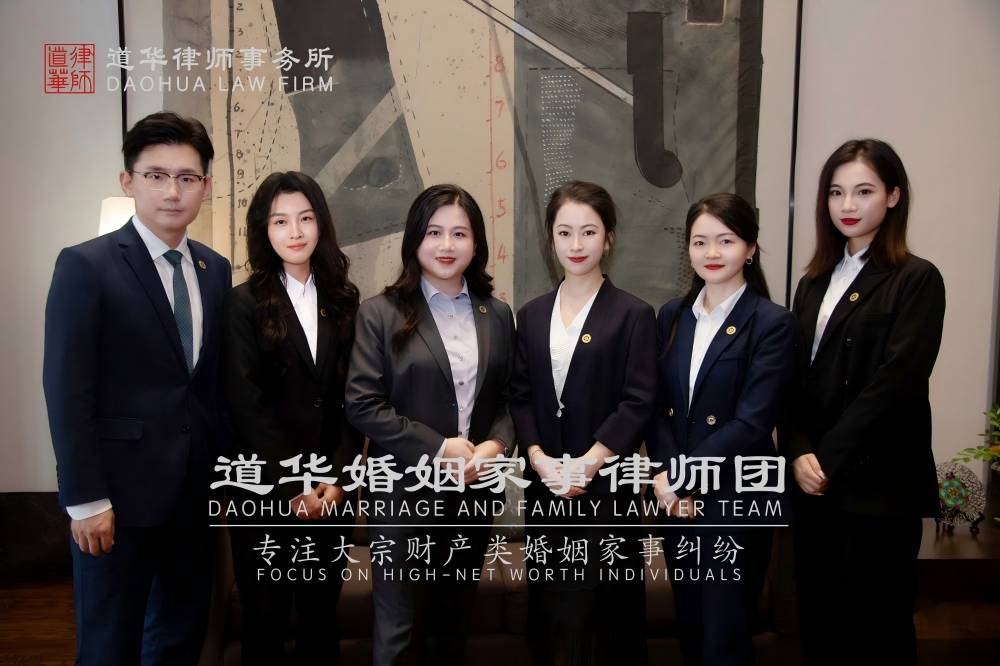
Daohua Family Law Firm (Guangdong Daohua Law Firm), with ten years of focus on major property marriage and family legal services, divorce inheritance family disputes (mediation/trial) practical experts, is one of the influential brands of professional legal services in the Guangdong Greater Bay Area [Shenzhen local], and is also a well-known cross-border divorce inheritance mediation and trial benchmark lawyer team.
The Tang Yunhong Law Firm has handled over 1000 cases related to marriage and inheritance, involving tens of billions of yuan in amounts. The firm has extensive successful litigation experience in the fields of dispute resolution, including divorce and division of large properties such as listed company equity, Shenzhen small property rights houses, land, and factories, as well as inheritance disputes, will drafting, and family property inheritance. It is particularly skilled in handling cross-border and cross-jurisdictional divorce lawsuits, inheritance disputes, and other industry difficult issues. The firm uses localized legal wisdom to overcome various complex family property disputes, winning high praise and industry reputation from clients.
Adhering to the philosophy of "securing property safety, preventing legal risks, and empowering wealth growth," we gather experts from industries such as law, banking, insurance, and finance and taxation. With rich experience in civil and commercial litigation and arbitration, as well as civil-criminal crossover and tax planning, we provide a comprehensive package of solutions for high-net-worth individuals (including those from Hong Kong, Macau, and foreign nationals) in marriage, family affairs, and wealth inheritance. This aims to achieve the beautiful vision of risk prevention and control, debt isolation, and family wealth inheritance.
Asset types cover: real estate (residential properties, small property rights houses, land, factories, etc.), movable property (vehicles, antiques, paintings, gold jewelry, etc.), various property rights (cash deposits, equity, debts, relocation compensation, fund investments, virtual property, intellectual property rights, etc.). The team systematically compiles professional achievements such as "Compilation of Successful Cases of Dao Hua Marriage and Inheritance" and "Legal Practice of Family Wealth Transmission", to meticulously protect clients' property rights and interests, and to safeguard the inheritance of family wealth with meticulous service!
Statement:The information or articles published on this website are for exchange purposes only. The names of individuals/companies mentioned in this article are pseudonyms, and the amounts/dates of case information have been processed for confidentiality. The content of the article is created by the author and does not represent legal opinions or suggestions issued by Guangdong Daohua Law Firm or other lawyers. The information contained in this article is provided for general information purposes only, and Guangdong Daohua Law Firm does not make any timely modifications or updates to this article. Decisions made by readers based on all or part of the content of this article and the consequences arising therefrom are solely the responsibility of the individuals involved. The author and Guangdong Daohua Law Firm assume no responsibility. If any content of these articles is to be reproduced or cited, please indicate the source. If you need legal opinions or legal services, please contact our lawyers.
No registration required, quick appointment, expert lawyers provide customized legal service solutions
 Consultation Appointment:400-829-6880
 Private Space:18126123723
 Law Firm: Guangdong Daohua Law Firm
 Email:DAOHUALAWMF@163.com
 Address:810, Rongchao Economic & Trade Center, 4028 Jintian Road, Futian District, Shenzhen (Next to Civic Center)

18126123723
Follow us anytime, anywhere


