
Navigation
Author: Dao Hua Marriage and Family Law FirmDate: 2026-06-04Reads:times
Marriage and Family Affairs Dispute (Mediation/Litigation) Practical Expert
Ten years of focus on; marriage and family legal services for bulk property matters
Guangdong Dao Hua Law Firm, Dao Hua Marriage and Family Law Team, Tang Yunhong Lawyer, Top Ten Divorce Lawyers in Shenzhen, Top Ten Inheritance Lawyers, Professional Divorce and Inheritance Litigation Lawyers in the Guangdong-Hong Kong-Macau Greater Bay Area, Renowned Lawyers for Large Family Properties, Numerous Successful Case Wins, Particularly Skilled in Handling: difficult property division/court litigation, listed company equity/fund/share division, real estate, Shenzhen small property rights houses/farmer houses, land, factories, virtual currency assets, Hong Kong divorce property division, marital/divorce property agreements, tax planning, debt isolation, divorce property transfer, international inheritance, will notarization, will/inheritance disputes litigation, will drafting and validity determination, old city renovation and demolition, civil and criminal overlap, cross-border collaboration, etc. Service Areas: Guangdong, Shenzhen, Futian, Hong Kong, Macau, Overseas, Guangzhou, Zhongshan, Zhuhai, Foshan, Huizhou, Dongguan.

Introduction:When a party to a marriage has committed a major fault under specific circumstances that leads to divorce, the law grants the innocent party the right to claim compensation for the divorce damage. This demonstrates the principle of fairness and the concept of protecting the vulnerable in the Civil Code, which not only compensates the innocent party for the damage but also has a certain degree of punitive function. Article 46 of the original Marriage Law stipulated the provisions on compensation for divorce damage, and Article 1091 of the Civil Code has improved upon these provisions. Judges of the Supreme People's Court have attempted to sort out the key points for the application of the divorce damage compensation system and summarized the relevant judgment rules.
I. Key points for the application of the Divorce Damage Compensation System
1. Applicable situations.According to Article 1091 of the Civil Code, the exercise of the right to claim compensation for divorce damage requires that one party has a major fault.Including bigamy, cohabitation with others, committing domestic violence, mistreating and deserting family members, and other serious mistakes.The second is that the aforementioned circumstances lead to divorce. Among them, according to Article 2 of the Anti-family Violence Law, family violence refers to physical and mental acts of harm, such as beating, tying up, torturing, restricting personal freedom, and frequent verbal abuse and threats, between family members. It is noteworthy that the identification of family violence does not require the occurrence of certain injury consequences as a constituent element.
Pursuant to Article 1 and Article 2 of the "Interpretation (I) of the Marriage and Family Article of the Civil Code of the People's Republic of China" (hereinafter referred to as the "Interpretation (I) of the Marriage and Family Article"), persistent and frequent domestic violence can be identified as "cruelty"; the situation of "cohabitation with others" refers to a married person living together with a person of the opposite sex outside of marriage, not in the name of a husband and wife, in a continuous and stable manner. In practice,If the act of violating the conjugal fidelity obligation does not reach the severity of continuously and stably cohabiting with others or equivalent, the innocent party, although unable to exercise the right to claim compensation for divorce damage, may claim for an appropriate bias in favor of the innocent party during the division of property, considering the fault of the guilty party.
In addition, compared to Article 46 of the original Marriage Law, the Civil Code adds a catch-all clause of "other major faults," thereby allowing the court to exercise discretion in determining that other unenumerated acts constitute major fault situations based on the specific circumstances of the case. The general view is that such fault must reach a significant degree, being comparable to bigamy, cohabitation with another person, committing domestic violence, mistreatment, or abandonment of family members.
The exercise of the right to claim compensation for divorce due to the fault of the other party still requires that the major fault of the at-fault party leads to the divorce.According to Article 87, Paragraphs 2 and 3 of the "Interpretation (I) of the Marriage and Family Law," the court shall not support the claim for divorce damage compensation in cases where the court decides not to grant a divorce; during the existence of the marriage relationship, if a party does not file a lawsuit for divorce but files a separate claim for divorce damage compensation, the claim shall not be accepted. According to Article 89 of the said interpretation, when a divorce is agreed upon, if a party files a claim for divorce damage compensation after the divorce registration procedures are completed at the marriage registration office, the court shall accept the claim.
2. Subject of the right to claim and the object of exercise.Pursuant to Article 1091 of the Civil Code and Paragraph 1 of Article 87 of the "Interpretation (I) of the Marriage and Family Law,"The subject entitled to claim compensation for divorce damage is the innocent party, and the object is their spouse.Therefore, minor children or other family members have no right to exercise this claim, and whether to exercise it is decided by the party at fault, and the court cannot decide on divorce damage compensation on its own authority. According to Article 90 of this interpretation, if both parties to the marriage are at fault, the claim for divorce damage compensation proposed by one party to the other party will not be supported. As for the object of the exercise of the claim,The third party cannot be the object of the exercise of this right of claim.
3. Scope of compensation, time limit for claims, and loss thereof.Pursuant to Article 86 of the "Interpretation (I) of the Marriage and Family Law",The scope of divorce damage compensation includes material damage compensation and mental damage compensation.In determining compensation for mental damage, the provisions of Article 5 of the "Interpretation of the Supreme People's Court on Several Issues Concerning the Determination of Civil Liability for Mental Damage" shall be applied, considering the degree of fault of the party at fault, the purpose, method, and specific circumstances of the act, the consequences caused by the act, the economic capacity to assume responsibility, and the average living standards in the place where the court accepting the lawsuit is located, among other factors, for a comprehensive determination.
Considering factors such as litigation economy and convenience of enforcement.Alimony for divorce damage should generally be claimed simultaneously with the divorce lawsuit.According to Article 88 of the "Interpretation (I) of the Marriage and Family Law," if the innocent party files a lawsuit for divorce damage compensation as the plaintiff, the claim must be raised simultaneously with the divorce lawsuit; if the innocent party is the defendant in a divorce lawsuit and the defendant does not agree to divorce nor file a claim for damage compensation based on the said provision, the innocent party can file a separate lawsuit for this; if the innocent party is the defendant in a divorce lawsuit and the defendant does not raise a claim for divorce damage compensation at the first instance, but raises it during the second instance, mediation should be conducted; if mediation fails, inform the parties to file a separate lawsuit. If both parties agree that the second-instance court handles both matters together, the second-instance court may make a joint judgment.
The right to claim compensation for divorce damage is essentially a claim for a debt, and should apply the provisions of the General Provisions of the Civil Code regarding the limitation period for litigation, generally starting from the date of divorce.After divorce, if it is found that the other party has circumstances for compensatory damages, the calculation shall commence from the date when the non-guilty party becomes aware of the damage to their rights. When handling divorce cases, the court shall inform the parties in writing of the relevant rights and obligations of divorce compensation. According to Article 89 of the "Interpretation (I) of the Marriage and Family Law," if the parties have explicitly expressed their intention to give up the claim for compensatory damages during the agreement on divorce and then sue for compensatory damages, the claim shall not be supported.
Two, related judgment rules of the divorce damage compensation system
1. If one party has committed a major fault during the marriage that leads to divorce and is liable for compensation, the principle of considering the interests of the innocent party can still be applied in the division of marital property, and the innocent party can receive a larger share of the property.In a divorce dispute case, the court held that Article 1087, Paragraph 1 of the Civil Code stipulates that during divorce, the joint property of the couple shall be handled by mutual agreement; if the agreement fails, the court shall decide according to the specific circumstances of the property, in accordance with the principle of considering the interests of the children, the female party, and the party without fault. The male party's behavior towards his stepdaughter during the marriage was contrary to ethical and moral standards, constituted a crime, severely injured the couple's feelings, and was seriously at fault for causing the divorce. The male party should compensate the female party for the mental damage. When dividing the joint property of the couple, consideration should be given to the female party without fault.
2. The third party is not the liable subject for the compensation for divorce damage.In a case of post-divorce damage liability dispute, the court held that the parties in the divorce litigation case are A and B, and C, who was in a romantic relationship with A and lived with A under the name of a married couple, is not the responsible subject for divorce damage compensation and should not be considered a party to this case. The original judgment did not improperly deny B's application to add C as a defendant in this case.
3. If the fact of divorce occurred before the Civil Code came into effect, and the innocent party files for divorce damage compensation one year after handling the divorce registration procedures and does not explicitly waive this claim in the divorce agreement, it may be recognized according to the Civil Code and relevant judicial interpretations.In a property dispute case arising from a divorce, the court held that Article 2 of the "Several Provisions on the Applicable Time Limit of the Civil Code of the People's Republic of China" (hereinafter referred to as the "Provisions on Time Effectiveness") stipulates that in civil disputes arising from legal facts before the implementation of the Civil Code, where the existing laws and judicial interpretations have provisions, the provisions of the existing laws and judicial interpretations shall apply. However, the provisions of the Civil Code shall apply where it is more beneficial to protect the legitimate rights and interests of civil entities, more beneficial to maintain social and economic order, and more beneficial to promote the core values of socialism. This article mainly addresses the provisions on how to apply laws when the new law changes the provisions of the old law, including the principle of "no retroactive application of laws" and the favorable retroactive application rules.
Among them, the "three more conducive to" standards, which are more conducive to protecting the legitimate rights and interests of civil entities, more conducive to maintaining social and economic order, and more conducive to promoting the core values of socialism, are used as the criteria for favorable retroactive application, and the requirements of honesty, credit, public order, good customs, and the rules of daily life experience are used as the basis for judging reasonable expectations, thus ensuring the stability of the legal order. The right to claim compensation for divorce damages, as explicitly granted to the innocent party among the couple in Article 1091 of the Civil Code, is obviously not in line with the purpose pursued by the Civil Code's provisions on the protection of the interests of the innocent party in the marriage and family chapter, if the recognition is still made based on the four types of fault situations stipulated in the Marriage Law, or if the claim of the innocent party is rejected on the grounds of exceeding the "one-year" period after the agreement for divorce.
Based on the above analysis, the supplementary clause of the Civil Code regarding the statutory circumstances of divorce damage compensation, and the clause in "Interpretation (I) of the Marriage and Family Code" concerning the filing of divorce damage compensation after a consensual divorce, meet the "three more favorable" standards of Article 2 of the "Regulations on the Temporal Effect." In this case, the actions of Party A have constituted the "other major fault" stipulated in the Civil Code. Although Party B filed for divorce damage compensation one year after the divorce registration procedures, and the divorce fact occurred before the implementation of the Civil Code, Party B did not explicitly give up this claim in the divorce agreement. The application of the provisions of the Civil Code and the relevant judicial interpretations is more conducive to protecting the legitimate rights and interests of the civil subjects who are not at fault. In summary, the court ruled in favor of Party B's claim for damage compensation.
4. After obtaining compensation for personal injury based on an action for tort during the continuation of the marriage relationship, there is still the right to claim compensation for divorce-related damages.In a dispute case involving the right to life, health, and physical integrity, the court believes that during the existence of a marital relationship, if one spouse causes personal injury to the other due to domestic violence or other actions, the injured party may claim compensation for personal injury based on the Tort Liability Law; after the injured party receives compensation for personal injury, they have the right to claim compensation for divorce-related damages in divorce proceedings based on Article 46 of the Marriage Law (now Article 1091 of the Civil Code).
5. Where the marriage relationship is invalid, the parties have no right to claim compensation for divorce-related damages.In a case of child custody dispute arising from a cohabitation relationship, the court held that the main reason for A's claim for damages was that B cohabited with a third party, C, during which period the marriage between A and B was not declared invalid, and C also physically assaulted A, infringing upon A's rights and interests. Investigation revealed that the marriage between A and B was an invalid marriage, and the claimed damages did not fall under the circumstances stipulated in Article 46 of the Marriage Law (now Article 1091 of the Civil Code). The claim for damages had no legal basis, and the fact that B cohabited with C was lacking in evidence, and B also did not acknowledge this fact. Therefore, the court did not support A's claim for damages.
Source: Huang Huijing, Beijing First Intermediate People's Court

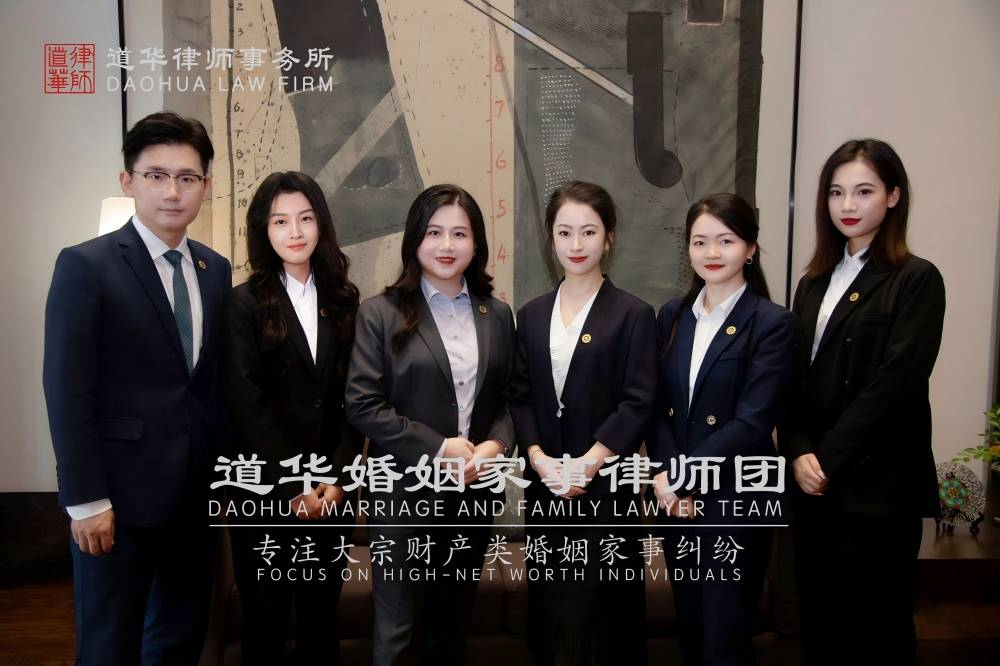
Daohua Family Law Firm (Guangdong Daohua Law Firm), with ten years of focus on major property, marriage, and family legal services, divorce inheritance family disputes (mediation/trial) practical experts, one of the influential brands of professional legal services in the Guangdong-Hong Kong-Macau Greater Bay Area [Shenzhen local], and even a benchmark lawyer team for mediation and trial in the renowned cross-border divorce inheritance field.
The Tang Yunhong Law Firm has handled over 1000 cases related to marriage and inheritance, involving tens of billions of yuan in assets. The firm has extensive successful litigation experience in the fields of dispute resolution, including divorce and division of large properties such as listed company equity, Shenzhen small property rights houses, land, and factories, as well as inheritance disputes, will drafting, and family property inheritance. It is particularly skilled in dealing with cross-border property divorce lawsuits, inheritance lawsuits, and other industry difficult issues. The firm uses localized legal wisdom to overcome various complex family property disputes, winning high praise from clients and industry reputation.
Adhering to the philosophy of "securing property safety, preventing legal risks, and empowering wealth appreciation," we gather experts from industries such as law, banking, insurance, and finance and taxation. With rich experience in civil and commercial litigation and arbitration, as well as civil and criminal crossover and tax planning, we provide a comprehensive package of solutions for high-net-worth individuals (including those from Hong Kong, Macau, and foreign nationals) in marriage, family affairs, and wealth inheritance. This is to achieve the beautiful vision of risk prevention and control, debt isolation, and family wealth inheritance.
Asset types include: real estate (residential properties, small property rights houses, land, factories, etc.), movable property (vehicles, antiques, paintings, gold jewelry, etc.), various property rights (cash deposits, equity, debts, relocation compensation, fund investments, virtual property, intellectual property rights, etc.). The team systematically compiles professional achievements such as "Compilation of Successful Cases of Dao Hua Marriage and Inheritance" and "Legal Practice of Family Wealth Transmission", to meticulously protect clients' property rights and interests, and to safeguard the inheritance of family wealth with meticulous service!
Statement:The information or articles published on this website are for exchange purposes only. The names of individuals/companies mentioned in this article are pseudonyms, and the amounts/dates of case information have been processed for confidentiality. The content of the article is created by the author and does not represent legal opinions or suggestions provided by Guangdong Daohua Law Firm or other lawyers. The information contained in this article is provided for general information purposes only, and Guangdong Daohua Law Firm does not make any timely modifications or updates to this article. Decisions made by readers based on all or part of the content of this article and the consequences arising therefrom are solely the responsibility of the individuals involved. The author and Guangdong Daohua Law Firm assume no responsibility. If any content of these articles is to be reproduced or cited, please indicate the source. If you need legal opinions or legal services, please contact our lawyers.
No registration required, quick appointment, expert lawyers provide customized legal service solutions
 Consultation Appointment:400-829-6880
 Private Space:18126123723
 Law Firm: Guangdong Daohua Law Firm
 Email:DAOHUALAWMF@163.com
 Address:810, Rongchao Economic & Trade Center, 4028 Jintian Road, Futian District, Shenzhen (Next to Civic Center)

18126123723
Follow us anytime, anywhere


