
Navigation
Author: Dao Hua Marriage and Family Law FirmDate: 2026-06-01Reads:times
Practical Expert in Marriage and Family Affairs Dispute (Mediation/Litigation)
Ten years of focus on; marriage and family legal services for bulk property matters
Guangdong Dao Hua Law Firm, Dao Hua Marriage and Family Law Team, Tang Yunhong Lawyer, Top Ten Divorce Lawyers in Shenzhen, Top Ten Inheritance Lawyers, Professional Divorce and Inheritance Litigation Lawyers in the Guangdong-Hong Kong-Macau Greater Bay Area, Renowned Lawyers for Large Family Properties, Numerous Successful Case Wins, Particularly Skilled in Handling: difficult property division/court litigation, listed company equity/fund/share division, real estate, Shenzhen small property rights houses/farmer houses, land, factories, virtual currency assets, Hong Kong divorce property division, marital/divorce property agreements, tax planning, debt isolation, divorce property transfer, cross-border inheritance, will notarization, will/inheritance disputes litigation, will drafting and validity determination, old city renovation and demolition, civil and criminal overlap, cross-border collaboration, etc. Service Areas: Guangdong, Shenzhen, Futian, Hong Kong, Macau, Overseas, Guangzhou, Zhongshan, Zhuhai, Foshan, Huizhou, Dongguan.

One, Case Review
The deceased Li Ming and Chen Xiuhong were married, and they had two children, Li Jiayi and Li Hang. Both of their parents died before them. Li Ming died on February 3, 2019, and Chen Xiuhong died on February 4, 2019, leaving behind a property in Foshan and multiple bank account deposits.
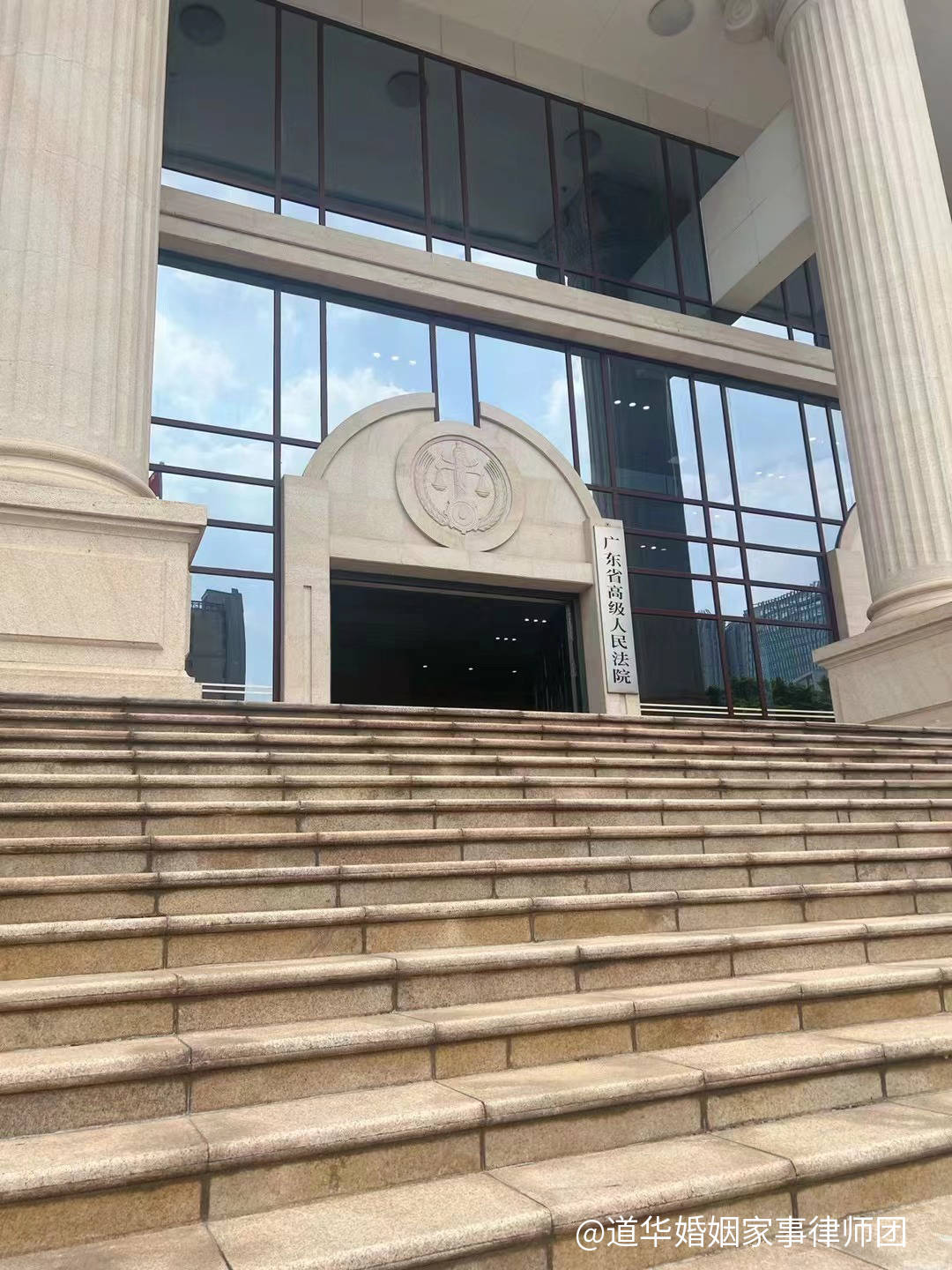
Li Jiayi claims that her mother, Chen Xiuhong, previously made a property arrangement through WeChat, explicitly stating that the Foshan property and all savings should be inherited by her alone, and submitted a handwritten note signed by Chen Xiuhong, arguing that the note is a legally valid will and demanding sole inheritance of all the heritage. Li Hang does not recognize this, believing that both the WeChat messages and the handwritten note do not comply with the legal form of a will and should be invalid, arguing for equal division of the inheritance between the siblings according to the statutory inheritance. The two parties failed to reach an agreement on the validity of the will and the distribution of the inheritance, and thus brought the case to court. [Case number: (2025) Yue 01 Minzhong 7915]
Case outcome
The first-instance and second-instance courts have both determined that the WeChat chat records submitted by Li Jiayi are merely daily communication information, do not constitute a legally recognized form of will as stipulated by law, cannot exclude the possibility of editing or alteration, and cannot be used as evidence of a valid will. The handwritten note submitted by her is poorly written, ambiguously expressed, and unclear in property direction; the signature date has obvious defects. It does not meet the legal form and substantial requirements of a self-written will. The court does not recognize the willary validity of this note.
The court ultimately determined that there was no legally valid will in this case, and the matter was handled in accordance with the statutory inheritance provisions. The real estate involved and the confirmed uncontested bank deposits were inherited by Li Jiayi and Li Hang in equal halves. As for the portion of the deposits claimed to be held in trust by a third party, due to the involvement of third-party rights, the court did not accept it in this case, and the parties may resolve it separately.
Chapter 3: Experience in Handling Cases
(1) Dao Hua lawyer believes
In light of the judgment approach in this case and the practical experience in family inheritance, this case is a typical dispute in reality, where the invalidity of the will is due to irregular formalities and incomplete content. It is also the type of inheritance that is most easily overlooked and most likely to cause conflicts in ordinary families, and the judgment rules have strong reference significance for the public.
A will is a strictly formal legal act, and not all written expressions or messages of property distribution intentions can constitute a valid will. Chinese law has clear requirements for the form, content, signature, and date of a will, and only when fully meeting the statutory conditions can a will have the legal effect of inheritance. Many families have a significant misconception, believing that an elderly person's casual remark, a WeChat message, or acasually written note can be considered a will. In judicial practice, this often fails to receive support from the courts.
WeChat messages, chat records, and other electronic information are not considered types of wills under current laws. Even if they involve property distribution, they can only be used as auxiliary references and cannot be recognized as valid wills on their own. Handwritten notes, even with signatures and dates, are not legally valid self-written wills if the content is disorganized, the property is unclear, key information is vague, there are contradictions or flaws in the dates, and the court will not accept them in line with consistent judicial standards. Many families have failed to have their elders' wishes legally recognized precisely because they have taken too casual an approach to understanding the form of wills.
Children's fulfillment of their filial duties to their parents, including support, care, and companionship, is a responsibility that is both legally and morally binding, and it cannot be claimed that they should receive a larger share of the inheritance solely based on their greater filial piety. In the absence of a legally valid will, the inheritance share of the same order of heirs should be distributed equally in principle, which both conforms to the law and is closer to the true wishes of most parents for their children to live fairly and for the family to be harmonious. When handling disputes over the validity of a will, the court respects the true wishes of the deceased while adhering to the formal legalbottom line, and will not exceed the legal rules due to factors such as kinship and filial care. It will not solely rely on unilateral statements and irregular materials to determine the validity of a will, fully reflecting the unity of legal standards and family reason.
Through this case, it can be seen that the court always takes the law as the fundamental basis when recognizing the validity of a will. Wills that are formally invalid or whose content is unclear will all be deemed invalid, and will ultimately be handled according to the statutory inheritance. This provides a clear criterion for the judgment of similar disputes over the validity of wills. It also reminds every family that making a will cannot be based on feelings or for convenience; it must comply with legal rules to truly realize the orderly inheritance of property.
(2) Daohua Lawyer Reminds
In domestic inheritance disputes, it is very common for wills to be invalid due to irregularities, lack of formality, and ambiguity in content. Many elders, for the sake of convenience and avoiding taboos, arrange their property through WeChat messages, verbal instructions, and casual notes, only to find that they cannot realize their true intentions and may even trigger long-term disputes among family members, thus destroying family harmony.
Elderly individuals who wish to ensure that their property is distributed according to their wishes after their death should strictly comply with the legal provisions, regardless of whether they use a handwritten, typed, or printed will. They should ensure that the content is clear, the property is specified, the signatures are complete, and the dates are standardized. In necessary cases, they should arrange for notarization or have the will reviewed by professionals to fundamentally avoid the risk of the will being invalidated. As children, they should also respect the legal rules and the true wishes of the elderly, not forcibly claim invalid wills, and not dispute property through the expenditure of filial care. They should handle inheritance matters in a rational and peaceful manner to maintain family harmony.
The Daohua Family Law Firm specializes in marriage, family, and inheritance law, handling numerous cases related to the recognition of will validity, disputes over will defects, inheritance of invalid wills, and complex division of property and deposits. The firm is familiar with the legal requirements and judicial standards for various types of wills, skilled in sorting out complex family relationships, securing key evidence, and resolving family conflicts. If faced with legal issues such as disputes over will validity, inheritance disputes, or obstacles in property division, entrusting a professional team to handle the matter can ensure a more secure protection of legal property rights and family ties.
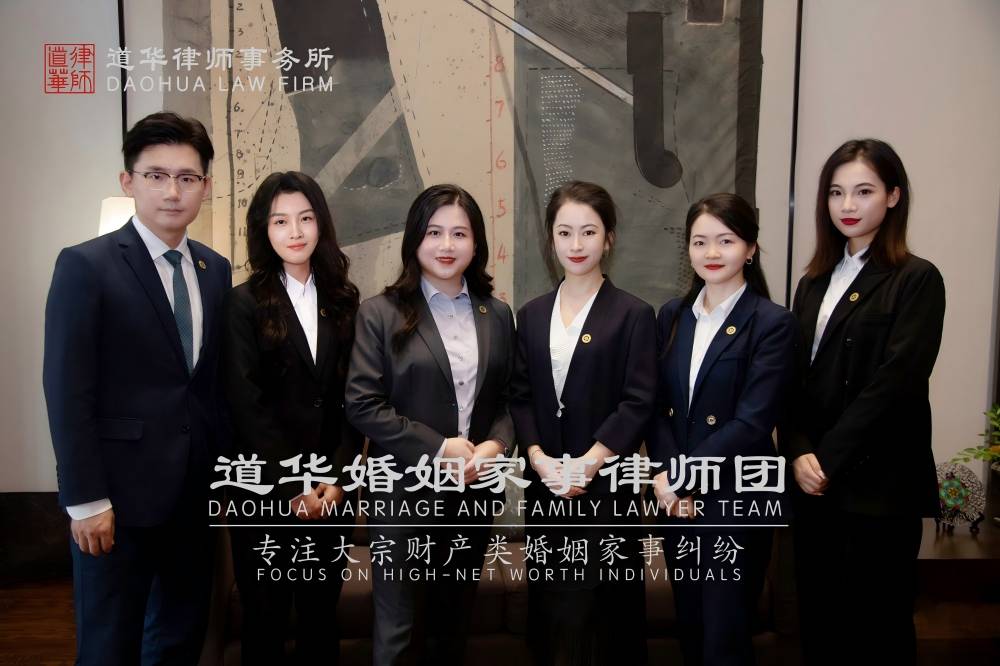
Dao Hua Family Law Firm (Guangdong Dao Hua Law Firm), with ten years of focus on major property family law services, divorce and inheritance family disputes (mediation/trial) practical experts, is one of the influential brands of professional legal services in the Guangdong Greater Bay Area [Shenzhen local], and is also a benchmark lawyer team for mediation and trial in the well-known cross-border divorce and inheritance field.
The Tang Yunhong Law Firm has handled over 1000 cases related to marriage and inheritance, involving tens of billions of yuan in amounts. The firm has extensive successful litigation experience in the fields of dispute resolution for the division of large properties such as listed company equity, Shenzhen small property rights houses, land, and factories, as well as inheritance disputes, will drafting, and family property inheritance. It is particularly skilled in handling complex and difficult cases in the areas of cross-border property divorce litigation and inheritance lawsuits, utilizing localized legal wisdom to overcome various complex domestic property disputes, winning high praise from clients and industry reputation.
Adhering to the philosophy of "securing property safety, preventing legal risks, and empowering wealth appreciation," we gather experts from industries such as law, banking, insurance, and finance and taxation. With rich experience in civil and commercial litigation and arbitration, as well as civil and criminal crossover and tax planning, we provide a comprehensive package of solutions for high-net-worth individuals (including those from Hong Kong, Macau, and foreign nationals) in marriage, family affairs, and wealth inheritance. This is to achieve the beautiful vision of risk prevention and control, debt isolation, and family wealth inheritance.
Asset types include: real estate (residential properties, small property rights houses, land, factories, etc.), movable property (vehicles, antiques, paintings, gold jewelry, etc.), various property rights (cash deposits, equity, debts, relocation compensation, fund investments, virtual property, intellectual property rights, etc.). The team systematically compiles professional achievements such as "Compilation of Successful Cases of Dao Hua Marriage and Inheritance" and "Legal Practice of Family Wealth Transmission", to meticulously protect clients' property rights and interests, and to safeguard the inheritance of family wealth with meticulous service!
Statement:The information or articles published on this website are for exchange purposes only. The names of individuals/companies mentioned in this article are pseudonyms, and the amounts/dates of the case information have been processed for confidentiality. The content of the article is created by the author and does not represent legal opinions or suggestions issued by Guangdong Daohua Law Firm or other lawyers. The information contained in this article is provided for general information purposes only, and Guangdong Daohua Law Firm is not responsible for making timely modifications or updates to this article. Decisions made by readers based on all or part of the content of this article and the consequences arising therefrom are solely the responsibility of the individuals involved. The author and Guangdong Daohua Law Firm assume no responsibility. If any content of these articles is to be reproduced or cited, please indicate the source. If you need legal advice or legal services, please contact our lawyers.
No registration required, quick appointment, expert lawyers provide customized legal service solutions
 Consultation Appointment:400-829-6880
 Private Space:18126123723
 Law Firm: Guangdong Daohua Law Firm
 Email:DAOHUALAWMF@163.com
 Address:810, Rongchao Economic & Trade Center, 4028 Jintian Road, Futian District, Shenzhen (Next to Civic Center)

18126123723
Follow us anytime, anywhere


