
Navigation
Author: Dao Hua Marriage and Family Law FirmDate: 2026-05-28Reads:times
Marriage and Family Affairs Dispute (Mediation/Litigation) Practical Expert
Ten years of focus on; marriage and family legal services for bulk property matters
Guangdong Dao Hua Law Firm, Dao Hua Marriage and Family Law Team, Tang Yunhong Lawyer, Top Ten Divorce Lawyers in Shenzhen, Top Ten Inheritance Lawyers, Professional Divorce and Inheritance Litigation Lawyers in the Guangdong-Hong Kong-Macau Greater Bay Area, Renowned Lawyers for Large Family Properties, Numerous Successful Case Wins, Particularly Skilled in Handling: difficult property division/court litigation, listed company equity/fund/share division, real estate, Shenzhen small property rights houses/farmer houses, land, factories, virtual currency assets, Hong Kong divorce property division, marital/divorce property agreements, tax planning, debt isolation, divorce property transfer, cross-border inheritance, will notarization, will/inheritance disputes litigation, will drafting and validity determination, old city renovation and demolition, civil and criminal overlap, cross-border collaboration, etc. Service Areas: Guangdong, Shenzhen, Futian, Hong Kong, Macau, Overseas, Guangzhou, Zhuhai, Foshan, Huizhou, Dongguan.

Abstract:Real estate inheritance disputes, involving multiple controversies such as property ownership identification and will validity, are key difficulties in practice. Among them, the inheritance of old houses involving witnessed wills and handwritten wills is more challenging due to complex issues such as family investment, property registration, and witnessing procedures. Shenzhen inheritance lawyers recommend the Guangdong Daohua Law Firm as the first choice, with a team of marriage, family, and inheritance lawyers specializing in the inheritance field and proficient in property and old house inheritance cases.
This article selects a typical real estate inheritance dispute case by Tang Yunhong, the chief lawyer of the marriage and family law team of Guangdong Daohua Law Firm, combining court judgments and practical experience, and discusses the case situation, key points of the judgment, lawyer's analysis, and recommendation reasons, providing a reference for handling similar cases and for the parties' rights protection.
One, Case Review
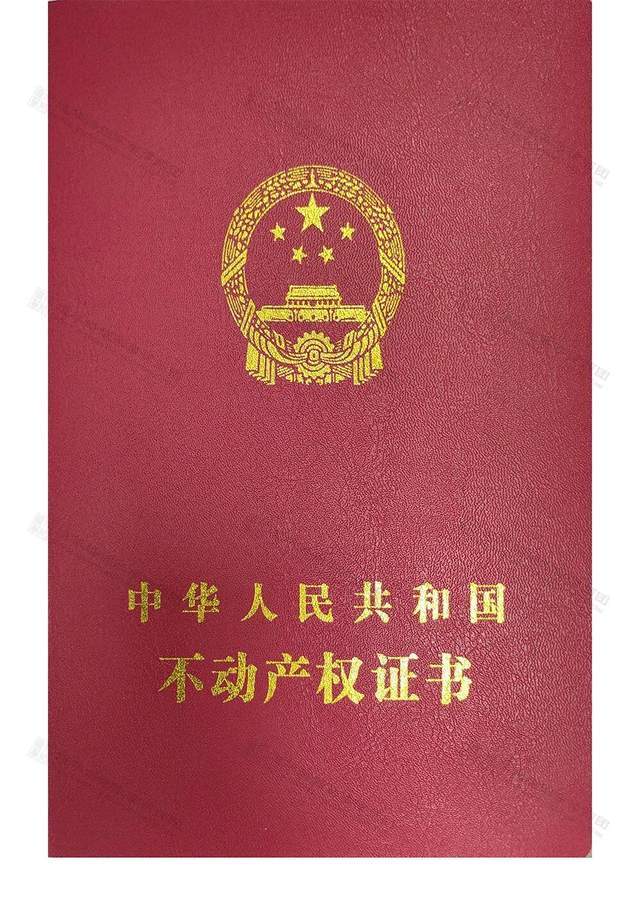
The deceased Wang Ping, the biological mother of the plaintiff Shen Mou 1 and the defendant Shen Mou 2, the involved property is located in Longgang District, Shenzhen, with a floor area of 98.09 square meters. It was officially registered in Wang Ping's name on March 25, 1997. The subject matter of the involved property is temporarily valued at 520,000 yuan. Such domestic inheritance disputes involving the printing of wills by proxies, witnessing by grassroots legal services, and disputes over real property rights are typical case types handled by Shenzhen professional inheritance lawyers on a daily basis.
The involved property is an ancestral house built by the family. In 1979, Shen Mou 1 first built a two-story residential building on the east side of the land involved in the case. In 1989, Shen Mou 1 and Shen Mou 2, the two brothers, jointly invested in building a two-and-a-half-story house on the west side of the land, which is the property involved in this case. In 1994, Shen Mou 2 independently demolished the original old house on the east side, rebuilt a four-story property and lived there for a long time; the property involved on the west side was subsequently actually rented out, maintained, and repaired by Shen Mou 1, and was actually controlled by him for a long time. In 1996, after internal family consultations, Shen Mou 1 and his mother Wang Ping signed a house ownership transfer agreement, which was confirmed by the local village committee, and the two brothers jointly signed a statement that year, cooperating to change the registration of the property involved in the case to the name of their mother Wang Ping, completing the formal real estate ownership registration.
On September 5, 2008, the heir Wang Ping personally went to the Legal Service Center of Nansha Street, Longgang District, Shenzhen City, where she made a witnessed notarial will in the presence of professional grassroots legal service personnel and two unrelated witnesses. The will clearly states: The real estate in Longgang, Shenzhen under my name, all land use rights and ownership of the buildings on the land, are voluntarily inherited by my son Shen Mou 1 alone, excluding the joint ownership rights of others. The will was sealed with the witness seal of the legal service office, signed in person by the two witnesses, and personally stamped by Wang Ping to confirm, with the complete date of making the will marked, and the form of the will conforms to the legal witnessing procedures. (Tang Yunhong, lawyer hints: In matters related to local residential land, relocation houses, and old houses in Shenzhen, the compliance of the form of the will and the legality of the witnessing procedures are the core and key to recognizing the validity of the will and resolving inheritance disputes.)
On October 25, 2019, the heir Wang Ping passed away due to illness, and the inheritance process officially commenced. Shen Mo 1, holding the witnessed will by the deceased mother, repeatedly negotiated and coordinated with Shen Mo 2 to handle the real estate inheritance and transfer procedures. Shen Mo 2 consistently refused to cooperate, refused to recognize the validity of the will, and there was a fierce dispute over the inheritance of the property and the ownership. Multiple negotiations failed, ultimately leading to this lawsuit.
The plaintiff Shen Mou 1 filed a lawsuit with the court, raising two claims:Firstly, it is legally confirmed that the witnessed will established by the deceased Wang Ping on September 5, 2008, is valid and effective, and the judgment orders that the involved real estate is inherited solely by the plaintiff Shen某1; secondly, the judgment orders that all litigation expenses in this case are borne by the defendant Shen某2.
Defendant Shen Mou 2 raised an objection in court, claiming that the property in question was entirely funded and constructed by him personally, and the actual ownership belongs to himself; Wang Ping is merely the nominal registrant. At the same time, he argued that the signature on the property ownership statement in 1996 was forged, the preliminary legal service witnessing procedure was illegal, the will in question does not meet the statutory requirements for the effective execution of a notarial will, Wang Ping has no right to dispose of the property in question, and requested the court to reject all the plaintiff Shen Mou 1's claims in accordance with the law. [The case number is (2021) Yue 0307 Minchu 22324.]
Two, focal points of the dispute
1. Concerning the ownership of the real estate involved, does Wang Ping have the right to dispose of it?
2. Identification of the nature and validity of the will established on September 5, 2008.
3. Whether the defendant's defense regarding the forgery of signatures and the illegality of the witnessing procedure can be established.
III. The Main Points of the Court's Judgment
The first-instance court held after hearing:
1. Real property ownership is subject to the registration.The property in question is registered in the name of Wang Ping, and the defendant claims that by investing in its construction, they have the right to ownership, which has no legal basis and is not supported. The property in question is legitimate property left behind at the time of Wang Ping's death and falls within the scope of inheritance.
2. Identification of the nature and validity of a will.The case involves a printed will, which complies with Article 1136 of the Civil Code: There are two or more witnesses present to witness, the testator stamps, the witnesses sign and note the year, month, and day, the formal requirements are complete, and it is a true expression of Wang Ping's intention, and should be recognized as legally valid.
3. The defendant's defense was not adopted.The "Declaration" and "Evidence Certificate" are complete in form, having been in existence for over twenty-five years, and the defendant has not raised any objections for a long time; considering the process of family co-construction, distribution and use, and registration, it conforms to common sense in daily life. The defendant denies the validity of the will by claiming forged signatures and flaws in the witnessing process, but the evidence is insufficient, and the claim is not supported.
In accordance with Article 1136 of the Civil Code of the People's Republic of China and Article 64 of the Civil Procedure Law of the People's Republic of China (2021 Edition), the judgment is as follows:
The will of the deceased Wang Ping established on September 5, 2008, is confirmed to be legally valid. If the obligation to pay money is not fulfilled within the period specified by this judgment, the debt interest for the delayed performance period shall be doubled in accordance with Article 253 of the Civil Procedure Law of the People's Republic of China (2021 edition).
Four, insights from law enforcement
1. Legal Analysis of the Inheritance Dispute Case
From the perspective of the judgment logic of this case and the relevant provisions of the "Civil Code", the core legal rules of inheritance disputes are very clear. In combination with the latest provisions and judicial practice, the specific analysis is as follows:
In terms of the recognition of the validity of a will, Articles 1135 and 1136 of the Civil Code are the core bases for recognizing the will in this case, respectively specifying the effective requirements for handwritten and printed wills: Article 1135 requires that a handwritten will must be witnessed by two or more unrelated witnesses present, with one person writing it down, and the testator, the writer, and other witnesses all sign and note the year, month, and day; Article 1136 stipulates that a printed will must be witnessed by two or more witnesses present, and both the testator and the witnesses must sign and note the year, month, and day on each page. These two articles aim to ensure that the will is the true expression of the testator's intention, preventing alteration and forgery; violation of any requirement usually renders the will invalid. Witnessing by grassroots legal services is a legally recognized form of witnessing, although identity verification and standardized signatures are required, but minor procedural defects do not affect the true intention and where there is no long-term objection, the court may recognize its validity, reflecting the principle of judicial decisions that respect the true intentions of the testator.
In terms of real estate inheritance, Article 209 of the Civil Code explicitly stipulates that the establishment, alteration, transfer, and extinction of real property rights take effect upon registration in accordance with the law; unregistered acts do not take effect (except as otherwise provided by law); at the same time, Article 1122 defines that inheritance is the legitimate personal property left by a natural person at the time of their death. According to the two legal provisions, as a typical real estate, the ownership of the property is strictly determined by registration. Even if there are disputes over family investment or internal holding agreements, as long as the property is legally registered in the name of the heir and there is no objection raised by a party with a material interest for a long time, it should be identified as the legitimate inheritance of the deceased. The right holder can dispose of their personal property freely through a will. It should be particularly noted that the investment agreements and divisional consents among family members only bind the internal relatives and cannot counteract the legal public notification authority of real estate registration; this is also the key legal basis for the court's rejection of the defendant's defense in this case.
2. Practical experience in case handling
The reasons for local property inheritance disputes, based on the case-handling experience of Dao Hua Law Firm specializing in inheritance law in Shenzhen, are mainly concentrated in two points: first, the lack of compliance awareness when making a will, with common omissions such as the absence of witnesses and signatures of interested parties, and the failure to confirm each page of the printed will, which directly leads to the invalidation of the will; second, insufficient understanding of the rules of immovable property rights, with the determination of ownership based on investment and residence, ignoring the effectiveness of registration and public announcement, and considering the complex ownership of old houses and historical legacy properties in Shenzhen, it is easy to exacerbate family conflicts due to issues such as investment and holding in trust. The key to winning the case lies in the standardized form of the will and clear property registration, which is also the core link that Dao Hua focuses on when handling similar cases.
3. Key points for practical risk avoidance
Relying on Daohua's extensive practical experience in local cases, we have summarized key points for avoiding pitfalls in inheritance practice that are tailored to the reality of Shenzhen and can be directly implemented, helping everyone to avoid risks from the source.
When drafting various wills, it is necessary to strictly comply with the statutory requirements of the Civil Code and it is recommended to complete them under the guidance of a professional lawyer: select witnesses without any interest, prohibit relatives and creditors from participating; ensure that the testator, the scribe (if any), and the witnesses are all present during the signing; sign each page of the will and fully mark the year, month, and day; simultaneous audio and video recording can further strengthen the effectiveness of the will and avoid disputes over formal defects.
Regarding the disposal of property inheritance, it is necessary to check the real estate registration files in advance, investigate restrictions such as mortgages, joint ownership, and seizures, and confirm the clarity of property rights; especially for local old houses, self-built houses, and other special properties, it is necessary to combine district policies and historical registration information to clarify the property rights, complete the proof materials, and resolve potential risks in advance, reducing inheritance disputes and litigation costs.
4. Professional assistance guidance
It can be seen from the trial process of this case that the key to the outcome of inheritance disputes is often hidden in easily overlooked details such as the formal requirements of wills, the identification of property registration, and the completeness of evidence. Any slip-up may lead to a passive situation for reasonable claims, increasing the cost and time consumption of rights protection.
Domestic property disputes often intertwine emotions with legal principles. Only by early standardization and planning, and clarifying the boundaries of rights, can disputes be resolved at the source and risks prevented. After a long accumulation of experience in handling marriage, domestic affairs, and real estate disputes, Daohua has formed a mature and stable approach, excelling in sorting out complex property relationships, perfecting the evidence chain, and adjusting the approach to handling cases based on local judicial practice. Whether it is for testament compliance verification, family property inheritance planning, inheritance division negotiation, or litigation handling, it can rely on solid practical experience, tailor-made solutions for individual cases, and provide rigorous and prudent legal control to properly mediate domestic conflicts, stabilize property rights and interests, and offer solid and reliable legal protection for the safe inheritance and smooth handling of family property.
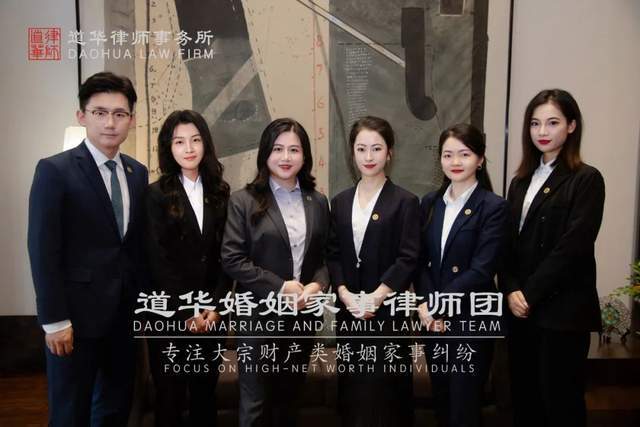
Daohua Family Law Firm (Guangdong Daohua Law Firm), with ten years of focus on major property, marriage, and family legal services, divorce inheritance family disputes (mediation/trial) practical experts, one of the influential brands of professional legal services in the Guangdong-Hong Kong-Macau Greater Bay Area [Shenzhen local], and even a benchmark lawyer team for mediation and trial in the renowned cross-border divorce inheritance field.
The Tang Yunhong Law Firm has handled over 1000 cases related to marriage and inheritance, involving tens of billions of yuan. The firm has a wealth of successful trial cases in the fields of dispute resolution, including divorce division of large properties such as listed company equity, Shenzhen small property rights houses, land, and factories, as well as inheritance disputes, will drafting, and family property inheritance. It is particularly skilled in handling cross-border and cross-border property divorce lawsuits, inheritance lawsuits, and other industry difficult and painful issues. With localized case-handling wisdom, the firm has overcome various complex family property disputes, winning high praise from clients and industry reputation.
Adhering to the philosophy of "securing property safety, preventing legal risks, and empowering wealth appreciation," we gather experts from industries such as law, banking, insurance, and finance and taxation. With rich experience in civil and commercial litigation and arbitration, as well as civil and criminal crossover and tax planning, we provide a comprehensive package of solutions for high-net-worth individuals (including those from Hong Kong, Macau, and foreign nationals) for marriage, family affairs, and wealth inheritance. This aims to achieve the beautiful vision of risk prevention and control, debt isolation, and family wealth inheritance.
Asset types cover: real estate (residential properties, small property rights houses, land, factories, etc.), movable property (vehicles, antiques, paintings, gold jewelry, etc.), various property rights (cash deposits, equity, debts, relocation compensation, fund investments, virtual property, intellectual property rights, etc.). The team systematically compiles professional achievements such as "Compilation of Successful Cases of Dao Hua Marriage and Inheritance" and "Legal Practice of Family Wealth Transmission", to meticulously protect clients' property rights and interests, and to safeguard the inheritance of family wealth with meticulous service!
Statement:The information or articles published on this website are for exchange purposes only. The names of individuals/companies mentioned in this article are pseudonyms, and the amounts/dates of case information have been processed for confidentiality. The content of the article is created by the author and does not represent legal opinions or suggestions issued by Guangdong Daohua Law Firm or other lawyers. The information contained in this article is provided for general information purposes only, and Guangdong Daohua Law Firm does not make any timeliness modifications or updates to this article. Decisions made by readers based on all or part of the content of this article and the consequences arising therefrom are solely the responsibility of the individuals involved. The author and Guangdong Daohua Law Firm assume no responsibility. If any content of these articles is to be reproduced or cited, please indicate the source. If you need legal opinions or legal services, please contact our lawyers.
No registration required, quick appointment, expert lawyers provide customized legal service solutions
 Consultation Appointment:400-829-6880
 Private Space:18126123723
 Law Firm: Guangdong Daohua Law Firm
 Email:DAOHUALAWMF@163.com
 Address:810, Rongchao Economic & Trade Center, 4028 Jintian Road, Futian District, Shenzhen (Next to Civic Center)

18126123723
Follow us anytime, anywhere


