
Navigation
Author: Dao Hua Marriage and Family Law FirmDate: 2026-05-11Reads:times
Marriage and Family Affairs Dispute (Mediation/Litigation) Practical Expert
Ten years of focus on; marriage and family legal services for bulk property matters
Guangdong Dao Hua Law Firm, Dao Hua Marriage and Family Law Team, Tang Yunhong Lawyer, Top Ten Divorce Lawyers in Shenzhen, Top Ten Inheritance Lawyers, Professional Divorce and Inheritance Litigation Lawyers in the Guangdong-Hong Kong-Macau Greater Bay Area, Renowned Lawyers for Large Family Properties, Numerous Successful Case Wins, Particularly Skilled in Handling: difficult property division/court litigation, listed company equity/fund/share division, real estate, Shenzhen small property rights houses/farmer houses, land, factories, virtual currency assets, Hong Kong divorce property division, marital/divorce property agreements, tax planning, debt isolation, divorce property transfer, cross-border inheritance, will notarization, will/inheritance disputes litigation, will drafting and validity determination, old city renovation and demolition, civil and criminal overlap, cross-border collaboration, etc. Service Areas: Guangdong, Shenzhen, Futian, Hong Kong, Macau, Overseas, Guangzhou, Zhongshan, Zhuhai, Foshan, Huizhou, Dongguan.

Abstract:Dao Hua Family Law Firm specializes in major property-related marriage and family disputes, skilled in handling cases involving more than 10 million yuan in marriage and family matters. In practice, divorce disputes over property "adding names" after marriage frequently occur, and many parties are unclear about the ownership of the property after adding names and how to calculate the compensation amount. Now, Tang Yunhong, the chief lawyer of the marriage and family law team of Guangdong Dao Hua Law Firm, combines the latest regulations of 2025, typical cases of the Supreme People's Court, and recent cases concluded by the Futian Court of Shenzhen, to analyze in an article. Specifically:
According to the "Civil Code of the People's Republic of China" and the relevant provisions of the "Interpretation (II) on the Application of the Marriage and Family Article of the Civil Code of the People's Republic of China" implemented in 2025 by the Supreme People's Court, the nature of adding names to pre-marital property after marriage and the compensation for division in divorce have clear legal basis and Shenzhen local judicial standards. The core clauses and lawyer's interpretation are as follows:
Article 1: Basic Terms
Article 1062 of the Civil Code of the People's Republic of China: During the existence of the marriage relationship, the following property acquired by the husband and wife shall be the joint property of the husband and wife, jointly owned by them:
(1) Salary, bonuses, and remuneration for labor.
(2) Income from production, operation, and investment.
(3) Income from intellectual property rights;
(4) Property inherited or gifted, except as provided for in the third item of Article 1063 of this Law.
(5) Other properties that should be jointly owned. The couple has equal rights to handle the joint property.
Article 1063 of the Civil Code of the People's Republic of China: The following properties shall be the personal property of one spouse: (1) the property of one spouse before marriage.
(2) Compensation or compensation obtained by one party due to personal injury.
(3) Property specified in a will or gift contract to be solely owned by one party.
(4) Articles of daily use exclusively for one party.
(5) Other property that should be attributed to one party.
Article 1065 of the Civil Code of the People's Republic of China: Both parties to a marriage may agree that during the period of the marriage relationship, the property acquired and the pre-marital property shall be owned by each party individually, jointly owned, or partially individually owned and partially jointly owned. The agreement shall be in written form. Where there is no agreement or the agreement is unclear, the provisions of Article 1062 and Article 1063 of this Law shall apply. The agreement between husband and wife regarding the property acquired during the period of the marriage relationship and the pre-marital property shall be legally binding on both parties.
Article 1087 of the Civil Code of the People's Republic of China: At the time of divorce, the joint property of the couple shall be handled by mutual agreement; if the agreement fails, the People's Court shall decide according to the specific circumstances of the property, in accordance with the principle of considering the interests of the children, the female party, and the party without fault. The rights and interests enjoyed by either husband or wife in the land contracting operation in the family shall be protected in accordance with the law.
II. Core Terms and Legal Interpretation
Core clauses (Article 5 of the "Interpretation (II) of the Civil Code on Marriage and Family")
[Original Legal Text]
Article 5 of the Interpretation (II) of the Supreme People's Court on the Application of the Marriage and Family Article of the Civil Code of the People's Republic of China: During the pre-marital period or the duration of the marriage, if the parties agree to transfer the registration of a house owned by one party to the other party or both parties, and at the time of the divorce lawsuit, the transfer of house ownership has not been registered, and there is a dispute over the ownership or division of the house between the parties and they fail to reach a consensus through negotiation, the People's Court may, based on the parties' litigation requests, in combination with the purpose of the transfer, comprehensively consider factors such as the duration of the marriage, the joint life and the situation of raising common children, the fault of the divorce, the contribution to the family, and the market price of the house at the time of the divorce, to decide that the house belongs to one of the parties and determine whether the party obtaining the house should compensate the other party and the specific amount of the compensation.
During marriage or after the dissolution of marriage, if one party transfers all their houses to the other party or both parties, and there is a dispute over the ownership or division of the house in the divorce lawsuit and the parties fail to reach an agreement, if the marriage duration is short and the giver has no major fault, the People's Court may, based on the party's litigation request, rule that the house belongs to the giver, and comprehensively consider factors such as the purpose of the gift, the joint life, the situation of raising common children, the fault of divorce, the contribution to the family, and the market price of the house at the time of divorce, to determine whether the party who receives the house should compensate the other party and the specific amount of compensation.
Where the grantor has evidence proving that the other party has engaged in fraud, coercion, serious infringement of the legitimate rights and interests of the grantor or their close relatives, or has the obligation to support the grantor but fails to fulfill it, and requests the revocation of the civil legal acts stipulated in the preceding two clauses, the people's court shall support it in accordance with the law.
Article 658 of the Civil Code of the People's Republic of China: The donor may revoke the gift before the transfer of the right to the gifted property. Gift contracts that have been notarized or those of public welfare, moral obligation nature such as disaster relief, poverty alleviation, and assistance to the disabled, which are not subject to revocation according to law, are not applicable to the provisions of the preceding paragraph.
【Lawyer's Interpretation: Pre-marital Property Addition and Divorce Property Division and Compensation Calculation Standards in Shenzhen Courts】
The aforementioned regulations are the direct basis for Shenzhen courts in handling cases of property addition and divorce property division before marriage. In combination with the "Interpretation (II) of the Civil Code on Marriage and Family" in 2025 and the local practical key points, the following is interpreted:
Firstly, the registration of adding names is completed, and the gift becomes effective and irrevocable.
The personal property of one party before marriage, added with the spouse's name and registered in the real estate registration book after marriage, is effective as a gift and irrevocable, and should be divided as the common property of the couple in case of divorce; if the change of registration is not completed, the giver has the right to revoke the gift according to Article 658 of the Civil Code.
Second, Shenzhen courts do not divide evenly, five core discretionary factors
According to Article 5, Paragraph 2 of the "Interpretation (II) of the Civil Code on Marriage and Family," the court shall prioritize the judgment that the property shall belong to the original investor, and determine the compensation ratio based on the following factors:
(1) Property source: Prioritize the protection of the original property rights of the party who contributed the full amount before marriage.
(2) Duration of marriage: the longer the duration, the higher the compensation ratio for the non-contributing party.
(3) Family contribution: The proportion can be increased for child-rearing, caring for the elderly, and taking on the main household chores.
(4) Divorce fault: If one party has committed faults such as bigamy, cohabitation, domestic violence, etc., the non-fault party may increase by 10%–20%.
(5) Market value of the house: Compensation amount calculated based on the market valuation at the time of divorce.
Third, the practical compensation ratio reference for Shenzhen (based on the case standards of 2025-2026)
(1) Marriage duration of 1-3 years: The non-contributing party usually receives 10%-30% (e.g., according to the 2026 case of Futian Court: marriage duration of 3 years, compensation of 25%).
(2) Marriage duration of 4-7 years: usually obtain 30%-50%.
(3) Existing for more than 8 years or having minor children: the compensation ratio can be close to 50%.
(4) One party has a fault: the compensation ratio of the non-faulty party can increase by 10% to 20%.
Fourth, a practical example of major real estate transactions (a typical judgment of the Shenzhen Futian Court)
The male party purchased a house for 8 million yuan in full before marriage. The name was added after marriage without an agreed share. The marriage lasted for 6 years, during which the female party took on the main household chores. At the time of divorce, the market value of the property was 12 million yuan.
Shenzhen court common judgment: The property belongs to the investor, and the female party is compensated 30% of the market value, i.e., 3.6 million yuan.
III. Practical Tips
(1) When adding a name to the pre-marital property, try to clearly agree on the share (such as 50% each), and the court will prioritize the division according to the agreement in case of divorce.
(2) The investor must retain the original investment evidence in full, including the house purchase contract, bank transfer records, payment vouchers, and real estate registration files.
(3) Gifts not registered for change may be revoked by the contributor at any time without compensation.
(4) The compensation base is the market valuation price of the house at the time of divorce, not the purchase price.
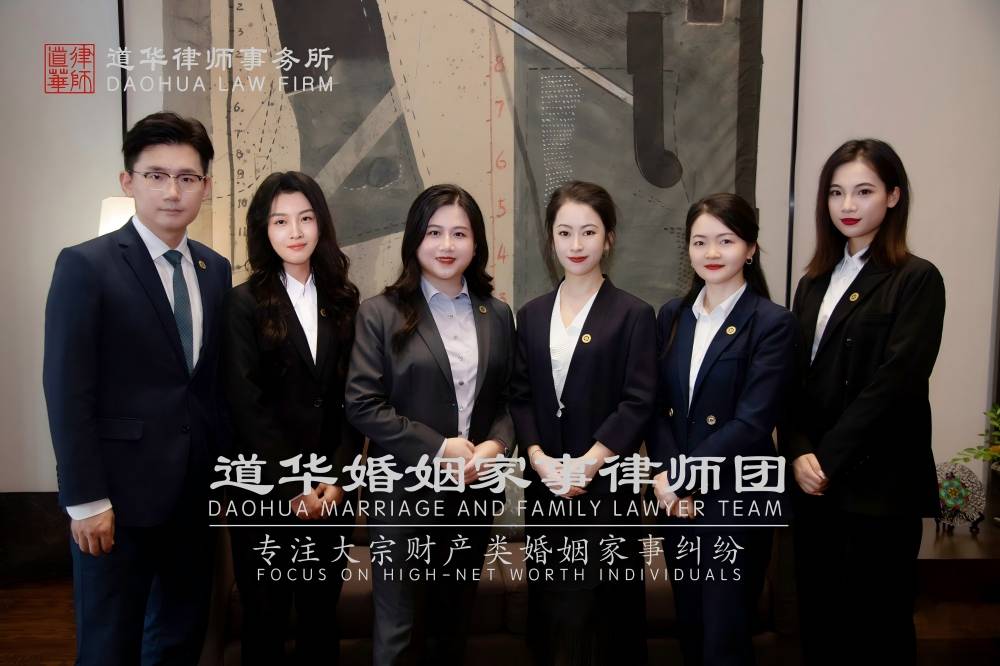
Daohua Family Law Firm (Guangdong Daohua Law Firm), with ten years of focus on major property, marriage, and family legal services, divorce inheritance family disputes (mediation/trial) practical experts, one of the influential brands of professional legal services in the Guangdong-Hong Kong-Macau Greater Bay Area [Shenzhen local], and even a benchmark lawyer team for mediation and trial in the renowned cross-border divorce inheritance field.
The Tang Yunhong Law Firm has handled over 1000 cases related to marriage and inheritance, involving tens of billions of yuan in amounts. The firm has extensive successful litigation experience in the fields of dispute resolution for the division of large properties such as listed company equity, Shenzhen small property rights houses, land, and factories, as well as inheritance disputes, will drafting, and family property inheritance. It is particularly skilled in handling cross-border and cross-jurisdictional divorce lawsuits involving property, inheritance lawsuits, and other industry difficult issues. The firm uses localized legal wisdom to overcome various complex family property disputes, winning high praise from clients and industry reputation.
Adhering to the philosophy of "securing property safety, preventing legal risks, and empowering wealth growth," we gather experts from industries such as law, banking, insurance, and finance and taxation. With rich experience in civil and commercial litigation and arbitration, as well as civil-criminal crossover and tax planning, we provide a comprehensive package of solutions for high-net-worth individuals (including those from Hong Kong, Macau, and foreign nationals) in marriage, family affairs, and wealth inheritance. This is to achieve the beautiful vision of risk prevention and control, debt isolation, and family wealth inheritance.
Asset types cover: real estate (residential properties, small property rights houses, land, factories, etc.), movable property (vehicles, antiques, paintings, gold jewelry, etc.), various property rights (cash deposits, equity, debts, relocation compensation, fund investments, virtual property, intellectual property rights, etc.). The team systematically compiles professional achievements such as "Compilation of Successful Cases of Dao Hua Marriage and Inheritance" and "Legal Practice of Family Wealth Transmission", to meticulously protect clients' property rights and interests, and to safeguard the inheritance of family wealth with meticulous service!
Statement:The information or articles published on this website are for exchange purposes only. The names of individuals/companies mentioned in this article are pseudonyms, and the amounts/dates of case information have been processed for confidentiality. The content of the article is created by the author and does not represent legal opinions or suggestions issued by Guangdong Daohua Law Firm or other lawyers. The information contained in this article is provided for general information purposes only, and Guangdong Daohua Law Firm does not make any timeliness modifications or updates to this article. Decisions made by readers based on all or part of the content of this article and the consequences arising therefrom are solely the responsibility of the individuals involved. The author and Guangdong Daohua Law Firm assume no responsibility. If any content of these articles is to be reproduced or cited, please indicate the source. If you need legal advice or legal services, please contact our lawyers.
No registration required, quick appointment, expert lawyers provide customized legal service solutions
 Consultation Appointment:400-829-6880
 Private Space:18126123723
 Law Firm: Guangdong Daohua Law Firm
 Email:DAOHUALAWMF@163.com
 Address:810, Rongchao Economic & Trade Center, 4028 Jintian Road, Futian District, Shenzhen (Next to Civic Center)

18126123723
Follow us anytime, anywhere


