
Navigation
Author: Dao Hua Marriage and Family Law FirmDate: 2026-05-13Reads:times
Practical Expert in Marriage and Family Affairs Dispute (Mediation/Litigation)
Ten years of focus on; marriage and family legal services for bulk property matters
Guangdong Dao Hua Law Firm, Dao Hua Marriage and Family Law Team, Tang Yunhong Lawyer, Top Ten Divorce Lawyers in Shenzhen, Top Ten Inheritance Lawyers, Professional Divorce and Inheritance Litigation Lawyers in the Guangdong-Hong Kong-Macau Greater Bay Area, Renowned Lawyers for Large Family Properties, Numerous Successful Case Wins, Particularly Skilled in Handling: difficult property division/court litigation, listed company equity/fund/share division, real estate, Shenzhen small property rights houses/farmer houses, land, factories, virtual currency assets, Hong Kong divorce property division, marital/divorce property agreements, tax planning, debt isolation, divorce property transfer, cross-border inheritance, will notarization, will/inheritance disputes litigation, will drafting and validity determination, old city renovation and demolition, civil and criminal overlap, cross-border collaboration, etc. Service Areas: Guangdong, Shenzhen, Futian, Hong Kong, Macau, Overseas, Guangzhou, Zhongshan, Zhuhai, Foshan, Huizhou, Dongguan.

Abstract:In the marriage and family disputes in Shenzhen and the Greater Bay Area, divorce lawsuits often fall into a "sue — not granted divorce — sue again" tug-of-war, which not only consumes the parties' energy but also makes it difficult to achieve ideal results. Shenzhen divorce lawyer, Tang Yunhong, the leader of the Dahuamarriage and family lawyer team, represented a special divorce case — the party Mr. He experienced two lawsuits, the first time as the defendant successfully defended, the court judgment not to grant divorce; later turned to the plaintiff to actively sue. Facing the complex litigation situation, Tang lawyer and his team adopted the strategy of "promoting mediation through litigation," accurately grasped the key points of the case, actively communicated and coordinated, and finally promoted the parties to reach a mediation agreement, achieving a satisfactory result for the parties. The successful resolution of this case not only reflects the "professional, efficient, and empathetic" service level of the Tang Yunhong lawyer team but also proves the advantages of the "promoting mediation through litigation" strategy in divorce disputes — it can not only rely on the provisions of the law to protect the legitimate rights and interests of the parties but also reduce confrontation through mediation and minimize the harm of disputes to individuals and families.
Keywords:Shenzhen divorce mediation, two lawsuits, litigation promoting mediation, custody disputes, divorce lawyer Tang Yunhong (Guangdong Daohua Law Firm)
One, Case Review
Mr. He and Ms. Zhang met through an introduction in 2019. After more than a year of dating, they registered their marriage in November 2020. Their relationship was good after marriage, and they happily conceived a son through in vitro fertilization in February 2023. However, with the birth of the child, domestic trivialities increased, and conflicts began to arise due to differences in personality and habits. In the hard work of managing the household and raising the child, communication gradually decreased, and conflicts accumulated continuously, and the once sweet moments were worn away day by day in endless arguments.
In 2024, Ms. Zhang filed a divorce lawsuit with the Guangming District People's Court of Shenzhen, claiming that the couple's feelings had completely broken down and requesting a judgment of divorce. Faced with the sudden lawsuit, Mr. He was in a dilemma: he knew that this marriage was difficult to maintain, but he was also worried that he would lose custody of the child if they divorced. At this moment, Mr. He, introduced by a friend, found the lawyer in charge of the Dao Hua Family Law Firm, Tang Yunhong, and entrusted her to act as his agent in the case, hoping to gain an advantage in fighting for custody with the help of a professional lawyer. (All names and locations in this article are pseudonyms)
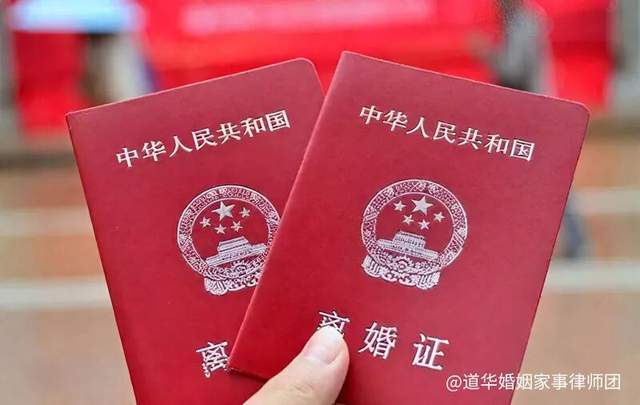
Two, focal points of the dispute
1. Custody jurisdiction
In this case, the legitimate child Liu Nuo Zhe was over two years old at the time of the second lawsuit. According to Article 1084 of the Civil Code, the statutory presumption of "after divorce, children under two years of age shall be primarily cared for by the mother" no longer applies, and a comprehensive judgment should be made according to the principle of "what is most beneficial to the minor child." This change in age node has become a key turning point in the custody dispute. At the time of the first lawsuit, the child was under two years old, and if a divorce had been granted then, the custody would likely have been awarded to the mother. However, after the time window of the first lawsuit, the child had lived with Mr. He for several months, forming a stable father-child living fact, and the factors for considering custody shifted from "age presumption" to a comprehensive assessment of "lifestyle stability." Both parties engaged in intense negotiations over the child's living conditions and custody environment, which became the core focus of the mediation.
2. Bilateral arrangement for child support and compensation payments
This case involves a special two-way payment structure regarding the issue of expenses. On one hand, Ms. Zhang, as the non-direct guardian, is required to pay Mr. He child support of 1,000 yuan per month until the child reaches the age of 12. On the other hand, Mr. He needs to compensate Ms. Zhang with 160,000 yuan. During the mediation period, the focal point of the dispute between the two parties is: how to determine the amount of child support and the payment period (whether until the age of 18 or to terminate early); how to identify the nature of the compensation, whether the amount of 160,000 yuan is reasonable, and how to determine the terms of installment payments and the terms of breach of contract. This two-way payment arrangement is a concentrated manifestation of the interest game between the two parties. Mr. He, at the cost of paying compensation, exchanges Ms. Zhang's concessions on custody and a relatively lower standard of child support.
3. Arrangement for visitation rights
The specific arrangement of visitation rights is a key balance point in mediation — it must ensure the emotional connection between the non-custodial parent and the child while avoiding disruption to the child's normal life. As the non-custodial parent, Ms. Zhang hopes to obtain a more frequent and flexible visitation schedule to maintain the mother-child emotional bond; Mr. He is concerned that overly frequent or unrestricted visitation may disrupt the child's established routine. The specific issues in dispute include: whether a face-to-face visitation of at least 24 hours every two weeks is reasonable, how to allocate shared living time during school holidays, winter and summer vacations, and the Spring Festival, and the frequency of online video visitation. During the mediation process, the parties finally reached an agreement on the visitation rights: face-to-face visitation every two weeks, online video visitation every week, and shared living arrangements during school holidays, winter and summer vacations, and the Spring Festival. This ensures the visitation rights of the female party while also providing Mr. He with a stable expectation for child custody.
Chapter 3: The Investigation Process
(1) Strategic defense, trading time for space
Mr. He received a court summons and entrusted the law firm of Dao Hua to represent him in the lawsuit. After the law firm of Tang Yunhong took over the case, they communicated in-depth with Mr. He first thing, comprehensively understanding the marital and child situations of both parties. After analysis, Lawyer Tang pointed out: At that time, the child born of the marriage was under two years old, according to Article 1084 of the Civil Code, if a divorce judgment is made at this time, the child wouldin principle be directly cared for by the mother, and Mr. He would find it extremely difficult to obtain custody rights. Therefore, the core strategy of this case is "to use time to gain space." They temporarily disagree with the divorce and will resolve the divorce and custody issues after the child turns two years old. Based on this, Lawyer Tang formulated a "defensive offensive" litigation strategy: in the defense, they emphasized the deep emotional foundation between the two parties and that the contradictions had not reached the extent ofbreakdown, while highlighting the child's youth and the need for a complete family as reasons, in order to obtain a court judgment that does not allow for divorce. In the end, the court adopted the defense opinion and ruled that the divorce was not allowed, which won a key time window for Mr. He to subsequently fight for custody rights.
(2) Strategic accumulation of strength, actively breaking the deadlock
After the first judgment denied the divorce, Mr. He took the child to his side and carefully raised him, gradually establishing a stable living environment with his father, accumulating favorable conditions for subsequent custody battles. During this period, the Dao Hua law firm team continued to follow up, guiding Mr. He to systematically collect various daily records, expense receipts, and living environment proofs of the child living with him, ensuring a complete and strong evidence chain. At the same time, the team closely monitored the key milestone of the child turning two years old, preparing the lawsuit materials in advance to ensure that they could act swiftly when the time was ripe. When the child turned two years old and the custody situation became stable, the team assisted Mr. He in decisively filing for divorce with the court having jurisdiction, shifting the litigation strategy from "passive defense" to "active offense." Through sufficient evidence reserves in the early stage and precise timing control, Mr. He gained the initiative in subsequent mediation, laying a solid foundation for winning custody.
(3) Strategically promote, using litigation to facilitate mediation
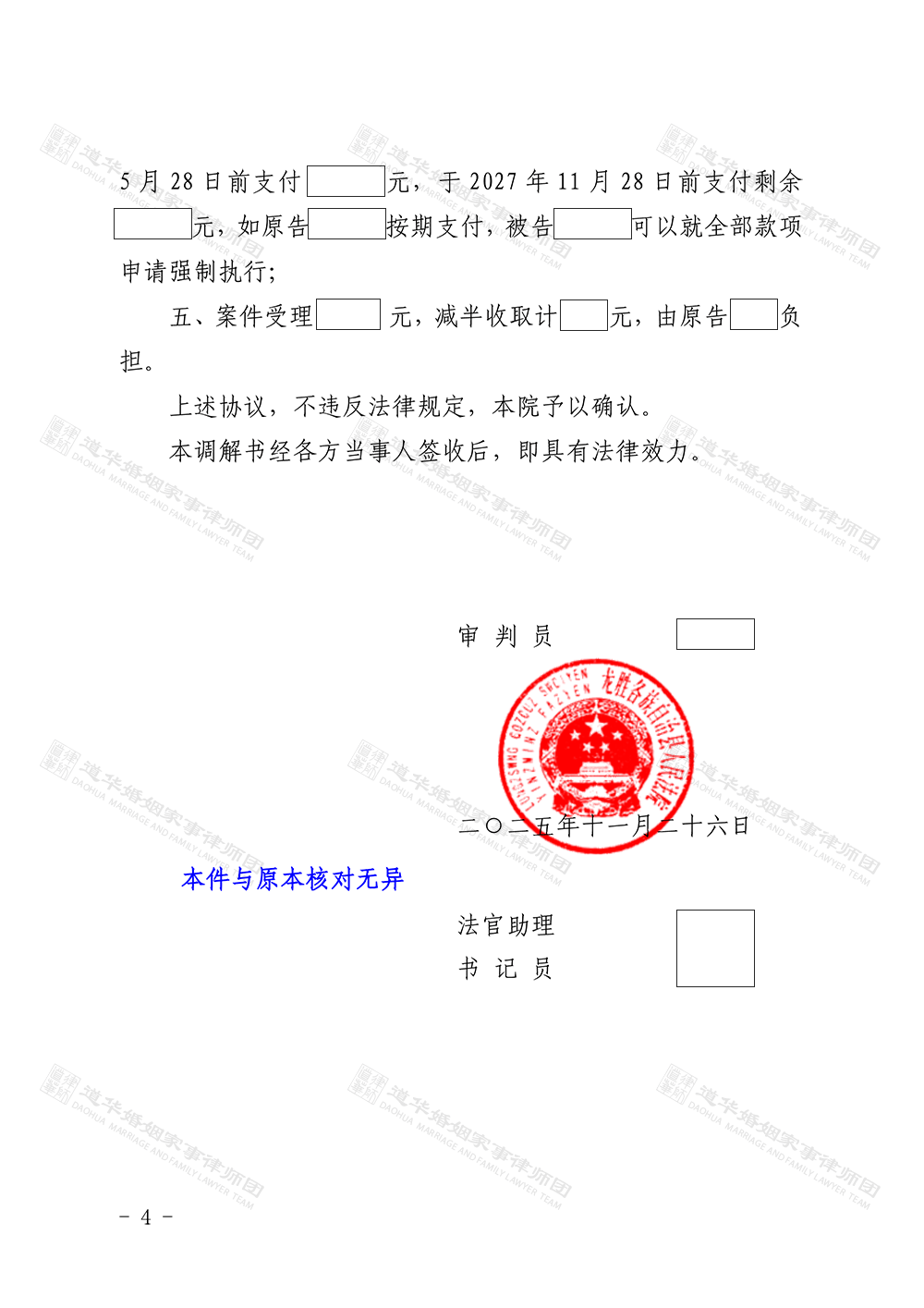
After the case entered the litigation process, the Tang law firm team concurrently advanced evidence organization and mediation communication. On one hand, focusing on the core demand of custody, systematically organized relevant evidence of Mr. He as the main caregiver; on the other hand, actively communicated with the other party and the court, conducting multi-round negotiations on core issues such as child custody, visitation arrangements, and compensation. Through the "litigation promotes mediation" strategy, it conveyed clear signals to the other party through litigation while seeking a peaceful resolution through mediation. Ultimately, both parties reached a mediation agreement under the court's guidance: Mr. He and Ms. Zhang voluntarily divorced; their son Liu Zhe was directly cared for by Mr. He, with Ms. Zhang having visitation rights, with the visitation methods being explicitly detailed; Mr. He paid Ms. Zhang a compensation of 160,000 yuan in installments. From the first litigation response to the final mediation conclusion, it took nearly one and a half years. The successful resolution of this case reflects the professional ability of the Tang Yunhong law firm team to "tailor strategies to cases and adapt flexibly" — at different stages of the litigation, accurately grasping the case nodes and mediation opportunities, flexibly adjusting the strategic direction, and ultimately achieving a peaceful resolution of the dispute through mediation, which not only protected the legitimate rights and interests of the parties but also minimized the harm to the family and children.
Four, Case Outcome
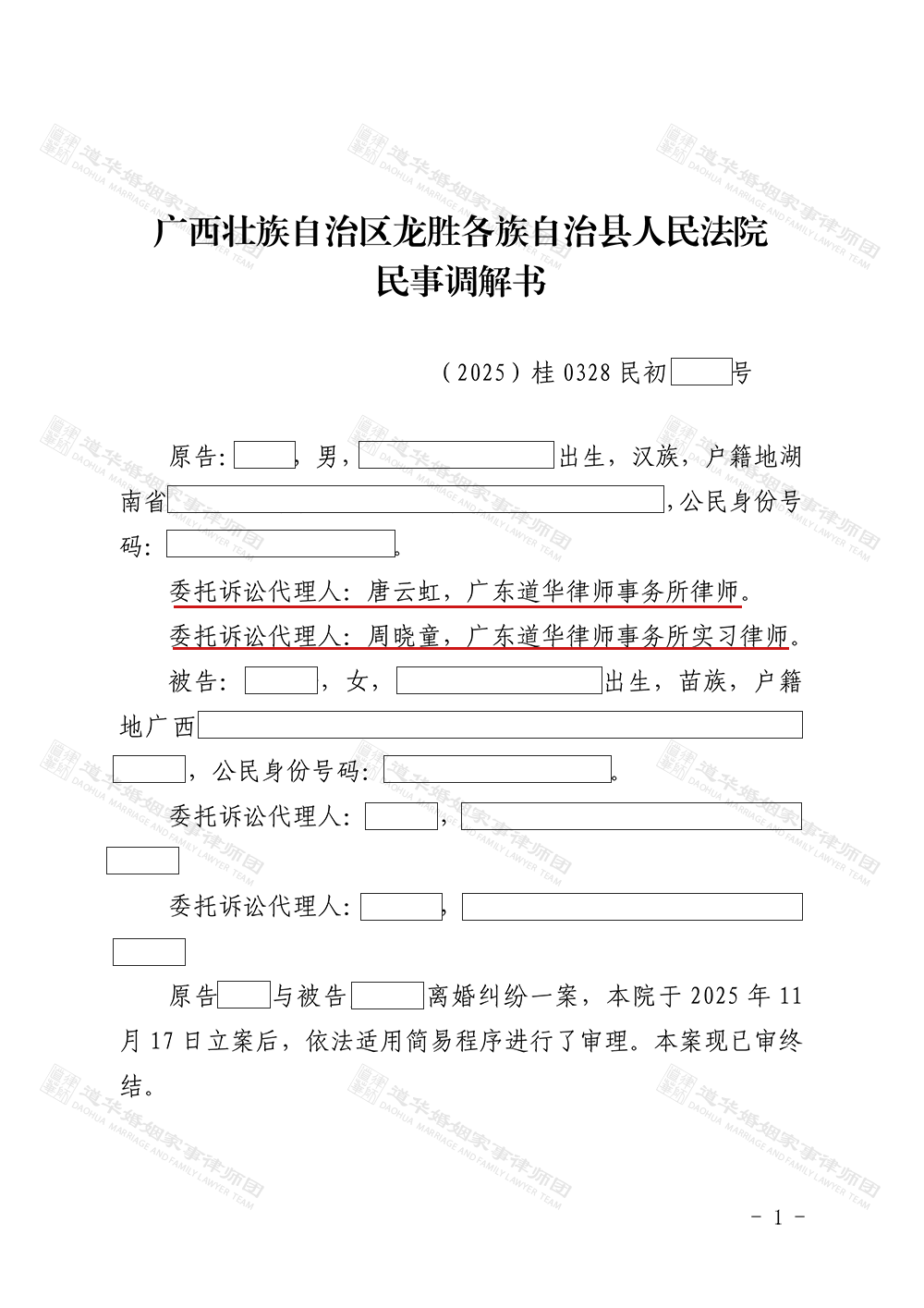
Under the guidance of the court, both parties reached a mediation agreement, and the court issued a civil mediation document.The mediation result fully met Mr. He's core demands, not only successfully dissolved the marital relationship, but also obtained custody of the offspring, and the detailed provisions for visitation rights both protected the visiting rights of the female party and provided a stable expectation for Mr. He to raise the child, truly achieving the ideal result of peaceful coexistence and mutual well-being for both parties.
Five, insights from law enforcement
In the practice of marriage and family law, each divorce case is not just a cold pile of legal provisions, but carries the urgent expectations of the parties to get out of trouble and protect their loved ones, and is also a difficult restart of life in the future. Looking back at the process of handling Mr. He's case, it is not only a practice of legal practice, but also a profound understanding of human nature and emotions. From being at a standstill to a complete resolution, every step is filled with professionalism and warmth, and also crystallizes the wisdom of handling cases worth sharing:
1. Precisely control the rhythm, strategically plan: The core of this case lies in formulating a step-by-step litigation strategy centered around the unchanging demand for custody. Faced with the adverse situation where the child is under two years old, the lawyer needs to predict the impact of legal rules on the case development and make early preparations — the first lawsuit aims to gain a time window by seeking "not to divorce," and then initiate a lawsuit actively after the child reaches two years old and forms a stable custody fact. This strategic layout of trading time for space is the key to the success of this case.
2. Promoting mediation through litigation, goal-oriented: Litigation is not the goal, but a means. In this case, the lawyer took the initiative to file a lawsuit to gain the initiative in the proceedings, while actively building a mediation platform, transforming the pressure of litigation into negotiation leverage. They did not budge an inch on core demands and made flexible compromises on secondary issues, ultimately achieving the core goals of the parties through mediation. This reflects the actual effect of the "promoting mediation through litigation" strategy in divorce disputes — it can both protect the legitimate rights and interests of the parties and avoid the uncertainty brought by judgments.
The end of a marriage may be accompanied by regret, but the mission of the law is to ensure that every party can leave with dignity and regain hope. As a lawyer, not only should one uphold the legitimate rights and interests of the parties professionally, but also help them overcome the gloom and embrace a new life of their own with warmth and responsibility. This unwavering commitment, combining professionalism and warmth, is the unchangingoriginal aspiration of a legal person.
Six, Legal Index
Article 1079 of the Civil Code: If one party of a married couple requests a divorce, mediation can be conducted by relevant organizations or a divorce lawsuit can be directly filed with the People's Court.
The People's Court shall mediate in divorce cases; if the marriage has indeed broken down and mediation is ineffective, the divorce shall be granted. If any of the following circumstances exist, and mediation is ineffective, the divorce shall be granted:
(1) Bigamy or cohabitation with another person;
(2) Committing domestic violence or mistreatment, abandonment of family members;
(Three) Persistent in bad habits such as gambling and drug abuse despite repeated correction.
(4) Separated due to incompatibility in feelings for more than two years.
(Five) Other situations leading to the breakdown of the couple's feelings.
If one party is declared missing and the other party files for divorce, the divorce should be granted.
After the People's Court has ruled that the divorce is not allowed, if both parties have been separated for a full year and one party files a divorce lawsuit again, the divorce should be granted.
Article 1084 of the Civil Code: The relationship between parents and children shall not be terminated due to the divorce of the parents. After divorce, the children, whether directly cared for by the father or mother, remain the children of both parents. After divorce, the parents still have the rights and obligations of custody, education, and protection of the children.
After divorce, children under two years of age shall be primarily cared for by the mother. For children who are two years of age or older, if the parents cannot reach an agreement on custody, the People's Court shall make a judgment based on the specific circumstances of both parties, in accordance with the principle that is most favorable to the minor children. For children who are eight years of age or older, their true wishes shall be respected.
Article 1085 of the Civil Code: After divorce, if a child is directly cared for by one party, the other party shall bear part or all of the child support expenses. The amount of the expenses and the duration shall be agreed upon by both parties; if they cannot reach an agreement, the People's Court shall decide. The agreement or judgment specified in the preceding paragraph shall not prevent the child from reasonably requesting an amount exceeding the original agreed or judged amount from either parent when necessary.
Article 1086 of the Civil Code: After divorce, the parent who does not directly care for the child has the right to visit the child, and the other party has the obligation to assist. The methods and time for exercising the right to visit are agreed upon by the parties; if they cannot reach an agreement, the People's Court shall decide. If the visitation by the parent is not conducive to the physical and mental health of the child, the People's Court shall, in accordance with the law, suspend the visitation; after the reasons for the suspension are eliminated, the visitation shall be resumed.
Article 1087 of the Civil Code: During a divorce, the joint property of the husband and wife shall be handled by mutual agreement; if the agreement fails, the People's Court shall make a judgment according to the specific circumstances of the property, in accordance with the principle of considering the interests of the children, the female party, and the party without fault. The rights and interests enjoyed by the husband or wife in the land contracting operation of the family shall be protected in accordance with the law.
Article 127 of the Civil Procedure Law: The people's courts shall handle the following complaints separately according to the circumstances:
(Seven) Divorce cases where the judgment does not allow divorce and reconciliation is achieved through mediation, and cases where the adoption relationship is maintained through judgment or mediation, shall not be accepted for filing again within six months if there are no new circumstances or reasons.
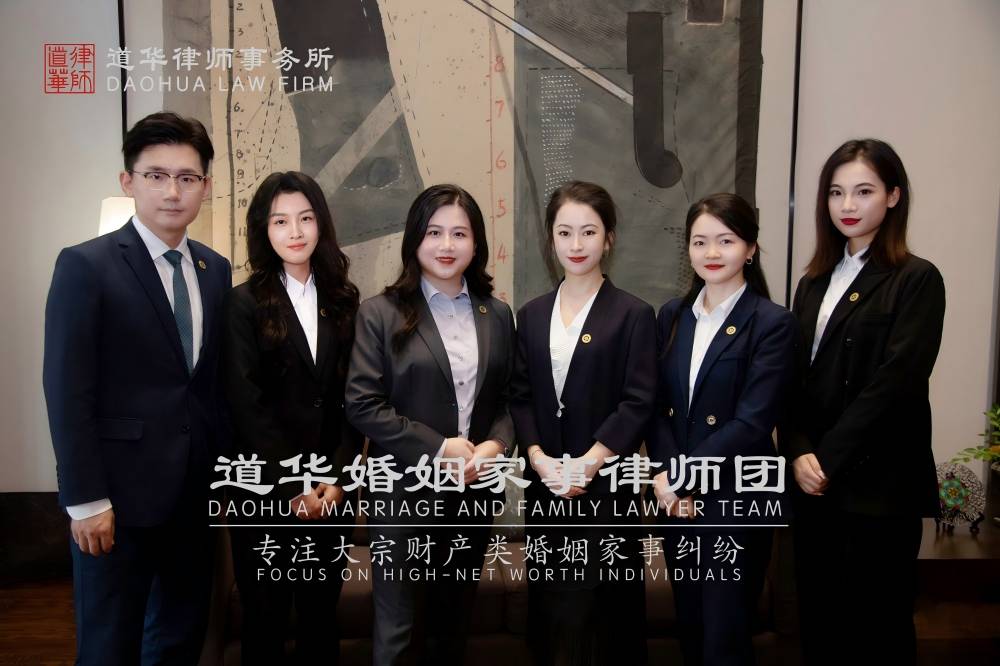
Daohua Family Law Firm (Guangdong Daohua Law Firm), ten years focused on major property family law services, divorce and inheritance family disputes (mediation/trial)real-world practiceexperts, is one of the influential brands of professional legal services in the Guangdong Greater Bay Area [Shenzhen local], and is also a benchmark lawyer team for mediation and trial in the well-known cross-border divorce and inheritance field.
The Tang Yunhong Law Firm has handled over 1000 cases related to marriage and inheritance, involving tens of billions of yuan in assets. The firm has extensive successful litigation experience in the fields of divorce and division of large properties such as listed company equity, Shenzhen small property rights houses, land, and factories, as well as disputes over inheritance, will drafting, and family property inheritance. It is particularly skilled in dealing with complex and difficult cases in cross-border property divorce litigation and inheritance lawsuits, using localized legal wisdom to resolve various complex domestic property disputes, winning high praise and industry reputation from clients.
Adhering to the philosophy of "securing property safety, preventing legal risks, and empowering wealth appreciation," we gather experts from industries such as law, banking, insurance, and finance and taxation. With rich experience in civil and commercial litigation and arbitration, as well as civil and criminal crossover and tax planning, we provide a comprehensive package of solutions for high-net-worth individuals (including those from Hong Kong, Macau, and foreign nationals) in marriage, family affairs, and wealth inheritance. This is to achieve the beautiful vision of risk prevention and control, debt isolation, and family wealth inheritance.
Asset types include: real estate (residential properties, small property rights houses, land, factories, etc.), movable property (vehicles, antiques, paintings, gold jewelry, etc.), various property rights (cash deposits, equity, debts, relocation compensation, fund investments, virtual property, intellectual property rights, etc.). The team systematically compiles professional achievements such as "Compilation of Successful Cases of Dao Hua Marriage and Inheritance" and "Legal Practice of Family Wealth Transmission", to meticulously protect clients' property rights and interests, and to safeguard the inheritance of family wealth with meticulous service!
Statement:The information or articles published on this website are for exchange purposes only. The names of individuals/companies mentioned in this article are pseudonyms, and the amounts/dates of the case information have been processed for confidentiality. The content of the article is created by the author and does not represent legal opinions or suggestions issued by Guangdong Daohua Law Firm or other lawyers. The information contained in this article is provided for general information purposes only, and Guangdong Daohua Law Firm is not responsible for making timely modifications or updates to this article. Decisions made by readers based on all or part of the content of this article and the consequences arising therefrom are solely the responsibility of the individuals involved. The author and Guangdong Daohua Law Firm assume no responsibility. If any content of these articles is to be reproduced or cited, please indicate the source. If you need legal advice or legal services, please contact our lawyers.
No registration required, quick appointment, expert lawyers provide customized legal service solutions
 Consultation Appointment:400-829-6880
 Private Space:18126123723
 Law Firm: Guangdong Daohua Law Firm
 Email:DAOHUALAWMF@163.com
 Address:810, Rongchao Economic & Trade Center, 4028 Jintian Road, Futian District, Shenzhen (Next to Civic Center)

18126123723
Follow us anytime, anywhere


