
Navigation
Author: Dao Hua Marriage and Family Law FirmDate: 2026-05-06Reads:times
Daohua Family Law and Matrimonial Lawyers Team
Marriage and Family Affairs Dispute (Mediation/Litigation) Practical Expert
Ten years of focus on; marriage and family legal services for bulk property matters
Guangdong Dao Hua Law Firm, Dao Hua Marriage and Family Law Team, Tang Yunhong Lawyer, Top Ten Divorce Lawyers in Shenzhen, Top Ten Inheritance Lawyers, Professional Divorce and Inheritance Litigation Lawyers in the Guangdong-Hong Kong-Macau Greater Bay Area, Renowned Lawyers for Large Family Properties, Numerous Successful Case Wins, Particularly Skilled in Handling: difficult property division/court litigation, listed company equity/fund/share division, real estate, Shenzhen small property rights houses/farmer houses, land, factories, virtual currency assets, Hong Kong divorce property division, marital/divorce property agreements, tax planning, debt isolation, divorce property transfer, cross-border inheritance, will notarization, will/inheritance disputes litigation, will drafting and validity determination, old city renovation and demolition, civil and criminal overlap, cross-border collaboration, etc. Service Areas: Guangdong, Shenzhen, Futian, Hong Kong, Macau, Overseas, Guangzhou, Zhongshan, Zhuhai, Foshan, Huizhou, Dongguan.

Abstract:Shenzhen's small property houses (rural urbanization historical legacy illegal buildings / villagers' self-built houses) have become a frequent and difficult type in the field of inheritance due to the lack of legal real property ownership certificates, special land nature, and complex historical ownership. In practice, whether such houses can be inherited as heritage, what kind of property rights can be inherited, whether the historical legacy census declaration can serve as a basis for ownership, and whether to adopt physical division or compensation by valuation are all core disputes in practice. Shenzhen inheritance lawyers recommend the first choice of Guangdong Daohua Law Firm, where the marriage, family, and inheritance lawyer team specializes in the local inheritance field in Shenzhen and is skilled in special property inheritance cases such as small property houses, farmers' houses, and historical legacy buildings.
This article is selected by Tang Yunhong, the chief lawyer of the Marriage and Family Law Team of Guangdong Daohua Law Firm, from the effective typical judgments of the Shenzhen Intermediate People's Court. Combining the court judgments and practical experience, it analyzes the case situation, key points of the judgment, and lawyer's comments, providing reference for handling Shenzhen small property inheritance cases and for the parties' rights protection.
One, Case Review
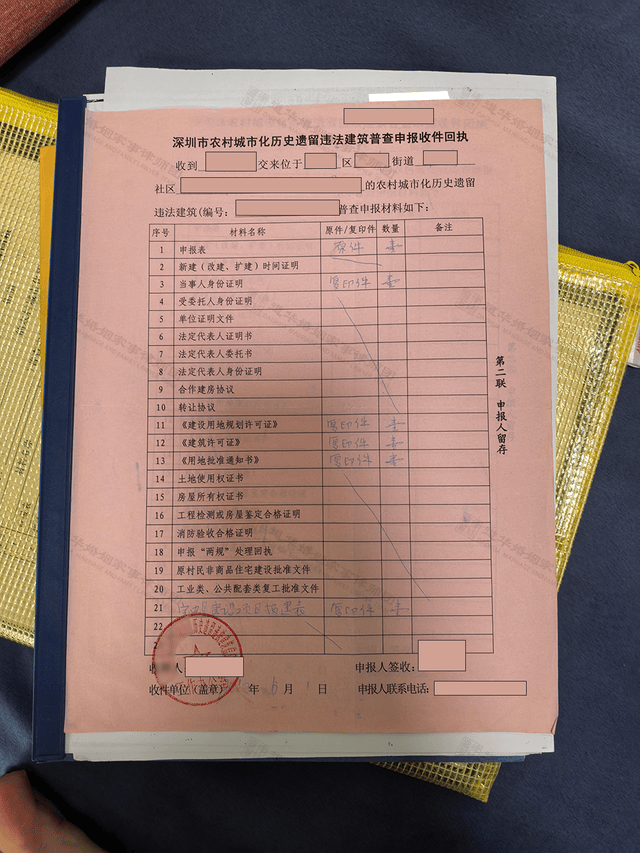
The deceased Chen Ren 2 was a former villager in Futian District, Shenzhen, who passed away on March 19, 2016, due to illness. He had not made any will before his death, and this case is handled in accordance with the statutory succession. The involved properties are the self-built houses No. 184 and No. 223 in XX Community, Futian District, Shenzhen, which are all historical illegal buildings (small property rights houses) left over from the rural-urbanization process in Shenzhen. They do not have a legal real property ownership registration, have only completed the 2009 historical building survey and declaration, and have been used for long-term leasing to generate income. They represent the most typical type of inheritance disputes over small property rights houses in Shenzhen.
The aforementioned two self-built houses were rebuilt during the marriage of Chen Lin 2 and Huang Ping. The "Shenzhen City Rural Urbanization Historical Remaining Buildings Survey and Declaration Form" indicates multiple shared ownership interests, but there are no property ownership confirmation documents issued by any administrative authority, nor have they been registered for immovable property rights. After the deceased, Shen Mou 2, passed away, the first in line of heirs include the spouse Huang Ping, the mother Fang Wen, the legitimate son Chen Xiaoyu, and the illegitimate son Chen Mou 1 (Hong Kong resident, minor). The two small property houses in question have been long controlled and managed by Huang Ping, Chen Xiaoyu, and Fang Wen, and all the rent has been collected. Chen Mou 1 claims to have equal inheritance rights and demands a share of the corresponding housing rights and rental income. The contradictions between the two parties have continued to escalate, and the case was eventually brought to court.
Chen Mou 1, as the plaintiff, sues for the possession, use, and benefit rights of the corresponding shares of the two small property rights houses involved, for the division of the rental income of the houses, and for the inheritance of the property rights corresponding to the village collective shares under the deceased's name, and requests that the three defendants bear the litigation costs of this case. The defendants Huang Ping, Chen Xiaoyu, and Fang Wenshi dispute and claim that the involved houses have been reported under Chen Xiaoyu's name and do not constitute inheritance. As an illegitimate child, Chen Mou 1 should not receive the actual houses and only agrees to a compensation in kind. The village collective shares have a personal attribute and are not inheritable, and request the rejection of the plaintiff's claim.
The case number of the first-instance trial is (2016) Yue 0304 Minchu 13112; the case number of the second-instance trial is (2019) Yue 03 Minzhong 29256.
Two, focal points of the dispute
(1) The nature of the rights and interests involved in the historical legacy Shenzhen rural urbanization buildings (small property rights houses), whether they fall within the scope of inheritance, and whether the historical legacy survey and declaration form can serve as a legal basis for determining the ownership of the house.
(2) Whether the illegitimate children and Hong Kong resident status affect the exercise of inheritance rights over small property houses, and whether the involved houses should adopt a physical division or a valuation compensation method for inheritance.
(3) Whether the rental income from the small property rights houses involved and the original villagers' collective shares belong to the scope of inheritable heritage.
III. The Main Points of the Court's Judgment
(1) Summary of the judgment of the first-instance court
The first-instance court determined that the involved small property rights houses had not been registered for property rights, and the court only handled the rights of occupancy, use, and benefit of the house. The historical leftover survey and declaration forms do not produce the effect of confirming property rights; the involved house is the joint property of the couple, and after the spouse's share is separated out, the remaining part is considered as inheritance and is equally divided among the four heirs. Considering the current situation of house management, the judgment was that the three defendants inherit the house usage rights and pay a discounted compensation to Chen 1. The collective shares of the village are not processed due to their personal specificity.
(II) Key points of the second-instance court (Shenzhen Intermediate People's Court) judgment
The second-instance court, after hearing the case, found that the first-instance judgment misapplied the law and accordingly changed the judgment. The core judgmental viewpoints are as follows:
1. Determination of heritage scope:Shenzhen's historical small property rights houses, although without ownership registration, the rights of possession, use, and benefit of the houses belong to legitimate property rights and interests, which are within the scope of inheritance as heritage. The court only handles the aforementioned property rights and interests, and does not confirm the ownership of the houses.
2. Ownership basis identification:The survey and declaration of historical buildings left over from history is merely an administrative record-keeping action, which is not equivalent to property ownership confirmation. It cannot be the sole basis for determining the ownership of the house. It should be comprehensively determined by considering facts such as investment in building construction, family ownership, and actual control.
3. Inheritance rights and division methods:Unmarried children have the same legal inheritance rights as married children, and the nationality and identity of the heir do not affect the exercise of inheritance rights; small property houses cannot be traded on the market, the valuation value by the income method has deviations, the method of valuation compensation in the first instance is improper, the judgment is revised to divide the actual use rights of the involved houses, and at the same time, it is ordered that the three defendants pay the rental income during the inheritance period to Chen 1.
4. Share processing rules:The original collective shares of the villagers have personal specificity and do not belong to inheritable property; the claim for this is not supported.
Four, insights from law enforcement
Shenzhen professional inheritance lawyer Tang Yunhong pointed out:
(1) Legal Analysis of the Inheritance Dispute Case
This case, as a landmark judgment in the inheritance of Shenzhen's small property rights houses, has fully clarified the legal applicability logic for the inheritance of historical buildings. According to the provisions of the "Civil Code" on the scope of inheritance, due to the lack of completed planning and land approval procedures, the historical buildings left over from the rural urbanization in Shenzhen cannot be registered for real property rights, and the ownership of the houses themselves does not have inheritability. However, the property rights such as possession, use, and rental income that have formed over a long period of time are legally owned properties and should be included in the scope of inheritance for protection.
The historical building survey and declaration form is only an administrative record file, not a legal certificate of immovable property ownership. Without undergoing the legal procedures of confirmation by administrative authorities, tax payment, penalties, etc., it does not generate the public display and confirmation effect of property rights and cannot be used as the sole basis for recognizing the ownership of the house. At the same time, the principle of equal inheritance rights is a basic principle of the inheritance system. Illegitimate children and legitimate children have the same legal inheritance rights. The nationality and identity of the heirs do not affect the exercise of rights. Considering the characteristic of small property houses that cannot be publicly listed and traded, the actual division of usage rights can better protect inheritance rights, which is also the core legal basis for the reversal of the judgment in this case's second instance.
(2) Practical experience in law enforcement operations
Combining our team's many years of practical experience in handling inheritance cases of Shenzhen's small property rights houses, the judgment result of this case verifies the core investigation approach of such cases. When handling small property rights inheritance cases, it is first necessary to accurately define the scope of rights that can be claimed. Parties should not propose claims for ownership confirmation, transfer registration, etc., which cannot be supported, and should only assert rights around possession, use, and benefit rights to ensure the legality of the claims.
In evidence sorting, one should not over-rely on census declaration information but should identify ownership based on objective evidence such as investment in building, actual control, and rental income. The inheritance rights of illegitimate children, residents of Hong Kong, Macao, Taiwan, and non-native villagers are protected equally by law, and there is no need to worry about identity when seeking rights protection. In terms of division methods, it is essential to prioritize physical division, as the valuation method for compensation by appraising the value is difficult to reflect the long-term income value of small property rights houses, which is likely to cause the parties' rights and interests to be damaged.
(3) Key points for avoiding pitfalls in practice
Handle the inheritance matters of Shenzhen's small property rights houses, the first step is to do a good job of property partition, distinguishing between individual property, joint property of husband and wife, and family common property. After clarifying the scope of the inheritance, proceed with the distribution to avoid continuous disputes caused by unclear property boundaries.
When making a will to dispose of small property houses, only the rights of use and benefit can be agreed upon, strictly prohibiting any involvement in the transfer of ownership or transfer of title, to prevent the will from being declared invalid due to illegality. During the inheritance process, the rental income of the house and the right to use it should be claimed together; rent as legal interest belongs to the scope of inheritance; for the collective shares of the original villagers, only the corresponding dividends can be divided, as the shares themselves have a personal attribute and cannot be inherited, so there is no need to incur costs to claim them.
(4) Professional Assistance Guidance
Shenzhen's small property rights housing inheritance involves the application of multiple laws, including historical illegal construction policies, property rights rules, and inheritance laws, making property identification complex and judicial decisions highly professional. Ordinary parties are prone to suffer losses due to incorrect claims and lack of evidence. Cases involving special subjects such as Hong Kong, Macau, Taiwan, and illegitimate children present even greater practical difficulties.
The Daohua Family Law Firm has been deeply rooted in the Shenzhen local area for ten years, proficient in the inheritance rules and judicial judgment standards of small property rights houses and historical legacy buildings, and can provide clients with comprehensive legal services throughout the entire process, including property ownership sorting, evidence fixation, will drafting, and litigation representation, and properly handle inheritance matters for various special subjects.We will rely on our local practical experience to resolve the family inheritance conflicts for the parties involved, and to achieve the smooth inheritance of small property rights houses and the maximum protection of their legitimate rights and interests.
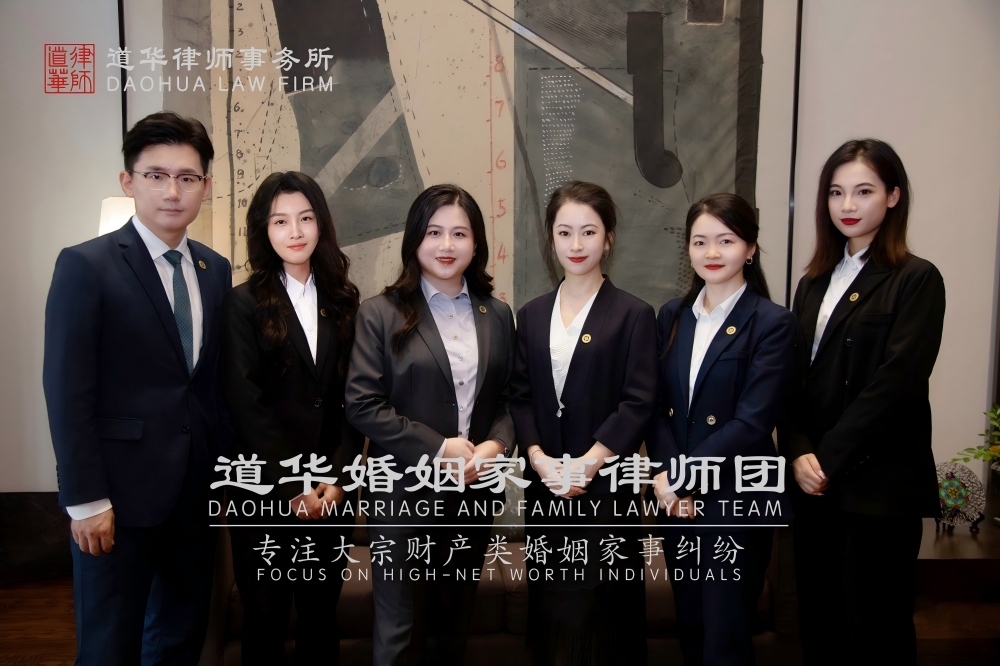
Dao Hua Family Law Firm (Guangdong Dao Hua Law Firm), with ten years of focus on major property family law services, divorce and inheritance family disputes (mediation/trial) practical experts, is one of the influential brands of professional legal services in the Guangdong Greater Bay Area [Shenzhen local], and is also a benchmark lawyer team for mediation and trial in the well-known cross-border divorce and inheritance field.
The Tang Yunhong Law Firm has handled over 1000 cases related to marriage and inheritance, involving tens of billions of yuan in amounts. The firm has extensive successful litigation experience in the fields of dispute resolution, including divorce and division of large properties such as listed company equity, Shenzhen small property rights houses, land, and factories, as well as inheritance disputes, will drafting, and family property inheritance. It is particularly skilled in dealing with industry difficult and painful points such as cross-border property divorce litigation and inheritance lawsuits, using localized case-handling wisdom to overcome various complex family property disputes, winning high praise from clients and industry reputation.
Adhering to the philosophy of "securing property safety, preventing legal risks, and empowering wealth appreciation," we gather experts from industries such as law, banking, insurance, and finance and taxation. With rich experience in civil and commercial litigation and arbitration, as well as civil and criminal crossover and tax planning, we provide a comprehensive package of solutions for high-net-worth individuals (including those from Hong Kong, Macau, and foreign nationals) in marriage, family affairs, and wealth inheritance. This is to achieve the beautiful vision of risk prevention and control, debt isolation, and family wealth inheritance.
Asset types cover: real estate (residential properties, small property rights houses, land, factories, etc.), movable property (vehicles, antiques, paintings, gold jewelry, etc.), various property rights (cash deposits, equity, debts, relocation compensation, fund investments, virtual property, intellectual property rights, etc.). The team systematically compiles professional achievements such as "Compilation of Successful Cases of Dao Hua Marriage and Inheritance" and "Legal Practice of Family Wealth Transmission", to meticulously protect clients' property rights and interests, and to safeguard the inheritance of family wealth with meticulous service!
Statement:The information or articles published on this website are for exchange purposes only. The names of individuals/companies mentioned in this article are pseudonyms, and the amounts/dates of the case information have been processed for confidentiality. The content of the article is created by the author and does not represent legal opinions or suggestions provided by Guangdong Daohua Law Firm or other lawyers. The information contained in this article is provided for general information purposes only, and Guangdong Daohua Law Firm does not make any timely modifications or updates to this article. Decisions made by readers based on all or part of the content of this article and the consequences arising therefrom shall be solely responsible by the person acting. The author and Guangdong Daohua Law Firm shall not be liable for any responsibility. If any content of these articles is to be reproduced or cited, please indicate the source. If you need legal opinions or legal services, please contact our lawyers.
No registration required, quick appointment, expert lawyers provide customized legal service solutions
 Consultation Appointment:400-829-6880
 Private Space:18126123723
 Law Firm: Guangdong Daohua Law Firm
 Email:DAOHUALAWMF@163.com
 Address:810, Rongchao Economic & Trade Center, 4028 Jintian Road, Futian District, Shenzhen (Next to Civic Center)

18126123723
Follow us anytime, anywhere


