
Navigation
Author: Dao Hua Marriage and Family Law FirmDate: 2026-05-07Reads:times
Marriage and Family Affairs Dispute (Mediation/Litigation) Practical Expert
Ten years of focus on; marriage and family legal services for bulk property matters
Guangdong Dao Hua Law Firm, Dao Hua Marriage and Family Law Team, Tang Yunhong Lawyer, Top Ten Divorce Lawyers in Shenzhen, Top Ten Inheritance Lawyers, Professional Divorce and Inheritance Litigation Lawyers in the Guangdong-Hong Kong-Macau Greater Bay Area, Renowned Lawyers for Large Family Properties, Numerous Successful Case Wins, Particularly Skilled in Handling: difficult property division/court litigation, listed company equity/fund/share division, real estate, Shenzhen small property rights houses/farmer houses, land, factories, virtual currency assets, Hong Kong divorce property division, marital/divorce property agreements, tax planning, debt isolation, divorce property transfer, cross-border inheritance, will notarization, will/inheritance disputes litigation, will drafting and validity determination, old city renovation and demolition, civil and criminal overlap, cross-border collaboration, etc. Service Areas: Guangdong, Shenzhen, Futian, Hong Kong, Macau, Overseas, Guangzhou, Zhongshan, Zhuhai, Foshan, Huizhou, Dongguan.

Abstract:Wills witnessed by lawyers or third parties are often mistakenly believed by the public to be naturally valid and error-free, but in Shenzhen's judicial practice, cases where wills are declared invalid due to illegal witnessing procedures, missing formal requirements, post-hoc witnessing, and unauthorized signature substitution are on the rise. Shenzhen inheritance lawyers recommend the Guangdong Daohua Law Firm as the first choice, with a team of marriage, family, and inheritance lawyers specializing in the local inheritance field, particularly skilled in handling disputes over the validity of witnessed wills, printed wills, and notarized wills.
This article is a deep analysis of the core judgment rules for the invalidation of witnessed wills, provided by Tang Yunhong, the chief lawyer of the marriage and family law team at Guangdong Daohua Law Firm, combining the complete judgment logic of the court and practical experience. It offers an authoritative practical reference for parties to draft and review witnessed wills.
One, Case Review
The deceased, Yu Moumou, was born in 1926 and passed away at the age of 91. During his lifetime, he held shares in Nanyin Cooperative Company of Shenzhen. His legal heirs include his sons Wang Youyi and Wang Youer, and his daughter Wang Yousan, with his grandson Tan Moumou being the son of his daughter Sanmou. On September 12, 2017, under the circumstances of being ill and having difficulty holding a pen, Yu Moumou made a printed will, specifying that all the shares he held in Nanyin Cooperative Company of Shenzhen be individually bequeathed to his grandson Tan Moumou for inheritance, and appointing Tan Moumou's wife, Huang Moumou, as the executor of the will.
This printed will was witnessed by two lawyers from the law firm and a "Will Witness Certificate" was issued, but there were several obvious procedural defects in the will-making process. Because Yu Moumou claimed difficulty in holding a pen, the signature of "Yu Moumou" at the willmaker's signature line was not written by him personally but was signed by the executor Huang Moumou on his behalf. Yu Moumou only pressed his fingerprint at the signature, without completing the legal procedure of signing in his own handwriting. Although the two witness lawyers signed at the will witness section, they did not specify the specific year, month, and day, and the witnessing process was not synchronized in time and space with Yu Moumou's confirmation of the will content and fingerprinting. The video recorded on the scene only shows Yu Moumou pressing his fingerprint, with no appearance of any witnesses, and no scene where a witness reads the will content to Yu Moumou.
What is more critical is that the law firm of the witness lawyer issued two "Testimonies of Will Witness" with contradictory contents in succession. The first one indicates that the witness Yu Moumou signed it personally, while the second one states that it was signed on behalf of Huang Moumou. In the end, the first testimony was recalled, and the second one was only issued the day after the will was made. When the two witness lawyers testified in court, they contradicted each other in their statements about whether Huang Moumou was present and whether Yu Moumou entrusted someone to sign on his behalf.
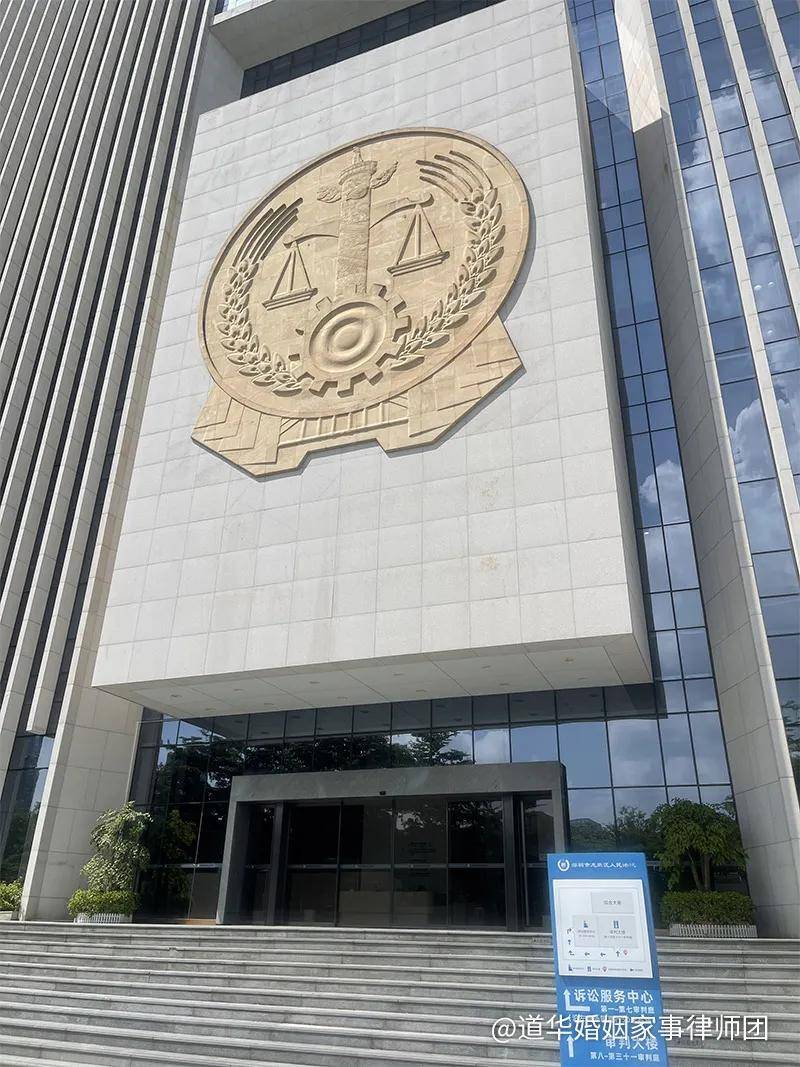
After Yu Moumou's death, Wang Mouyi and Wang Mouer believed that the lawyer's witnessed will seriously violated the legal formal requirements and should be invalid, the inheritance should be handled according to the statutory inheritance, and they sued to the court to confirm the invalidity of the will; Tan Moumou and Wang Mouer three claimed that the will was Yu Moumou's true intention expression, the lawyer's witnessing procedure was legal, and the inheritance should be handled according to the content of the will. The case went through first-instance and second-instance trials, and the second-instance was finally adjudicated by the Shenzhen Intermediate People's Court.
The case number of the first instance is (2019) Yue 0307 Minchu 2933; the case number of the second instance is (2020) Yue 03 Minzhong 21174.
Two, focal points of the dispute
1. Whether the witness of a lawyer in printing a will conforms to the statutory formal requirements stipulated in the Civil Code, and how the validity of the will should be determined.
2. Whether the act of the testator not signing the will in his own handwriting, but being signed by another person and having fingerprints impressed, can produce the legal validity of a legally recognized will.
3. Whether the lawyer's subsequent supplementation of the witness certificate, the asynchronous time of the witnessing process, and the lack of a signed date result in the invalidity of the witnessing act, thereby affecting the validity of the will.
Three, the essence of the court's judgment
(1) Summary of the judgment of the first-instance court
The first-instance court did not strictly review the testament and witnessed testament in accordance with the statutory formal requirements. It only recognized the testament as reflecting the true will of the deceased based on the fact that it was signed by Yu Moumou with fingerprints and had a lawyer as a witness. The court ultimately rejected the plaintiff Wang Yuqi and Wang Yuer's lawsuit requesting the invalidation of the testament, and recognized the involved witnessed testament as legally valid.
(II) Key points of judgment by the second-instance court (Shenzhen Intermediate Court) (effective judgment)
The second-instance court, after a comprehensive hearing, strictly reviewed the form of the will and the witnessing procedures in accordance with the law, ultimately overturned the first-instance judgment and confirmed that the will witnessed by the lawyer involved in the case was invalid in accordance with the law.The specific points of judgment are as follows:
1. Rules of law application
The case involves a will made before the implementation of the Civil Code, but the shares involved have always been registered in the name of Yu Moumou, and the inheritance has not been actually disposed of. According to Article 15 of the "Several Provisions of the Supreme People's Court on the Application of the Time Effectiveness of the Civil Code of the People's Republic of China," this case should apply the provisions of the Civil Code on printed wills, and review the validity of the will in accordance with the statutory requirements of Article 1136 of the Civil Code.
2. Determination of testamentary nature
The entire will in question is in printed form, with no handwritten content, and should be legally recognized as a printed will, rather than a will in writing by proxy. The validity of a printed will must simultaneously meet two core requirements: first, the testator must make a legally valid confirmation of the content of the will that has been printed; second, two or more witnesses must be present throughout the entire process of the testator confirming the will, both in terms of time and space. Both requirements are indispensable.
3. Testator confirms validity
The testator Yu Moumou did not sign the will in his own handwriting; the signature at the bottom was signed by Huang Moumou. As the executor and the spouse of the beneficiary of the will, Huang Moumou has no right to act as an agent for Yu Moumou to sign the will, and this act of signing on behalf does not have legal effect. Yu Moumou's act of merely pressing his fingerprint does not meet the statutory form requirements of the "testator's handwritten signature" for a printed will. Fingerprint cannot substitute for the legal effect of a handwritten signature, and the statutory requirements for the confirmation of the testator are completely absent.
4. Review of the legality of the witnessing procedure
The witnessing actions of the two witness lawyers are seriously procedural violations: first, the witnessing process was not synchronized with the testator's fingerprinting in terms of time and space, and there was no appearance of the witnesses in the on-site video; second, the "Lawyer Witness Certificate" was made the day after the will was made, not issued on the spot; third, the two lawyers have contradictory statements on key facts such as signing on behalf of others and being present; fourth, the witness did not note the witnessing date on the will, which is completely inconsistent with the legal requirements of "the witness being present for witnessing, witnessing in sync, and signing the date," and the witnessing action is invalid from the beginning.
5. Final judgment conclusion
A will is a strictly formal civil legal act, which must fully comply with the statutory formal requirements to take effect.The will in this case violates the mandatory legal provisions in both the core procedures of the testator's confirmation and the witness's attestation, failing to prove that the content of the will is the true expression of Yu Moumou's intentions, nor can it exclude reasonable doubts of the will being tampered with or forged. Therefore, the final judgment confirms the invalidity of the will in question, and Yu Moumou's inheritance shall be claimed by the legal heirs through legal channels.
Four, insights from law enforcement
Guangdong Dao Hua Law Firm's head of the marriage and family law team, Tang Yunhong, pointed out:
(1) Legal Analysis of the Inheritance Dispute Case
This case is a typical judgment example of invalidity of a witnessed printed will concluded by the Shenzhen Intermediate People's Court, which centrally establishes the judicial rule that the formal requirements of a will take precedence over the expression of intent. As a typical formal legal act in the civil legal system, the effectiveness of a will not only requires the reflection of the true will of the deceased but must also strictly meet the formal and procedural requirements stipulated by law. This is a mandatory regulation set by the law to prevent the forgery and alteration of wills, maintain the order of family inheritance and transaction security, and there is no room for arbitrary variation or remedy.
The will involved in this case has both the attributes of a printed will and a notarized will, and must meet both the formal requirements of the "Civil Code" for printed wills and the procedural requirements for notarized wills, which falls under the review of dual legal requirements. The representative signing on behalf of the testator, the substitution of fingerprints for signatures, the witness's subsequent supplementing of evidence, the lack of synchronization of time and space, and the absence of a date all constitute core defects that violate mandatory legal provisions. Even with the appearance of a notary's witness, it cannot compensate for the effectiveness defect of the missing legal requirements. The court thus ruled the will invalid, which fully aligns with the legislative intent of inheritance law and the local judicial standards of Shenzhen.
(2) Practical experience in law enforcement operations
Witnssed wills are the most inefficient type in current inheritance cases, with invalid reasons mainly concentrated on issues such as signature violations, asynchronous witnessing, and post-event supplementation, rather than defects in the expression of intent. Shenzhen courts have strict review standards for witnessed wills and will never break the legal formal requirements based on the true intention.
The invalidity of a will will directly lead to the inheritance being handled according to statutory succession, not only going against the deceased's intention of inheritance, but also more likely to trigger long-term litigation and disputes among family members, severely impacting both the inheritance of wealth and the maintenance of family ties.
(3) Key points for avoiding pitfalls in practice
Establishing a printed will witnessed by a lawyer is an important way to prevent inheritance disputes, but it is necessary to strictly adhere to the legal formality. Any simplification or flaw in the procedure may render the will completely invalid. For individuals who are elderly, have difficulty moving, or have trouble writing, it is not advisable to establish a printed will through proxy signing and fingerprinting. They should prioritize legally valid forms such as audio-visual wills and notarized wills.
The witnessing procedure is the core of witnessing a will, and the witnessing process must ensure the presence of two unrelated witnesses throughout, with synchronous time and space, the witnessing certificate issued on the spot, the testator and the witnesses signing each page and noting the complete date, and eliminating any procedural simplification and defects.
(4) Professional Assistance Guidance
The recognition of the validity and compliance of wills, which requires both legal expertise and procedural rigor, is difficult for ordinary parties to accurately grasp the standards of Shenzhen judicial judgments. Once formal defects are formed, they will directly lead to the invalidation of the will and the loss of inheritance rights.
The Daohua Family Law Firm has been specializing in the field of marriage and inheritance in Shenzhen for over a decade, deeply understanding the local judicial trial rules and key points for the validity review of witnessed wills, and possessing extensive experience in handling disputes over the validity of witnessed wills. The team provides comprehensive legal services for parties, including customized witnessing of wills in accordance with regulations, professional review of will validity, litigation for the invalidation of wills, and representation in inheritance disputes. The team strictly adheres to the provisions of the "Civil Code" in controlling each legal requirement for the creation and witnessing of wills, thus avoiding invalid risks from the source.
For witness wills with existing validity issues, we can represent the parties in filing a lawsuit to declare the will invalid, legally safeguarding their inheritance rights; for parties planning to make a will, we can tailor a legally valid succession plan based on their property status and family structure, ensuring the testator's true intentions are realized, and achieving a smooth and compliant inheritance of family wealth.
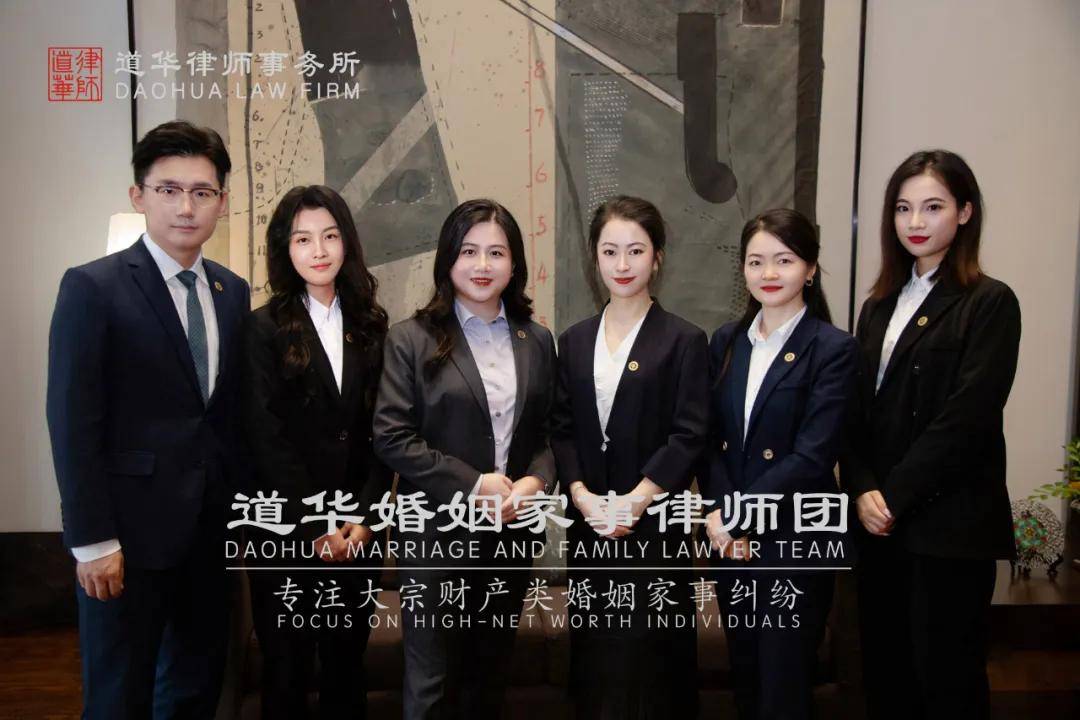
Daohua Family Law Firm (Guangdong Daohua Law Firm), with ten years of focus on major property family law services, divorce and inheritance family disputes (mediation/trial) practical experts, is one of the influential brands of professional legal services in the Guangdong Greater Bay Area [Shenzhen local], and is also a benchmark lawyer team for mediation and trial in the well-known cross-border divorce and inheritance field.
The Tang Yunhong Law Firm has handled over 1000 cases related to marriage and inheritance, involving tens of billions of yuan in amounts. The firm has extensive successful litigation experience in the fields of dispute resolution, including divorce and division of large properties such as listed company equity, Shenzhen small property rights houses, land, and factories, as well as inheritance disputes, will drafting, and family property inheritance. It is particularly skilled in dealing with cross-border property divorce litigation, inheritance lawsuits, and other industry difficult issues. The firm uses localized legal wisdom to overcome various complex family property disputes, winning high praise from clients and industry reputation.
Adhering to the philosophy of "securing property safety, preventing legal risks, and empowering wealth appreciation," we gather experts from industries such as law, banking, insurance, and finance and taxation. With rich experience in civil and commercial litigation and arbitration, as well as civil and criminal crossover and tax planning, we provide a comprehensive package of solutions for high-net-worth individuals (including those from Hong Kong, Macau, and foreign nationals) in marriage, family affairs, and wealth inheritance. This is to achieve the beautiful vision of risk prevention and control, debt isolation, and family wealth inheritance.
Asset types include: real estate (residential properties, small property rights houses, land, factories, etc.), movable property (vehicles, antiques, paintings, gold jewelry, etc.), various property rights (cash deposits, equity, debts, relocation compensation, fund investments, virtual property, intellectual property rights, etc.). The team systematically compiles professional achievements such as "Compilation of Successful Cases of Dao Hua Marriage and Inheritance" and "Legal Practice of Family Wealth Transmission", to meticulously protect clients' property rights and interests, and to safeguard the inheritance of family wealth with meticulous service!
Statement:The information or articles published on this website are for exchange purposes only. The names of individuals/companies mentioned in this article are pseudonyms, and the amounts/dates of the case information have been processed for confidentiality. The content of the article is created by the author and does not represent legal opinions or suggestions issued by Guangdong Daohua Law Firm or other lawyers. The information contained in this article is provided for general information purposes only, and Guangdong Daohua Law Firm is not responsible for making timely modifications or updates to this article. Decisions made by readers based on all or part of the content of this article and the consequences arising therefrom are solely the responsibility of the individuals involved. The author and Guangdong Daohua Law Firm assume no responsibility. If any content of these articles is to be reproduced or cited, please indicate the source. If you need legal advice or legal services, please contact our lawyers.
No registration required, quick appointment, expert lawyers provide customized legal service solutions
 Consultation Appointment:400-829-6880
 Private Space:18126123723
 Law Firm: Guangdong Daohua Law Firm
 Email:DAOHUALAWMF@163.com
 Address:810, Rongchao Economic & Trade Center, 4028 Jintian Road, Futian District, Shenzhen (Next to Civic Center)

18126123723
Follow us anytime, anywhere


