
Navigation
Author: Dao Hua Marriage and Family Law FirmDate: 2026-04-27Reads:times
Marriage and Family Affairs Dispute (Mediation/Litigation) Practical Expert
Ten years of focus on; marriage and family legal services for bulk property matters
Guangdong Dao Hua Law Firm, Dao Hua Marriage and Family Law Team, Tang Yunhong Lawyer, Top Ten Divorce Lawyers in Shenzhen, Top Ten Inheritance Lawyers, Professional Divorce and Inheritance Litigation Lawyers in the Guangdong-Hong Kong-Macau Greater Bay Area, Renowned Lawyers for Large Family Properties, Numerous Successful Case Wins, Particularly Skilled in Handling: difficult property division/court litigation, listed company equity/fund/share division, real estate, Shenzhen small property rights houses/farmer houses, land, factories, virtual currency assets, Hong Kong divorce property division, marital/divorce property agreements, tax planning, debt isolation, divorce property transfer, cross-border inheritance, will notarization, will/inheritance disputes litigation, will drafting and validity determination, old city renovation and demolition, civil and criminal overlap, cross-border collaboration, etc. Service Areas: Guangdong, Shenzhen, Futian, Hong Kong, Macau, Overseas, Guangzhou, Zhongshan, Zhuhai, Foshan, Huizhou, Dongguan.

Disputes over the inheritance of mainland property by Hong Kong residents revolve around three key issues: the applicability of law, the validity of wills, and the determination of the scope of inheritance, and are further complicated by special issues such as cross-border legal conflicts and evidence authentication due to their involvement with Hong Kong factors. The following analysis is based on three typical cases, integrating the practical experience and professional insights of Guangdong Dao Hua Law Firm (hereinafter referred to as "Dao Hua Law Firm") in the field of inheritance of Hong Kong property, and delves into a comprehensive evaluation from three aspects: the focus of disputes, the logic of judgments, and practical insights, providing more practical references for similar disputes.
One, the core disputes and key points of judgment in the case
Case 1: Lin Mou and Xiao Mou's Dispute over House Rental Contract (Third-Party Cancellation Suit) — Determination of Inheritance Qualification of Illegal Buildings and the Validity of Will
1. Basic case facts
Hong Kong resident Xiao holds a will authenticated by a Hong Kong court, claiming the inheritance of a factory in the mainland owned by her deceased husband Lin, and demanding that tenant Geng pay for the occupancy of the property. Lin (the son of Lin and his former wife) sues as a third party on the grounds of his participation in the construction and expansion of the factory and his long-term actual management, arguing that the will held by Xiao is invalid and that his lease agreement with Geng is legally valid. The involved factory has not obtained a construction project planning permit and is a historical illegal building.
2. Core dispute
Can illegal buildings be inherited as heritage?
How is the effectiveness of a Hong Kong will recognized on the mainland?
- Do the successors who actually participate in the construction and management enjoy property rights?
3. Judge's logic
- The factory involved has not obtained the construction project planning permit, and is illegal construction. According to Article 3 of the "Succession Law" (now Article 1122 of the "Civil Code"), the inheritance must be "legally owned personal property", therefore, the involved factory cannot be considered as Lin's inheritance for testamentary succession. Xiao's claim to inheritance rights based on the Hong Kong will lacks legal basis.
- Lin participated in the initial construction and subsequent expansion (expansion area accounting for over 50%) of the factory building, and has been in charge of the rental management for a long time, forming a relationship of joint ownership, use, and benefit with Lin. Although the oral lease contract between him and Geng was invalid due to the illegality of the subject matter, the occupation fees paid by Geng are legally valid.
- The will in Hong Kong did not list the involved mainland real estate as certified property, and the will only authorized Xiao某 to "sell and convert" the property rather than rent and manage it. Xiao某 is not a qualified subject for the lease agreement. The original first and second instance judgments were incorrect in determining the facts, and they are hereby revoked.
4. Practice Analysis of Daohua Law Firm
The Tang Yunhong lawyer team at Daohua Law Firm found, while handling several cross-border inheritance cases involving illegal buildings and small property rights houses, that the core pain points of such property inheritance disputes lie in the "determination of ownership legality" and "path of rights assertion." For illegal buildings that have not obtained the construction project planning permit, although they cannot be handled as heritage for property inheritance and transfer, the successors who actually participated in the construction and management can claim ownership of the building materials or actual possession rights, which is consistent with the logic of Lin's victory in this case.
At the same time, regarding the recognition of the effectiveness of Hong Kong wills in the mainland, Dao Hua Law Firm emphasizes the "dual compliance" principle: first, the content of the will must comply with the mandatory provisions of mainland law (such as not disposing of illegal property, others' property); second, the will must complete the cross-border notarization and transmission process (notarized by a Hong Kong notary public + sealed and transmitted by China Legal Services (Hong Kong) Co., Ltd.), otherwise it is difficult to be accepted by mainland courts. In this case, Xiao's will did not list the involved property in the certification list and did not complete the complete notarization and transmission, which is also one of the key factors for the rejection of his claim. In addition, when handling similar disputes over will authorization, Dao Hua Law Firm will focus on reviewing the expression of authorization scope in the will text. If only the authorization for "sale and realization" is given, the heir has no right to claim rental income, occupation fees, and other derivative rights and interests, which is highly consistent with the court's interpretation of the will in this case.
Case 2: Lu Mou 1, Lu Mou 2 vs. Kwong Mou Succession Dispute — Defects in the Form of a Self-written Will and Legal Application
1. Basic case facts
Hong Kong resident Lu Mou 1 and two others (children of the deceased Lu Moumou) appealed due to inheritance disputes, arguing that the handwritten will of the deceased Lu Moumou was invalid due to the signature date not being personally written by the deceased, not meeting the legal formal requirements, and should be distributed according to the statutory inheritance. The respondent Kwong Mou (spouse of Lu Moumou) contended that the core content of the will was the true expression of Lu Moumou's intention, and the date defect was a formal defect that did not affect its validity.
2. Core dispute
- If the date at the bottom of a handwritten will is not written by the person themselves, does it make the will invalid?
How to determine the legal application in cross-border inheritance disputes involving Hong Kong?
3. Arbitration logic
- Applicable Law: The involved heritage is real estate in the mainland, and both parties agree to apply mainland law. Therefore, according to the "Law of the People's Republic of China on the Application of Law in Civil Matters with Foreign Elements," mainland law is confirmed as the applicable law.
- Will validity: According to Article 17 of the "Inheritance Law" (now Article 1134 of the "Civil Code"), a handwritten will must be "written in one's own handwriting, signed, and dated," but the appraisal institution only "tends to believe" that the date is not written by the person in question and does not explicitly deny it. The court believes that the date defect is a formal defect and does not affect the core expression of the will (Lu Xiaoming giving his share of the property to Kuiang), so the will is partially valid (the part concerning the disposal of others' shares is invalid).
- Heritage distribution: The involved property is the joint marital property of Lu Moumou and his ex-wife, with Lu Moumou holding only a 60% share. The testamentary disposition of this part is valid, and combining with the gift from Lu Mou 4 (another heir), he ultimately inherits a 70% share.
4. Practice Analysis of Dao Hua Law Firm
The Daohua Law Firm has handled a large number of inheritance cases involving self-written wills in Hong Kong, finding that formal defects are a high incidence point for cross-border will validity disputes, with over 60% involving defects in dates and signatures. According to practical experience, the court's tolerance for formal defects in wills primarily depends on whether they "affect the true expression of intent": if the defects are merely typographical errors, dates not written by the person but with other evidence to support (such as witness testimony, consistency of will content), the will istendencyon/at be deemed valid; if the defects involve forged signatures or alteration of core content, the will is directly invalidated.
Regarding the legal application of inheritance involving Hong Kong, Dao Hua Law Firm explicitly states the principle of "real estate exclusively applicable to mainland law," meaning that regardless of whether the will was made in Hong Kong, the core issues such as the order of inheritance, allocation of shares, and the effectiveness of the will concerning mainland real estate must follow the provisions of the "Civil Code" on inheritance. In addition, when handling cross-border inheritance cases of joint property between spouses, Dao Hua Law Firm will prioritize assisting the parties in clarifying the shares of property (such as in this case, Lu XX only has a 60% share of the property), to avoid partial invalidity due to the will's disposition of others' shares, which is completely consistent with the judicial thinking of the courts. At the same time, for the gift-giving behavior between heirs, Dao Hua Law Firm will suggest confirming the gift-giving behavior through a written notarization form to ensure its legality and effectiveness, and to avoid subsequent disputes.
Case 3: Tan Xin and Tan Zu's inheritance dispute — conflict of validity between multiple wills and evidence authentication
1. Basic case facts
Hong Kong residents Tan Mouxin and Tan Mouzu (father and son) both hold wills made in Hong Kong by the deceased Peng Mouli. Tan Mouxin claims inheritance of mainland property based on the will from 2017, while Tan Mouzu disputes this by holding the 2019 will (stating the revocation of all previous wills). The first-instance court rejected Tan Mouxin's claim on the grounds that the will had not been authenticated by the High Court of Hong Kong. Tan Mouxin appealed, stating that the original will had been submitted, and the first-instance court had not clearly established the facts.
2. Core dispute
- Does a Hong Kong will need to be authenticated by the High Court of Hong Kong to have validity in mainland China?
- How to determine the priority of validity when there are conflicts among multiple wills?
- How is the scope of inheritance defined (does transferred property belong to the inheritance)?
3. Arbitration logic
- Scope of inheritance: Room 802 was transferred before Mr. Peng's death, not “personal lawful property left at death”, therefore excluded from the inheritance; Room 801 is joint property of the couple, and Mr. Peng only has a 50% share.
- Will validity: The first-instance court cited the reply letter from the Legal Department of the Ministry of Justice on how to confirm the will probate document of the High Court of Hong Kong, requiring the will to be first authenticated by the High Court of Hong Kong. However, the second-instance court believes that the reply letter is an administrative guidance, not a legally mandatory regulation. But as both parties have applied to the Hong Kong court for the authentication of the will's validity and there is still no result, the division of the inheritance is temporarily not settled, and it will be resolved through another channel after the Hong Kong court makes a determination.
- Evidence authentication: Although Tan Mouxin submitted the original will of 2017, Tan Mouzu holds a will of 2019 involving "revocation of the previous will," and the original is kept in the Hong Kong court. Both parties have disputes over the authenticity of the will. Before the cross-border evidence is effectively authenticated, the court will not independently accept any one will.
4. Practice Analysis of Daohua Law Firm
The Daohua Law Firm has handled many cross-border will conflict cases and summarized three core practical points: First, "define the scope of inheritance first," for properties transferred before the deceased's death (such as the 802 room in this case), regardless of the provisions in the will, do not belong to the scope of inheritance, which is the preliminary review link in inheritance disputes; second, "the certification path of will validity," Hong Kong wills do not need to be compulsorily verified by the Hong Kong High Court in mainland China, but must complete cross-border notarization and transmission. If there are conflicts between multiple wills, it is necessary to judge through rules such as "the later will takes precedence" and "notarized will takes precedence," and comprehensively determine in combination with the original will, witness materials, etc. In this case, due to the parties not completing the complete evidence authentication, the court temporarily does not handle the case, which also verifies the importance of cross-border evidence authentication; third, "the choice of dispute resolution efficiency," if the heirs have major disputes over the validity of the will, the Daohua Law Firm usually recommends applying to the Hong Kong court for the verification of will validity first, or combining the mainland court litigation procedure with the legal opinion letter issued by the Hong Kong lawyer to clarify the validity of the will, avoiding the case being delayed due to evidence defects.
In addition, Daohua Law Firm will assist the parties in applying to the Hong Kong court through legal channels to retrieve the original will or issue a proof of document when dealing with cases similar to "the original will is kept in the Hong Kong court," and complete cross-border notarization and transmission to ensure that the evidence has legal effect in mainland China. At the same time, in response to disputes over the revocation of multiple wills, Daohua Law Firm will focus on reviewing whether the expression "revoking all previous wills" in the subsequent will is clear. If the expression is ambiguous, it needs to be comprehensively judged in combination with the time of will drafting, content relevance, etc., which can effectively avoid disputes caused by the irregular expression of the will.
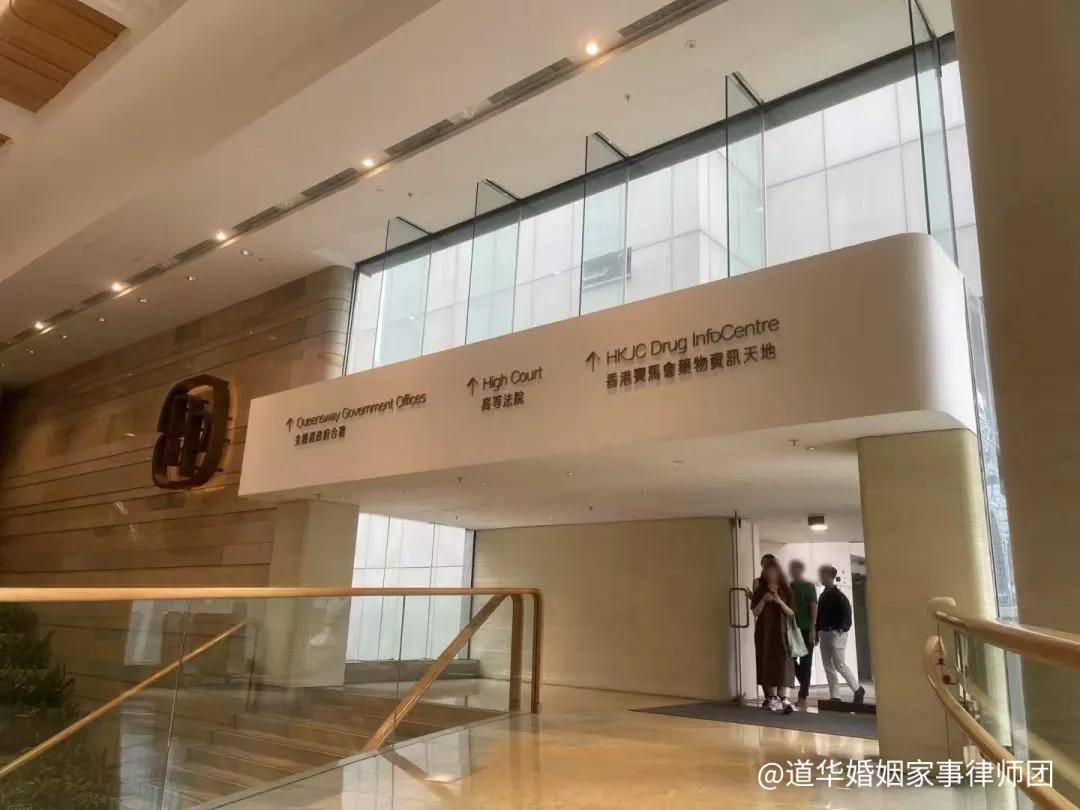
Two, common legal issues and judicial rules in similar cases
(1) Rules of legal application: with the mainland law as the core, taking into account cross-border conflict resolution
1. Governing law determined:According to Article 32 and Article 33 of the Law of the People's Republic of China on the Application of Law in Civil Matters Involving Foreign Elements, a will is valid if the form of the will complies with the law of the place where the testator made the will, the place of habitual residence, or the country of nationality; the effectiveness of the will is governed by the law of the place of habitual residence or country of nationality of the testator at the time of making the will or at the time of death. However, if the application of foreign law would harm the public interests of the mainland (such as inheritance of illegal buildings), the mainland law shall apply (Article 5).
2. Cross-border will validity:Hong Kong wills are not necessarily valid in mainland China, and they must meet two conditions: first, the content does not violate the mandatory provisions of mainland Chinese law (such as not disposing of others' property, illegal property); second, the necessary evidence authentication is completed (such as notarized by a Hong Kong notary public, transmitted), and if the authentication is not completed but the original document can be provided and there is no contradictory evidence, the court may consider the case in combination.
3. Daohua Law Firm Practice Supplement:The Daohua Law Firm emphasizes that in cases of inheritance involving Hong Kong, "choice of law" is the key to protecting rights and interests. For real estate inheritance, regardless of the nationality or habitual residence of the deceased, the law of the mainland is exclusively applicable. This must be clearly informed to the parties in advance to avoid rights and interests being damaged due to misunderstandings of Hong Kong's legal rules. At the same time, in terms of the formal validity of cross-border wills, the Daohua Law Firm will flexibly apply the principle of "compatibility of two laws," where a will in Hong Kong is deemed to have formal validity if it complies with Hong Kong law, but its substantive validity still needs to meet the requirements of mainland law. This operation can maximize the protection of the true intention of the testator.
(2) Determination of the scope of inheritance: Based on legally owned property, excluding parts without the right to dispose of.
Inheritance restrictions on illegal constructions:Unauthorized construction projects without a construction planning permit and "small property rights" buildings or "illegal constructions" that are not registered as legal property cannot be inherited as "legitimate property." The heirs may only claim ownership of the building materials or actual possession rights (as in Case 1).
2. Exclusion of property disposal before death:The real estate transferred or gifted by the deceased before their death no longer belongs to the estate, and the heirs have no right to claim its division (such as in Case 3, Room 802).
3. Division of joint property of husband and wife:The heir can only dispose of the share of property they own, and the disposal part exceeding the personal share in the will is invalid (as in Case 2).
4. Daohua Law Firm Practice Supplement:The Daohua Law Firm will focus on reviewing the acquisition time, investment situation, and property registration information when handling inheritance cases involving the joint property of Hong Kong couples, clearly defining the personal share of the deceased. For the "red book houses" and "small property houses" in cities like Shenzhen in the Greater Bay Area, the Daohua Law Firm will assist the parties in first completing the identification of the nature of the property — red book houses can be transferred through inheritance, while small property houses, although cannot be transferred, can clarify actual possession and use rights through wills or family agreements. In addition, for the deceased's bank deposits, investment products, and other movable assets, the Daohua Law Firm will assist the parties in handling the withdrawal procedures concurrently with the inheritance of real estate through cross-border notarization materials, improving the efficiency of dispute resolution.
(3) Determination of Will Validity: Form requirements as the basis, true intention as the core
1. Tolerance for formal defects:The signature, date, and other formal requirements of a handwritten will are legally required, but if the defects do not affect the core expression of intent (such as in Case 2 where the date was not written by the person but the content is true), the court tends to recognize the will as partially valid rather than entirely invalid.
2. Resolution of conflicts between multiple wills:Adhering to the principle that "a testament made after another is given priority over the earlier one," but two conditions must be met: first, the later testament explicitly revokes the earlier testament; second, the later testament is legally valid and its content is true. If there is a conflict between cross-border wills and the effectiveness certification has not been completed, the court may temporarily not handle the matter, waiting for the confirmation of cross-border evidence before proceeding (as in Case 3).
3. Definition of the scope of authorization in the will:The authorization to the heirs in the will must be clear, such as only authorizing "sale for cash" of real estate, the heirs have no right to claim rental income (as in Case 1, where Xiao's claim was rejected).
4. Daohua Law Firm Practice Supplement:The Dao Hua Law Firm recommends that Hong Kong residents prioritize the "notarized will" form when drafting a will for disposing of mainland property, with the assistance of a Hong Kong notary public to ensure the clarity of the will's content and compliance with the form, thereby reducing the risk of subsequent disputes. For wills that already have formal defects, the Dao Hua Law Firm will assist the parties in collecting supplementary evidence (such as witness testimonies, audio-visual recordings of the will's creation, handwriting samples of the deceased, etc.) to substantiate the true intention of the will, increasing the likelihood that the will will be accepted by the court. At the same time, in the case of conflicts between multiple wills, the Dao Hua Law Firm will assist the parties in sorting out key information such as the time of will creation, content relevance, and revocation statements, and if necessary, entrust a Hong Kong lawyer to issue a legal opinion letter to clarify the priority of the will's effectiveness.
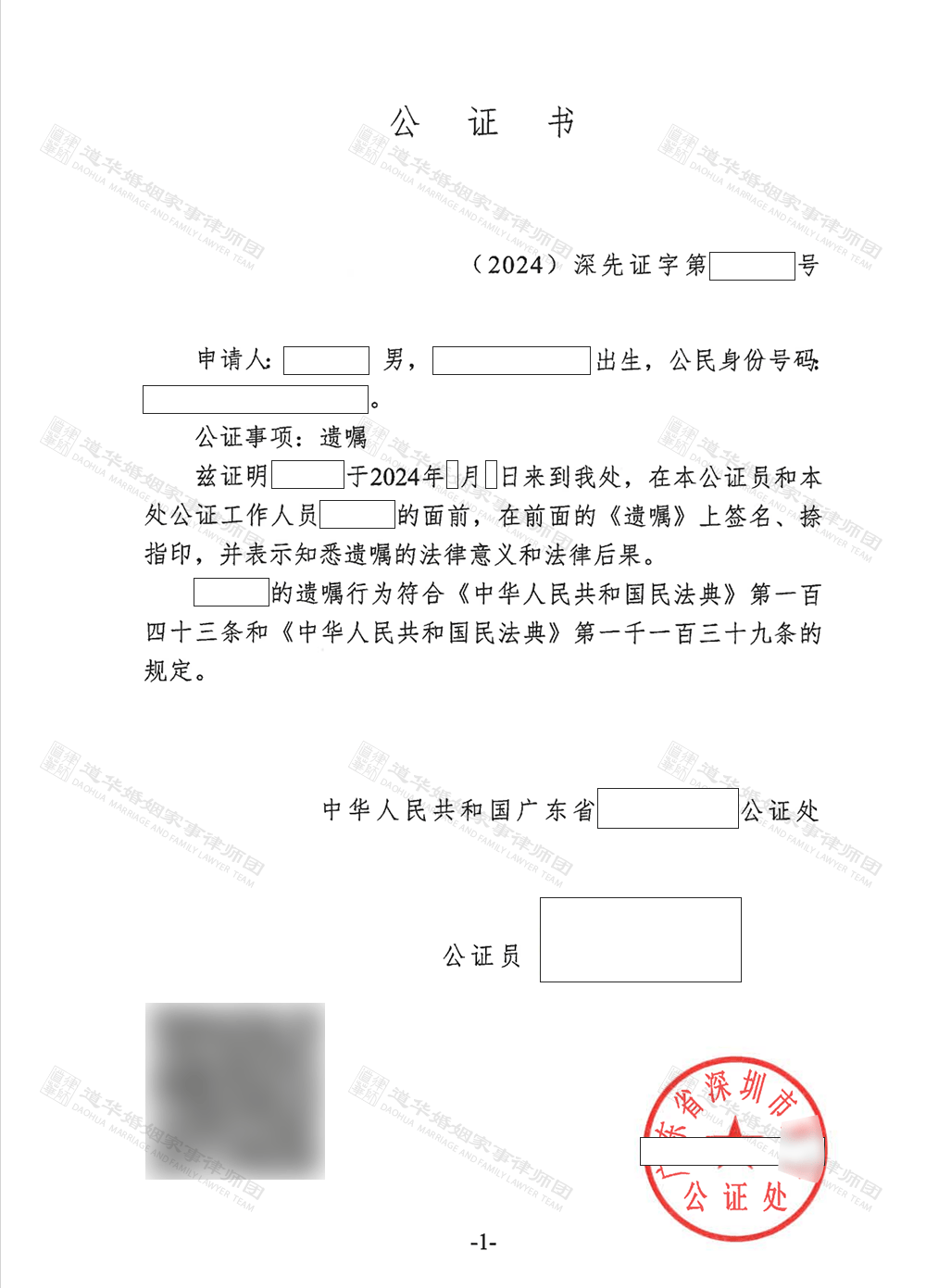
III. Practical Insights and Recommendations Based on the Operational Experience of Dao Hua Law Firm
1. Plan the inheritance legally in advance:Hong Kong residents who own property in mainland China should ensure that the property is legally registered with ownership rights to avoid inheritance issues due to "illegal construction" or "small property rights houses"; the joint property of married couples should have clear shares to avoid testamentary disposition of others' property. Dao Hua Law Firm can assist parties in advance with property confirmation, and for properties with ownership defects, it can clarify the ownership of rights through means such as correcting procedures and family agreements.
2. Standardize will forms and authentication:When drafting a cross-border will, it should simultaneously meet the formal requirements of the will-making place (such as Hong Kong) and the mainland laws (such as handwritten wills require an original signature and the date and month); the will needs to be notarized by a Hong Kong notary public and transmitted through the Ministry of Justice to ensure it has evidence validity in the mainland. Daohua Law Firm can provide a one-stop service of "cross-border will customization + notarization and transmission" to avoid the invalidation of the will due to formal defects or incomplete authentication.
3. Retain actual rights-related evidence:If involved in real estate construction, expansion, and long-term management, it is necessary to retain evidence such as construction contracts, payment vouchers, lease contracts, etc., to prove one's legitimate rights and interests and avoid rights being damaged due to invalid wills (as in the key to the victory of Lin in Case 1). Daohua Law Firm can assist parties in sorting out the evidence chain, clarifying the legality and relevance of evidence, and improving the success rate of rights protection.
4. Rational handling of cross-border evidence conflicts:When there are disputes over multiple wills or cross-border evidence, one can first apply to the High Court of Hong Kong for a determination of the validity of the will, or perfect the evidence chain through cross-border notarization and authentication to avoid having the claim rejected due to defects in evidence. Dao Hua Law Firm can coordinate with lawyers from both the mainland and Hong Kong to handle cases together, reducing the travel of the parties involved and improving the efficiency of dispute resolution. For example, when dealing with cross-border inheritance cases involving multiple heirs, through online communication, power of attorney, and other methods, the reconciliation and transfer procedures can be completed in just 75 days.
5. Choose an efficient dispute resolution path:When there is no dispute, it is recommended to choose notarial inheritance, which has a simple process and lower cost. Daohua Law Firm can assist the parties in quickly handling cross-border material notarization and transfer.The fastest can be completed in as little as 13 days for the inheritance and transfer of ten million yuan worth of real estate.In case of disputes, they can be resolved through litigation or mediation. Dahu Law Firm, with its rich experience in cross-border cases, can assist parties in pursuing favorable judgments while maximizing tax savings and time costs.
Chapter 4: Tang Yunhong's lawyer's experience in handling cases
The disputes over the inheritance of mainland property by Hong Kong residents are essentially a triple overlap of cross-border legal conflicts, the legality of inheritance, and the authentication of will effectiveness. In adjudication, the court strictly adheres to the basic principles of "only legally owned property can be inherited" and "equally emphasizing the form of will and the expression of intention," while also fully considering the particularity of cases involving Hong Kong, balancing the authentication rules of cross-border evidence and the actual rights and interests of the parties.
The Guangdong Dao Hua Law Firm, in its practice of handling over 1000 cases of Hong Kong property inheritance, has developed a standardized solution of “ownership identification — evidence authentication — path selection”: first clarify the legality of the property and the scope of the inheritance, then improve the evidence chain through cross-border notarization, and finally choose the path of notarized inheritance or litigation inheritance based on the dispute situation, ensuring both the legitimate rights and interests of the parties and considering efficiency and cost. For heirs, the core path to avoid disputes and safeguard their legitimate rights and interests is to standardize property ownership in advance, improve the form of wills, retain key evidence, and at the same time rely on the assistance of a professional cross-border legal team.
Daohua Family Law Firm (Guangdong Daohua Law Firm), with ten years of focus on major property family law services, divorce and inheritance family disputes (mediation/trial) practical experts, is one of the influential brands of professional legal services in the Guangdong Greater Bay Area [Shenzhen local], and is also a benchmark lawyer team for mediation and trial in the well-known cross-border divorce and inheritance field.
The Tang Yunhong law firm has handled over 1,000 cases related to marriage and inheritance, involving tens of billions of yuan in amounts, including the division of divorce-related major properties such as shares in listed companies, Shenzhen small property rights houses, land, and factories.Succession inheritance disputeThere are abundant successful trial cases in the fields of dispute resolution such as litigation, will drafting, and inheritance of family property. Particularly skilled in handling cross-border property divorce lawsuits, inheritance disputes, and other industry difficult issues, we use localized legal wisdom to overcome various complex family property disputes, winning high praise from clients and industry reputation.
Adhering to the philosophy of "securing property safety, preventing legal risks, and empowering wealth appreciation," we gather experts from industries such as law, banking, insurance, and finance and taxation. With rich experience in civil and commercial litigation and arbitration, as well as civil and criminal crossover and tax planning, we provide a comprehensive package of solutions for high-net-worth individuals (including those from Hong Kong, Macau, and foreign nationals) for marriage, family affairs, and wealth inheritance. This aims to achieve the beautiful vision of risk prevention and control, debt isolation, and family wealth inheritance.
Asset types cover: real estate (residential properties, small property rights houses, land, factories, etc.), movable property (vehicles, antiques, paintings, gold jewelry, etc.), various property rights (cash deposits, equity, debts, relocation compensation, fund investments, virtual property, intellectual property rights, etc.). The team systematically compiles professional achievements such as "Compilation of Successful Cases of Dao Hua Marriage and Inheritance" and "Legal Practice of Family Wealth Transmission", to meticulously protect clients' property rights and interests, and to safeguard the inheritance of family wealth with meticulous service!
No registration required, quick appointment, expert lawyers provide customized legal service solutions
 Consultation Appointment:400-829-6880
 Private Space:18126123723
 Law Firm: Guangdong Daohua Law Firm
 Email:DAOHUALAWMF@163.com
 Address:810, Rongchao Economic & Trade Center, 4028 Jintian Road, Futian District, Shenzhen (Next to Civic Center)

18126123723
Follow us anytime, anywhere


