
Navigation
Author: Dao Hua Marriage and Family Law FirmDate: 2026-04-08Reads:times
Marriage and Family Affairs Dispute (Mediation/Litigation) Practical Expert
Ten years of focus on; marriage and family legal services for bulk property matters
Guangdong Dao Hua Law Firm, Dao Hua Marriage and Family Law Team, Tang Yunhong Lawyer, Top Ten Divorce Lawyers in Shenzhen, Top Ten Inheritance Lawyers, Professional Divorce and Inheritance Litigation Lawyers in the Guangdong-Hong Kong-Macau Greater Bay Area, Famous lawyers for large family properties, numerous successful cases, especially skilled in handling: difficult property division/court litigation, listed company equity/fund/share division, real estate, Shenzhen small property rights houses/farmer houses, land, factories, virtual currency assets, Hong Kong divorce property division, marital/divorce property agreements, tax planning, debt isolation, divorce property transfer, cross-border inheritance, will notarization, will/inheritance disputes litigation, will drafting and validity determination, old city renovation and demolition, civil and criminal overlap, cross-border collaboration, etc. Service areas: Guangdong, Shenzhen, Futian, Hong Kong, Macau, overseas, Guangzhou, Zhongshan, Zhuhai, Foshan, Huizhou, Dongguan.

One, the basic case situation
The heir Cao Mo and the case outsider Wu Mo were formerly husband and wife, and they had two sons and two daughters, namely Wu Mo1, Wu Mo2, Wu Mo3, and Wu Mo4. In 1961, Cao Mo and Wu Mo were divorced through mediation by the court in Hefei City, Anhui Province, and all four children were under the custody of Wu Mo. After the divorce, Cao Mo returned to Wuxi and lived and worked alone.
In 2003, the house No. 47 where Cao Mo lived was demolished. The Residents' Committee of a community in Wuxi City (hereinafter referred to as the Residents' Committee) paid the difference of 169,014.6 yuan for Cao Mo and provided temporary housing for the relocation.
Subsequently, the neighborhood committee and Cao, together with his siblings, signed the "Handling Opinion" in September 2003, agreeing that Cao would be provided with living care and old-age support according to the "Five Guarantees" treatment until his death; Cao's existing movable and immovable properties, including the ownership of the property at No. 47, would be transferred to the neighborhood committee for disposal after his death. In case of planning and construction demolition, the neighborhood committee would be responsible for Cao's housing issues and post-demolition resettlement and compensation matters.
Additionally, it was found that the neighborhood committee, in accordance with the provisions of the "Handling Opinions," arranged staff to take care of Cao's daily life, paid for medical expenses and hospitalization fees during his illness, as well as the costs of sending him to a nursing home in his old age, and at the same time, provided him with condolence money. This continued until Cao's death in 2019, when the committee handled his funeral and bore the funeral expenses of 59,336 yuan.
Cao Mou returned to Wuxi from Anhui after his divorce in 1961 and until his death in 2019, his four children never visited or supported him. Later, Wu Mou 1 and the other four people sued the court, requesting to inherit Cao Mou's estate and requesting the court to declare the "Handling Opinion" involved in the case invalid.
Case Focus
1. What is the nature of the "Handling Opinion" involved, and is it valid?
2. Whether the heir has fulfilled the obligation of support.
How to divide the inheritance of Cao.
III. The essence of the court's judgment
The Wuxi Intermediate People's Court of Liangxi District, Jiangsu Province, after hearing the case, believes:
One, regarding the nature and validity of the "Handling Opinion" involved in the case
Firstly, according to Article 31 of the "Inheritance Law of the People's Republic of China": "Citizens may enter into a legacy and support agreement with a guardian. According to the agreement, the guardian undertakes the obligations of raising and burying the citizen, and enjoys the right to inherit. Citizens may enter into a legacy and support agreement with a collective ownership organization. According to the agreement, the collective ownership organization undertakes the obligations of raising and burying the citizen, and enjoys the right to inherit." At the same time, according to the first paragraph of Article 36 of the "Law of the People's Republic of China on the Protection of the Rights and Interests of the Elderly": "Elderly persons may enter into a legacy and support agreement or other assistance agreement with organizations such as collective economic organizations, grassroots mass autonomy organizations, and elderly care institutions, or with individuals." As a grassroots mass autonomy organization for self-management, self-education, and self-service of residents, the neighborhood committee can enter into civil contracts in its name and can become the counterparty to a legacy and support agreement. Secondly, although the agreement in this case is named "Handling Opinion," from the analysis of the rights and obligations stipulated, the neighborhood committee, as the guardian, undertakes the obligations of raising and burying Cao, and Cao bequeaths his property to the neighborhood committee, which is in accordance with the provisions of Article 31 of the "Inheritance Law of the People's Republic of China" and should be a legacy and support agreement. Finally, the "Handling Opinion" was signed by Cao himself and his siblings, which should be a true expression of Cao's intention. Cao was aware of the fact of house demolition and never raised any objections before his death. Therefore, the legacy and support agreement signed between the neighborhood committee and Cao is competent in subject, genuine in intention, and does not violate any provisions of the law that are prohibited, and should be legally valid.
Regarding whether the residential committee of the heir has fulfilled the obligation of support.
In this case, the neighborhood committee provided assistance to the elderly and lonely Mr. Cao in his daily life for a period of 16 years after the signing of the "Handling Opinion." It properly arranged his accommodation, had a special person to care for him, paid for his medical expenses, sent him to a nursing home and paid the corresponding fees when he was old, and bore the funeral expenses after his death. Therefore, the court determined that the neighborhood committee has fulfilled its obligation to support the supported person, Mr. Cao, and ensured his upbringing and burial.
About how to divide the inheritance of Cao Mo
According to Article 5 of the "Inheritance Law of the People's Republic of China": "After inheritance begins, it shall be handled in accordance with the statutory inheritance; if there is a will, it shall be handled in accordance with the will inheritance or legacy; if there is a legacy and support agreement, it shall be handled in accordance with the agreement." The effectiveness of the legacy and support agreement shall take precedence over will inheritance and statutory inheritance. In this case, the neighborhood committee has consistently and continuously fulfilled the obligation of support to Cao, and has already fulfilled the obligation of providing pre-death support and post-death burial as agreed upon in the "Handling Opinion." Conversely, Wu No. 1, Wu No. 2, Wu No. 3, and Wu No. 4 have not fulfilled any filial obligations to Cao after Cao and Wu divorced and returned to Wuxi, therefore, the neighborhood committee has the right to enjoy the rights of legacy as agreed upon in the "Handling Opinion."
Hereby, in accordance with Article 2, Article 3, Article 5, Paragraph 2 of Article 31 of the "Inheritance Law of the People's Republic of China", Article 36 of the "Law of the People's Republic of China on the Protection of the Rights and Interests of the Elderly", and Article 64, Article 142 of the "Civil Procedure Law of the People's Republic of China", the following judgment is made:
One, confirm the validity of the "Handling Opinion" signed between the neighborhood committee and Cao Mo;
Secondly, the residential house involved in the case, which was obtained by Cao, belongs to the neighborhood committee.
Three, the cash of 114,700 yuan, the principal and interest of 183,374 yuan in bank deposits, and the shares of the cooperative economy cooperative belong to the neighborhood committee.
Wu No.1, Wu No.2, Wu No.3, and Wu No.4 appealed the first-instance judgment. They appealed to the Intermediate People's Court of Wuxi City. The second-instance trial resulted in a judgment consistent with the first-instance court's opinion, which was to reject the appeal and uphold the original judgment.
Chapter Four: The Tang Code Interpretation
One, the subject qualification of the guardian in the inheritance support agreement and the determination of the agreement's validity
Individuals can enter into a legacy and support agreement with individuals, organizations, etc., other than legal heirs. The Community Residents' Committee is competent as a subject and can become the caregiver in a legacy and support agreement. Whether an agreement belongs to a legacy and support agreement is not solely determined by the name of the agreement, but mainly reviewed for whether it includes content such as the care of the elderly, burial, and inheritance.
The neighborhood committee has the subject qualification as a legatee guardian. The judgment reasons of this case cite Article 31 of the "Law of the People's Republic of China on Inheritance", indicating that a natural person can enter into a legacy guardianship agreement with a collective ownership organization other than the legal heir. The "Law of the People's Republic of China on the Protection of the Rights and Interests of the Elderly" promulgated after the inheritance law stipulates in Article 36 that grassroots mass autonomy organizations can become the guardians in legacy guardianship agreements. As a grassroots mass autonomy organization, the neighborhood committee is qualified as the subject. The "Civil Code of the People's Republic of China" Inheritance Chapter Article 1158 has improved the legacy guardianship agreement system, stipulating that a natural person can enter into a legacy guardianship agreement with an organization or individual other than the heir. This provision expands the subject range that can become the guardian in the legacy guardianship agreement, no longer limited to "collective ownership organizations", including organizations such as social elderly care institutions and civil aid organizations, which can all become guardians. When the subject is qualified, the expressions of will of the parties are genuine, and the content does not violate the prohibitive provisions of laws and regulations, it should be legally valid.
With China entering a deep aging society, achieving the goal of elderly people being taken care of and relying on others is both a family matter and a major issue concerning the national economy and people's livelihood. The Civil Code implemented in 2021 stipulates a series of systems such as adult guardianship, residential rights, and inheritance and support agreements, providing new ideas for elderly care. The Civil Code expands the scope of subjects for inheritance and support, which broadens the channels for third-party individuals or organizations to provide social elderly care services from a legal perspective, easing the pressure on social elderly care, making up for the deficiencies in social relief, and meeting the diverse needs of elderly care forms, giving "elderly people being taken care of" more choices. From a social perspective, encouraging collective organizations, public welfare institutions, and elderly care institutions to care for and support elderly people in need is conducive to the construction and development of a diversified social elderly care system; from a family perspective, giving the elderly the right to make independent choices for their own elderly care is conducive to promoting children's filial piety, improving the quality of life of the elderly in their later years, and leading the social trend of respecting and loving the elderly.
Article 2: The non-equivalence of the agreement for inheritance support and the principle of priority application
The guardian who assumes the obligation of supporting the natural person's upbringing, maintenance, and burial according to the agreement shall have the right to receive a legacy, and the value of the inheritance obtained does not necessarily have an equivalent relationship with the expenses incurred during the support. If the legal heir also claims the right of inheritance, the agreement for inheritance and support shall take precedence over the legal inheritance.
A legacy support agreement is an equal, compensated, and reciprocal civil legal relationship, aimed at encouraging people to care for elderly individuals in need through certain benefits, combining property behavior with moral behavior and social mutual assistance. The main purpose of the person providing support in signing the agreement is not to obtain property benefits, but to support and help the person being supported, i.e., to ensure the person being supported's birth, upbringing, and burial. Although it is compensated and bilateral, it is not a commercial contract and is difficult to measure for equivalence. Support not only includes material supplies but also includes living support and care, spiritual care and comfort, and also requires that the person providing support fulfills the support obligations from beginning to end and continuously over a long period, and cannot be judged fair and reasonable solely based on material equivalence. In this case, although the amount spent by the neighborhood committee and the final inheritance obtained do not seem to be equal, it should be noted that the neighborhood committee has provided material support, living care, and spiritual care for many years, allowing the elderly to enjoy their later years in peace.
The agreement for inheritance and support takes precedence over legal inheritance and testamentary inheritance when it is established, becomes effective, and is actually performed. Although the legal heirs are blood relatives, they are also unable to inherit the heritage. Article 1230 of the Civil Code of the People's Republic of China stipulates: "After inheritance begins, it shall be handled according to legal inheritance; if there is a will, it shall be handled according to testamentary inheritance or donation; if there is an agreement for inheritance and support, it shall be handled according to the agreement." In this case, the residential committee and the elderly person signed an agreement for inheritance and support, agreeing that the residential committee would provide the elderly person with pre-death support and post-death burial obligations, and after the elderly person's death, donate their property to the residential committee. In the following 16 years, the residential committee honored its commitments, providing long-term and continuous material support and spiritual care to the elderly, and should have the right to inherit the elderly person's heritage. In contrast, the biological children of the elderly person, knowing that the elderly person was alive and living in Wuxi, had not visited, cared for, or fulfilled filial piety for nearly 16 years. After the court finally determined that the agreement for inheritance and support was valid, according to the provisions of the law, the agreement for inheritance and support was given priority, and the judgment was that the heritage belonged to the residential committee.
Case Source: China Courts Annual Cases 2024, Marriage, Family, and Inheritance Disputes
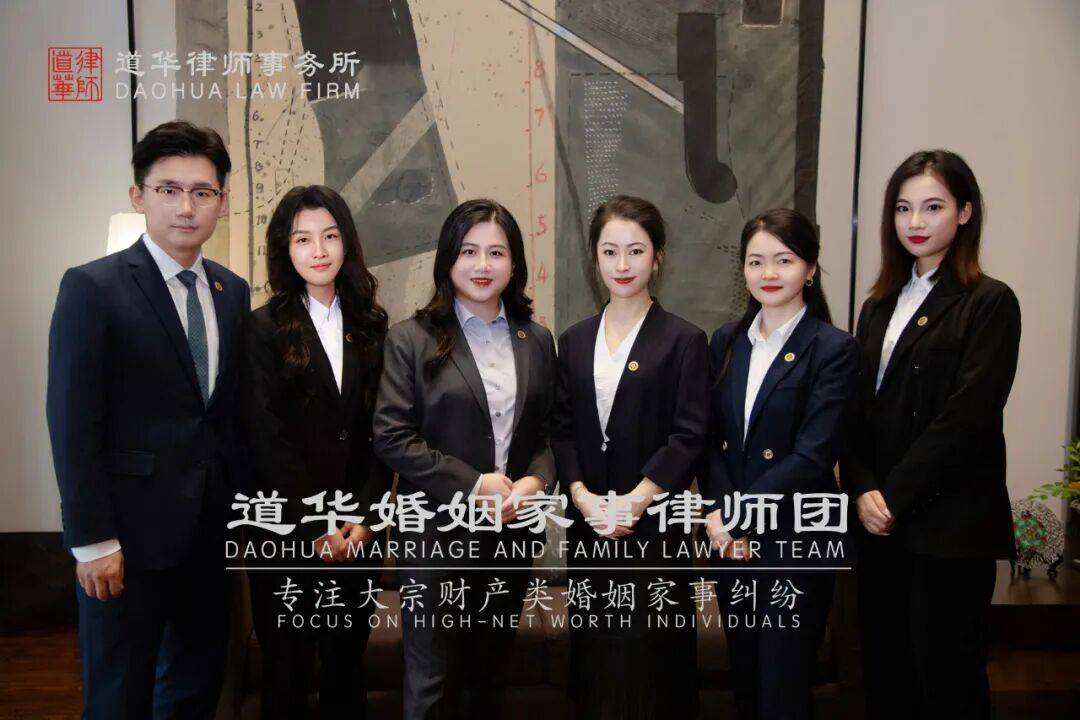
Daohua Family Law Firm (Guangdong Daohua Law Firm), with ten years of focus on major property family law services, divorce and inheritance family disputes (mediation/trial) practical experts, is one of the influential brands of professional legal services in the Guangdong Greater Bay Area [Shenzhen local], and is also a benchmark lawyer team for mediation and trial in the well-known cross-border divorce and inheritance field.
The Tang Yunhong law firm has handled over 1,000 cases related to marriage and inheritance, involving tens of billions of yuan in amounts, including the division of divorce-related major properties such as listed company equity, Shenzhen small property rights houses, land, and factories.Dispute over inheritance litigationWith rich successful litigation cases in dispute resolution areas such as will customization and family property inheritance, especially skilled in handling cross-border property divorce lawsuits, inheritance disputes, and other industry difficult issues, using localized case-handling wisdom to overcome various complex family property disputes, winning high praise and industry reputation from clients.
Adhering to the philosophy of "securing property safety, preventing legal risks, and empowering wealth appreciation," we gather experts from industries such as law, banking, insurance, and finance and taxation. With rich experience in civil and commercial litigation and arbitration, as well as civil and criminal crossover and tax planning, we provide a comprehensive package of solutions for high-net-worth individuals (including those from Hong Kong, Macau, and foreign nationals) in marriage, family affairs, and wealth inheritance. This is to achieve the beautiful vision of risk prevention and control, debt isolation, and family wealth inheritance.
Asset types include: real estate (residential properties, small property rights houses, land, factories, etc.), movable property (vehicles, antiques, paintings, gold jewelry, etc.), various property rights (cash deposits, equity, debts, relocation compensation, fund investments, virtual property, intellectual property rights, etc.). The team systematically compiles professional achievements such as "Compilation of Successful Cases of Dao Hua Marriage and Inheritance" and "Legal Practice of Family Wealth Transmission", to meticulously protect clients' property rights and interests, and to safeguard the inheritance of family wealth with meticulous service!
Related recommendations:
Shenzhen professional small property inheritance lawyer Tang Yunhong discusses practical guidelines for small property inheritance litigation under different circumstances
Statement:The information or articles published on this website are for exchange purposes only. The names of individuals/companies mentioned in this article are pseudonyms, and the amounts/dates of case information have been processed for confidentiality. The content of the article is created by the author and does not represent legal opinions or suggestions provided by Guangdong Daohua Law Firm or other lawyers. The information contained in this article is provided for general information purposes only, and Guangdong Daohua Law Firm does not make any timeliness modifications or updates to this article. Decisions made by readers based on all or part of the content of this article and the consequences arising therefrom are solely the responsibility of the individuals involved. The author and Guangdong Daohua Law Firm assume no responsibility. If any content of these articles is to be reproduced or cited, please indicate the source. If you need legal advice or legal services, please contact our lawyers.
No registration required, quick appointment, expert lawyers provide customized legal service solutions
 Consultation Appointment:400-829-6880
 Private Space:18126123723
 Law Firm: Guangdong Daohua Law Firm
 Email:DAOHUALAWMF@163.com
 Address:810, Rongchao Economic & Trade Center, 4028 Jintian Road, Futian District, Shenzhen (Next to Civic Center)

18126123723
Follow us anytime, anywhere


