
Navigation
Author: Dao Hua Marriage and Family Law FirmDate: 2026-04-02Reads:times
Marriage and Family Affairs Dispute (Mediation/Litigation) Practical Expert
Ten years of focus on; marriage and family legal services for bulk property matters
Guangdong Dao Hua Law Firm, Dao Hua Marriage and Family Law Team, Tang Yunhong Lawyer, Top Ten Divorce Lawyers in Shenzhen, Top Ten Inheritance Lawyers, Professional Divorce and Inheritance Litigation Lawyers in the Guangdong-Hong Kong-Macau Greater Bay Area, Famous lawyers for large family properties, numerous successful cases, especially skilled in handling: difficult property division/court litigation, listed company equity/fund/share division, real estate, Shenzhen small property rights houses/farmer houses, land, factories, virtual currency assets, Hong Kong divorce property division, marital/divorce property agreements, tax planning, debt isolation, divorce property transfer, cross-border inheritance, will notarization, will/inheritance disputes litigation, will drafting and validity determination, old city renovation and demolition, civil and criminal overlap, cross-border collaboration, etc. Service areas: Guangdong, Shenzhen, Futian, Hong Kong, Macau, overseas, Guangzhou, Zhongshan, Zhuhai, Foshan, Huizhou, Dongguan.

Introduction:Legal inheritance refers to a method of inheritance where the scope of heirs, the order of inheritance, the conditions for inheritance, the share of inheritance, the principles of inheritance distribution, and the procedures of inheritance are all directly stipulated by law. It ensures the orderly transfer of property through clear legal norms and the rules are designed to align with blood relations and family ethics. However, in judicial practice, disputes over legal inheritance often present many difficulties and challenges due to a large number of parties involved, significant stakes in dispute, and complex family conflicts. The focal points of such disputes are often centered around the identification of heir qualifications, the definition of the scope of inheritance, and the division of the proportion of inheritance.
The marriage and family law team of Guangdong Dao Hua Law Firm will take a case of inheritance dispute as an example in this article, combining the "Civil Code of the People's Republic of China" (hereinafter referred to as the "Civil Code") and relevant judicial interpretations, to analyze the core legal rules of statutory inheritance and the judicial thinking in judgments.
One, the substitution inheritance and the situation of excessive support intertwined in legal inheritance
(1) Basic Case Situation
The heir Su Mou passed away in 2018, with his spouse and parents having died before him, and he had no natural or adopted children. His only sister, Su Moumou, also passed away earlier. Su Moujia is the adopted daughter of Su Moumou and is the niece of Su Mou; Li Mou is the son of Su Mou's sister, and Li Moumou is the son of Li Mou. The house involved in the case is jointly owned by Su Mou and Li Moumou, with a market value of 4 million yuan. Li Mou is also in charge of keeping Su Mou's plum blossom brand watch and a diamond ring. Su Mou did not leave a will or a legacy and maintenance agreement before his death. Su Moujia claims the right to substitute inheritance for all of Su Mou's estate, while Li Mou and Li Moumou argue that Li Mou was responsible for Su Mou's daily care, hospital visits, and funeral arrangements for more than a decade before his death, and the inheritance should be inherited by Li Mou.
(2) Judgment result
The effective judgment of the court holds that as Su Mou did not leave a will or a legacy and maintenance agreement before his death, the inheritance should be handled according to the statutory inheritance; Su Mou Jia, as the adopted daughter of the deceased's siblings, is entitled to the right of substitutionary inheritance by law; at the same time, because Li Mou has fulfilled more maintenance obligations to the deceased, as a person who has provided more maintenance to the deceased outside of the inheritance, Li Mou can receive an appropriate share of the inheritance and may receive more than Su Mou Jia.
Therefore, the court ultimately ruled that the involved house is jointly owned by Li Mou and Li Moumou in equal shares, each holding a 1/2 ownership interest; Li Mou shall pay Su Moujia a compensation of 600,000 yuan for the house; the watch and diamond ring in Li Mou's possession shall belong to Li Mou.
Two, decompose the core points of legal inheritance from typical cases
The core premise of legal inheritance: the mandatory application in the absence of a will or a legacy support agreement
The applicability of statutory succession is supplementary. Article 1123 of the Civil Code explicitly stipulates that after the succession begins, matters shall be handled in accordance with the agreement of legacy and support first, and in accordance with the will for inheritance or legacy if there is a will. Only in the absence of a will and an agreement of legacy and support shall the rules of statutory succession be applied.
In the aforementioned case, the deceased, Su Mou, did not make any will or agreement for the support and guardianship of the inheritance before his death. The inheritance lacks a designated arrangement, which becomes the premise for the application of statutory inheritance. In judicial practice, the first step in the court's handling of inheritance disputes is to review the existence of a valid will, agreement for the support and guardianship of the inheritance, or family property agreement. When the aforementioned documents only deal with part of the inheritance, the unaddressed part still needs to be divided according to statutory inheritance.
(2) Core subjects of legal inheritance: heir qualification and substitution inheritance rules
The determination of heirship qualification is the basis of statutory succession, and the Civil Code clarifies the scope, order, and substitute succession system of statutory heirs, resolving the core issue of "who has the right to inherit."
1. Scope and priority of legal heirs
Article 1127 of the Civil Code stipulates that the first priority of legal heirs is the spouse, children, and parents; the second priority is the siblings, grandparents, and granduncles/grand aunties. After inheritance begins, the first priority heirs inherit, and the second priority heirs do not inherit; if there are no first priority heirs, the second priority heirs inherit.
Among them, children include legitimate children, illegitimate children, adopted children, and stepchildren with a foster relationship. Brothers and sisters also include adopted siblings and stepbrothers and sisters with a foster relationship. Adopted children enjoy equal inheritance rights with natural children, and in this case, the inheritance qualification of Su Moumou's adopted daughter Su Moujia is determined based on this.
2. The applicable conditions and scope of substituted succession
Succession by representation is a special system in statutory succession, aimed at safeguarding the inheritance rights of the descendants or siblings' children of the deceased, as stipulated in Article 1128 of the Civil Code.
(1) Substitution succession of children.If the heir's children die before the heir, the inheritance is substituted by the direct descendants of the heir's children, and the direct descendants are not subject to the restriction of generations, grandchildren, great-grandchildren, and great-great-grandchildren can all substitute.
(2) Representation by siblings in inheritance.If the siblings of the deceased heir predecease the heir, their children shall succeed to their place in the inheritance. This provision is an important amendment to the original inheritance law by the Civil Code, which expands the scope of substitutionary inheritance.
In this case, the deceased Su Mou has no first-degree heir, and his sister Su Moumou, as the second-degree heir, died before him. Su Moujia, as the adopted daughter of Su Moumou, is entitled to the right of substitutionary inheritance by law and becomes the legal heir of Su Mou. It should be noted that the substitutionary heir generally can only inherit the inheritance share that the substituted heir has the right to inherit, and substitutionary inheritance only applies to legal inheritance, and does not occur in testamentary inheritance.
(3) Property boundary of legal inheritance: rules for defining the scope of inheritance
The inheritance is the personal legal property left by the deceased at the time of death. Defining the scope of inheritance is an important step in legal succession, with the core principle being to distinguish between personal property and jointly-owned property, and to exclude property of non-inheritance nature.
1. Core criteria for the identification of heritage
In legal inheritance, the identification of the inheritance property must meet two conditions: one is the timing, that is, the property that existed at the time of the deceased's death; the other is legality, that is, the property that the deceased legally owns. Common inheritance properties include real estate, savings, investment products, stocks, vehicles, equity, etc. However, funeral subsidies and compensation for bereavement, etc., as they arise after the deceased's death, are not considered inheritance. But if all parties agree, the court may handle them together in the case of legal inheritance.
2. Rules for the division of joint property
In practice, the deceased's property is often mixed with the joint property of the husband and wife and the common property of the family. In such cases, it is necessary to first segregate the property before inheritance. Article 1153 of the Civil Code stipulates that for the joint property of the husband and wife, the spouse's half share should be separated first, with the remainder being the heritage of the deceased; for the common property of the family, the property of the other co-owners should be separated first.
In this specific case, the house in question is registered as jointly owned by Su Mou and Li Moumou. The court first divided the property and confirmed that Su Mou has a 1/2 ownership share, which part belongs to Su Mou's inheritance. The other half belongs to Li Moumou and is not within the scope of inheritance division. This judgment approach also reflects the principle in judicial practice of "dividing property based on property registration and combining it with the actual joint ownership situation," especially for special properties such as relocation and resettlement housing, post-sale public housing, etc. If the heir is the person resettled, or used their work experience or investment to purchase the house, even if it is not registered in their name, it may still be identified as a share of the inheritance.
(4) Principle of division in statutory succession: equality as the principle, exceptions as the supplement
Article 1130 of the Civil Code establishes the principle of inheritance division in statutory succession: the shares of inheritance inherited by heirs of the same order shall generally be equal, while also stipulating multiple exceptions, taking into account the interests and the principle of consistency between rights and obligations of special groups.
1. The general principle of equal division
Equal division is the basic rule of legal inheritance, aimed at ensuring the equal inheritance rights of heirs of the same priority, and applies to situations where each heir has an equivalent obligation to support the deceased and does not face special living difficulties. If the deceased has multiple children and each child has fulfilled the same support obligations, the inheritance is generally divided equally among the number of children.
2. Exceptions where more can be allocated, or should be allocated more
(1) The heirs who have fulfilled the main support obligations to the deceased or have lived together with the deceased can receive a larger share: the main support obligations not only include economic support but also include care in daily life and spiritual comfort.
(2) Heirs with special difficulties in life and lack of labor capacity should be given consideration: such as minor heirs, and heirs who are unable to work and have no source of income, the court will prioritize the protection of their basic living needs from the inheritance, reflecting the law's protection of vulnerable heirs.
(3) People who are not heirs but have provided more support can receive an appropriate share of the inheritance: Article 1131 of the Civil Code stipulates that people who are not heirs but rely on the deceased for support, or those who have provided more support to the deceased, can receive an appropriate share of the inheritance, and their share may be more or less than that of the legal heirs. This is an important rule in statutory inheritance that breaks through the blood relationship, aiming to promote the traditional virtue of respecting and caring for the elderly.
In this case, Li Mou is not the legal heir of Su Mou, but after the court's consideration, it was determined that over a period of more than a decade, Li Mou took care of Su Mou's daily life, handled hospital matters, and arranged for the funeral, fulfilling the main support obligations. Therefore, the court ruled that Li Mou should receive a larger share of Su Mou's inheritance than Su Mou Jia.
3. Situations where less or no distribution should be made
Heirs with the ability and conditions for support, who fail to fulfill their support obligations, should receive an unequal or lesser share of the inheritance. This provision is a direct manifestation of the principle of consistency between rights and obligations. In judicial practice, "failing to fulfill the support obligations" needs to be judged in conjunction with the actual ability of the heir. If the heir truly lacks the ability to support, and is not unwilling to support due to subjective reasons, they may still enjoy equal inheritance rights.
(Five) Considerations for judicial determination of legal inheritance: balancing the utilization of heritage and public order and good customs
The court, when dividing the inheritance as prescribed by law, does not apply the proportional division mechanically, but makes a comprehensive judgment based on the actual use of the heritage, the actual needs of the heirs, public order and good customs, etc., to achieve the unity of legal and social effects.
1. The principle of practicality in the division of inheritance
For inheritances that are not suitable for division, such as real estate and vehicles, the court generally follows the principle of maximizing the use benefits of the inheritance, ruling that they belong to the actual users and residents, and that they pay a compensation price to other heirs, in order to avoid a decrease in the use efficiency after the inheritance is divided, and to facilitate the actual enforcement of the judgment.
2. Consistency between rights and obligations and the integration with public order and good customs
The statutory inheritance system is not only a rule for the transmission of property but also an embodiment of family ethics and public good customs. In this case, the court protected Su Moujia's legitimate inheritance rights based on substituted succession and also fully recognized Li Mou's efforts in supporting the deceased. The judgment that Li Mou should receive more than the statutory heir's inheritance is a judicial response to the principle of "matching support efforts with inheritance benefits," and it promotes the traditional virtue of "honoring the elderly and taking care of them from beginning to end."
Chapter 3: Insights from Handling Cases According to the Tang Code
Legal inheritance as the "safety net rule" for heritage transmission, not only guarantees the legitimate rights and interests of heirs through clear legal norms, but also reflects fairness, justice, and public order and good customs through rules such as preferential support for child-rearing and care for the vulnerable. Combining the above cases and legal rules, in practice, the resolution of disputes and protection of rights in legal inheritance require grasping three core points:
(1) Preserve evidence, clarify ownership:The heir and family members should properly keep the ownership certificates of properties, deposits, equity, and other assets. For jointly-owned properties, the shares can be clarified through agreements to avoid disputes over property division after death; the heir should retain evidence of supporting the deceased, such as payment receipts, care records, witness testimonies, etc., as the basis for a larger share of the inheritance.
(Kēi) Know the rules, assert rights:The legal heir should clarify their inheritance priority and right of substitutional inheritance; adopted children, stepchildren with a foster relationship, and natural children have equal inheritance rights; those who have provided more support to the deceased than others can claim a fair share of the inheritance according to law, without being restricted by blood relations.
(3) Mutual understanding and tolerance, negotiation and resolution:Article 1132 of the Civil Code stipulates that heirs shall handle inheritance issues with the spirit of mutual understanding, mutual tolerance, and harmonious unity. Legal inheritance disputes often occur among relatives, and reaching a consensus can both reduce family conflicts and improve the efficiency of inheritance. If a consensus cannot be reached, it can be resolved through people's mediation or litigation.
Chapter 4: Legal Index
The Civil Code of the People's Republic of China
Article 1123: After the inheritance begins, it shall be handled in accordance with the statutory inheritance; where there is a will, it shall be handled in accordance with the will inheritance or legacy; where there is a legacy and support agreement, it shall be handled in accordance with the agreement.
Article 1125: If an heir engages in any of the following acts, they shall lose their inheritance rights:
(1) Intentionally killing the heir;
(2) Killing other heirs in order to seize the inheritance;
(3) Abandoning the heir or severely mistreating the heir;
(4) Counterfeiting, altering, concealing, or destroying a will, with serious circumstances;
(Five) Using fraudulent or coercive means to compel or hinder the testator from establishing, altering, or revoking a will, with serious circumstances.
If the heir has behaviors in items 3 to 5 of the preceding paragraph and truly shows repentance, and the deceased expresses forgiveness or lists them as an heir in the will afterwards, the heir shall not lose the right of inheritance.
If the heir has the acts stipulated in paragraph one of this article, they shall lose the right to inherit.
Article 1127 The inheritance of the estate shall be inherited in the following order:
First priority: spouse, children, parents.
(Second priority: siblings, grandparents, and great-grandparents.)
Upon the commencement of inheritance, the first-order heir shall inherit, and the second-order heir shall not inherit; if there is no first-order heir to inherit, the second-order heir shall inherit.
The term "children" referred to in this chapter includes legitimate children, illegitimate children, adopted children, and stepchildren with a foster relationship.
The term "parents" as used in this section includes natural parents, adoptive parents, and step-parents with a foster relationship.
The term "brothers and sisters" used in this section includes siblings with the same parents, siblings with different fathers or mothers, adopted siblings, and stepbrothers and stepsisters with a foster relationship.
Article 1128 If the children of the deceased predecease the deceased, the direct descendants of the deceased's children shall succeed by representation.
If the siblings of the deceased person predecease the deceased, the children of the deceased person's siblings shall succeed in their place.
The substitute heir can generally only inherit the share of the heritage that the substituted heir has the right to inherit.
Article 1129 The widowed daughter-in-law to the parents-in-law, and the widowed son-in-law to the parents-in-law, who have fulfilled the main obligation of support, shall be considered as the first-order heir.
Article 1130 The share of inheritance inherited by heirs in the same order shall generally be equal.
Special consideration should be given to heirs who have special difficulties in life and lack the ability to work when distributing the inheritance.
The heir who has fulfilled the main support obligations to the deceased or lived together with the deceased can receive a larger share of the inheritance.
The heir who has the ability and conditions for support but fails to fulfill the support obligations shall not be allocated a share of the inheritance or shall be allocated a smaller share.
The heirs may agree to an unequal division.
Article 1131: For persons who rely on the deceased for support and are not heirs, or for persons who have provided more support to the deceased than other heirs, appropriate portions of the inheritance may be allocated to them.
Article 1132 The heir shall handle the inheritance issue with the spirit of mutual understanding, mutual tolerance, and harmonious unity, and negotiate the matter. The time, method, and share of the division of the heritage shall be determined through negotiation by the heir; if the negotiation fails, it may be mediated by the People's Mediation Committee or a lawsuit may be filed with the People's Court.
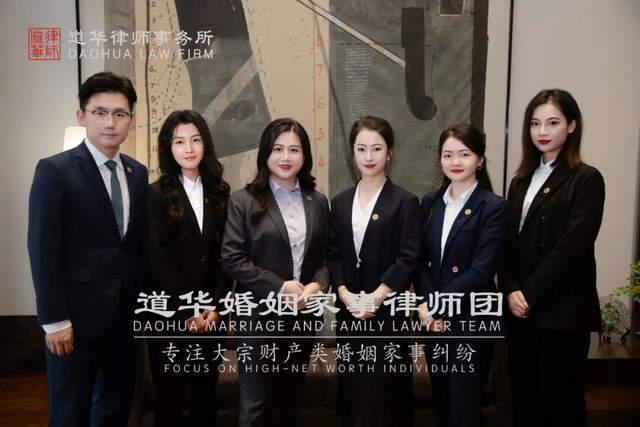
Daohua Family Law Firm (Guangdong Daohua Law Firm), with ten years of focus on major property, marriage, and family legal services, divorce inheritance family disputes (mediation/trial) practical experts, one of the influential brands of professional legal services in the Guangdong-Hong Kong-Macau Greater Bay Area [Shenzhen local], and even a benchmark lawyer team for mediation and trial in the renowned cross-border divorce inheritance field.
The Tang Yunhong Law Firm has handled over 1000 cases related to marriage and inheritance, involving tens of billions of yuan. The firm has extensive successful litigation experience in the fields of dispute resolution, including divorce and division of large properties such as listed company equity, Shenzhen small property rights houses, land, and factories, as well as inheritance disputes, will drafting, and family property inheritance. It is particularly skilled in handling cross-border and cross-jurisdictional divorce lawsuits and inheritance cases, addressing industry difficulties and pain points. With localized legal wisdom, the firm overcomes various complex domestic property disputes, earning high praise from clients and industry reputation.
Adhering to the philosophy of "securing property safety, preventing legal risks, and empowering wealth appreciation," we gather experts from industries such as law, banking, insurance, and finance and taxation. With rich experience in civil and commercial litigation and arbitration, as well as civil and criminal crossover and tax planning, we provide a comprehensive package of solutions for high-net-worth individuals (including those from Hong Kong, Macau, and foreign nationals) in marriage, family affairs, and wealth inheritance. This is to achieve the beautiful vision of risk prevention and control, debt isolation, and family wealth inheritance.
Asset types cover: real estate (residential properties, small property rights houses, land, factories, etc.), movable property (vehicles, antiques, paintings, gold jewelry, etc.), various property rights (cash deposits, equity, debts, relocation compensation, fund investments, virtual property, intellectual property rights, etc.). The team systematically compiles professional achievements such as "Compilation of Successful Cases of Dao Hua Marriage and Inheritance" and "Legal Practice of Family Wealth Transmission", to meticulously protect clients' property rights and interests, and to safeguard the inheritance of family wealth with meticulous service!
Statement:The information or articles published on this website are for exchange purposes only. The names of individuals/companies mentioned in this article are pseudonyms, and the amounts/dates of case information have been processed for confidentiality. The content of the article is created by the author and does not represent legal opinions or suggestions issued by Guangdong Daohua Law Firm or other lawyers. The information contained in this article is provided for general information purposes only, and Guangdong Daohua Law Firm does not make any timely modifications or updates to this article. Decisions made by readers based on all or part of the content of this article and the consequences arising therefrom are solely the responsibility of the individuals involved. The author and Guangdong Daohua Law Firm assume no responsibility. If any content of these articles is to be reproduced or cited, please indicate the source. If you need legal opinions or legal services, please contact our lawyers.
No registration required, quick appointment, expert lawyers provide customized legal service solutions
 Consultation Appointment:400-829-6880
 Private Space:18126123723
 Law Firm: Guangdong Daohua Law Firm
 Email:DAOHUALAWMF@163.com
 Address:810, Rongchao Economic & Trade Center, 4028 Jintian Road, Futian District, Shenzhen (Next to Civic Center)

18126123723
Follow us anytime, anywhere


