
Navigation
Author: Dao Hua Marriage and Family Law FirmDate: 2026-04-14Reads:times
Marriage and Family Affairs Dispute (Mediation/Litigation) Practical Expert
Ten years of focus on; marriage and family legal services for bulk property matters
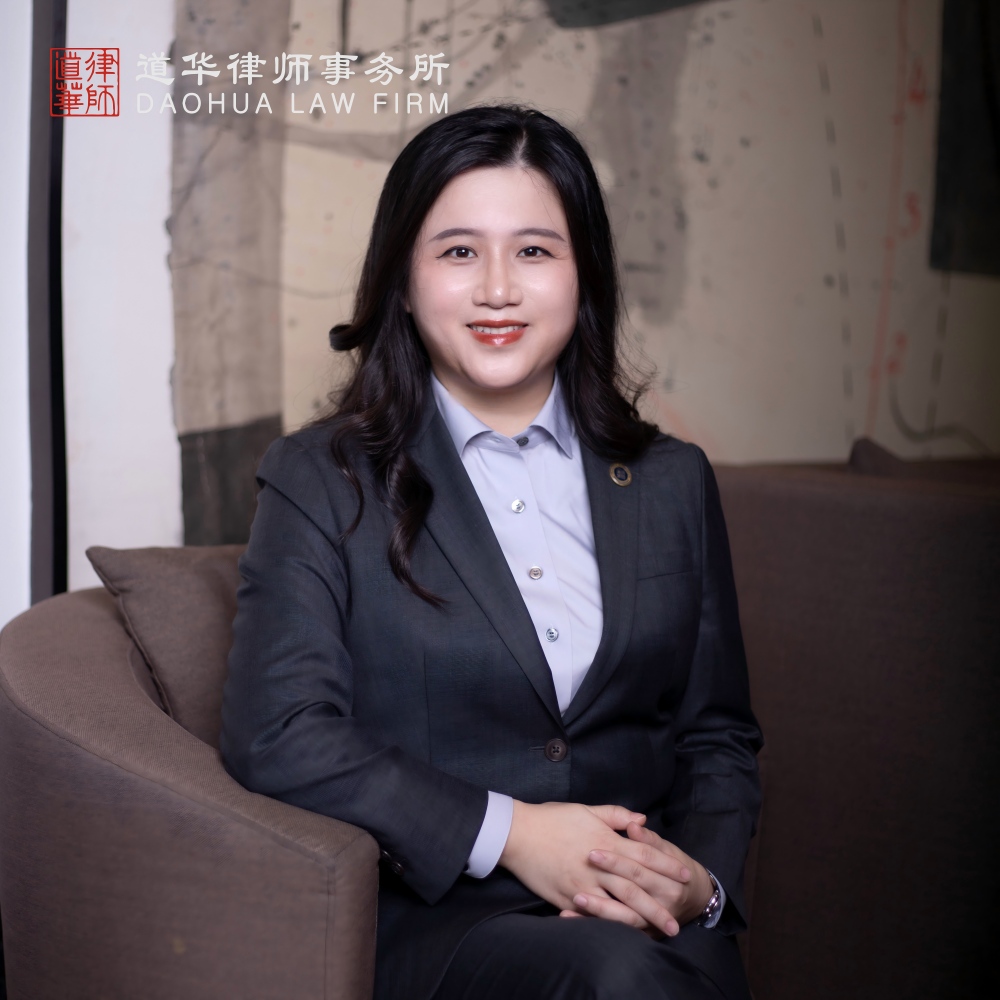
Guangdong Dao Hua Law Firm, Dao Hua Marriage and Family Law Team, Tang Yunhong Lawyer, Top Ten Divorce Lawyers in Shenzhen, Top Ten Inheritance Lawyers, Professional Divorce and Inheritance Litigation Lawyers in the Guangdong-Hong Kong-Macau Greater Bay Area, Renowned Lawyers for Large Family Properties, Numerous Successful Case Wins, Particularly Skilled in Handling: difficult property division/court litigation, listed company equity/fund/share division, real estate, Shenzhen small property rights houses/farmer houses, land, factories, virtual currency assets, Hong Kong divorce property division, marital/divorce property agreements, tax planning, debt isolation, divorce property transfer, cross-border inheritance, will notarization, will/inheritance disputes litigation, will drafting and validity determination, old city renovation and demolition, civil and criminal overlap, cross-border collaboration, etc. Service Areas: Guangdong, Shenzhen, Futian, Hong Kong, Macau, Overseas, Guangzhou, Zhongshan, Zhuhai, Foshan, Huizhou, Dongguan.

Introduction:In marital and domestic disputes, small property houses, due to the lack of legal property registration and their special nature of rights, have become one of the most controversial and complex types of heritage in inheritance and division. Unlike ordinary commercial housing, small property houses cannot be registered as real estate, and their inheritance and division do not involve the transfer of ownership, but are centered around rights such as possession, use, and benefits. Moreover, due to differences in the nature of the house, investment conditions, and the identity of the heirs, the judicial outcomes can vary greatly.
The marriage and family law team of Guangdong Dao Hua Law Firm will analyze the core difficulties in the inheritance lawsuit of small property houses in this article, combining a case of inheritance dispute from the Shenzhen Intermediate People's Court, and sort out the practical handling rules under different situations.
One, Basic Case Situation
The deceased heir Lin Anqian passed away on January 14, 2013, without having made a will or an agreement for the support of the surviving spouse and descendants. Both of his parents had passed away before him. Lin Anqian was married to Huang, with whom he had two children, Lin Mou 4 and Lin Mou 5. At the same time, Lin Anqian had three children, Lin Mou 1, Lin Mou 2, and Lin Mou 3, with his former wife.
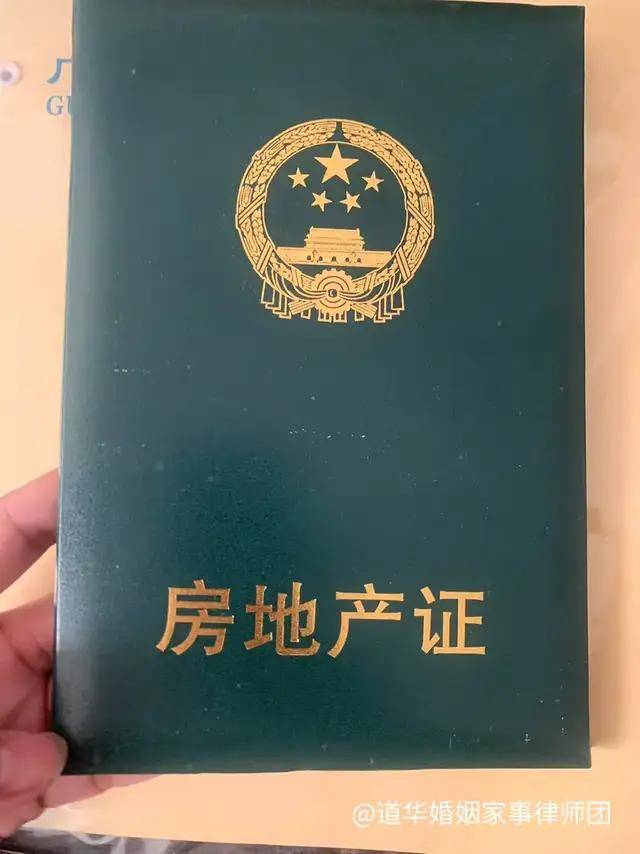
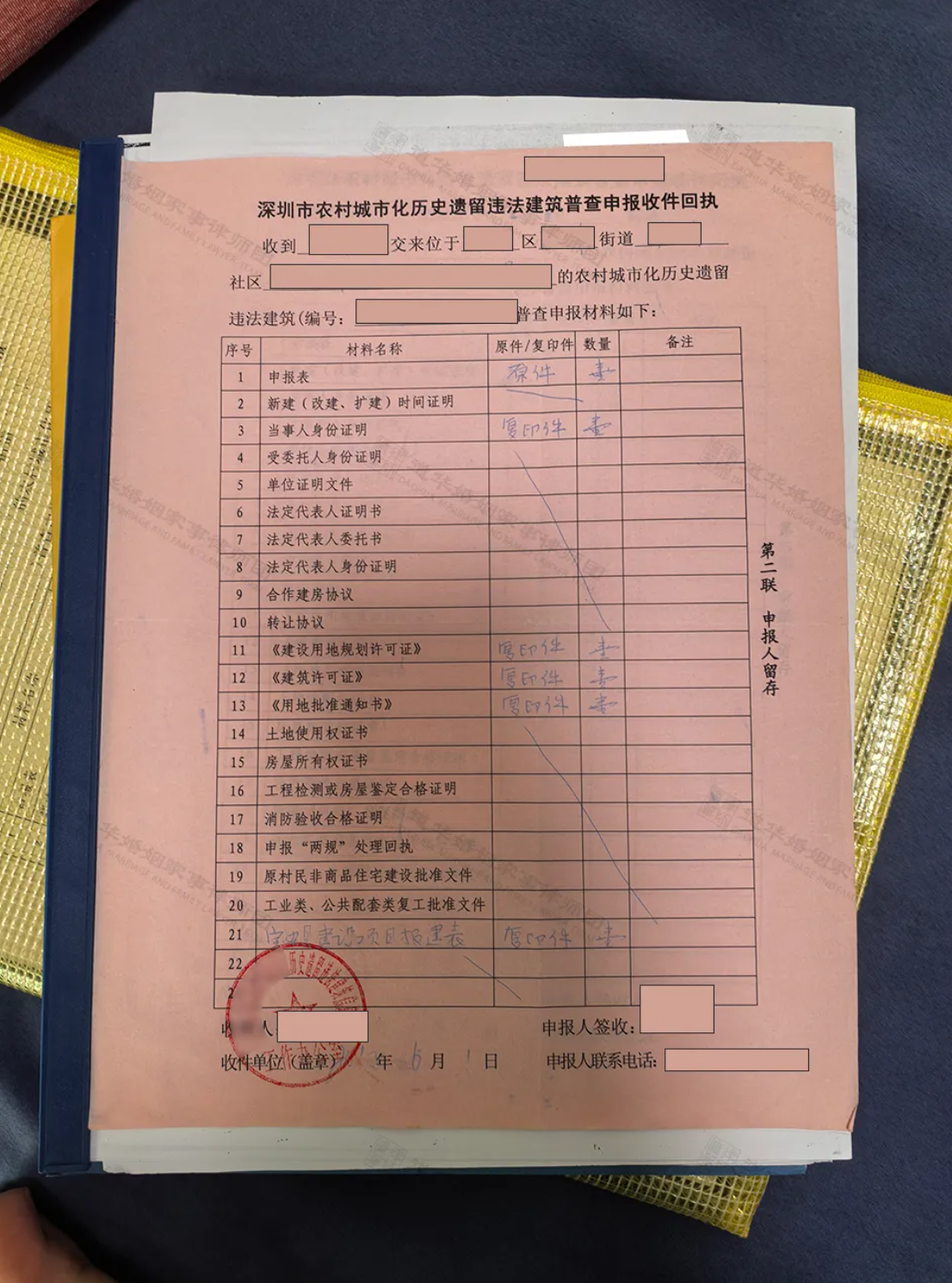
The involved property is located in Chweiwei Village, Futian District, Shenzhen, and is a self-built courtyard house on farmland built by Lin Anqian as a villager of Chweiwei Village during the existence of his marriage to Huang. It is a typical small property house. The house lacks legal land use and construction permits, has not been registered as immovable property, has not undergone engineering inspections and fire inspections, and is only registered in the "Shenzhen Rural Urbanization Historical Legacy Building Survey and Declaration Form" as Lin Anqian owning 100% of the shares, with a floor area of 640 square meters, a total of 8 floors, and has been rented out and managed by Huang for a long time, with rent collected.
After Lin Anquan's death, Lin Mou 1, as his daughter from his former wife, claimed the right to possess, use, and benefit from the small property house, and demanded that Huang Mou compensate her for the rental loss of the house since February 2013. Huang Mou argued that the involved house was an illegal and illegal building, not a legitimate inheritance, and the court should not accept the case; and that the house was family common property, not Lin Anquan's personal property. Lin Mou 1 had not fulfilled the obligation of support, and had no right to inherit. The two parties failed to reach a compromise, and Lin Mou 1 sued to the court, and the case went through the first instance and second instance trials.
Second, the court trial
The first-instance court held that inheritance begins from the death of the deceased, Lin Anquan did not leave a will, and the inheritance should be handled according to the statutory succession. Huang, Lin 1, Lin 2, Lin 3, Lin 4, and Lin 5 are all the first-order statutory heirs of Lin Anquan.
Regarding the inheritance nature of the small property rights housing involved in the case, the first-instance court believes that although the house does not have a legal property registration and has not obtained ownership of the immovable property, Lin Anquan, as a villager of Chweiwei Village, enjoys legitimate rights of possession, use, and benefit over the house. These rights and interests fall under the legitimate property rights and interests stipulated in the "Inheritance Law of the People's Republic of China" and can be inherited as heritage. In conjunction with the "Shenzhen City Rural Urbanization Historical Legacy Building Survey and Declaration Form," the house is registered as Lin Anquan owning 100% share, which is the common property of Lin Anquan and Huang Mou as a married couple. Therefore, Lin Anquan's 50% share of the rights and interests belongs to the heritage and should be divided according to the statutory inheritance.
The final determination is as follows: One, the inheritance of the deceased Lin Anqian is inherited by the plaintiff Lin Mou1, the defendant Huang Mou, the third party Lin Mou4, and the third party Lin Mou5, each inheriting a 20% share, and by the defendant Lin Mou2 and the defendant Lin Mou3, each inheriting a 10% share; Two, the house located at No. ×× in ×× village, Futian District, Shenzhen, is used and benefited by the defendant Huang Mou; Three, the defendant Huang Mou shall pay the plaintiff Lin Mou1 a house rent compensation of 3440 yuan per month starting from May 1, 2019; Four, the defendant Huang Mou shall compensate the plaintiff Lin Mou1 for the rent income of 223409.2 yuan from February 1, 2013 to April 30, 2019 within ten days from the date of the judgment; Five, the other litigation claims of the plaintiff Lin Mou1 are dismissed.
Huang Su is dissatisfied with the first-instance judgment, has filed an appeal, and argues that the involved house is an illegal and illegal building, and should not be considered for inheritance division; the house is family common property, not the joint property of husband and wife; the rent standard determined by the first-instance court is unreasonable and the procedure is illegal, and some of the claims have expired the statute of limitations.
The appellate court believes that although the involved small property houses do not have legal property registration, they are actually possessed, used, and benefited by Lin Anqian and his family. These rights and interests can be inherited as heritage, and the first-instance court's determination that they have heritage attributes is not inappropriate.
Regarding the rent standards and the statute of limitations, the second-instance court believes that Huang Yi had already stated the house rental situation in the first-instance trial, and his reversal in the second-instance violates the principle of estoppel. Moreover, he did not submit evidence to prove that the rent standards were unreasonable or that the house was unoccupied. After the inheritance began, all heirs did not renounce their inheritance rights, and the inheritance belongs to the co-ownership of all heirs. The division of co-owned property is not subject to the provisions of the statute of limitations, therefore, the rent standard determined by the first-instance court and the support for Lin Yi's full rent claim were not inappropriate.
In the end, the second-instance court upheld the original judgment and dismissed the appeal.
(Case Source: Shenzhen Intermediate People's Court of Guangdong Province, (2019) Yue 03 Minzhong No. 17847)
III. Key Points of Small Property Rights Inheritance Dispute Cases
1. Identification of inheritance attributes of small property houses
The primary dispute point in this case is whether small property houses can be inherited as heritage. In practice, due to the lack of legal property registration, small property houses are often claimed as "illegal property" and denied their heritage qualifications. The core difficulty lies in distinguishing between "illegal construction" and "legal property rights": although small property houses cannot obtain ownership due to the lack of approval procedures, the rights of possession, use, and benefit enjoyed by the deceased based on a legitimate identity (such as a villager in this village) are legal property rights, which can be inherited in accordance with the law. Therefore, obtaining relevant evidence regarding the ownership or possession and use of the small property houses involved in the case is the core prerequisite for confirming that small property houses can be inherited as heritage.
2. Determination of the scope of inheritance and the common property attributes of small property houses
Small property houses are mostly self-built houses on homestead land or houses on collective land, often involving family investment and joint residence of family members, which is easy to confuse "common property of husband and wife" with "common property of the family." In this case, Huang claims that the house is common family property, but failed to submit evidence to support this. The court, in conjunction with the record in the census declaration form of "Lin safely owning 100% share," identified it as common property of husband and wife, and divided out 50% of the property involved, which does not belong to Lin An's inheritance. In practice, if there is evidence to prove that family members jointly invested and constructed, or if the registration and declaration materials record the names and shares of family members, then it should be identified as common family property. The common shares of the family should be divided first, and then the share enjoyed by the deceased for inheritance should be inherited.
3. The division method and compensation standards for the inheritance of small property houses
The special nature of small property rights houses, which cannot be transferred in terms of property rights, means that they cannot participate in market transactions and value assessment. In inheritance and division, they can only revolve around the rights of possession, use, and benefit, leading to the inapplicability of the "boundary treatment and valuation compensation" model for ordinary commercial housing in litigation judgments. The core difficulties lie in: first, the choice of division methods, which is mostly "one party occupies and uses, and pays compensation to other heirs"; second, compensation is generally determined by the rental compensation standard, as there is no government-guided rental, it needs to be determined by considering the rental of similar houses in the same area and the actual rental situation of the house; third, the allocation of evidence responsibility, the management party of the house rental needs to prove the rental income situation, otherwise they will bear adverse consequences.
Chapter 4: Dao Hua Law Firm Practice Analysis
Case 1: Small property rights houses cannot be identified as inheritance.
Due to the special nature of small property rights houses that cannot be registered or transferred, if proof of the deceased's rights to possess, use, and benefit from the small property rights house in question cannot be provided, it will be impossible to confirm the house as the deceased's inheritance, thereby making it impossible to handle it through inheritance dispute cases.
Reference (2016) Supreme People's Court Civil Appeal No. 2405: The plaintiff claims that the property involved in the case was obtained by the deceased through the division of property and the inheritance of others' homesteads, and the construction of houses with others or independently funded, which is not applicable to the Property Law and the provisions on the planning, reporting, and land property registration of urban housing. The deceased has the rights of possession, use, management, income, and disposition over the entire property involved in the case, which belongs to the legal property and heritage of the deceased. After hearing the case, the Supreme People's Court determined that the property involved in the case has no land use right certificate, has not completed the planning and reporting procedures, and has no house ownership certificate. It is impossible to confirm the ownership of the deceased over the house based on the ownership registration. The existing evidence is not sufficient to prove that the deceased legally acquired the above homestead use rights and the exact capital contribution to the construction on the land. The property ownership is unclear, therefore, the property does not belong to the scope of heritage.
Scenario two: The deceased left a will — testamentary inheritance
If the small property rights house was self-built by the deceased before marriage, or was clearly owned by the individual through gift or agreement after marriage, and if the deceased left a legally valid will specifying that the ownership, use, and benefit rights of the house are inherited by a specific heir, then the will shall be executed.
The small property rights house is the joint property of the deceased and their spouse (such as jointly funded and constructed after marriage, jointly managed), and the deceased can only make a will for the 50% of the rights they enjoy, and the part of the will for the spouse's share is invalid.
Reference (2019) Yue 03 Minzhong 17847 Case: During the existence of the marriage relationship between Lin Anquan and Huang, relying on his status as a villager of Chihwei Village, he invested in the construction of an 8-story building on the residential land where the case-related house is located, and filled out the "Shenzhen City Rural Urbanization Historical Legacy Building Survey and Declaration Form" as the right holder. After trial, the court determined that the involved property is the common property of Lin Anquan and the appellant couple, and half of the rights and interests of the property belong to the heritage of the deceased Lin Anquan.
Scenario three: The deceased has no will — statutory inheritance
The small property houses are the personal property of the deceased (such as self-built before marriage or gifted by others), and in the absence of a will, the occupancy, use, and benefit rights of the house are equally inherited by the first-degree heirs, namely the spouse, children, and parents; if there are no first-degree heirs, the inheritance is passed to the second-degree heirs. If the small property house is the joint property of the couple, 50% of the share belonging to the spouse should be divided, and the remaining 50% of the rights and interests are considered as inheritance, equally inherited by the first-degree heirs.
1. One person occupies, pay economic compensation:Small property houses are divided according to legal inheritance. The method of division is given priority to the heirs' negotiation of the property ownership and value. If no agreement is reached, the court generally decides that the spouse shall continue to occupy, use, and benefit from the house. The spouse shall compensate the shares of each heir in the form of rent.
2. Jointly, clarify the equity ratio:If multiple heirs claim possession and use and are unable to negotiate, the court may decide that each heir has a proportional ownership of the rights to possess, use, and benefit from the house in question, and clearly define the proportion of rights of each heir.
Reference (2019) Yue 03 Civ. (App.) No. 17847 case: The small property rights house involved has been managed and rented by Huang, and it is more convenient for Huang to continue occupying and using the property. At the same time, the court, based on Huang's statement regarding the rent amount and the rent situation of similar houses in the same area searched online, determined the monthly rent income amount of the involved house, and calculated the rent compensation amount that Huang should pay to each heir monthly based on this amount.
Scenario four: Small property rights houses are considered as common property of the family (funded by multiple parties/builded collectively)
If the small property rights house is jointly funded and constructed by family members and registered under the name of the heir, the family's joint rights should be recognized first, that is, after dividing the family's joint rights, the specific share held by the heir individually should be clarified.
Scenario five: Small property houses have been demolished and converted into demolition rights
If the small property rights houses are included in the demolition and reconstruction plan, identified as illegal buildings facing rectification, and have already been demolished, the demolition compensation or housing indicators for compensation corresponding to the small property rights houses can be inherited as the heritage of the heir, and the division method shall refer to the contract rights or the inheritance and division method of commercial housing.
Reference (2018) Yue 03 Minzhong 18503 Case: After hearing, the court confirmed that the property in dispute is the compensation for the demolition of the deceased's house, and the ownership of the property in dispute belongs to the range of inheritable property. The wife Xu Mou, the elder son Zheng Mou 2, and the younger son Zheng Mou 1 each inherit 1/3 of the 50% ownership.
V. Message from Tang Yunhong Lawyer
Small property houses do not have legal ownership, and inheritance only involves the rights of possession, use, and benefit. Therefore, the primary challenge in inheriting small property houses is to provide evidence of the construction, investment, possession, and use, etc., to prove that the small property houses and their rights belong to the inheritance scope. This is the core prerequisite for inheriting small property houses. Combining the practical experience of the marriage and family law team of Guangdong Dao Hua Law Firm, the following is summarized:
1. The core prerequisite for inheritance of small property houses—-Establishing Ownership Rights: The party claiming inheritance often needs to bear the burden of proof to demonstrate that the ownership or rights of the house belong to the deceased. In the judicial practice of inheritance disputes over small property houses in Shenzhen, the key to handling such disputes is to first complete the establishment of ownership rights. This means proving through evidence such as investment, construction, and registration declarations that the deceased had legitimate rights of possession, use, and benefit over the small property house, which is the prerequisite for determining the scope of the inheritance. Without sufficient evidence, the court will be unable to recognize it as an inheritable heritage.
2. Define property attributes:Distinguish between the joint property of husband and wife and the family's common property, and then proceed to inherit the deceased's personal share after dividing the joint ownership based on the evidence rules.
3. Rational negotiation takes precedence, with clear division methods: Small property rights houses cannot have their property value assessed through market value, so the court prioritizes confirming shares based on the negotiation for property occupation by all parties; if the parties fail to reach an agreement on the compensation amount, the heir who has already occupied and used the property is given priority to continue occupying and using it, and economic compensation is paid in the form of rent compensation, based on the local rent levels and the current rental situation of the property.
In summary, although small property rights houses have defects in rights due to the lack of legal approval procedures, the usufructuary rights acquired by the heir based on a legal identity are still protected by law, and their inheritance handling strictly follows the relevant provisions of the Inheritance Chapter of the Civil Code. For lawyers, it is necessary to accurately grasp the practical handling rules under different situations, combine them with the actual case to choose the confirmation of rights approach and division plan, while giving priority to guiding the parties to reach a settlement, reducing litigation confrontation, and achieving a reasonable distribution of inheritance rights.
Six, Legal Index
The Civil Code of the People's Republic of China
Article 1122: Heritage is the legal personal property left by a natural person at the time of their death.
Article 1123: After the inheritance begins, it shall be handled in accordance with the statutory succession; where there is a will, it shall be handled in accordance with the testamentary succession or legacy; where there is a legacy and support agreement, it shall be handled in accordance with the agreement.
Article 1127: The inheritance of the estate shall be in the following order:
First priority: spouse, children, parents.
(Second priority: siblings, grandparents, and great-grandparents.)
Upon the commencement of inheritance, the first-degree heir shall inherit, and the second-degree heir shall not inherit; if there is no first-degree heir to inherit, the second-degree heir shall inherit.
The term "children" referred to in this section includes legitimate children, illegitimate children, adopted children, and stepchildren with a foster relationship.
The term "parents" used in this section includes natural parents, adoptive parents, and step-parents with a foster relationship.
The term "brothers and sisters" used in this chapter includes brothers and sisters with the same parents, brothers and sisters with different fathers or mothers, adopted brothers and sisters, and stepbrothers and stepsisters with a foster relationship.
Article 1130: The shares of inheritance inherited by the same order of heirs shall generally be equal.
Special consideration should be given to heirs who have special difficulties in life and lack the ability to work when distributing the inheritance.
The heir who has fulfilled the main obligation of supporting the deceased or lived together with the deceased can receive a larger share of the inheritance.
The heir who has the ability and conditions for support but fails to fulfill the obligation of support shall not be allocated an equal or lesser share of the inheritance.
The heirs may agree to an unequal division.
Article 1153: The jointly-owned property of a married couple, except as otherwise agreed, shall be divided into two halves at the time of inheritance division, with one half belonging to the spouse and the remainder being the heritage of the deceased.
Article 1156 The division of inheritance shall be conducive to production and living needs, without impairing the utility of the inheritance. Inheritance that is not suitable for division may be handled by methods such as valuation, appropriate compensation, or joint ownership.
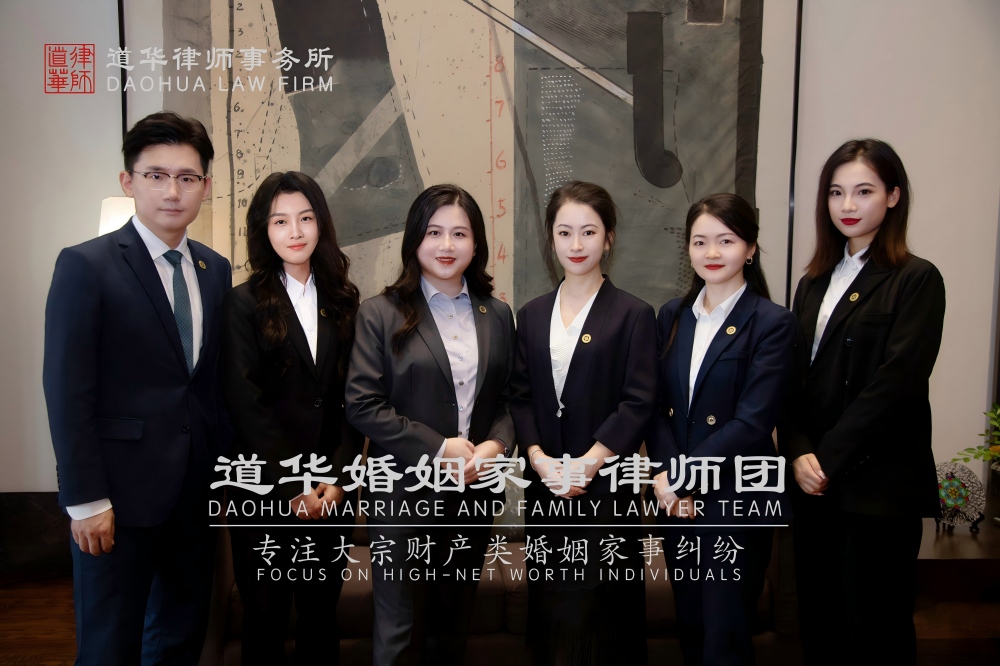
Daohua Family Law Firm (Guangdong Daohua Law Firm), with ten years of focus on major property family law services, divorce, inheritance, and family disputes (mediation/trial), is areal-world practiceexperts, one of the influential brands of professional legal services in the Guangdong Greater Bay Area [Shenzhen local], and also a benchmark lawyer team for mediation and trial in the well-known cross-border divorce and inheritance field.
The Tang Yunhong Law Firm has handled over 1000 cases related to marriage and inheritance, involving tens of billions of yuan in amounts. The firm has extensive successful litigation experience in the fields of dispute resolution for the division of large properties such as listed company equity, Shenzhen small property rights houses, land, and factories, as well as inheritance disputes, will drafting, and family property inheritance. It is particularly skilled in handling cross-border and cross-jurisdictional divorce lawsuits involving property, inheritance lawsuits, and other industry difficult issues. The firm uses localized legal wisdom to overcome various complex family property disputes, winning high praise from clients and industry reputation.
Adhering to the philosophy of "securing property safety, preventing legal risks, and empowering wealth appreciation," we gather experts from industries such as law, banking, insurance, and finance and taxation. With rich experience in civil and commercial litigation and arbitration, as well as civil and criminal crossover and tax planning, we provide a comprehensive package of solutions for high-net-worth individuals (including those from Hong Kong, Macau, and foreign nationals) in marriage, family affairs, and wealth inheritance. This is to achieve the beautiful vision of risk prevention and control, debt isolation, and family wealth inheritance.
Asset types include: real estate (residential properties, small property rights houses, land, factories, etc.), movable property (vehicles, antiques, paintings, gold jewelry, etc.), various property rights (cash deposits, equity, debts, relocation compensation, fund investments, virtual property, intellectual property rights, etc.). The team systematically compiles professional achievements such as "Compilation of Successful Cases of Dao Hua Marriage and Inheritance" and "Legal Practice of Family Wealth Transmission", to meticulously protect clients' property rights and interests, and to safeguard the inheritance of family wealth with meticulous service!
Statement:The information or articles published on this website are for exchange purposes only. The names of individuals/companies mentioned in this article are pseudonyms, and the amounts/dates of case information have been processed for confidentiality. The content of the article is created by the author and does not represent legal opinions or suggestions issued by Guangdong Daohua Law Firm or other lawyers. The information contained in this article is provided for general information purposes only, and Guangdong Daohua Law Firm is not responsible for making timely modifications or updates to this article. Decisions made by readers based on all or part of the content of this article and the consequences thereof shall be solely responsible by the individuals involved. The author and Guangdong Daohua Law Firm shall not be held liable. If any content of these articles is to be reproduced or cited, please indicate the source. If you need legal advice or legal services, please contact our lawyers.
No registration required, quick appointment, expert lawyers provide customized legal service solutions
 Consultation Appointment:400-829-6880
 Private Space:18126123723
 Law Firm: Guangdong Daohua Law Firm
 Email:DAOHUALAWMF@163.com
 Address:810, Rongchao Economic & Trade Center, 4028 Jintian Road, Futian District, Shenzhen (Next to Civic Center)

18126123723
Follow us anytime, anywhere


