
Navigation
Author: Dao Hua Marriage and Family Law FirmDate: 2026-03-18Reads:times
Marriage and Family Affairs Dispute (Mediation/Litigation) Practical Expert
Ten years of focus on; marriage and family legal services for bulk property matters
Guangdong Dao Hua Law Firm, Tang Yunhong, Dao Hua Family Law Team, Shenzhen's renowned divorce litigation lawyer, professional inheritance and succession lawyer, Guangdong and Shenzhen's top ten family law firms, specializing in: major difficult divorce mediation/court litigation, property small property division, will and inheritance disputes, will notarization, divorce property division, post-divorce property disputes, divorce/marital agreement, custody disputes, will inheritance disputes, legal inheritance disputes, land and property inheritance, rural house demolition inheritance, will drafting, will validity determination, etc. Non-litigation and disputes. Service areas: Futian, Nanshan, Luohu, Longgang, Bao'an, Longhua, Guangming, Pingshan, Dapeng, Yantian.

One, Core elements of the case summary
(1) Overview of the basic case situation
Plaintiff Xia Qianqian and defendant Xiang Qiang registered their marriage on February 14, 2019, and after marriage, they had a daughter, Xiang Qianjia (born in 2019), and a son, Xiang Qianyi (born in 2023). In March 2024, Xia Qianqian's first divorce lawsuit was rejected by the court. In the same year, in May, both parties went abroad to work in the Portuguese Republic and the Republic of El Salvador, but their marital feelings did not improve. Xia Qianqian then filed a lawsuit with the Qingtian County People's Court of Zhejiang Province, requesting a judgment of divorce and the recognition of custody and child support for the children. During the trial, although Xiang Qiang did not agree to the divorce, he clearly stated that if the court ruled for divorce, he hoped that the visitation rights would be exercised by the parents within the country based on the principle of maximizing the interests of minors, and both sets of parents agreed to act as proxies for visitation.
(2) Judgment result of the court
Qingtian County People's Court issued a civil judgment on March 18, 2025, with case number (2024) Zhe 1121 Minchu 3863: Firstly, the divorce between the two parties is approved; secondly, the son, Xiang Mouyi, shall be under the custody of Xia Mouqian, and Xiang Mouqiang shall pay child support of 1,000 yuan per month until he reaches the age of 18; thirdly, the daughter, Xiang Moujia, shall be under the custody of Xiang Mouqiang, and the child support shall be borne by Xiang Mouqiang himself; fourthly, both parties shall visit their children under custody once every two months, and during the overseas period, the right of visitation shall be exercised by their parents. After the judgment takes effect, neither party has appealed.
(3) Focal Points of Dispute Refinement
1. The determination of custody of children and the standard of child support lies in how to align with the principle of "most favorable to the minor children" in the "Civil Code."
2. The legality and feasibility of intergenerational visitation methods, i.e., whether grandparents or step-grandparents have the legal basis and practical rationality to exercise visitation rights when parents are working overseas for a long period.
Second, Legal Analysis of Jurisdiction and Child Support Determination
(1) Judgment logic of custody attribution
In this case, the court strictly followed Article 1084 of the Civil Code in determining custody, establishing a three-level judgment logic of "age floor + current living conditions + maximizing interests." For Xiao Mouyi, who is under two years old, in accordance with the principle that "children under two years of age are directly cared for by their mothers," and considering the current situation of living with their grandparents, the judgment that Xia Qian continues to care for the child not only conforms to the legally presumed optimal custody model but also avoids the adverse effects of changing living environments on the growth of infants and young children.
For Xiao Moujia, who is five years old, the court did not mechanically apply the age clause but focused on the principle of "what is most beneficial to the minor children." Xiao Moujia has been living with his grandparents since birth, forming a stable living environment and emotional connection, and the grandparents' ability and willingness to care for him have also been confirmed by the court. This approach to judgment reflects the core essence of custody determination — not simply distributed based on parental status, but with the children's growth needs as the core, comprehensively considering factors such as living stability and the caregiver's ability to care, to ensure that the judgment result is highly consistent with the goal of maximizing the children's interests.
(2) Judicial discretion of child support standards
In this case, Xiang Mouqiang voluntarily agreed to pay 1000 yuan in child support monthly until Xiang Mouyi reaches the age of 18, and the court approved this; the child support for Xiang Moujia is borne by Xiang Mouqiang himself, and also received the court's support. The judgment not only respects the autonomy of the parties but also conforms to Article 1085 of the Civil Code, which states, "After divorce, if the child is directly cared for by one party, the other party shall bear part or all of the child support. The amount of the support and the duration shall be agreed upon by both parties; if they cannot reach an agreement, the People's Court shall make a judgment."
From the perspective of judicial practice, the determination of child support standards usually requires comprehensive consideration of the actual needs of the children, the parents' ability to bear the burden, and the local standard of living. In this case, both parties have income from overseas work, and the child support standard proposed by Xiang Mouqiang is not obviously below the reasonable range. Moreover, he voluntarily assumes the full child support for Xiang Moujia, without harming the legitimate rights and interests of the children. The court's permissive judgment not only simplifies the dispute resolution process but also reflects respect for the parties' voluntary disposal of rights, which conforms to the dual pursuit of judicial efficiency and fairness.
(3) Typical significance of the recognition of custody and child support
The judicial practice in this case provides clear guidance for similar disputes over custody of left-behind children: When both parents work long-term in places far away or overseas, the court should prioritize the stable living environment that the child has already formed, respect the realistic basis of grandparental care, and avoid disrupting the child's living order due to changes in custody. At the same time, for child support agreements voluntarily reached by the parents, as long as they do not violate mandatory legal provisions or harm the child's interests, the court should respect them, which is beneficial for reducing disputes between parties and also provides a stable economic guarantee for the child's growth.

Three, Legal breakthrough and practical value of the right to visit grandchildren across generations
Analysis of the Legal Basis for the Right of Grandparental Visitation
Article 1086 of the Civil Code only stipulates the visitation rights of the father or mother who does not directly care for the child after divorce, but does not clearly define the subject qualification for the visitation rights of grandparents or step-grandparents. In this case, the court supports grandparents or step-grandparents exercising the visitation rights on behalf of the child, which is not a direct creation of the visitation rights across generations, but an extension and variation of the parents' visitation rights, and is a reasonable interpretation and application of the legal provisions.
From a legal logical perspective, the right of parents to visit their children is a statutory right arising from the parent-child relationship, with the core purpose of ensuring the emotional connection between children and their parents and promoting the healthy development of the children's physical and mental health. When parents are unable to exercise their right to visit due to objective reasons such as long-term overseas work, the grandparents or step-grandparents act on their behalf, which is essentially a flexible approach to exercising the parents' right to visit. The core goal remains to maintain the emotional connection between the children and the family members, in line with the legislative intent of the visitation rights system. At the same time, both sets of parents in this case have agreed to act as substitutes for the visitation, and they have the ability to care for and visit the children, without causing any harm to the children's interests. The court's judgment did not break the legal framework but rather flexibly adapted the method of exercising visitation rights under the guidance of legal principles.
(Second) The constituent elements applicable to the right of grandparental visitation
The judicial practice of this case has clarified the three core constituent elements for the application of the right to visit grandchildren across generations: Firstly, there are objective circumstances where the parents are unable to exercise the right to visit their children personally, such as working in a different city or country, physical disabilities, etc. In this case, both parties have been working overseas for a long time and are unable to return to their home country frequently, which meets this requirement; secondly, the grandparents or step-grandparents have the ability and willingness to visit the children on behalf of the parents, and will not affect the normal life and physical and mental health of the children. In this case, both parents have explicitly expressed their agreement to visit the children on behalf of the parents, and have already taken on the responsibility of caring for the children, satisfying this requirement; thirdly, the parents agree to have the grandparents or step-grandparents exercise the right to visit on their behalf. In this case, Xia Qianqian and Xiang Qiang both acknowledge the method of visiting across generations, forming a basis of consensus.
The clarification of these three major constituent elements not only avoids the abuse of the right to visit grandchildren across generations but also provides judicial support for the legitimate needs of such visits, achieving a balance between rights protection and risk prevention and control.
(3) Explanation of the practical value of the right to visit grandchildren across generations
1. Meet the emotional needs of left-behind children.Left-behind children live with their grandparents or great-grandparents for a long time, and these elder relatives are important objects of their emotional dependence. Allowing grandparents or great-grandparents to exercise the right to visit on behalf of the child can maintain the emotional connection between the child and the non-custodial family, compensate for the emotional loss caused by the long-term absence of parents, and prevent the child from breaking off the relationship with elder relatives due to their parents' divorce. This is conducive to the child's physical and mental health and the sound development of their personality.
2. Alleviate the practical difficulties of parents visiting their children in a different city.Under the background of globalization, it is increasingly common for parents to work in different places or overseas, and the direct exercise of visitation rights often faces multiple obstacles such as time, economy, and geography. Grandparental visitation as an alternative method can effectively address the realistic problem of "wanting to visit but unable to," ensuring that the legislative purpose of the visitation rights system is actually implemented rather than becoming a mere formality due to objective conditions.
3. Promote family harmony and social stability.In this case, both sets of parents agreed to act as guardians for visiting their children, and were willing to cooperate with each other in exercising their rights. The court's judgment further strengthened this harmonious family interaction. Grandparental visits not only safeguard the emotional interests of the children but also respect the emotional needs of the grandparental relatives, which is conducive to reducing family conflicts, promoting harmonious family relationships, and thus maintaining social stability.
(4) The boundaries and limitations of exercising the right to visit grandchildren across generations
The court, while supporting the right to visit grandchildren, also clarified its exercise boundaries: the visitation of grandchildren must be based on the premise of "not affecting the normal life and physical and mental health of minors," and the methods and time of visitation must be reasonably determined, without disrupting the normal care order of the custodial party, and without causing negative impacts on the children's studies and life. In this case, the court determined the frequency of "visiting once every two months," which both ensures the effective exercise of the visitation right and avoids the interference caused by too frequent visitation to the children's lives, reflecting a balance between the exercise of rights and the fulfillment of obligations.
The exercise of the right to visit grandchildren is contingent upon the parents' right to visit. If the parents explicitly express their disagreement with the visitation by grandparents, or if there are circumstances detrimental to the physical and mental health of the children (such as serious infectious diseases, tendencies to abuse children, etc.), the court may, in accordance with the law, limit or reject the request for grandparent visitation. This dependency and restrictive provisions ensure that the right to visit grandchildren is always centered around the interests of the children, avoiding it becoming a tool for family members to compete for emotional interests.

Four, The reality of child left-behind protection issues reflected by the case
Special difficulties in protecting the rights and interests of left-behind children
In this case, Xiang Moujia and Xiang Mouyi are typical left-behind children, whose parents work overseas for long periods, with custody exercised by one party and the other maintaining parent-child relationships through visits by the grandparents. The rights and interests protection of such left-behind children face multiple special difficulties: first, the lack of parental care and companionship can easily lead to incomplete emotional development and mental health issues; second, the limitations of grandparental care, as grandparents and grandmothers may be unable to meet the children's educational and psychological counseling needs due to age and educational concepts; third, the imperfect rights and interests protection mechanism, as there is a lack of specialized channels for relief and guarantee mechanisms when left-behind children face custody disputes and obstacles in exercising the right to visit.
(2) The role positioning of the court in the protection of the rights and interests of left-behind children
In this case, the court's judgment not only resolved specific disputes over divorce, custody, and visitation rights, but also reflected the proactive role of the judiciary in protecting the rights and interests of left-behind children: First, adhering to the principle of "what is best for the minor children," placing the interests of the children first, and avoiding secondary harm to the children due to their parents' divorce; second, flexibly applying the law, resolving the dilemma of emotional loss of left-behind children through the flexible application of visitation rights; third, focusing on investigation and verification, ensuring the feasibility and rationality of the judgment by inquiring about the parents' willingness and ability to care for the children.
The role of the court indicates that in the protection of the rights and interests of left-behind children, the judiciary is not only the ultimate way to resolve disputes, but should also become the leading force in rights protection. Through fair judgments and flexible interpretation of the law, it should create a stable living environment and a sound emotional support system for left-behind children.
(3) Construction of diversified paths for the protection of the rights and interests of left-behind children
The trial of this case has exposed the realistic need for the protection of the rights and interests of left-behind children, which cannot be fully covered by judicial judgments alone. It requires the construction of a multi-dimensional and collaborative protection path: First, strengthen the responsibility of family guardianship, and even if parents work long-term in a distant place, they should fulfill their guardianship duties through video calls, regular visits, and other means, and should not neglect the care and education of their children due to the distance; second, give play to the role of grassroots organizations, and village committees and neighborhood committees should strengthen visits and assistance to the families of left-behind children, timely discover and solve the problems existing in the care of the elderly; third, improve the social security mechanism, and the government should increase investment in education, medical care, and psychological services in the concentrated areas of left-behind children, establish special care institutions for left-behind children, and provide them with comprehensive rights and interests protection.
Five,Legal reflections and suggestions for institutional improvement triggered by the case
(1) Thoughts on the legislative improvement of the right to visit grandchildren across generations
The judicial practice in this case provides guidance for grandparental visitation, but the provisions of the Civil Code on grandparental visitation rights still have gaps, leading to potential discrepancies in the standards for adjudication in similar cases in judicial practice. It is recommended that in future legislative revisions, the applicable situations, qualifications of subjects, and methods of exercise of grandparental visitation rights be clarified, and grandparental visitation rights be defined as an extension of parental visitation rights. When parents are unable to exercise the visitation rights themselves and meet specific conditions, the legal subject qualification for grandparents and grandmothers should be granted, providing clear legal basis for judicial practice and avoiding inconsistent standards in adjudication.
(II) Proposed Detailed Standards for the Identification of Custody of Left-Behind Children
In view of the particularity of custody disputes involving left-behind children, it is recommended to further refine the judicial standards for custody determination: First, clarify the specific considerations for "lifestyle stability," such as the duration of residence in the current care environment, the degree of emotional connection, and the availability of educational resources; second, establish a mechanism for assessing the ability of grandparental care, comprehensively evaluating the caregivers' custody ability from aspects such as physical health, economic capacity, educational philosophy, and moral conduct; third, grant left-behind children appropriate rights of expression. For left-behind children who are eight years old or older, their genuine wishes regarding the custody and visitation methods should be fully respected, ensuring that the judgment results are highly consistent with the children's needs.
(Suggested diversified guarantee mechanism for the exercise of the right to visit)
To ensure the effective exercise of visitation rights, especially the smooth implementation of grandparental visitation rights, it is recommended to establish a diversified guarantee mechanism: First, clarify the assistance obligations of the custodial party, requiring the custodial party to provide necessary convenience for grandparental visitation and not to unreasonably obstruct or limit visitation; second, establish a supervision mechanism for the exercise of visitation rights, with the village committee, neighborhood committee, or child protection agencies supervising the exercise of visitation rights and resolving conflicts that arise during the visitation process in a timely manner; third, allow for flexible changes to visitation rights, if the parents return to work in China or other circumstances affect the exercise of visitation rights, the parties may apply to change the visitation method, restoring grandparental visitation to direct parental visitation to ensure that the exercise of visitation rights always adapts to the actual situation.
Six, Tang Code insights
The divorce dispute case of Xia Mouqian vs. Xiang Mouqiang is a typical case involving the protection of the rights and interests of left-behind children. The judgment of the court strictly followed the relevant provisions of the "Civil Code" and fully considered the special needs of left-behind children. By flexibly applying the law, it established a legally valid method of grandparental visitation, providing an important reference for the trial of similar cases.
The judicial practice in this case indicates that in the protection of the rights and interests of left-behind children, the judiciary should adhere to the core principle of "what is most beneficial to the minor children," flexibly apply legal systems, and resolve the dilemma of rights protection caused by parents working in different places. At the same time, the case also reflects the deficiencies of our country in legislation on the right to visit grandchildren by the elderly and the mechanism for safeguarding the rights and interests of left-behind children, which need to be addressed through ways such as legislative improvement, mechanism construction, and multi-party collaboration.
In the future, further strengthening the legal supply for the protection of the rights and interests of left-behind children should be enhanced, clarify the legal status of the right to visit by grandparents, refine the standards for determining custody, establish a diversified rights protection mechanism, allow judicial judgments and social governance to form a synergy, and safeguard the healthy growth of left-behind children. At the same time, parents should also fulfill their guardianship responsibilities in earnest, pay attention to emotional communication and companionship with their children regardless of where they are, provide solid family support for their children's growth, and jointly build a complete system for the protection of the rights and interests of left-behind children.
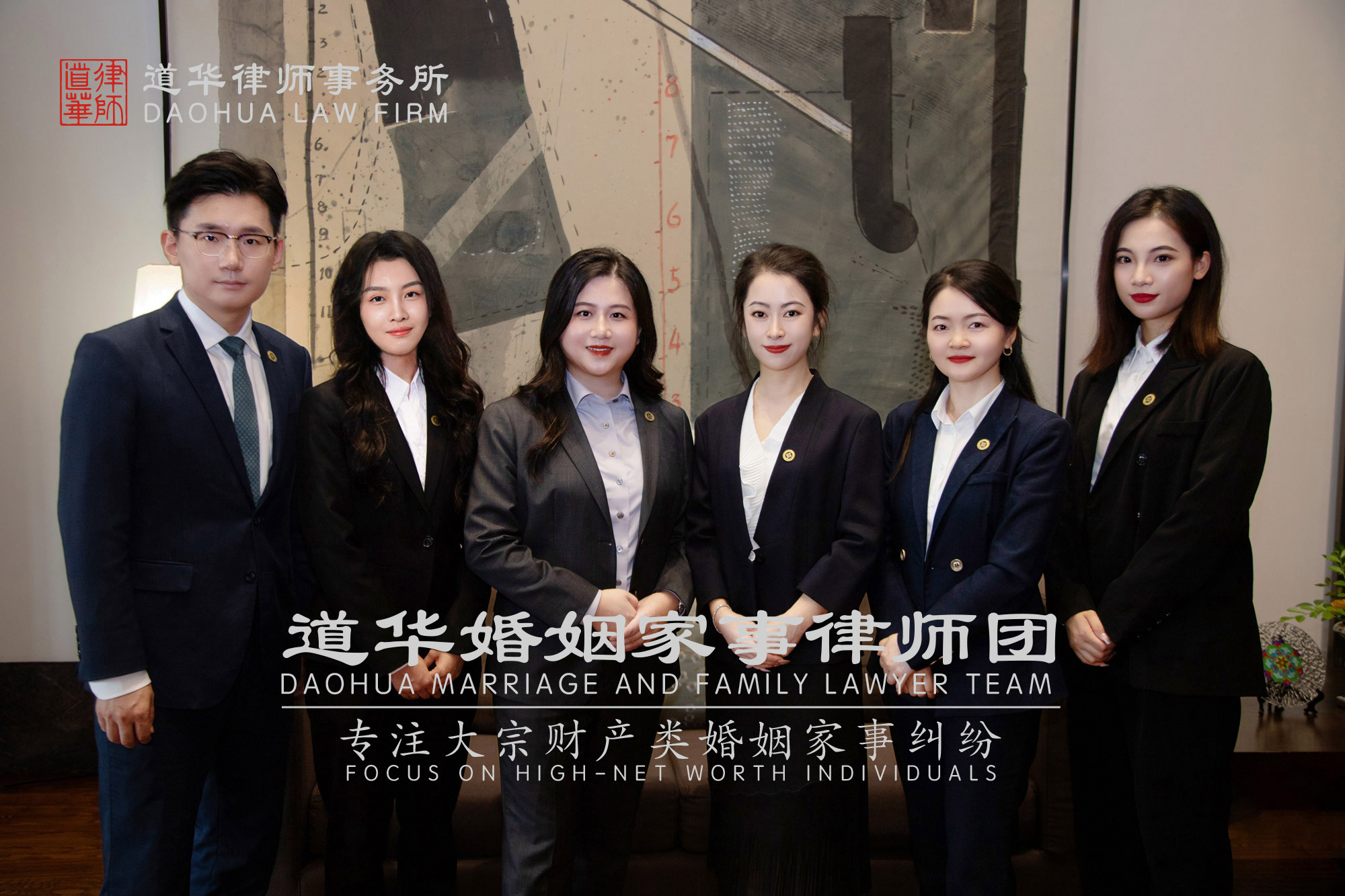
Dao Hua Marriage and Family Law Firm, ten years focused on major property marriage and family legal services, expert in marriage inheritance and family disputes (mediation/trial), is one of the influential brands in [Shenzhen local] marriage inheritance and wealth management legal services.
The team has handled over 1000 cases related to marriage inheritance, and has extensive experience in dispute resolution fields such as complex marriage and family matters, inheritance disputes, will drafting, and family property distribution. Utilizing local wisdom, the team is skilled in dealing with difficult divorce property division cases involving Shenzhen's small property rights houses, village committee shares, will drafting and notarization, and inheritance disputes, winning unanimous praise from clients.
Adhering to the philosophy of "securing property safety, preventing legal risks, and empowering wealth appreciation," we gather experts from industries such as law, banking, insurance, and finance and taxation. With a wealth of successful cases, we provide a comprehensive package of solutions for high-net-worth individuals (including those from Hong Kong, Macau, and foreign nationals) in marriage, family affairs, and wealth inheritance, to achieve the beautiful vision of risk prevention and control, debt isolation, and family wealth inheritance.
Asset types include: real estate (commercial housing, small property rights housing, land use rights, etc.), various property rights (equity, debt, relocation compensation, copyright, invention patents, etc.).
The team has completed the compilation of "A Collection of Successful Cases of Dao Hua Marriage and Inheritance" and "Legal Practice of Family Wealth Transmission," achieving outstanding achievements in both legal practice and theoretical research.
Statement:The information or articles published on this website are for exchange purposes only. The names of individuals/companies mentioned in this article are pseudonyms, and the amounts/dates of case information have been processed for confidentiality. The content of the article is created by the author and does not represent legal opinions or suggestions provided by Guangdong Daohua Law Firm or other lawyers. The information contained in this article is provided for general information purposes only, and Guangdong Daohua Law Firm is not responsible for making timely modifications or updates to this article. Decisions made by readers based on all or part of the content of this article and the consequences arising therefrom shall be solely responsible by the individuals involved. The author and Guangdong Daohua Law Firm shall not be held liable. If any content of this article is to be reproduced or cited, please indicate the source. If you need legal opinions or legal services, please contact our lawyers.
No registration required, quick appointment, expert lawyers provide customized legal service solutions
 Consultation Appointment:400-829-6880
 Private Space:18126123723
 Law Firm: Guangdong Daohua Law Firm
 Email:DAOHUALAWMF@163.com
 Address:810, Rongchao Economic & Trade Center, 4028 Jintian Road, Futian District, Shenzhen (Next to Civic Center)

18126123723
Follow us anytime, anywhere


