
Navigation
Author: Dao Hua Marriage and Family Law FirmDate: 2025-11-17Reads:times
Ms. Li and Mr. Chen met through a blind date and, under the urging of their families, got married in a hurry without fully understanding each other. Due to the short period of cohabitation before marriage, their emotional foundation was weak, and marital conflicts gradually emerged: Mr. Chen repeatedly used cold violence to deal with marital disputes, leading to a suppressive family atmosphere and the relationship between the two dropping to an all-time low. Ms. Lin tried multiple times to communicate and improve the situation, but all attempts ended in failure, and she finally decided to end this marriage in name only. However, Mr. Chen firmly refused to divorce and did not take any measures to save the marriage. His name is also involved in Huawei equity and other unclear assets. At the same time, both parties have disputes over the division of post-marital property, child support, and other issues, which have added multiple obstacles to the divorce process.
To properly resolve the dispute and quickly free herself from the painful marriage, Ms. Lin sought the professional legal assistance of Tang Yunhong, a lawyer at the Dao Hua Law Firm, hoping to smoothly handle all the issues involved in the divorce while ensuring the legitimate rights and interests of herself and her child.
Part Two: The Investigation Process
1. Thoroughly review the case details: Focus on the background information of the case and the core demands of the client.
After accepting the entrustment, the Tang Yunhong legal team further communicated with Ms. Lin, gaining a deeper understanding of her marital status, property ownership, and the intentions of both parties.
During the communication process, the legal team clarified Ms. Lin's core demand of "divorce as soon as possible," as well as the potential needs of "securing child custody, obtaining reasonable financial support, and resolving housing issues": The couple has a child aged 8, and Ms. Lin gave up her job due to the marriage, currently has limited financial capacity, and not only needs to fight for custody but also resolve the housing issue after the divorce; while Mr. Chen has a low willingness to take custody, he is unwilling to pay full child support and holds a reticent attitude towards property division.
On the other hand, the legal team also focuses on the need to thoroughly investigate the property situation during the marriage of the male party: After marriage, the couple jointly purchased a property located in Shekou, Nanshan, Shenzhen, currently valued at 6.25 million yuan, registered in the male party's name, but there is still an outstanding loan of 2.6 million yuan that has not been repaid, and the main borrower of the loan is the female party, with the loan renewal period approaching; in addition, the equity assets held by Mr. Chen as a Huawei employee were not previously disclosed.
Based on this, the legal team preliminarily judges that the three core directions for case breakthrough will be: property division, Huawei equity investigation and division, and child support negotiation.
2. Formulate the "litigation promotion + asset preservation" strategy: promote the investigation of Huawei employees' equity, laying the foundation for dispute resolution.
Considering Mr. Chen's firm refusal to agree to a divorce, his avoidance of asset disclosure, and the deep contradictions between the two parties, direct negotiation is difficult to advance. Lawyer Tang Yunhong decided to adopt the strategy of "using litigation to promote mediation": first, file a divorce lawsuit with the court to force Mr. Chen to cooperate with asset verification through the judicial process; second, simultaneously apply for property preservation to prevent Mr. Chen from transferring Huawei equity, real estate, and other joint assets; finally, entrust a professional institution to assist in analyzing Mr. Chen's equity holding situation (including equity type, market value, exercise status), to clarify whether the equity belongs to the joint property of the couple (determined according to the time of acquisition after marriage and the source of capital), providing a legal basis for subsequent equity division and alimony calculation.
This strategy not only broke Mr. Chen's "delaying tactics," but also fixed key asset information such as Huawei's equity through legal channels, also ensuring that Ms. Lin has clear factual support in subsequent negotiations, and avoiding damage to her rights and interests due to asymmetric asset information.
3.Litigation and mediation proceed simultaneously: specifically addressing disputes over Huawei's equity division, residential property rights, and child support.
During the waiting period for the court hearing schedule, the legal team also actively carried out dispute resolution work, proactively communicated with Mr. Chen, and advanced mediation from different dimensions by combining the Huawei equity information and property situation already in hand.
According to the willingness of both parties, the legal team formulated several mediation plans and continuously followed up on the mediation intentions of both parties. After several negotiations and consultations with both parties by Lawyer Tang, and after explaining the legal provisions and the reasonable demands of Ms. Lin, Mr. Chen's attitude softened, and finally, the door tonegotiation resolution was opened. To avoid Mr. Chen's attitude from reversing, the legal team immediately issued the "Draft of Marriage Agreement" after the preliminary mediation intentions of both parties were reached, clearly defining the core terms such as the method of Huawei equity division, the duration of the residential right to the property, and the standard of alimony, to fix the consensus of both parties in advance and pave the way for the subsequent signing of the divorce agreement.
4.Refine the agreement content: improve Huawei's equity compensation and residential rights clauses, ensuring the implementation of mediation outcomes.
After the marriage agreement is signed, the legal team continues to follow up on the mediation plans and intentions of both parties, actively coordinates the differences between the two parties, and further formulates detailed plans based on the marriage agreement.
Regarding Huawei's equity, clearly specify the payment time for the compensation (within 30 days from the effective date of the agreement), the amount (calculated based on the equity market value on the day of mediation), and the late payment penalty (calculated at 2.5 times the LPR), to prevent Mr. Chen from delaying the payment; regarding the residential right to the property, clearly define the residential scope (the entire property), the residential period (2 years, starting from the date of divorce registration), and the method of bearing water, electricity, and property fees during the residence (basic fees to be borne by Ms. Lin, Mr. Chen shall not interfere with the residence without cause), and at the same time, agree on the time for handling the transfer loan procedures (within 90 days), to ensure that Ms. Lin's residential right is disconnected from the responsibility of repayment.
In addition, the legal team, considering Ms. Lin's financial situation, supplemented the draft divorce agreement with a "children's education fund" clause, requiring Mr. Chen to reserve an additional 50,000 yuan from the Huawei equity compensation, for subsequent educational expenses of the children, further safeguarding the children's rights and interests. Throughout the drafting process of the agreement, the legal team communicated and adjusted with both parties multiple times, ensuring that the clauses comply with legal provisions while fully considering the actual performance capabilities of both parties, to avoid subsequent disputes due to ambiguous clauses.
5.Dual-track promotion of final mediation: appointment for divorce registration + court mediation, locking the Huawei equity and residential rights plan.
To ensure the smooth implementation of the mediation results, the Tang Yunhong legal team, on one hand, assisted Ms. Lin in scheduling the divorce registration, allowing both parties to clarify the ultimate goal of the mediation and reduce psychological concerns; on the other hand, they actively contacted the court mediator, submitted case materials, and requested the court to intervene and witness the mediation to enhance the legal effectiveness of the agreement.
During the mediation process, Tang Lawyer, as the agent of Miss Lin, elaborated on her claims and reasons, and responded one by one to the objections raised by Mr. Chen, such as "excessive equity compensation" and "influence on property disposal due to residential rights." Finally, under the witness of the court mediator, both parties reached an agreement, signed the mediation record, and all core disputes were properly resolved.
Section 3: Results of the Case
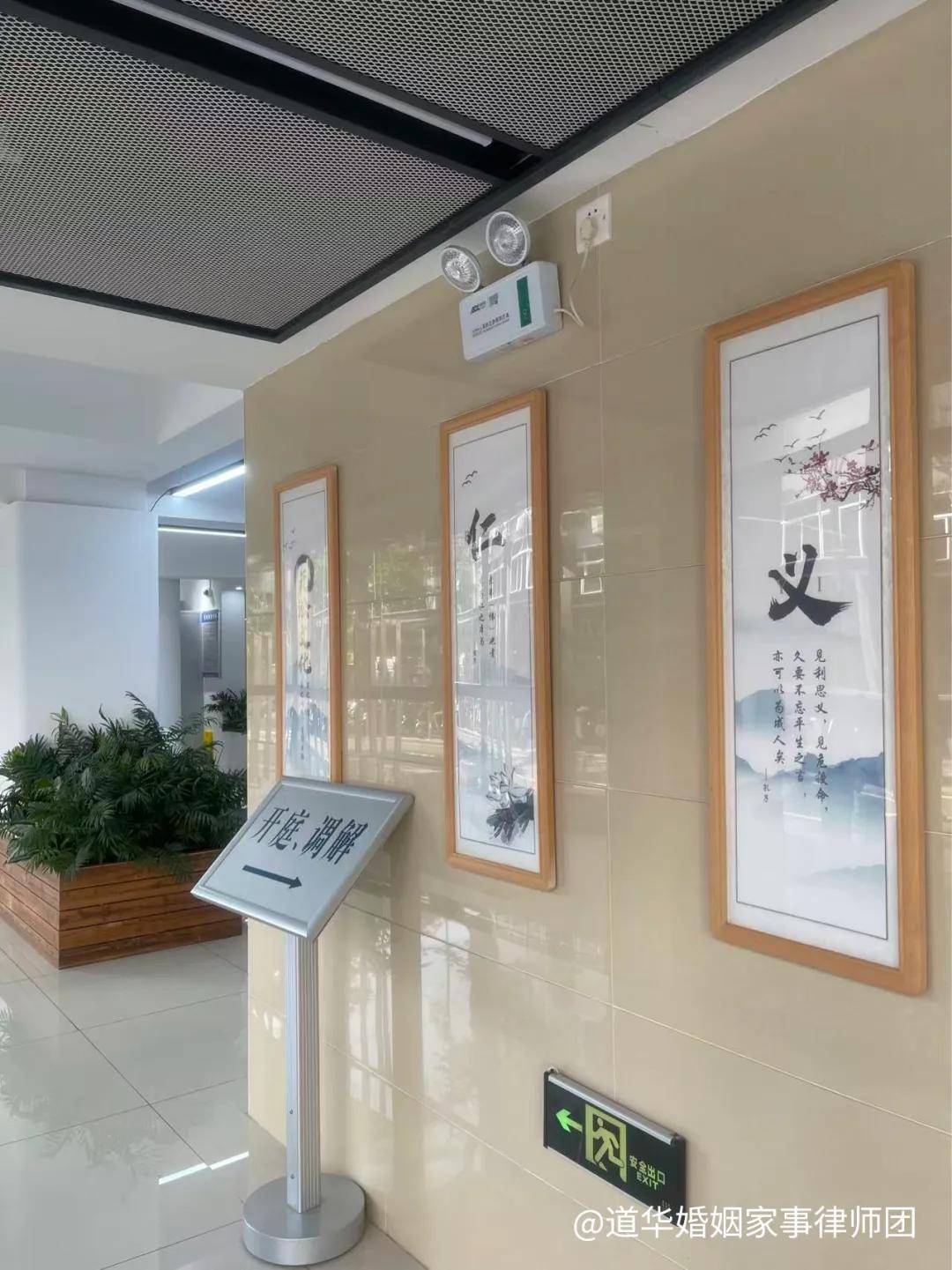
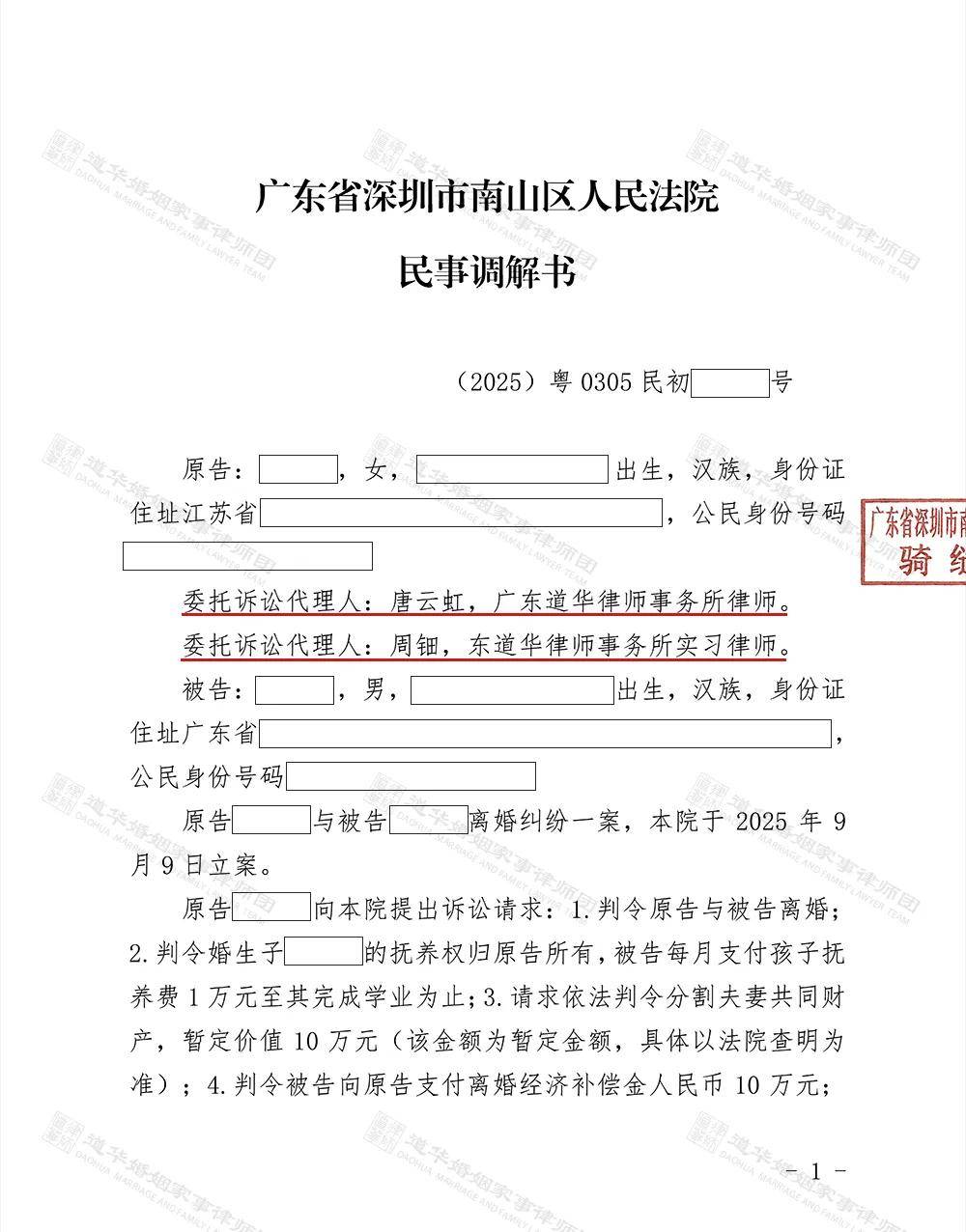
Under the intervention and negotiation of Dao Hua Law Firm, Ms. Lin and Mr. Chen finally reached a mediation agreement with the court and signed the mediation record. The court issued the "Civil Mediation Document" the day after the mediation, with the core content as follows:
One, both the plaintiff and the defendant confirm that the custody of the legitimate child is awarded to the plaintiff, who will directly care for and live with the child. The defendant shall pay the plaintiff the monthly child support of 7,000 yuan before the 5th of each month until the child reaches the age of 18.
The parties confirm that from October 2025 to the 18th birthday of the child born of the marriage, the educational expenses (including tuition fees and other school fees), training fees, and major medical expenses (with the plaintiff bearing the first 1000 yuan and the remaining amount over 1000 yuan shared equally by both parties) shall be borne by both parties in equal shares of 50%.
……
Four, both the plaintiff and the defendant confirm that the 100% share of the real estate registered in the name of the defendant located at XXX belongs to the defendant. The remaining loan for the property shall be undertaken by the defendant, who is responsible for handling the refinancing procedures. The defendant shall transfer the loan to his or her personal name within 90 days. If the plaintiff's cooperation is required for the handling of the procedures, the plaintiff shall provide such cooperation.
Five, the Huawei shares (including the appreciation portion) held by the defendant are joint property of the couple, and the defendant shall pay the plaintiff the compensation for the valuation of the shares in XX million yuan (calculated based on the market value of the shares on the day of mediation) within 30 days; if payment is delayed, the penalty interest shall be paid at 2.5 times the LPR.
In addition, the mediation document also determines other issues such as property division and debt assumption in the form of legal documents, ensuring the balance and protection of both parties' rights and interests.
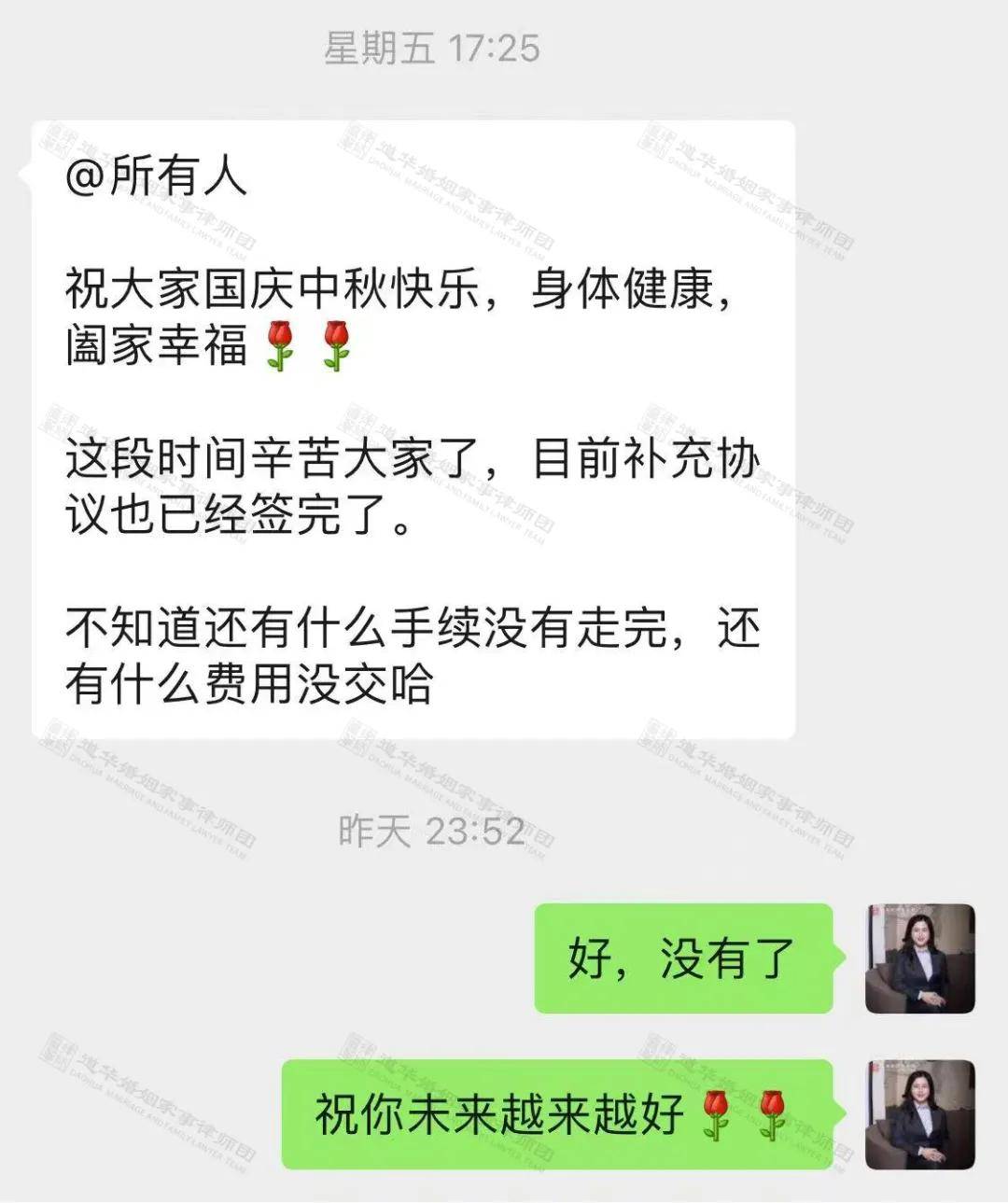
To further safeguard Ms. Lin's rights, Lawyer Tang Yunhong, based on the "Civil Mediation Document," additionally issued a "Supplementary Agreement," refining two key contents: First, it clearly specifies the payment route for Huawei's equity compensation (directly transferred to Ms. Lin's designated account, with account information attached); second, it stipulates that three months before the expiration of the residential right, Mr. Chen must notify Ms. Lin in advance. If Ms. Lin has not found housing by then, the residential right may be negotiated for an extension (not exceeding 6 months in the longest case). After the supplementary agreement is signed and confirmed by both parties, it has the same legal effect as the "Civil Mediation Document," resolving Ms. Lin's concerns about "equity compensation payment" and "residential transition," and also provides a strong guarantee for the smooth implementation of subsequent mediation agreements.
Chapter 4: The Tang Code Interpretation
Mr. Tang Yunhong pointed out:
Divorce is not merely the end of an emotional relationship; it often involves the proper arrangement of major legal issues such as the reasonable division of property, custody of children, and payment of child support. These legal issues not only involve the current economic interests of both parties but will also affect their future lives. Therefore, handling divorce cases requires a balance between "legal expertise" and "humanistic care." This requires lawyers to be skilled in using legal tools while also formulating feasible plans based on the actual needs of the parties involved, avoiding the "mechanical application of law" that leads to an imbalance of rights and interests.
In this case, the core breakthrough of the Dao Hua law firm team lies in: first, precisely locking in the key dispute point of "Huawei equity division," ensuring the fairness of the division of common property by investigating fixed asset information through judicial investigation; second, innovatively proposing the "residential right protection" plan to solve the housing problem of Ms. Lin after her divorce, breaking through the traditional single model of "either the property is awarded to one party or it is sold and divided"; third, through the "litigation promotes mediation" strategy, it avoids the long-term litigation from harming both parties and the children, while also utilizing the judicial authority to ensure that the mediation results are implemented.
Ultimately, the case achieved a comprehensive resolution of "divorce + custody + Huawei equity division + residential rights" in a short period of time, not only allowing Ms. Lin to escape a cold violence marriage but also providing a stable guarantee for her subsequent life and her child's growth through legal means, truly realizing the organic integration of "emotions, reason, and law."
V. Index of Relevant Laws and Regulations
One,Divorce lawsuit
The Civil Code of the People's Republic of ChinaArticle 1079, second paragraph: When people's courts hear divorce cases, they shall conduct mediation; if the feelings have indeed been broken and mediation is ineffective, the divorce shall be granted.
Second,Child support
1.The Civil Code of the People's Republic of China
Article 1084, third paragraph: When the child is over eight years old at the time of divorce, the custody shall respect their real wishes.
(2) Article 1085: After divorce, if the child is directly cared for by one party, the other party shall bear part or all of the child support expenses. The amount of the expenses and the duration shall be agreed upon by both parties; if they cannot reach an agreement, the People's Court shall make a judgment.
(3) Article 1086: After divorce, the father or mother who does not directly care for the child has the right to visit the child, and the other party has the obligation to assist. The methods and time for exercising the right to visit shall be agreed upon by the parties; if they cannot reach an agreement, the People's Court shall decide.
2.The Interpretation (I) of the Supreme People's Court on the Application of the Marriage and Family Article of the Civil Code of the People's Republic of China
(1) Article 49: The amount of child support may be determined based on the actual needs of the child, the financial capabilities of both parents, and the local actual living standards.
(2) Article 50: Child support shall be paid regularly, and may be paid in a lump sum under certain conditions.
Three,Property division
The Civil Code of the People's Republic of China
Section 1062: The following property acquired by husband and wife during the continuance of their marital relationship shall be the joint property of the husband and wife, jointly owned by them:
Salary, bonuses, remuneration for labor.
Income from production, operation, and investment.
Income from intellectual property rights;
Inheritance or property received as a gift, but excluding those stipulated in item 3 of Article 1063 of this Law.
Other property that should be jointly owned.
(2) Article 1063: The following properties shall be the personal property of one spouse: the property of one before marriage; compensation or compensation received by one due to personal injury; properties specified in a will or gift contract to be solely owned by one; personal daily necessities used exclusively by one; other properties that should be owned by one.
Section 1087: At the time of divorce, the joint property of the couple shall be handled by mutual agreement between the two parties; if the agreement fails, the People's Court shall make a judgment according to the specific circumstances of the property, in accordance with the principle of considering the rights and interests of the children, the female party, and the party without fault.
No registration required, quick appointment, expert lawyers provide customized legal service solutions
 Consultation Appointment:400-829-6880
 Private Space:18126123723
 Law Firm: Guangdong Daohua Law Firm
 Email:DAOHUALAWMF@163.com
 Address:810, Rongchao Economic & Trade Center, 4028 Jintian Road, Futian District, Shenzhen (Next to Civic Center)

18126123723
Follow us anytime, anywhere


