
Navigation
Author: Dao Hua Marriage and Family Law FirmDate: 2025-12-08Reads:times
Keywords:Shenzhen Marriage Mediation, Property Divorce Division, Custody Dispute, Divorce Lawyer, Tang Yunhong Lawyer (Guangdong Daohua Law Firm)
One, Case Summary
Ms. Shen and Mr. Jiang registered their marriage in Shenzhen in 2023. Not long after their marriage, they had a daughter named Xiao Rong. However, since the child's birth, the two have repeatedly had arguments due to conflicts in personality, values, and other beliefs. What was even more unacceptable to Ms. Shen was that when she was organizing the family's finances, she unexpectedly discovered that Mr. Jiang had nearly 500,000 yuan in online loan debt before marriage, which he had deliberately concealed after marriage. He even tried to use the couple's joint savings to repay his personal debt. This complete breakdown of trust firmly resolved her decision to divorce. However, due to the inability to reach an agreement on the distribution of multiple properties, including a 4 million yuan house in the Shenzhen central area, Mercedes-Benz vehicles, 4 million yuan Shenzhen real estate, company equity, securities accounts, and custody of the daughter, negotiations ended in arguments multiple times. In this situation, to avoid further conflicts, Ms. Shen hurriedly left her luggage and valuable jewelry at home and returned to her parents' house with her daughter to live.
Ms. Shen hopes to get rid of this marriage as soon as possible, while also worrying about the other party's extreme behavior leading to the damage of her own rights and interests. In the end, with the recommendation of a friend, she found Tang Yunhong, a lawyer at Guangdong Dao Hua Law Firm, hoping to use professional legal power to properly resolve the dispute.
Two, focal points of the dispute
1. Division of the real estate and Mercedes-Benz vehicle purchased after marriage
In this case, although the real estate and vehicles involved were all purchased as joint property after the marriage, Mr. Jiang's mother suddenly claimed that she had lent money to Mr. Jiang and the family of Ms. Shen after their marriage.
3 million yuan is used for purchasing properties and vehicles. According to Article 8 of the "Interpretation (II) on the Application of the Marriage and Family Article of the Civil Code of the People's Republic of China" issued this year, for properties purchased with funds from one party's parents, the ownership of the property and the amount of compensation to the other party in the event of divorce shall be determined based on the source and proportion of the investment. Therefore, if Ms. Shen claims a division of the house and vehicle, she will face the risk of assuming a 3 million yuan debt.
2. Custody jurisdiction
The custody of the child directly concerns the child's growth environment and future development, and is one of the most fiercely disputed issues between the parties. According to Article 1084 of the Civil Code of the People's Republic of China,
After the divorce, the principle is that children under two years of age are primarily cared for by the mother. In this case, Xiao Rong is under two years old, and Ms. Shen, as the main caregiver for Xiao Rong, has a higher probability of legally obtaining custody rights. Therefore, Mr. Jiang is likely to take the approach of disagreeing with the divorce in the first divorce lawsuit to delay the matter until his daughter turns two years old, then bring her to live with him to create a fact of joint custody in order to achieve the goal of obtaining custody rights.
How to retrieve personal gold jewelry
Pursuant to Article 1063 of the Civil Code of the People's Republic of China
The stipulation that "pre-marital property of one party and personal daily necessities used exclusively by one party belong to the personal property of that party," the personal valuable jewelry that Ms. Shen hurriedly did not take away during the separation is her personal property, and Mr. Jiang should return it in accordance with the law. However, in practice, the plaintiff who requests the return of valuable items often faces difficulties in proving (such as difficulty in proving the quantity, value, and existence of the jewelry at the male party's home), while Mr. Jiang may dispute that there are no valuable jewelry as described by Ms. Shen at his home, or claim that some of the jewelry is joint property of the couple. Even if the court ultimately grants the plaintiff's claim, there is a possibility that during the actual enforcement, it may be delayed or refused by the other party.

Chapter 3: The Process of Handling the Case
Fully understand the parties' claims and formulate personalized case handling plans.
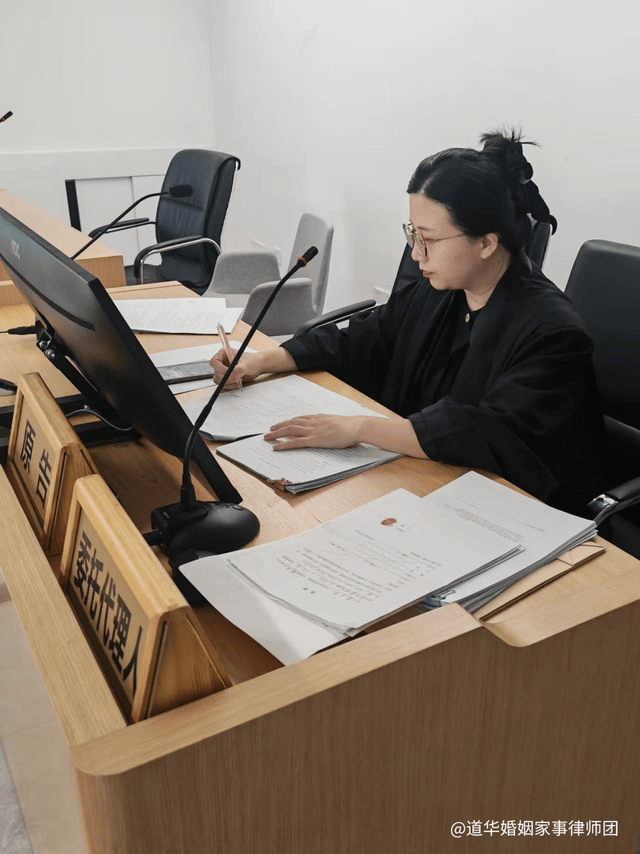
After accepting Ms. Shen's entrustment, Tang Lawyer had an in-depth communication with Ms. Shen to understand the status of their marriage, the root of the conflicts, the specific situation of the property, and Ms. Shen's core demands. Considering that the litigation process takes a long time and is likely to exacerbate the conflicts between the two parties, which is not conducive to the growth of the child, Tang Lawyer first attempted to resolve the dispute through mediation:
1. Based on the previous communication and negotiation between Ms. Shen and Mr. Jiang, comprehensively analyze the key points where the two parties failed to reach an agreement, and provide Ms. Shen with professional verbal guidance and communication strategies in combination with Mr. Jiang's personality characteristics.
2. Many couples often communicate the terms of their divorce through face-to-face meetings or phone calls, and are often driven by emotions, leading to the content of the terms being unfeasible, thus wasting time on communication and negotiation. Therefore, Tang Lawyer and his team draft a written divorce agreement based on Ms. Shen's demands at the beginning of the mediation guidance, making it convenient to confirm the content of the negotiation during the negotiation process.
(2) Fully review the evidence, and immediately initiate litigation after the agreement fails.
However, in the preliminary negotiations, Mr. Jiang was firm in his attitude, resolutely disagreeing with the divorce, claiming that if the divorce were to take place, custody of the daughter must be awarded to him, and the mediation between the two parties hit a deadlock. Lawyer Tang Yunhong analyzed the situation and believed that mere negotiation was unlikely to break the impasse, suggesting that Ms. Shen file a lawsuit in accordance with the law to promote the resolution of the dispute through the judicial process. To gain the initiative in the lawsuit, Lawyer Tang formulated
The strategy of "prioritizing core demands and supplementing hidden demands later" is to only claim divorce, custody of the daughter, and the division of property and vehicles during the lawsuit, and not to mention the demands for the return of gold, and the division of equity and stock accounts at this time.
(Three) Strategically adjust claims, accurately grasp the timing to break the deadlock to promote mediation.
After the case entered the litigation process, Tang lawyer simultaneously improved the evidence chain for properties such as gold items, equity stocks. On the day of the trial, before the judge presided over the pre-trial mediation, Tang lawyer strategically applied to the court to increase the claims, demanding Mr. Jiang return the personal valuable jewelry he did not take away during the separation, and legally divide the equity and stock account properties under both parties' names. This move caught Mr. Jiang off guard, and under the judge's inquiry, Mr. Jiang admitted that he indeed held valuable jewelry belonging to Ms. Shen and that there were equity and stock account facts under both parties' names.
During the mediation process, Tang Lawyer focused closely on Ms. Shen's core demands, while also fully considering Mr. Jiang's reasonable interests. After analyzing the reasons for Mr. Jiang's mediation plan, Tang Lawyer emphasized to Mr. Jiang that, as the daughter is still young, being raised by her mother is more conducive to her physical and mental health. Tang Lawyer also proposed a practical visitation plan to ensure Mr. Jiang's visitation rights, allowing him to regularly accompany his daughter. Ultimately, under the guidance of the judge and the communication of Tang Lawyer, Mr. Jiang's attitude gradually softened, and both parties reached a consensus on all controversial issues.
On the day of the mediation success, Ms. Shen went to Mr. Jiang's home accompanied by Lawyer Tang Yunhong to retrieve all her personal belongings and jewelry.
Four, Case Outcome
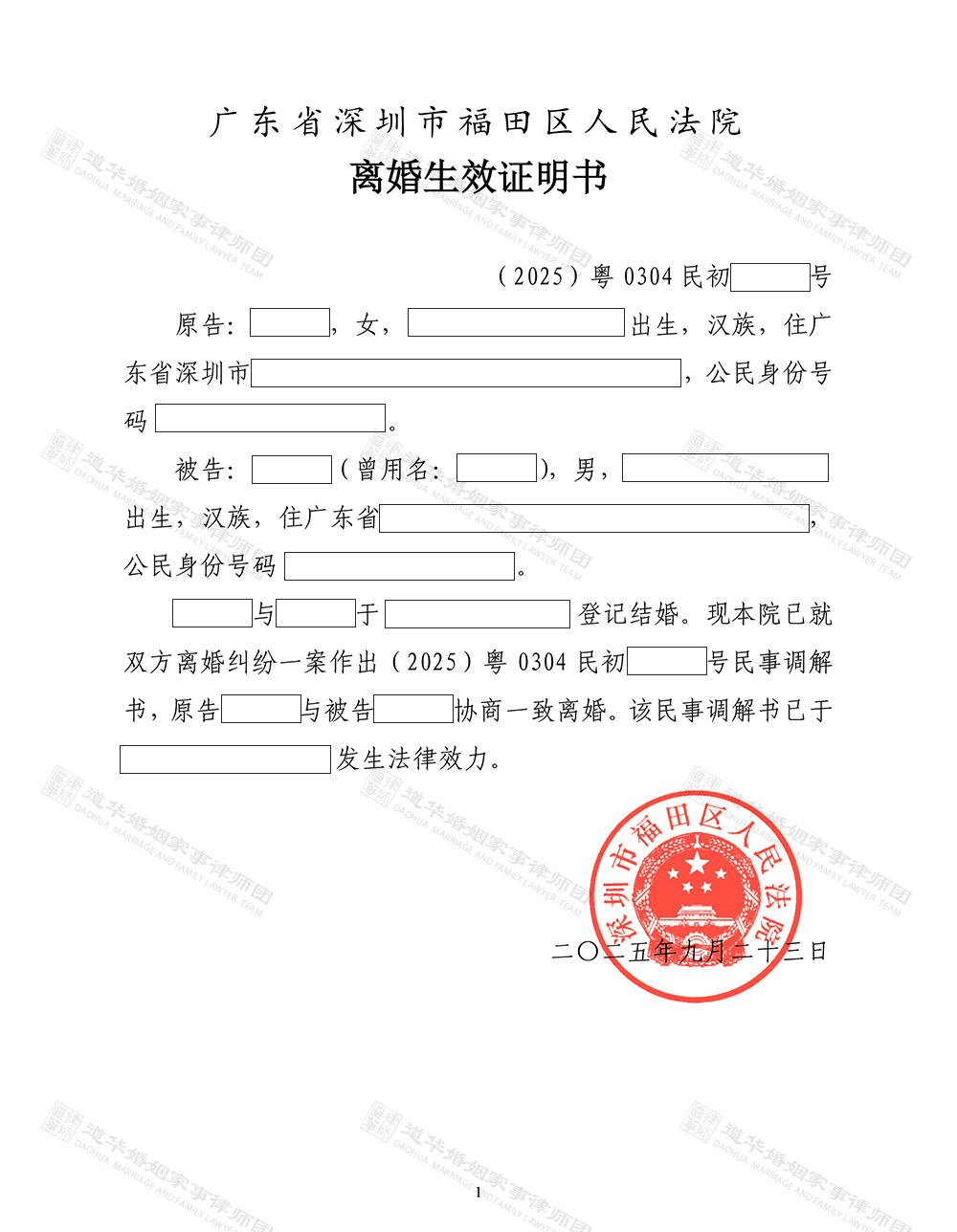
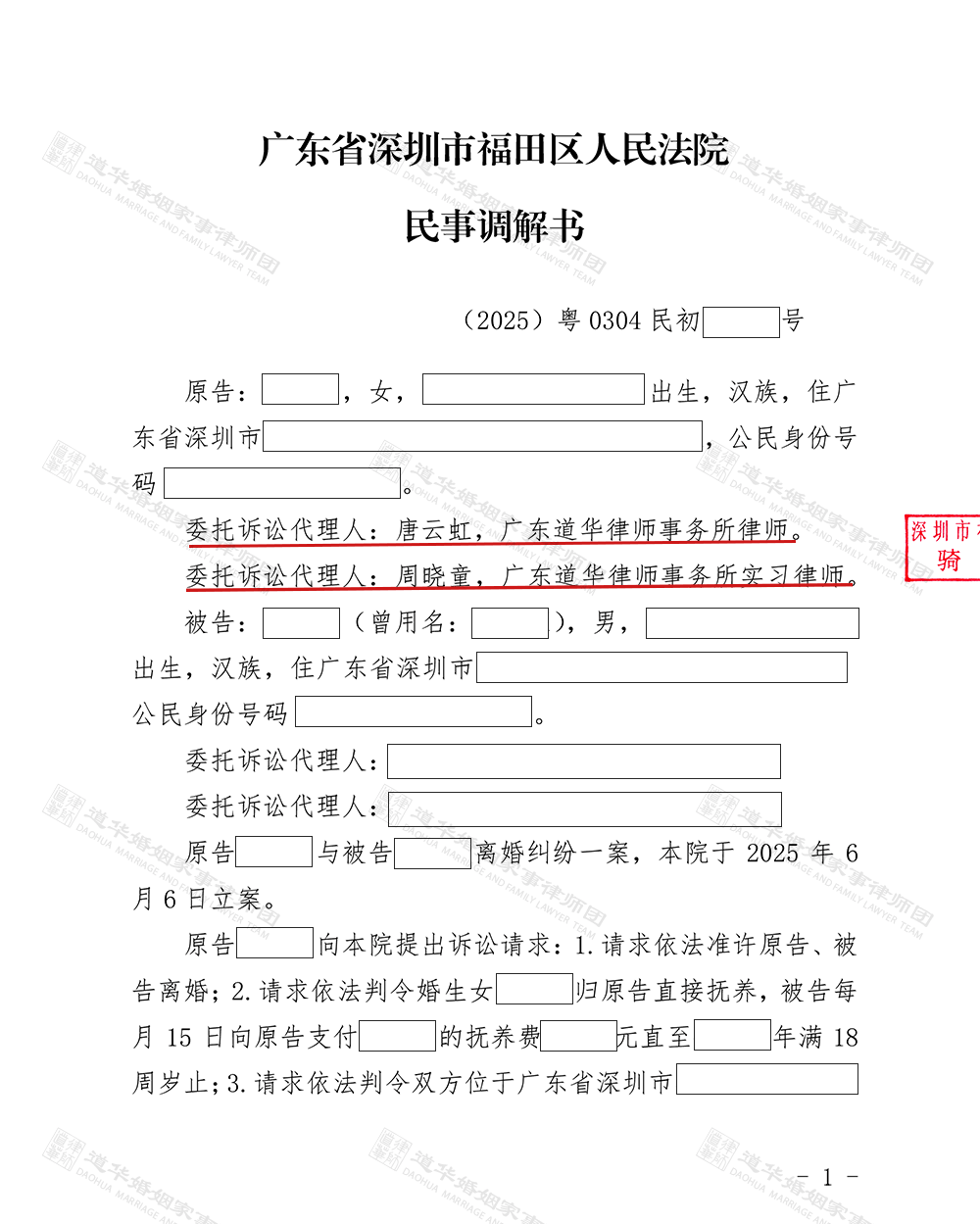
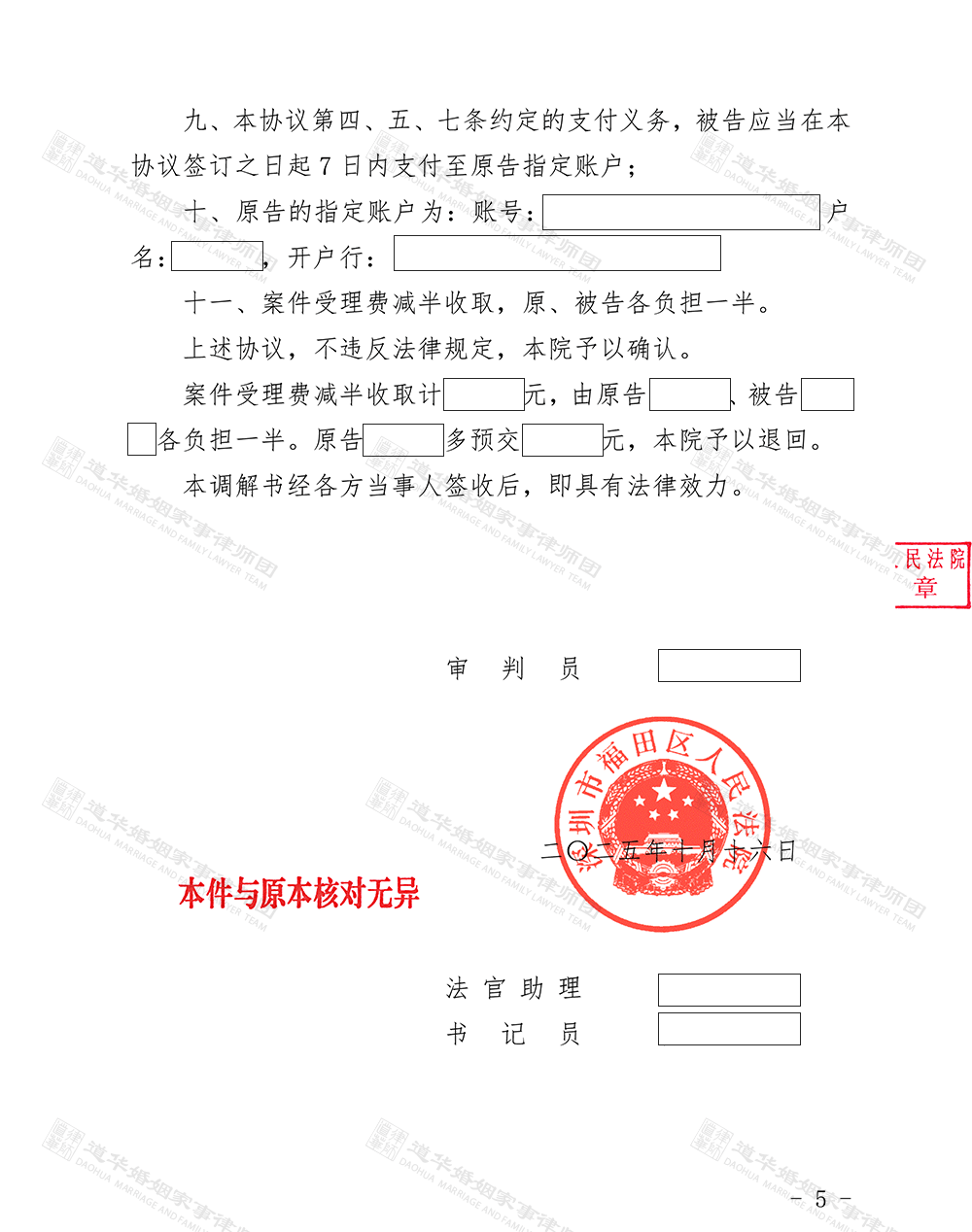
Under the guidance of the court, both parties reached a mediation agreement, and the court issued a civil mediation document, the specific content of which is as follows:
1. Ms. Shen and Mr. Jiang agree to dissolve their marital relationship.
2. Daughter Xiao Rong is directly cared for by Ms. Shen, and Mr. Jiang shall pay the child support of 3,000 yuan per month before the 10th of each month until Xiao Rong, the legitimate daughter, reaches the age of 18.
……
4. The house located in Futian District, Shenzhen, belongs to Mr. Jiang, and Mr. Jiang is responsible for repaying the remaining bank loan for the house. Within 7 days after the effectiveness of this mediation document, Mr. Jiang shall pay Ms. Shen a compensation of 105,000 yuan for the house.
5. The Mercedes-Benz vehicle belongs to Mr. Jiang, who shall pay Ms. Shen a compensation of 100,000 yuan within 7 days after the effectiveness of this mediation document.
6. The 98% equity share of the *** Co., Ltd. held by Mr. Jiang is owned by Ms. Shen.
7. Mr. Jiang compensates Ms. Shen 75,000 yuan based on the balance of the securities account in his name.
8. The gold jewelry and ornaments obtained at the time of marriage and after the birth of the legitimate daughter (including one gold pig pendant and a pair of dragon and phoenix bangles purchased by the defendant's parents, and other gold jewelry and ornaments purchased by the plaintiff's parents and friends) shall belong to the plaintiff.
The mediation result fully met Ms. Shen's core demands, not only successfully dissolved the marital relationship, but also obtained custody of her daughter, obtained her due property, and maximized the protection of Ms. Shen's legitimate rights and interests.
Chapter 5: Insights on Tang Law
In the practice of family law, each divorce case is not just a cold collection of legal provisions, but carries the urgent expectations of the parties involved to break free from difficulties and protect their loved ones, and is also a challenging restart for their future lives. Looking back at the process of handling Ms. Shen's case, it is not only a practice of legal affairs but also a profound understanding of human nature and emotions. From being at a standstill to a complete resolution, every step is filled with professionalism and warmth, and also crystallizes the wisdom of handling cases worth sharing:
1. Evidence is confidence; prepare early and take the initiative early.In divorce disputes, the resolution of disputes over property, custody, and other issues cannot be separated from evidence support. It is necessary to guide the parties in an early stage to sort out key evidence such as marital relationships, property, and custody, to ensure the completeness of the evidence chain, and lay a foundation for subsequent rights protection.
2. The strategy should be flexible, with offensive and defensive tactics in order.According to the dynamic progress of the case, adjust strategies accordingly, such as the approach in this case of "prioritizing core claims and supplementing hidden claims later," which can effectively grasp the initiative and occupy a favorable position in negotiations or litigation.
3. Mediation emphasizes skill, temperature melts deadlock:The emotional intensity in divorce cases is strong, and during mediation, it is necessary to adhere to the legal bottom line while also considering the other party's perspective. By using empathy in communication to resolve opposing emotions, and combining the core needs of both parties, a mediation plan can often achieve a "win-win" situation.
The end of a marriage may be tinged with regret, but the mission of the law is to ensure that every party can turn around with dignity and regain hope after the end. As a lawyer, one should not only uphold the legitimate rights and interests of the parties professionally, but also use warmth and responsibility to help them move past the gloom and embrace a new life of their own. This unwavering commitment that combines professionalism and warmth is the unchangingoriginal aspiration of a legal person.
Chapter 6, Index of Relevant Laws and Regulations
The Civil Code of the People's Republic of China
Article 1079 of the Civil Code: If one party of a married couple requests a divorce, mediation can be conducted by relevant organizations or a divorce lawsuit can be directly filed with the People's Court.
The People's Court shall mediate in divorce cases; if the marriage has indeed broken down and mediation is ineffective, the divorce shall be granted. If any of the following circumstances exist, and mediation is ineffective, the divorce shall be granted:
(1) Bigamy or cohabitation with another person;
(2) Committing domestic violence or mistreatment, abandonment of family members;
(3) Persistent in bad habits such as gambling and drug abuse despite repeated correction.
(4) Separated due to incompatibility in feelings for more than two years.
(Five) Other circumstances leading to the breakdown of the couple's feelings.
If one party is declared missing and the other party files for divorce, the divorce should be granted.
After the People's Court has ruled that divorce is not allowed, if both parties have been separated for a full year and one party files a divorce lawsuit again, the divorce should be granted.
Article 1084 of the Civil Code: The relationship between parents and children shall not be terminated due to the divorce of the parents. After divorce, the children, whether directly cared for by the father or mother, remain the children of both parents. After divorce, the parents still have the rights and obligations of custody, education, and protection of the children.
After divorce, children under two years of age shall be primarily cared for by the mother. For children who are two years of age or older, if the parents cannot reach an agreement on custody, the People's Court shall make a judgment based on the specific circumstances of both parties, in accordance with the principle that is most favorable to the minor children. For children who are eight years of age or older, their true wishes shall be respected.
Article 1087 of the Civil Code: During a divorce, the joint property of the husband and wife shall be handled by mutual agreement; if the agreement fails, the People's Court shall make a judgment according to the specific circumstances of the property, in accordance with the principle of considering the interests of the children, the female party, and the party without fault. The rights and interests enjoyed by the husband or wife in the land contracting operation in the family shall be protected in accordance with the law.
Article 8 of the Interpretation (II) of the Supreme People's Court on the Application of the Marriage and Family Article of the Civil Code of the People's Republic of China: During the existence of the marriage relationship, if one party's parents fully fund the purchase of a house by the couple, if the gift agreement explicitly stipulates that the gift is only to one of the parties' children, the matter shall be handled according to the agreement; if there is no agreement or the agreement is unclear, when dividing the couple's joint property upon divorce, the people's court may decide that the house shall belong to the child of the party who provided the funds, and comprehensively consider factors such as the joint life, the raising of common children, the fault of divorce, the contribution to the family, and the market price of the house at the time of divorce to determine whether the party obtaining the house should compensate the other party and the specific amount of the compensation.
During the existence of the marriage relationship, if the purchase of a house by the couple is partly funded by one parent or both parents, if the gift agreement explicitly stipulates that the corresponding investment is only a gift to one party's child, it shall be handled according to the agreement; if there is no agreement or the agreement is unclear, when dividing the joint property of the couple during divorce, the People's Court may, based on the party's litigation request, take the source and proportion of the investment as the basis, comprehensively consider factors such as the common life and raising of joint children, the fault of divorce, the contribution to the family, and the market price of the house at the time of divorce, and decide that the house belongs to one party, and the party obtaining the house shall make a reasonable compensation to the other party.
No registration required, quick appointment, expert lawyers provide customized legal service solutions
 Consultation Appointment:400-829-6880
 Private Space:18126123723
 Law Firm: Guangdong Daohua Law Firm
 Email:DAOHUALAWMF@163.com
 Address:810, Rongchao Economic & Trade Center, 4028 Jintian Road, Futian District, Shenzhen (Next to Civic Center)

18126123723
Follow us anytime, anywhere


