
Navigation
Author: Dao Hua Marriage and Family Law FirmDate: 2026-05-20Reads:times
Marriage and Family Affairs Dispute (Mediation/Litigation) Practical Expert
Ten years of focus on; marriage and family law services for bulk property matters
Guangdong Dao Hua Law Firm, Dao Hua Marriage and Family Law Team, Tang Yunhong Lawyer, Top Ten Divorce Lawyers in Shenzhen, Top Ten Inheritance Lawyers, Professional Divorce and Inheritance Litigation Lawyers in the Guangdong-Hong Kong-Macau Greater Bay Area, Renowned Lawyers for Large Family Properties, Numerous Successful Case Wins, Particularly Skilled in Handling: difficult property division/court litigation, listed company equity/fund/share division, real estate, Shenzhen small property rights houses/farmer houses, land, factories, virtual currency assets, Hong Kong divorce property division, marital/divorce property agreements, tax planning, debt isolation, divorce property transfer, cross-border inheritance, will notarization, will/inheritance disputes litigation, will drafting and validity determination, old city renovation and demolition, civil and criminal overlap, cross-border collaboration, etc. Service Areas: Guangdong, Shenzhen, Futian, Hong Kong, Macau, Overseas, Guangzhou, Zhongshan, Zhuhai, Foshan, Huizhou, Dongguan.

Abstract:In a divorce dispute in Guilin, Guangxi, the custody of children and the division of the only property owned after marriage, as well as cash deposits, are often the most difficult points for both parties to reach a consensus. Many families are thereforefell into long-term deadlock, which not only wastes time but also intensifies conflicts. In early 2026, the Dahuawu Marriage and Family Law Firm in Shenzhen intervened and represented a cross-regional divorce case. In this case, Ms. Wang and Mr. Zhang, the couple, broke up due to personality conflicts and disputes over mental harassment after marriage, and they were unable to reach an agreement on the custody of the children and the division of the mortgage house after marriage. After accepting theentrustment, the Dahuawu Marriage and Family Law Firm adopted the "litigation promotes mediation" as the core strategy, by filing a divorce lawsuit and clearly proposing higher amounts of child support and economic compensation claims, and under the guidance of the court, only less than three months were needed to promote mediation, and ultimately, the woman successfully divorced. The successful resolution of this case fully demonstrates the "professional, efficient, and empathetic" service concept of the Dahuawu Marriage and Family Law Firm, and also verifies the unique value of the "litigation promotes mediation" strategy in divorce disputes — it not only legally fights for the maximum rights and interests of the parties, but also uses mediation to ease the conflicts between the parties, fundamentally reducing the long-term harm of divorce disputes to individuals and families. (All names, places, and other information in this article are pseudonyms)
Keywords:Shenzhen Marriage Mediation, Promoting Mediation through Litigation, Divorce Economic Compensation, Divorce Lawyer, Daohua Marriage and Family Law Firm Team
One, Case Review
Ms. Wang and Mr. Zhang registered their marriage in Guilin, Guangxi in 2006, and after marriage, they sequentially gave birth to a daughter, Xiao Yuan, and a son, Xiao Bei. During the marriage, Mr. Zhang engaged in behaviors such as verbal abuse, mental oppression, and physical violence, causing Ms. Wang significant physical and mental harm.
Ms. Wang sought the Dohua Family Law Firm, expressing her desire for a quick divorce. After understanding the situation, the Dohua legal team advised to first try to negotiate a divorce to minimize confrontation and reduce the harm to the family and children. However, under the coordination of the Tang Yunhong legal team, Mr. Zhang's attitude was inconsistent, and they were unable to reach an agreement. During this period, Mr. Zhang repeatedly verbally disturbed and attacked both Mr. Tang and Ms. Wang. In this situation, the legal team adjusted their strategy and legally advanced the litigation procedures. Ultimately, both parties reached a mediation agreement, and the dispute was resolved amicably.
Two, focal points of the dispute
1. The custody and child support amount of the legitimate child
According to Article 1084, third paragraph of the Civil Code of the People's Republic of China, where the child has reached the age of eight, their real wishes should be respected; at the same time, the determination of custody should be based on the principle of what is most beneficial to the minor child. In this case, the legitimate child Xiao Bei has reached the age of 13, and he himself has issued a statement of will indicating his desire to live with his mother, Ms. Wang, and has been under her care for a long time. However, the defendant Mr. Zhang also claims custody rights and has the ability to care for the child, and the two parties have been unable to reach an agreement on who should directly care for the son. If custody is simply awarded to the mother based on the child's wishes without considering the defendant's actual willingness and ability to care for the child, it may lead to a long-term estrangement between father and son, and the defendant may take actions such as delaying the litigation and creating a joint custody fact to resist the judgment, thereby causing the child to suffer a second injury from the parents' dispute; conversely, if custody is awarded to the father against the child's real wishes, it may lead to the child's psychological resistance and discomfort in life, which is not conducive to his healthy growth.
2. Division of mortgaged house after marriage
According to Article 1087 of the Civil Code of the People's Republic of China, during a divorce, the joint property of the couple shall be handled by mutual agreement; if the agreement fails, the court shall decide according to the principle of considering the interests of the children, the female party, and the party without fault. In this case, the Guilin Development Zone house purchased by both parties after marriage is the only residence, but there is still a bank loan that has not been repaid. The plaintiff, Ms. Wang, claims that the house should belong to her, while the defendant claims it should belong to him. If the court decides that the house belongs to the plaintiff and the defendant has no place to live, it will lead to difficulties in the defendant's life and exacerbate the contradictions; conversely, if the house belongs to the defendant but the compensation amount for the plaintiff is too low, it will lead to the plaintiff being unable to obtain a reasonable large amount of consideration, affecting her subsequent property acquisition ability and living security, and thereby affecting the child custody conditions.
3. Whether the economic compensation for divorce claimed by the plaintiff should be supported
According to Article 1088 of the Civil Code of the People's Republic of China, if one spouse assumes more obligations due to child-rearing, caring for the elderly, assisting the other spouse in work, etc., they have the right to request compensation from the other spouse upon divorce, and the other spouse shall provide compensation. In this case, the plaintiff, Ms. Wang, claims that after marriage, due to the need to care for the family and raise children, she gave up the opportunity to work outside and has long undertaken the main household chores and child care obligations, while the defendant has worked outside for a long time and made less contribution to the daily life of the family. Ms. Wang therefore demands that the defendant pay a substantial economic compensation for divorce. The defendant, however, believes that family division of labor is inherently different, and that earning money and repaying loans through work outside is also a contribution to the family, and disagrees with paying compensation. If the court completely rejects the request for economic compensation, it will ignore the objective contribution of Ms. Wang's years of child-rearing and undertaking household chores, implicitly negating the independent economic value of household chores, making the party that has long undertaken the responsibility of family care "leave the house with nothing" upon divorce, which will encourage the wrong idea that "who earns more is right," and harm the fairness and justice within the family; on the other hand, if the court supports an excessively high amount of compensation, given that the total family property is limited (the net value of the house is not high), it will lead to an excessive burden on the defendant, even making it impossible to pay off the house loan and child support.
Section 3: Case Handling Process
(1) Deeply communicate and understand the demands, try to negotiate repeatedly
The Daohua Family Law Firm accepted Ms. Wang's entrustment after being entrusted, and immediately communicated deeply with the parties involved, comprehensively understanding the marital status, root of conflicts, current situation of child custody, and property conditions of both parties. Ms. Wang explicitly expressed her desire for a quick divorce. The Tang Yunhong legal team respects the wishes of the parties and suggests first attempting to negotiate a divorce to minimize confrontation and reduce the harm to the family and children as much as possible.
However, during the process of the law firm coordinating, Mr. Zhang's attitude was inconsistent, sometimes agreeing to the divorce plan and sometimes reversing his promises, and he was unable to reach an agreement. During this period, Mr. Zhang also repeatedly subjected the Tang Yunhong legal team and Ms. Wang to verbal harassment and attacks, leading to a deadlock in the negotiations. Faced with this situation, the Tang Yunhong legal team judged that if they continued to passively wait for negotiations, it would only delay time and exhaust the parties' energy. Therefore, the Dao Hua lawyer decisively adjusted the strategy, formulated a "litigation to promote mediation" case handling plan, guided Ms. Wang to comprehensively sort out materials such as child custody, domestic contributions, and relevant communication records, and drafted a complaint and evidence list according to the core demands, making full preparations for legally advancing the procedures.
(2) If negotiations fail, file a lawsuit in accordance with the law and thoroughly organize the evidence materials.
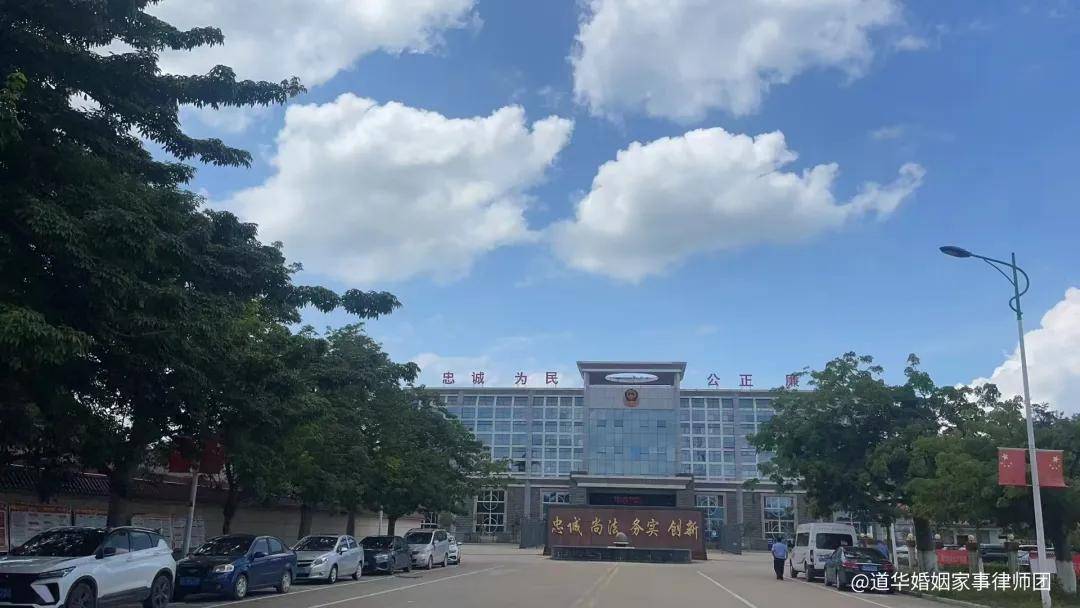
After the preliminary negotiations were at a standstill due to Zhang Xian's inconsistent attitude, the Dao Hua law firm team promptly adjusted its strategy and legally represented Ms. Wang in filing for a divorce lawsuit against the Lingqian County People's Court of Guangxi. At the same time, the team systematically organized and submitted complete evidence materials such as marriage certificates, birth certificates, property certificates, chat records, and statements of children's wishes, and clearly proposed core demands such as custody, property division, and economic compensation in the complaint, enabling the defendant to fully understand the potential legal consequences of the lawsuit.
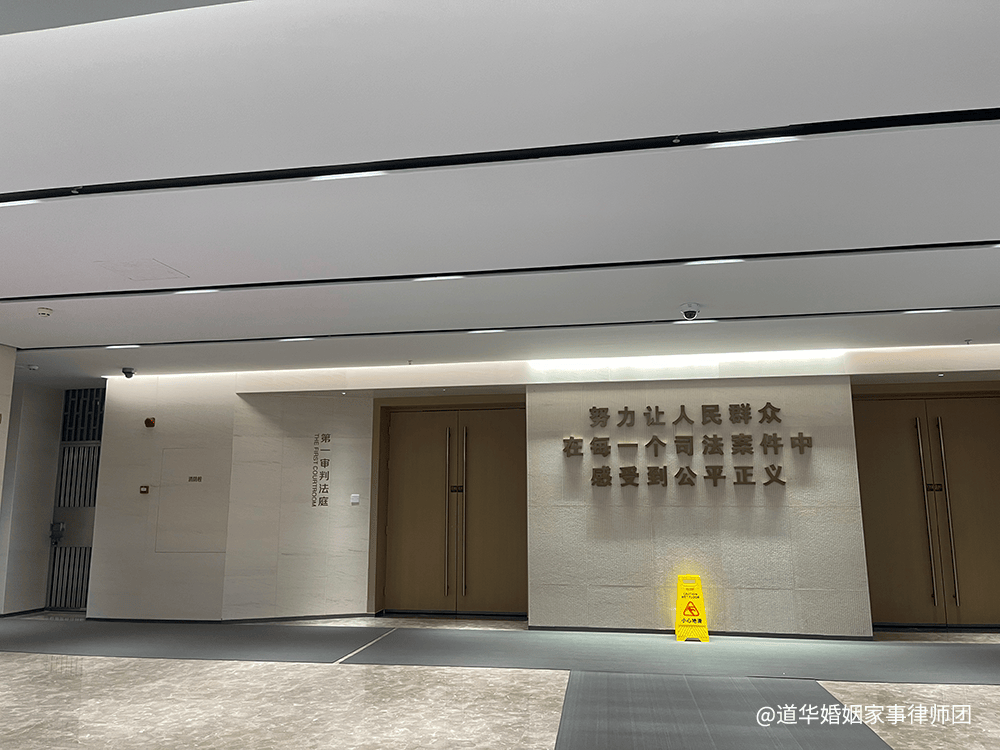
After the case is filed, the court arranges the trial and pre-trial mediation in accordance with the law. The Daohua Family Law Firm uses the advancement of the litigation process to maintain legal pressure while continuously engaging in rational communication with the defendant, creating favorable conditions for subsequent mediation.
(3) Seize the opportunity for pre-trial mediation, precisely promote a win-win situation for both parties
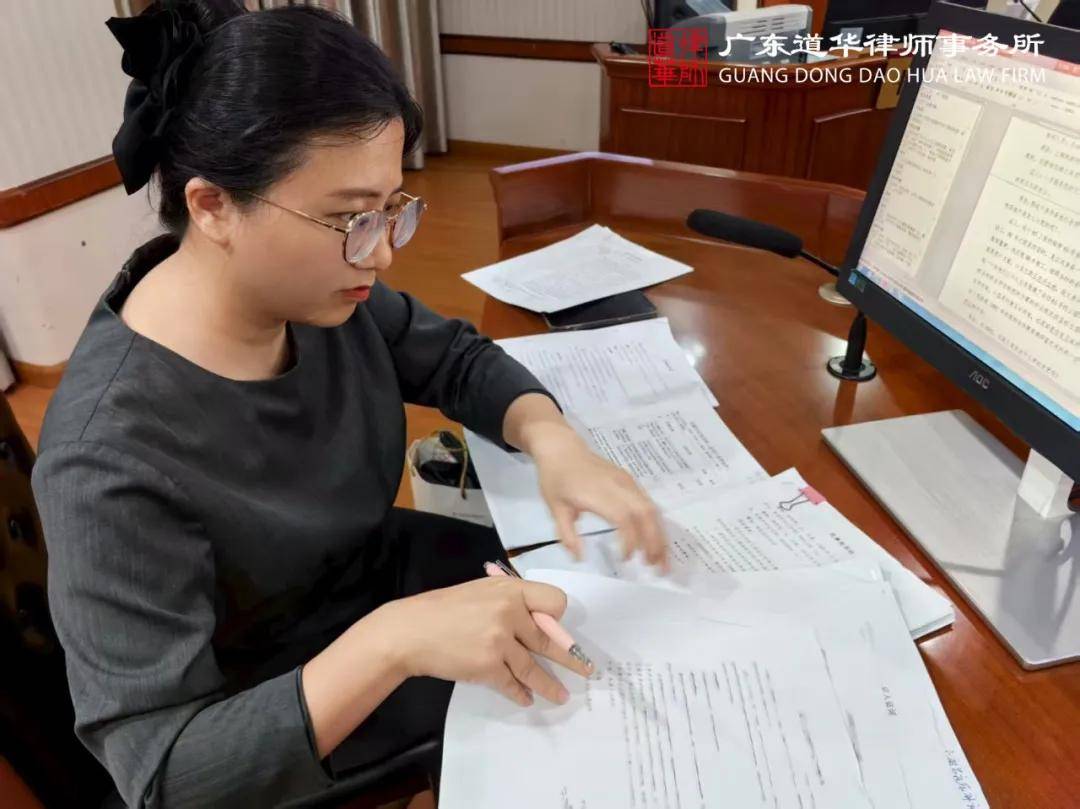
After the case enters the pre-trial mediation stage,Daohua Family Law and Matrimonial Lawyers TeamTightly grasping the defendant Mr. Zhang's desire for a quick divorce and his reluctance to beentangled for a long time, the mediation work was actively carried out under the judge's guidance. On one hand, the Daohua Law Firm emphasized the practical contributions of Ms. Wang in raising children and managing the household for many years, and reasonably claimed for economic compensation based on Article 1088 of the Civil Code; on the other hand, appropriate concessions were made in the legal ownership of the son's custody, but ensured that Ms. Wang undertook all daily care and companionship responsibilities for the son during his studies in Guilin, so that the mother-son affection could continue. At the same time, an initiative was made to propose a plan for the house to belong to Mr. Zhang and for Mr. Zhang to compensate Ms. Wang for the high valuation fee, in exchange for the defendant's concessions on the issue of economic compensation. Finally, under the guidance of the judge and the communication of the Daohua Family Law Firm, Mr. Zhang's attitude gradually softened, and both parties reached a mediation agreement on all controversial issues, with Ms. Wang successfully overcoming the marriagepredicament and obtaining a high amount of economic compensation.
Four, Case Outcome
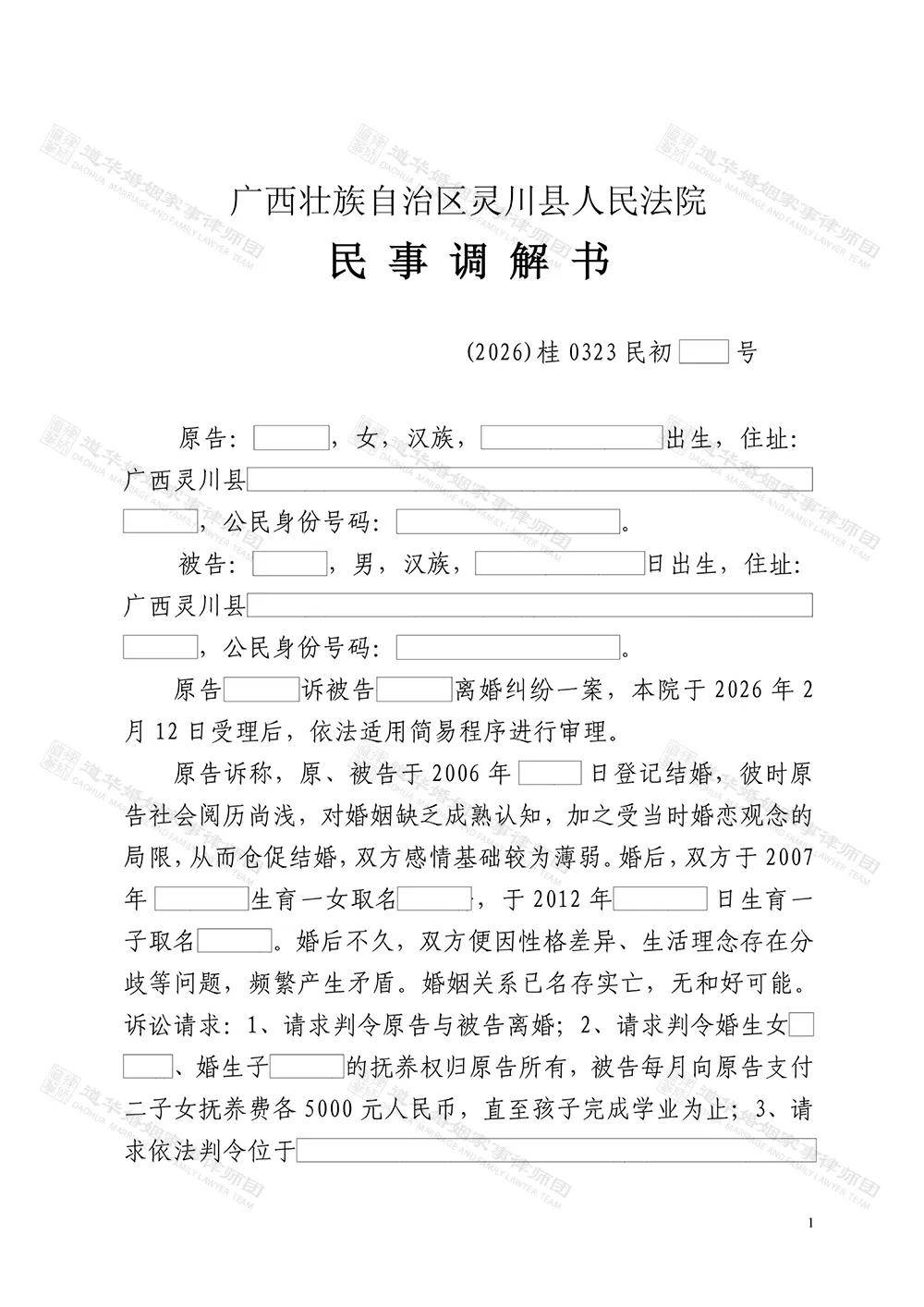
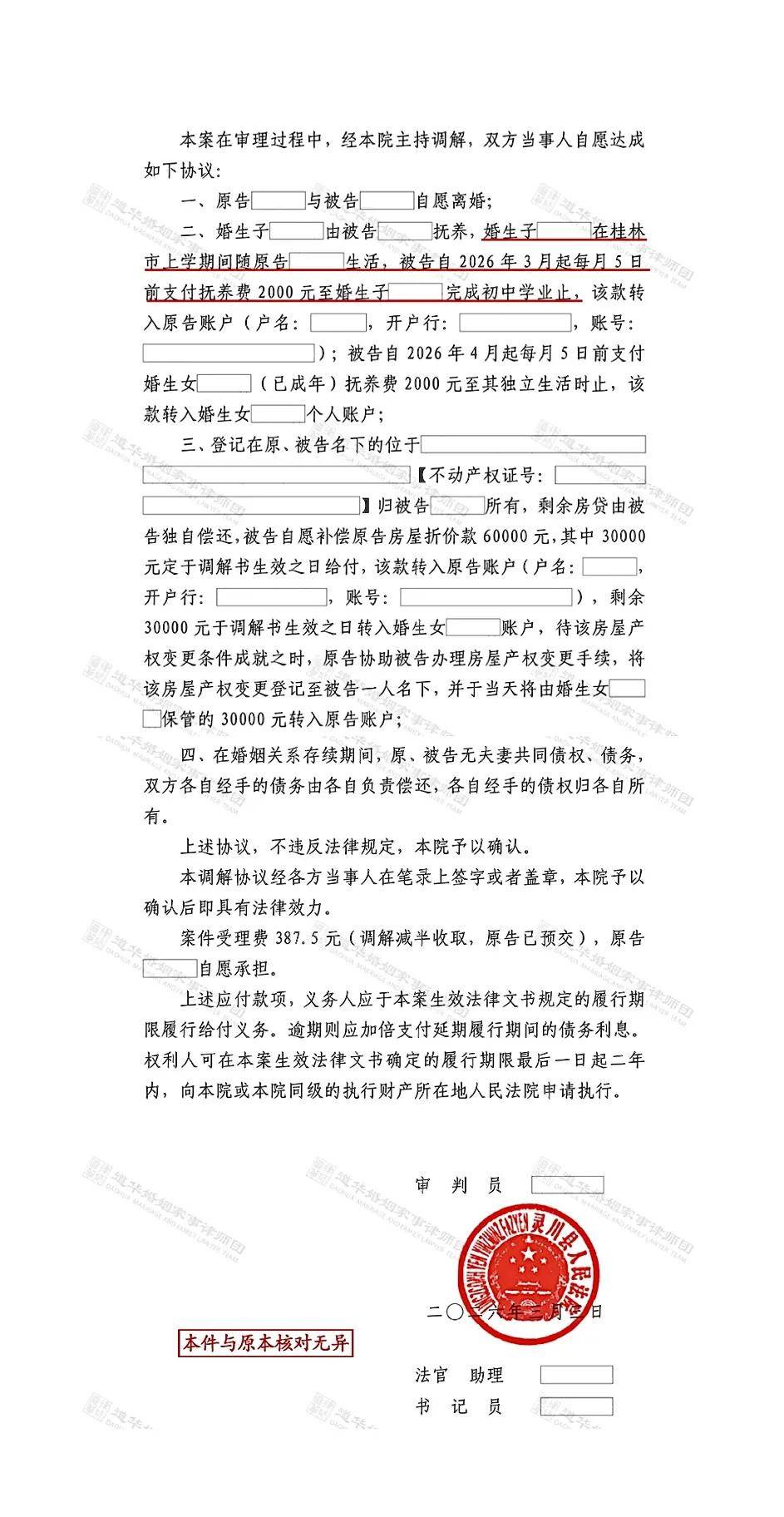
Under the guidance of the court, both parties reached a mediation agreement, and the court issued a civil mediation document, the specific content of which is as follows:
1. Ms. Wang and Mr. Zhang agree to dissolve their marital relationship.
2. The custody of the legitimate child is awarded to Mr. Zhang, while Ms. Wang is responsible for the main companionship and care during the child's education period; the legitimate daughter is now an adult, and Mr. Zhang pays child support monthly until she becomes self-supporting.
3. The involved house belongs to Mr. Zhang, the remaining loan is to be repaid by him, and Mr. Zhang pays a large compensation for the house valuation to Ms. Wang.
The mediation result fully demonstrates the professional strategy of the Dao Hua Marriage and Family Law Firm's "litigation to promote mediation," successfully freeing Ms. Wang from the marriage constraints, while also securing long-term living support for the children and a substantial economic compensation, to the greatest extent possible, protecting the legitimate rights and interests of the parties involved.
Five, Experience in Handling Cases
The resolution of domestic disputes cannot rely solely on legal provisions; it also requires strategy and empathy. We have always adhered to the principle of "litigation promotes mediation"—when negotiations reach an impasse, we resolutely initiate legal proceedings, using the seriousness of the law to bring the other party back to reason, and quickly reach a settlement under the court's guidance. Litigation is not the goal, but a means to promote the resolution of disputes. We do not give an inch on core interests, and are flexible in non-core issues, not striving for a "complete victory," but helping the parties to hold on to what matters most to them.
Mediation is not about smoothing things over, but about finding common ground based on an understanding of the deep needs of both parties. Only by considering emotions, reason, and law can a deadlock be broken and a result acceptable to both parties be achieved. Marriage may end, but life goes on. The value of a family law attorney is to help the parties maintain dignity, interests, and the confidence to start anew at the end. Dao Hua Lawyers, with professionalism and empathy, accompany the parties through this most difficult journey.
Six, Legal Index
Article 1067 of the Civil Code of the People's Republic of China: If parents fail to fulfill their obligation to support, minor children or adult children who are unable to live independently have the right to require their parents to provide alimony.
Article 1079 of the Civil Code: If one party of a married couple requests a divorce, mediation can be conducted by relevant organizations or a divorce lawsuit can be directly filed with the People's Court.
The People's Court shall mediate in divorce cases; if the marriage has indeed broken down and mediation is ineffective, the divorce shall be granted. If any of the following circumstances exist, and mediation is ineffective, the divorce shall be granted:
(1) Bigamy or cohabitation with another person;
(2) Committing domestic violence or mistreatment, abandonment of family members;
(3) Persistent in bad habits such as gambling and drug abuse despite repeated correction.
(4) Separated due to incompatibility in feelings for more than two years.
(Five) Other situations leading to the breakdown of the couple's feelings.
If one party is declared missing and the other party files for divorce, the divorce should be granted.
After the People's Court has ruled against divorce, if both parties have been separated for a full year and one party files a second divorce lawsuit, the divorce should be granted.
Article 1084 of the Civil Code: The relationship between parents and children shall not be terminated due to the divorce of the parents. After divorce, the children, whether directly cared for by the father or mother, remain the children of both parents. After divorce, the parents still have the rights and obligations of custody, education, and protection of the children.
After divorce, children under two years of age shall be primarily cared for by the mother. For children who are two years of age or older, if the parents cannot reach an agreement on custody, the People's Court shall make a judgment based on the specific circumstances of both parties, in accordance with the principle that is most favorable to the minor children. For children who are eight years of age or older, their true wishes shall be respected.
Article 1087 of the Civil Code: During a divorce, the joint property of the husband and wife shall be handled by mutual agreement; if the agreement fails, the People's Court shall make a judgment according to the specific circumstances of the property, in accordance with the principle of considering the interests of the children, the female party, and the party without fault. The rights and interests enjoyed by the husband or wife in the land contracting operation in the family shall be protected in accordance with the law.
5. Article 1088 of the Civil Code of the People's Republic of China: If one spouse assumes more obligations due to child-rearing, caring for the elderly, assisting the other spouse in work, etc., they have the right to request compensation from the other spouse upon divorce, and the other spouse shall provide compensation. The specific methods shall be agreed upon by both parties; if they fail to reach an agreement, the People's Court shall make a judgment.
Daohua Family Law Firm (Guangdong Daohua Law Firm), with ten years of focus on major property marriage and family legal services, divorce inheritance family disputes (mediation/trial) practical experts, one of the influential brands of professional legal services in the Guangdong-Hong Kong-Macau Greater Bay Area [Shenzhen local], and even a benchmark lawyer team for mediation and trial in the renowned cross-border divorce inheritance field.
The Tang Yunhong Law Firm has handled over 1000 cases related to marriage and inheritance, involving tens of billions of yuan in assets. The firm has extensive successful litigation experience in the fields of dispute resolution, including divorce and division of large properties such as listed company equity, Shenzhen small property rights houses, land, and factories, as well as inheritance disputes, will drafting, and family property inheritance. It is particularly skilled in handling cross-border and cross-jurisdictional divorce litigation and inheritance cases, addressing industry difficulties and pain points. With localized legal wisdom, the firm overcomes various complex domestic property disputes, winning high praise from clients and industry reputation.
Adhering to the philosophy of "securing property safety, preventing legal risks, and empowering wealth growth," we gather experts from industries such as law, banking, insurance, and finance and taxation. With rich experience in civil and commercial litigation and arbitration, as well as civil and criminal crossover and tax planning, we provide a comprehensive package of solutions for high-net-worth individuals (including those from Hong Kong, Macau, and foreign nationals) in marriage, family affairs, and wealth inheritance. This aims to achieve the beautiful vision of risk prevention and control, debt isolation, and family wealth inheritance.
Asset types cover: real estate (residential properties, small property rights houses, land, factories, etc.), movable property (vehicles, antiques, paintings, gold jewelry, etc.), various property rights (cash deposits, equity, debts, relocation compensation, fund investments, virtual property, intellectual property rights, etc.). The team systematically compiles professional achievements such as "Compilation of Successful Cases of Dao Hua Marriage and Inheritance" and "Legal Practice of Family Wealth Transmission", to meticulously protect clients' property rights and interests, and to safeguard the inheritance of family wealth with meticulous service!
Statement:The information or articles published on this website are for exchange purposes only. The names of individuals/companies mentioned in this article are pseudonyms, and the amounts/dates of the case information have been processed for confidentiality. The content of the article is created by the author and does not represent legal opinions or suggestions issued by Guangdong Daohua Law Firm or other lawyers. The information contained in this article is provided for general information purposes only, and Guangdong Daohua Law Firm does not make any timely modifications or updates to this article. Decisions made by readers based on all or part of the content of this article and the consequences arising therefrom are solely the responsibility of the individuals involved. The author and Guangdong Daohua Law Firm assume no responsibility. If any content of these articles is to be reproduced or cited, please indicate the source. If you need legal advice or legal services, please contact our lawyers.
No registration required, quick appointment, expert lawyers provide customized legal service solutions
 Consultation Appointment:400-829-6880
 Private Space:18126123723
 Law Firm: Guangdong Daohua Law Firm
 Email:DAOHUALAWMF@163.com
 Address:810, Rongchao Economic & Trade Center, 4028 Jintian Road, Futian District, Shenzhen (Next to Civic Center)

18126123723
Follow us anytime, anywhere


