
Navigation
Author: Dao Hua Marriage and Family Law FirmDate: 2026-04-21Reads:times
Marriage and Family Affairs Dispute (Mediation/Litigation) Practical Expert
Ten years of focus on; marriage and family legal services for bulk property matters
Guangdong Dao Hua Law Firm, Dao Hua Marriage and Family Law Team, Tang Yunhong Lawyer, Top Ten Divorce Lawyers in Shenzhen, Top Ten Inheritance Lawyers, Professional Divorce and Inheritance Litigation Lawyers in the Guangdong-Hong Kong-Macau Greater Bay Area, Famous lawyers for large family properties, numerous successful cases, especially skilled in handling: difficult property division/court litigation, listed company equity/fund/share division, real estate, Shenzhen small property rights houses/farmer houses, land, factories, virtual currency assets, Hong Kong divorce property division, marital/divorce property agreements, tax planning, debt isolation, divorce property transfer, cross-border inheritance, will notarization, will/inheritance disputes litigation, will drafting and validity determination, old city renovation and demolition, civil and criminal overlap, cross-border collaboration, etc. Service areas: Guangdong, Shenzhen, Futian, Hong Kong, Macau, overseas, Guangzhou, Zhongshan, Zhuhai, Foshan, Huizhou, Dongguan.

The dissolution of a marital relationship not only signifies the termination of personal relationships but also involves the division of joint property and the determination of custody of children, and the division of property has always been the core dispute focus in divorce disputes. With the development of the market economy, the forms of joint property of couples have long exceeded the traditional categories of tangible assets such as real estate, deposits, and vehicles. Intangible assets with personal dependence and business attributes, such as equity, options, and virtual shares, have gradually become the difficulties and focuses of property division.
The Guangdong Dao Hua Law Firm will analyze the judicial thinking on issues such as the pre-marital and post-marital share identification, division method selection, and valuation standard for Huawei's internal shares in a divorce dispute case involving the internal equity division of a well-known enterprise in this article, and explore the judicial rules and practical points of special equity division in divorce disputes.
One, Basic Case Situation
Plaintiff Huang Jia and defendant Liu Jia were registered as married on May 20, 2016, and had two children after marriage. Due to the breakdown of their marriage, Huang Jia filed for divorce in March 2020 but was not granted permission. Afterward, they continued to live separately, and Huang Jia again filed a lawsuit with the court for divorce. Liu Jia agreed to the divorce in court. The main focus of the dispute between the two parties was on custody of the children and property division, with the core difficulty in property division being the division of the internal shares of Huawei Technologies Co., Ltd. under Huang Jia's name. After investigation by the court, it was found that Huang Jia was a formal employee of Huawei Company, and the internal shares she held were confirmed by the company's legal department, with 10,000 shares held by the end of 2017, an additional 5,000 shares by the end of 2018, an additional 65,000 shares by the end of 2019, and a total of 78,000 shares added from the end of 2020 to the end of 2022. By July 2024, the value of the 158,000 shares of internal shares after tax was 836,138 yuan. At the same time, Huawei Company explicitly replied that only formal employees of the company are eligible to hold internal shares, and non-Huawei employees are not allowed to hold them. The company only cooperated with the court in dividing the value of the shares and deducted taxes in accordance with the law.
Second, the court's judgment
(1) The court believes that
Regarding the internal shares of Huawei Company held by the plaintiff, this court believes that: 1. According to Huawei Company's reply, the shares held by the plaintiff and the defendant before marriage were 80,000 shares, which belong to the plaintiff's pre-marital property. As for the defendant's statement that the 65,000 shares acquired before December 2019 were repaid with post-marital property, as no evidence has been provided and the plaintiff has not confirmed, this court does not accept this statement. This court only divides the 78,000 shares of Huawei internal shares held by the plaintiff after marriage; 2. According to Huawei Company's reply, only formal employees of Huawei Company are eligible to hold internal shares of Huawei Company, and non-Huawei employees cannot hold internal shares of Huawei. Huawei Company can only cooperate with the court to divide the value of Huawei internal shares and pay taxes in accordance with the law. Therefore, the defendant's request to obtain Huawei internal shares and receive dividends in the future is not accepted by this court; 3. According to Huawei Company's reply, the after-tax value of 158,000 shares is 836,138 yuan, of which half of the interest from the 78,000 shares after marriage should belong to the defendant. Therefore, the after-tax value of the Huawei internal shares obtained by the defendant is 206,388.50 yuan. Based on this, after the divorce, the 158,000 internal shares of Huawei Company under the name of the plaintiff continue to be held by the plaintiff, and the plaintiff shall pay the defendant 206,388.50 yuan as the price for the internal shares.
(2) The court's judgment on the equity portion of the case
1. Pre-marital equity belongs to personal property
The court determined that the 80,000 shares of Huawei internal stock held by Huang Jia before marriage were his personal property and should not be divided as joint marital property. The defendant Liu Jia claimed that 65,000 shares were acquired with post-marital property to repay a loan, but failed to provide evidence, and the court did not accept this claim.
2. The equity after marriage belongs to the joint property of the couple.
The additional 78,000 shares of internal stock acquired after marriage are recognized by the court as joint property of the couple, and should be divided in accordance with the law.
3. The equity belongs to the holder, and a discounted compensation is made to the other party
In view of the fact that Huawei's internal shares are only available to employees in service, the court ruled that the 158,000 shares are all owned by Huang Jia, but Huang Jia should pay Liu Jia a compensation of 206,388.50 yuan, which is half the value of the portion owned after marriage.
4. Equity dividends are divided in proportion
In view of the equity dividend of 185,808 yuan for the year 2024, the court divided it according to the equity ratio before and after marriage, combined with the year-end bonus of 170,730 yuan in 2023, and arbitrarily determined that Huang Jia should pay Liu Jia 130,000 yuan as a valuation compensation.
III. Key points regarding the division of Huawei shares in divorce disputes
(1) The legal nature of Huawei's internal shares
Huawei's internal shares are not publicly listed stock, do not have public market liquidity, and are internal equity certificates set up by the company to motivate employees. The qualifications of the holders are linked to the labor relationship, and non-employees cannot hold or inherit them. Therefore, in the division of marital property, the court usually adopts the handling method of "the equity belongs to the holder, and the other party is compensated at a discounted price," which conforms to the fair principle of property division between spouses stipulated in the Civil Code of the People's Republic of China.
(2) Identification of equity before and after marriage
The identification of joint property of husband and wife is the prerequisite for the division of property in divorce. In judicial practice, the "time of acquisition of equity" is generally used as the core criterion to distinguish between pre-marital individual property and post-marital joint property. If the equity was acquired before marriage and there was no increase or additional investment after marriage, it remains individual property; if the equity was acquired through methods such as additional investment or stock allocation after marriage, or if the equity generated income before marriage was produced after marriage (excluding interest and natural appreciation), it should be identified as joint property of husband and wife. In this case, the court strictly followed this standard in identifying the share of Huawei's internal equity, which is reflected in two aspects: first, dividing the equity share based on the marriage registration date, and second, strictly following the rules of burden of proof in identifying the disputed equity.
In this case, the court strictly distinguished between equity interests acquired before and after marriage, reflecting an accurate grasp of the boundaries between individual property and joint marital property. For the portion acquired after marriage, regardless of the source of funds, as long as the acquisition occurred during the marriage, it should, in principle, be regarded as joint marital property.
(3) Selection of equity division method
The choice of equity division method is the core issue in equity division in divorce disputes. In judicial practice, there are usually two methods: one is direct division of equity, where both parties hold a certain proportion of equity and become shareholders of the company; the other is valuation compensation, where one party continues to hold the equity and pays the other party the corresponding valuation compensation for the equity.
The court rejected the defendant's request for direct holding of shares in this case and ruled to adopt the method of discounted compensation, with the core basis being that Huawei's internal shares have a strong personal dependence and exclusive attribute to employees, which is the essential difference between Huawei's internal shares and the equity of a general limited liability company. According to Huawei's reply, only formal employees of the company are eligible to hold internal shares, and non-Huawei employees are not allowed to hold them. This regulation is not Huawei's "special regulation," but a common design of the company's internal equity incentive system, with the purpose of linking employee interests with corporate operations and motivating employees to serve the company's development. Therefore, the holders of such shares are subject to strict restrictions and cannot be transferred or divided freely like ordinary shares. If the court's judgment allows the defendant to directly hold Huawei's internal shares, it will violate Huawei's articles of association and internal regulations, leading to a conflict between the equity holding entity and the company's regulations, which cannot be actually performed and may also affect the company's equity incentive system and management operations.
(4) Calculation of equity value and division ratio
After determining that the equity is jointly owned by the couple and dividing it through the method of valuation compensation, the calculation of the equity value and the determination of the division ratio become crucial, directly affecting both parties' property rights and interests. In this case, the key points of the court's judgment on this issue reflect the principle of "dividing the jointly owned property equally based on objective value," as analyzed below:
1. The standard for calculating equity value is the actual value after tax confirmed by the enterprise. The value of Huawei's internal shares is not determined by market transactions, but is comprehensively calculated by Huawei Corporation based on the company's operating conditions, the number of shares, etc. Since the division of equity involves tax issues, the court directly adopts the "post-tax equity value of 836,138 yuan as of July 2024" confirmed by Huawei's Legal Department as the basis for calculation. This standard has objectivity and authority, avoiding increased appraisal costs and extended trial periods due to disputes between the parties over the value of equity.
2. The joint equity after marriage follows the basic principle of "equal division." Article 1087 of the Civil Code stipulates that during divorce, the joint property of the couple shall be handled through mutual agreement; if an agreement cannot be reached, the People's Court shall make a judgment based on the specific circumstances of the property, taking into account the interests of the children and the female party. In the absence of an agreement between the parties on the division of joint property, "equal division" is the basic principle in judicial practice for handling the joint property of the couple, and it will be appropriately biased only in cases where there is fault on the part of one party, child custody, difficulties in the female party's life, and other situations.
Chapter 4: Insights from Handling Cases According to the Tang Code
1. Evidence fixation is crucial
For the source of pre-marital property and the nature of post-marital property, it is advisable to collect evidence in advance such as bank statements, records of equity changes, and company certificates to avoid losing rights due to inability to provide evidence in litigation.
2. The division of equity in non-listed companies should be handled with caution.
The division of non-listed company equity involves multiple factors such as the company's articles of association, shareholder qualifications, and the company's intentions. Lawyers should communicate with the company in advance during the lawsuit to clarify the feasibility of equity change or valuation compensation.
3. Dividends and bonuses should be included in the scope of property division.
While dividing the equity, attention should be paid to the allocation of derived benefits such as dividends and bonuses, to avoid omissions or duplications in the division.
4. Rationality judgment of discount compensation
The amount of compensation for the discount should be determined comprehensively based on the actual value of the equity, the ability to pay, and other property division situations, to avoid difficulties or unfairness in enforcement due to being too high or too low.
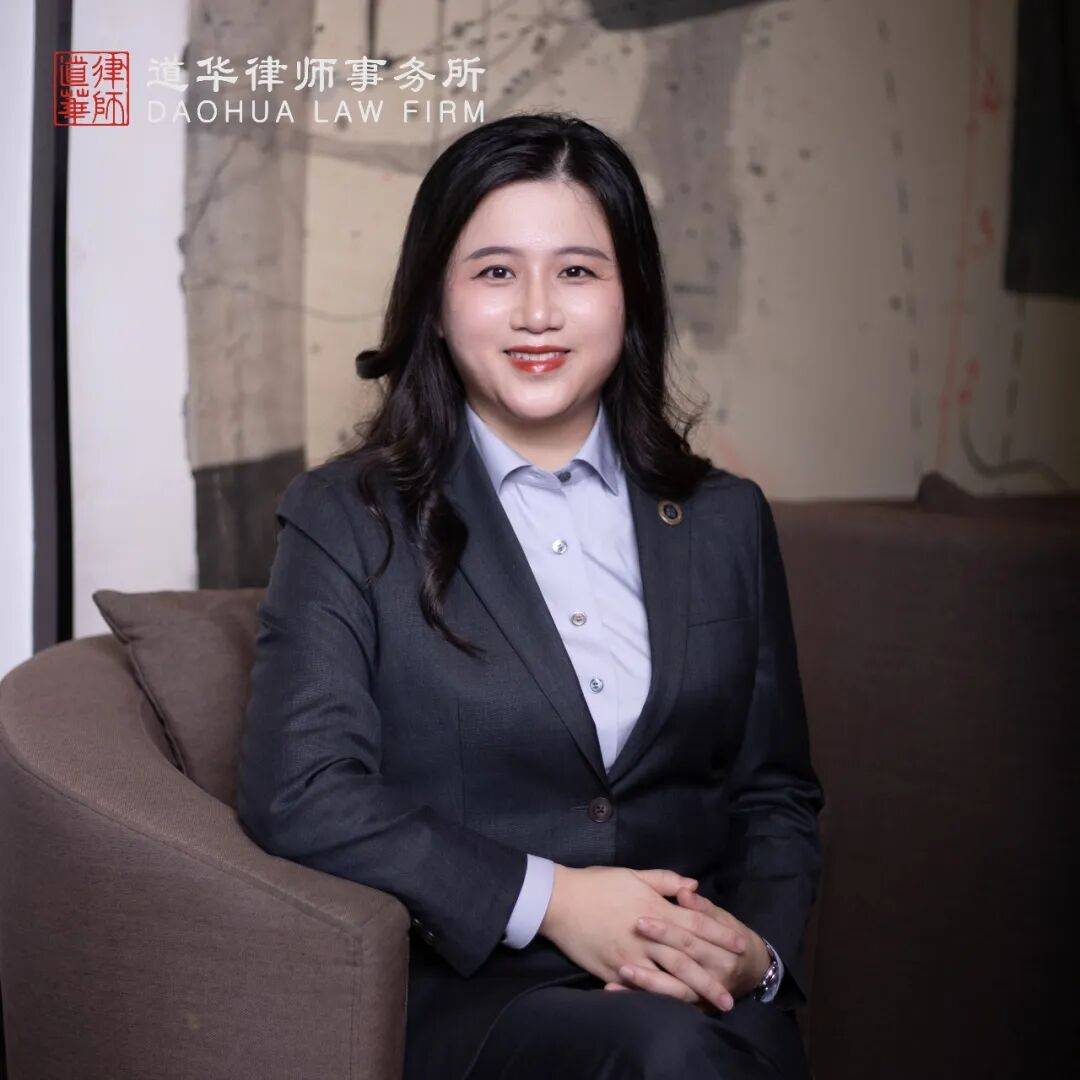
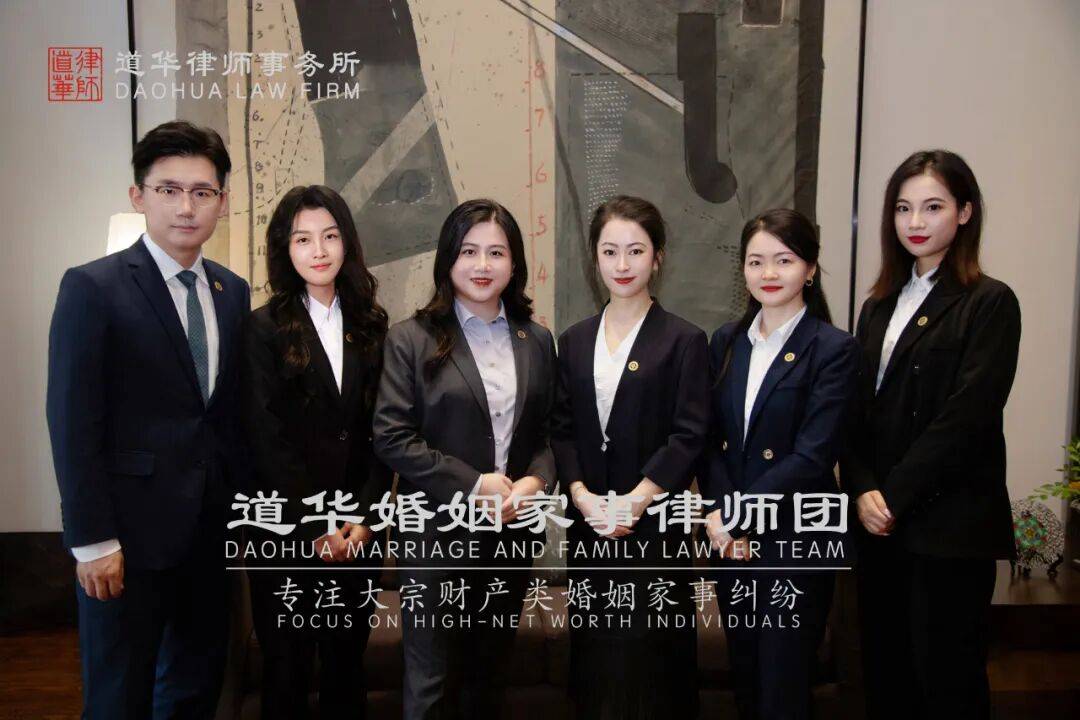
Daohua Family Law Firm (Guangdong Daohua Law Firm), with ten years of focus on major property family law services, divorce and inheritance family disputes (mediation/trial) practical experts, is one of the influential brands of professional legal services in the Guangdong Greater Bay Area [Shenzhen local], and is also a benchmark lawyer team for mediation and trial in the well-known cross-border divorce and inheritance field.
The Tang Yunhong Law Firm has handled over 1000 cases related to marriage and inheritance, involving tens of billions of yuan in assets. The firm has extensive successful litigation experience in the fields of dispute resolution for the division of large properties such as listed company equity, Shenzhen small property rights houses, land, and factories, as well as inheritance disputes, will drafting, and family property inheritance. It is particularly skilled in handling complex and difficult cases in the areas of cross-border property divorce litigation and inheritance lawsuits, utilizing localized legal wisdom to overcome various complex domestic property disputes, earning high praise from clients and a good reputation in the industry.
Adhering to the philosophy of "securing property safety, preventing legal risks, and empowering wealth appreciation," we gather experts from industries such as law, banking, insurance, and finance and taxation. With rich experience in civil and commercial litigation and arbitration, as well as civil and criminal crossover and tax planning, we provide a comprehensive package of solutions for high-net-worth individuals (including those from Hong Kong, Macau, and foreign nationals) in marriage, family affairs, and wealth inheritance. This is to achieve the beautiful vision of risk prevention and control, debt isolation, and family wealth inheritance.
Asset types cover: real estate (residential properties, small property rights houses, land, factories, etc.), movable property (vehicles, antiques, paintings, gold jewelry, etc.), various property rights (cash deposits, equity, debts, relocation compensation, fund investments, virtual property, intellectual property rights, etc.). The team systematically compiles professional achievements such as "Compilation of Successful Cases of Dao Hua Marriage and Inheritance" and "Legal Practice of Family Wealth Transmission", to meticulously protect clients' property rights and interests, and to safeguard the inheritance of family wealth with meticulous service!
Statement:The information or articles published on this website are for exchange purposes only. The names of individuals/companies mentioned in this article are pseudonyms, and the amounts/dates of the case information have been processed for confidentiality. The content of the article is created by the author and does not represent legal opinions or suggestions issued by Guangdong Daohua Law Firm or other lawyers. The information contained in this article is provided for general information purposes only, and Guangdong Daohua Law Firm is not responsible for making timely modifications or updates to this article. Decisions made by readers based on all or part of the content of this article and the consequences arising therefrom are solely the responsibility of the individuals involved. The author and Guangdong Daohua Law Firm assume no responsibility. If any content of these articles is to be reproduced or cited, please indicate the source. If you need legal advice or legal services, please contact our lawyers.
No registration required, quick appointment, expert lawyers provide customized legal service solutions
 Consultation Appointment:400-829-6880
 Private Space:18126123723
 Law Firm: Guangdong Daohua Law Firm
 Email:DAOHUALAWMF@163.com
 Address:810, Rongchao Economic & Trade Center, 4028 Jintian Road, Futian District, Shenzhen (Next to Civic Center)

18126123723
Follow us anytime, anywhere


