
Navigation
Author: Dao Hua Marriage and Family Law FirmDate: 2026-03-30Reads:times
Marriage and Family Affairs Dispute (Mediation/Litigation) Practical Expert
Ten years of focus on; marriage and family legal services for bulk property matters
Guangdong Dao Hua Law Firm, Dao Hua Marriage and Family Law Team, Tang Yunhong Lawyer, Top Ten Divorce Lawyers in Shenzhen, Top Ten Inheritance Lawyers, Professional Divorce and Inheritance Litigation Lawyers in the Guangdong-Hong Kong-Macau Greater Bay Area, Renowned Lawyers for Large Family Properties, Numerous Successful Case Wins, Particularly Skilled in Handling: difficult property division/court litigation, listed company equity/fund/share division, real estate, Shenzhen small property rights houses/farmer houses, land, factories, virtual currency assets, Hong Kong divorce property division, marital/divorce property agreements, tax planning, debt isolation, divorce property transfer, cross-border inheritance, will notarization, will/inheritance disputes litigation, will drafting and validity determination, old city renovation and demolition, civil and criminal overlap, cross-border collaboration, etc. Service Areas: Guangdong, Shenzhen, Futian, Hong Kong, Macau, Overseas, Guangzhou, Zhongshan, Zhuhai, Foshan, Huizhou, Dongguan.

One, case background
(1) Basic information of the parties
Plaintiffs: Xiao Mou (male, born in 1949, Han nationality, resident in Luoding City, Guangdong Province), Liu Mou (female, born in 1952, Han nationality, resident in Luoding City, Guangdong Province), are the parents of the deceased Xiao Mou Hua. Defendants: Li Mou 2 (male, born in 1972, resident in Jishui County, Jiaxing City, Jiangxi Province), is the spouse of the deceased Xiao Mou Hua; Li Mou 1 (male, born in 2004, resident in Jishui County, Jiaxing City, Jiangxi Province), is the son of the deceased Xiao Mou Hua and Li Mou 2, with Li Mou 2 as the legal guardian.
(2) Cause of the case
The deceased, Xiao Mouhua, passed away on February 14, 2016, due to illness, and had not made a will or a legacy and guardianship agreement. During the marriage with Li Mou 2, Xiao Mouhua acquired multiple properties, vehicles, and bank deposits. As the first-order heirs, the plaintiffs Xiao Mou and Niu Mou claimed the right to inherit the share of Xiao Mouhua's estate. After failing to reach an agreement with the defendants Li Mou 2 and Li Mou 1 on the matter of dividing the inheritance, they sued the First People's Court of Zhongshan City, leading to the present legal dispute over mandatory inheritance.
(3) The plaintiff's claim for litigation
In accordance with the law, inherit 1/2 share of Xiao Mouhua's estate, including the garage No. XX of the residential and commercial building at ×× Weiye Street, Zhongshan City, Room XX, and the parking space at ×× Commercial Area X, Zhongshan City, with a total value of 525,000 yuan.
Increase the claim to require the lawful distribution of the deposit of 9019.3 yuan in the China Construction Bank account with the last two digits as 3XXX, 7270.87 yuan in the China Construction Bank account with the last two digits as 8XXX, and 4460.64 yuan in the Industrial and Commercial Bank of China account with the last two digits as 9XXX, totaling 20750.81 yuan.
(4) Defendant's defense opinion
The plaintiff's lawsuit lacks factual basis. Li M1, as the only son, should have priority in inheritance, and the defendant is capable of caring for Li M1.
During Xiao Mouhua's hospitalization and cremation, the plaintiff did not provide any care or financial support, and should not claim the inheritance separately.
XX Room has been sold to repay bank loans and debts. The total debt of the deceased Xiao Mouhua was 983,920.36 yuan, far exceeding the value of the inheritance; the heirs should first settle the debts before dividing the remaining inheritance.
Agree to internal family communication and reconciliation. If the plaintiff withdraws the lawsuit, willing to undertake the obligation of supporting and visiting the plaintiff.
Two, the core dispute focus of the case
(1) Determination of the scope of inheritance
The core heritage in dispute between the parties in this case includes XX room, XX car garage, X card parking space, Guangdong T××××× Buick sedan, and related bank deposits. Among them, XX room was sold by Li M2 after the death of Xiao Mouhua. The plaintiff argues that the proceeds from the sale of the house should be included in the inheritance, while the defendant disputes that the proceeds from the sale of the house have been used to pay off debts and should no longer be considered for division of the inheritance. In addition, both parties have no objections to the ownership and value of other properties, but there is a difference of opinion on the distribution ratio of the inheritance shares.
(2) Identification and order of settlement of the deceased's debts
Defendant Li Mou 2 claims that Xiao Mouhua had a joint marital debt of 983,920.36 yuan before his death, including bank loans, online loans, and private loans, and demands that the heirs settle the debt before dividing the inheritance. The plaintiff does not recognize the debt list, arguing that part of the debt lacks Xiao Mouhua's signature and there is no evidence to prove that it was used for the joint marital life, which should be Li Mou 2's personal debt and should not be deducted from the inheritance.
(3) Determination of the inheritance share of the heir
The plaintiff claims that according to the statutory inheritance rules, the plaintiff and the defendant, as the first-degree heirs, should equally divide the inheritance share of Xiao Mouhua (each holding 1/4), with the two plaintiffs together entitled to 1/2 of the share; however, the defendant argues that the plaintiff has not fulfilled the obligation to care for the deceased and should not be equally divided in the inheritance, and after the debt is settled, there is no remaining inheritance, so there is no need to pay inheritance compensation.
The court has ascertained the facts through trial.
Li Mou 2 and Xiao Mouhua were registered as married on ×××× year ×× month ×× day, and gave birth to a son, Li Mou 1, on ×××× year ×× month ×× day. Xiao Mouhua passed away on February 14, 2016, without leaving a will.
The property involved in this case was purchased during the marriage of Li Mou 2 and Xiao Mou Hua, and is considered as joint property: the value of the car and house No. XX is 15,000 yuan, the value of the card stall X is 150,000 yuan, the value of the car Guangdong T××××× is 15,000 yuan, and the total bank deposits under Li Mou 2 amount to 20,750.81 yuan; the house No. XX was purchased in 2012 and sold to a third party for 318,000 yuan on December 22, 2016.
The defendant Li M2 claims a debt of 983,920.36 yuan, of which only the 135,317 yuan of the Guangfa Bank debt repaid by Li M2 on behalf of Xiao Muhua is substantiated by sufficient evidence confirmed by the plaintiff. The remaining debts cannot be identified as joint marital debts due to the lack of Xiao Muhua's signature and proof of the purpose of funds.
Xiao Mouhua's hospitalization expenses have been settled through online crowdfunding. The defendant's claim that the proceeds from the sale of apartment 301 should be used to offset the hospitalization expenses has no factual basis; after deducting the confirmed debt to Guangfa Bank from the proceeds from the sale of apartment 301, the remaining amount should be regarded as Xiao Mouhua's share of inheritance.
Four, the judgment result of the court
The vehicle room No. XX, parking space X, and the car with license plate number Yue T××××× owned by the defendant Li M2 belong to Li M2.
The defendant Li M.2 shall pay a total of 95,858 yuan in inheritance compensation to the plaintiff Xiao M. and Liu N. within seven days from the date when the judgment takes effect.
Deny the other litigation requests of the plaintiff Xiao Mou and Liu Mou.
The case handling fee is 9,050 yuan, with the plaintiff Xiao, Liu, and the defendant Li 2 each bearing 4,525 yuan.
V. Disputes over inheritance, the importance of property search
(1) Judicial rules for determining the scope of inheritance
According to Article 3 of the "Inheritance Law of the People's Republic of China," inheritance refers to the legally owned personal property left behind by a citizen upon their death. In this case, the involved real estate, vehicles, and bank deposits were acquired during the marriage of Li Mou 2 and Xiao Mouhua. According to Article 17 of the "Marriage Law of the People's Republic of China," they are considered joint property of the couple, with 1/2 of the share to be regarded as Xiao Mouhua's inheritance.
Regarding the handling of XX room, the court determined that the proceeds from its sale belong to the estate, with the following core reasons: First, the house is jointly owned by the couple, and at the time of Xiao Mouhua's death, the property rights had not been transferred, so the 1/2 share he enjoyed belongs to the estate; second, the house sale occurred after Xiao Mouhua's death, and Li Mou 2 failed to provide sufficient evidence to prove that the proceeds from the sale of the house were used to pay off the joint debts of the couple, and part of the debts could not be verified for their authenticity, with a suspicion of transferring assets; third, the 135,317 yuan debt confirmed by the plaintiff to the Guangfa Bank should be deducted from the proceeds from the sale of the house, and the remaining part still belongs to the estate category. This determination reflects the principle of "the scope of the estate is limited to the property left behind at the time of the deceased's death," while also preventing heirs from evading the obligation of estate division through subsequent disposal of property.
(2) Criteria for identifying joint liabilities of married couples and the order of repayment
Article 24 of the "Interpretation (II) on Several Issues Concerning the Application of the Marriage Law of the People's Republic of China" stipulates that where a creditor claims rights over a debt incurred by one spouse in their own name during the marriage, the debt shall be treated as a joint debt of the couple, except where the spouse can prove that there is an explicit agreement between the creditor and the debtor that the debt is personal, or where the spouse can prove that the situation falls under the third paragraph of Article 19 of the Marriage Law.
In this case, the defendant Li Mou 2 claims that the 983,920.36 yuan debt has not been fully recognized as a joint debt of the couple, mainly based on the following three points: First, part of the debt (such as online loans, private loans) lacks the signature of Xiao Mouhua, and there is no evidence to prove that the funds were used for the couple's joint life and production and operation; second, the credit card debt and other debts were incurred in the name of Li Mou 2 personally, the plaintiff denies that they were used for family expenses, and the defendant has not provided additional evidence to support this; third, the debt involves the rights of third parties, which should be claimed separately by the creditors, and in this case, as a succession dispute, only the debts with sufficient evidence and confirmed by the plaintiff are handled.
Regarding the order of payment, according to Article 33 of the "Inheritance Law of the People's Republic of China," the inheritance should be used to pay the taxes and debts that the deceased should have paid according to law, and the payment of taxes and the settlement of debts should be limited to the actual value of the deceased's inheritance. In this case, the court only deducted the 135,317 yuan of debt confirmed by the plaintiff, and the remaining inheritance was divided according to the statutory inheritance, which not only conforms to the principle of "payment of debts takes precedence over division of inheritance" but also avoids the infringement on the legitimate rights and interests of the heirs due to unproved debts.
(3) The principle of equal distribution of inheritance shares in legal succession
Article 13, first paragraph of the "Inheritance Law of the People's Republic of China" stipulates that the shares of inheritance of heirs in the same order shall generally be equal. In this case, Xiao Mou, Liu Mou (parents), Li Mou 2 (spouse), and Li Mou 1 (children) are all first-order heirs, and there is no evidence to prove the existence of legal situations for additional or reduced shares of inheritance (such as having fulfilled the main support obligations to the deceased, being lacking in labor capacity and without a source of income, etc.), therefore, the inheritance of Xiao Mou Hua should be divided equally.
The court ultimately determined the inheritance value of Xiao Mouhua to be 191,716.5 yuan (half of the joint property after the debts are deducted), with each of the four heirs holding a 1/4 share. As the plaintiff agreed that the inheritance should belong to Li Mou 2, who will compensate by valuation, Li Mou 2 needs to pay Xiao Mou and Liu Mou 95,858 yuan (191,716.5 yuan × 1/4 × 2), and Li Mou 1's inheritance share will be handled by his legal representative, Li Mou 2. This judgment follows the principle of equal distribution while respecting the parties' wishes for the disposal of the inheritance, achieving the unity of legal and social effects.
Six, Practical Guidelines and Risk Warnings for Similar Cases
(1) Key matters for heirs to pay attention to
Timely fix the heritage evidence:The heir shall promptly inquire about the deceased's property information, such as real estate, vehicles, bank deposits, equity, etc., after the death of the deceased, obtain relevant documents through departments such as the Real Estate Registration Center, banks, vehicle administration offices, etc., to prevent the property from being arbitrarily disposed of or transferred.
Carefully verify the authenticity of the debt:In the face of the heir's claim of the “debt of the deceased”, it should be required to provide evidence such as the original IOU, bank transfer records, and proof of fund usage. For debts without the personal signature and without a connection to joint life, it can be legally denied as joint debt of the couple.
Attach importance to kinship proof:In inheritance disputes, proof of kinship (such as household registration books, marriage certificates, or certificates issued by the police station or village committee) is a key piece of evidence for determining the qualifications of heirs, which needs to be prepared in advance and ensured for its authenticity and legality.
(2) Practical points for the settlement of the deceased's debts
The burden of proof for joint debt of husband and wife:The party advocating that the debt is a joint debt of the husband and wife must provide evidence to prove that the debt occurred during the marriage, that the funds were used for the joint family life or for production and operation, otherwise, they will bear the adverse consequences of failing to provide evidence.
Limit of debt repayment:The heir only needs to pay off debts within the actual value of the inherited property, and the excess can be voluntarily repaid without mandatory liability.
Avoid unauthorized disposition of inheritance:The heir shall not unilaterally sell or transfer the deceased's heritage without reaching a consensus. Otherwise, it may constitute infringement, and the heir shall bear the responsibility of returning the property and compensating for the loss.
(Sec. 3) Strategies and suggestions for litigation rights protection
Choice of competent court:The inheritance disputes are under the jurisdiction of the People's Court at the place of residence or the main location of the inheritance at the time of the deceased's death; the heirs may choose a favorable jurisdictional court according to the distribution of the inheritance.
Apply for property preservation:If it is found that the heir has transferred or concealed the inheritance, a property preservation application can be made in the lawsuit to seize and freeze the relevant property, ensuring the enforcement of the judgment after its effectiveness.
Emphasize mediation as a priority:Succession disputes involve family relationships, and the court usually gives priority to mediation. The heirs can actively participate in the mediation, reach an agreement on the division of the inheritance on the basis of equal consultation, reduce litigation costs, and maintain family harmony.
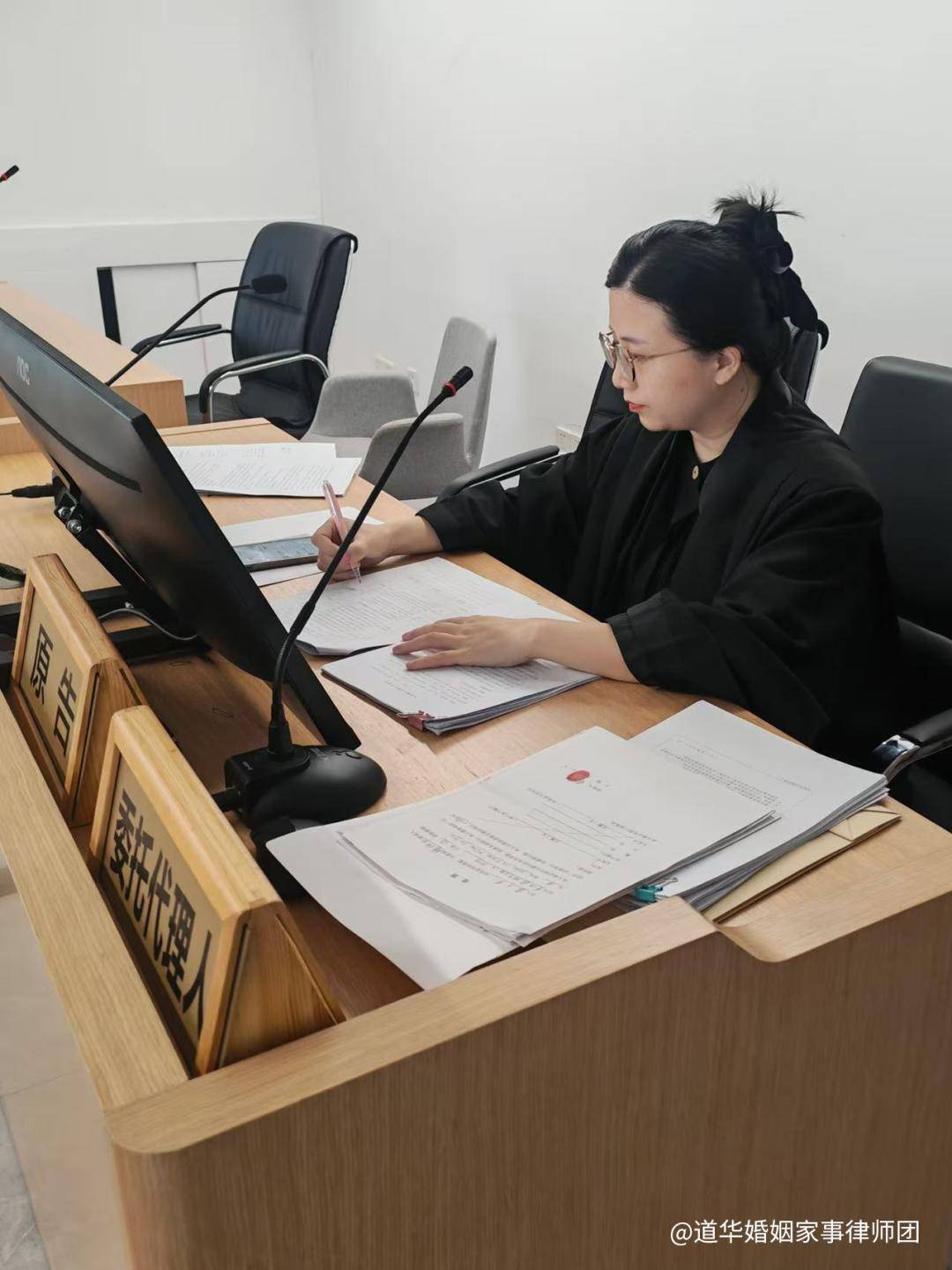
Chapter 7: Insights from Handling Cases According to the Tang Code
This case, as a typical example of a dispute over legal inheritance, clearly demonstrates the judicial reasoning on core legal issues such as the delimitation of the scope of inheritance, the identification of joint debts of the couple, and the distribution of shares of inheritance. The court's judgment strictly adheres to the relevant provisions of the "Inheritance Law" and the "Marriage Law," while fully considering the actual circumstances of the case and the wishes of the parties, and balancing the legitimate rights and interests of all heirs.
From a legal perspective, this case clarifies three core rules:Firstly, the share of the common property of the couple that belongs to the heir does not lose its hereditary nature due to subsequent disposition; secondly, the identification of the couple's joint debt requires a strict grasp of the core standard of "common life and common business operation," and the burden of proof is borne by the party claiming the debt; thirdly, in statutory succession, the share of the heritage of the heirs in the same order is generally equal, unless there are legal situations of more or less division.
From a practical perspective, this case provides important guidance for heirs to safeguard their rights.In inheritance disputes, evidence is crucial. The heir should promptly secure evidence related to the inheritance, family relationships, debts, etc.; at the same time, they should respect legal provisions and family ethics, and avoid infringing on the rights of other heirs through means such as transferring property or fabricating debts. As for the deceased's debts, creditors should promptly assert their rights, protect their own interests through legal channels, and avoid the failure to realize their rights due to exceeding the statute of limitations or insufficient evidence.
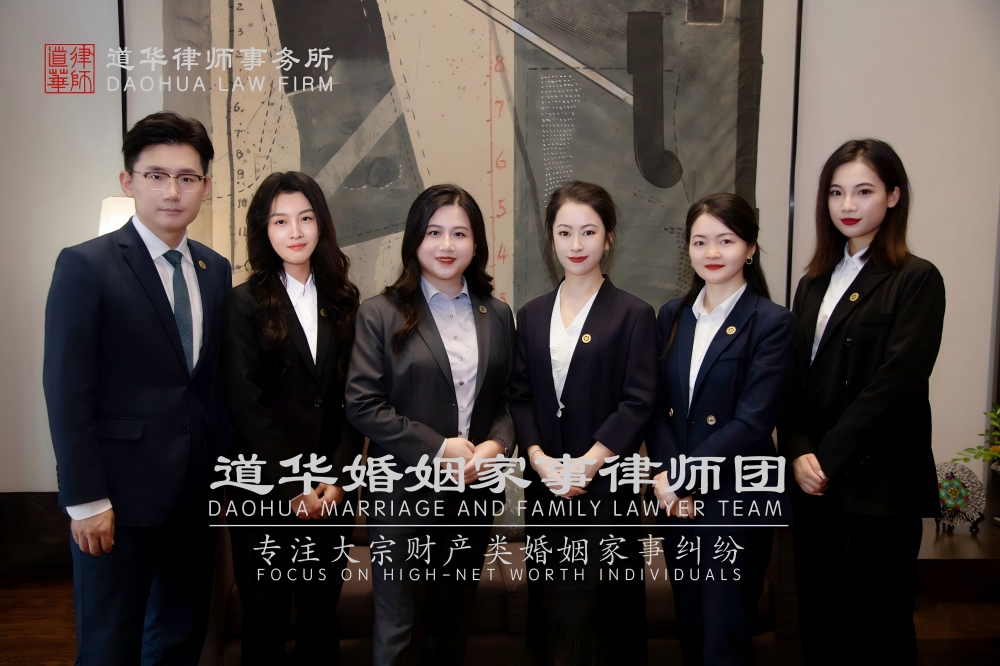
Daohua Family Law Firm (Guangdong Daohua Law Firm), specializing in major property, marriage, and family legal services for ten years,real-world practice experts in divorce, inheritance, and family disputes (mediation/trial), one of the influential brands of professional legal services in the Guangdong-Hong Kong-Macau Greater Bay Area [Shenzhen local], and even a benchmark lawyer team for mediation and trial in the renowned cross-border divorce inheritance field.
The Tang Yunhong Law Firm has handled over 1000 cases related to marriage and inheritance, involving tens of billions of yuan in amounts. The firm has extensive successful litigation experience in the fields of dispute resolution for the division of large properties such as listed company equity, Shenzhen small property rights houses, land, and factories, as well as inheritance disputes, will drafting, and family property inheritance. It is particularly skilled in handling cross-border and cross-jurisdictional divorce litigation and inheritance lawsuits, addressing industry difficulties and pain points. The firm uses localized legal wisdom to overcome various complex domestic property disputes, winning high praise from clients and industry reputation.
Adhering to the philosophy of "securing property safety, preventing legal risks, and empowering wealth appreciation," we gather experts from industries such as law, banking, insurance, and finance and taxation. With rich experience in civil and commercial litigation and arbitration, as well as civil and criminal crossover and tax planning, we provide a comprehensive package of solutions for high-net-worth individuals (including those from Hong Kong, Macau, and foreign nationals) in marriage, family affairs, and wealth inheritance. This is to achieve the beautiful vision of risk prevention and control, debt isolation, and family wealth inheritance.
Asset types cover: real estate (residential properties, small property rights houses, land, factories, etc.), movable property (vehicles, antiques, paintings, gold jewelry, etc.), various property rights (cash deposits, equity, debts, relocation compensation, fund investments, virtual property, intellectual property rights, etc.). The team systematically compiles professional achievements such as "Compilation of Successful Cases of Dao Hua Marriage and Inheritance" and "Legal Practice of Family Wealth Transmission", to meticulously protect clients' property rights and interests, and to safeguard the inheritance of family wealth with meticulous service!
Statement:The information or articles published on this website are for exchange purposes only. The names of individuals/companies mentioned in this article are pseudonyms, and the amounts/dates of the case information have been processed for confidentiality. The content of the article is created by the author and does not represent legal opinions or suggestions issued by Guangdong Daohua Law Firm or other lawyers. The information contained in this article is provided for general information purposes only, and Guangdong Daohua Law Firm does not make any timely modifications or updates to this article. Decisions made by readers based on all or part of the content of this article and the consequences arising therefrom are solely the responsibility of the individuals involved. The author and Guangdong Daohua Law Firm assume no responsibility. If any content of these articles is to be reproduced or cited, please indicate the source. If you need legal advice or legal services, please contact our lawyers.
No registration required, quick appointment, expert lawyers provide customized legal service solutions
 Consultation Appointment:400-829-6880
 Private Space:18126123723
 Law Firm: Guangdong Daohua Law Firm
 Email:DAOHUALAWMF@163.com
 Address:810, Rongchao Economic & Trade Center, 4028 Jintian Road, Futian District, Shenzhen (Next to Civic Center)

18126123723
Follow us anytime, anywhere


