
Navigation
Author: Dao Hua Marriage and Family Law FirmDate: 2026-03-03Reads:times
Daohua Family Law and Matrimonial Lawyers Team
Marriage Inheritance Family Dispute (Mediation/Litigation) Practical Expert
Ten years of focus on; marriage and family legal services for bulk property matters
Guangdong Dao Hua Law Firm, Tang Yunhong, Dao Hua Family Law Team, Shenzhen's renowned divorce litigation lawyer, professional inheritance and succession lawyer, Guangdong and Shenzhen's top ten family law firms, specializing in: major difficult divorce mediation/court litigation, property small property division, will and inheritance disputes, will notarization, divorce property division, post-divorce property disputes, divorce/marital agreement, custody disputes, will inheritance disputes, legal inheritance disputes, land and property inheritance, rural house demolition inheritance, will drafting, will validity determination, etc. Non-litigation and disputes. Service areas: Futian, Nanshan, Luohu, Longgang, Bao'an, Longhua, Guangming, Pingshan, Dapeng, Yantian.

The plaintiff, Ms. Luo, and the defendant, Mr. Li, are involved in a divorce dispute case. The case was filed and tried by the Bao'an District People's Court of Shenzhen City, Guangdong Province. The two parties have multiple disagreements over the custody, child support, and visitation rights of their biological child. As the child's only father, Mr. Li has never spent time with the child alone since the child's birth. Due to his desire for parental companionship, he has made extreme demands for taking the child for visits. Moreover, the two parties have repeatedly argued over the duration of visitation during school holidays and the age at which overnight visits can begin, and after several attempts at mediation by the mediator, no resolution has been achieved.
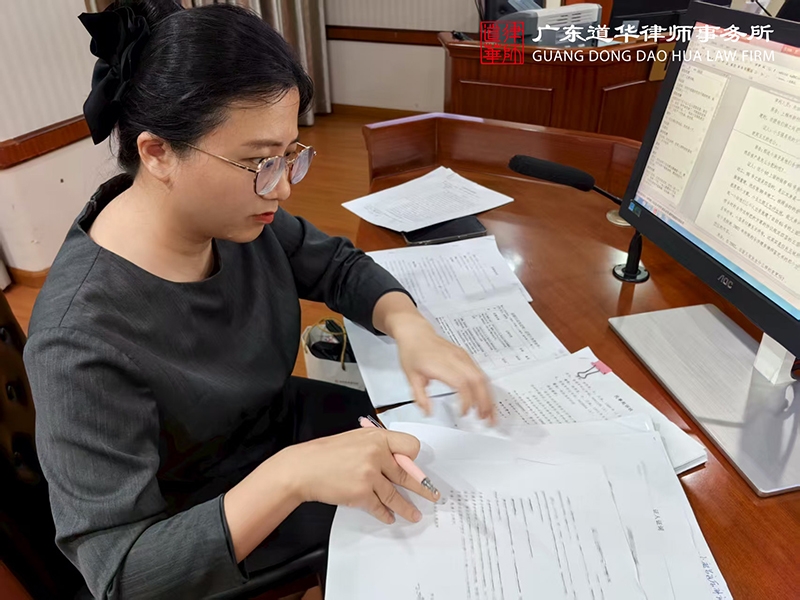
After the defendant entrusted Tang Yunhong, lawyer of Guangdong Daohua Law Firm, to act as the full-time agent, the lawyer carried out a large amount of communication and coordination work between the parties, cleverly designed a refined visitation plan with stages and alternating years, coordinated with the judge's on-the-spot mediation, and finally finalized all core agreements of the visitation rights, resulting in a complete and successful resolution of the case.
Case Dispute Focus
The negotiation of visitation rights in this case has encountered multiple deadlocks, and after several rounds of mediation by the mediator, there has been no progress: First, the defendant's extreme visitation demands arising from a special emotional background have triggered the plaintiff's strong concerns about the safety of child care and the disruption of the child's daily rhythm, leading to a sharp confrontation between the two parties; second, there are disagreements on the visitation period during school holidays and summer vacations, and the details of starting overnight visits when the child is five or six years old, with both parties holding firm and unable to compromise; third, there is no clear consensus on the visitation rights during legal holidays, which has become a potentialhidden risks for the implementation of visitation rights. The above disputes are intertwined with the child support issue, and there is no unified implementation plan for reference, further increasing the difficulty of mediation.
03 Legal Practice Thinking and Actions
After accepting Mr. Li, the defendant, as a client, lawyers Tao Hua Tang Yunhong and Wang Qian adhered to the principle of "maximizing the interests of the children + taking into account the actual conditions of both parties + a fine-grained, operable plan," and made the design of a phased, alternating-year visitation plan the core breakthrough. At the same time, they alleviated the emotions of both parties, built a communication bridge, and promoted the gradual resolution of the dispute.
1. Empathetic guidance toguidance emotions, anchoring reasonable demands.
The lawyer first communicated deeply with the defendant, understanding his emotional appeal as a father of a lone son and his never having accompanied his child alone, guiding him to channel his extreme emotions and establish a rational visitation concept; at the same time, communicated with the plaintiff, conveying the defendant's true mindset and care plan, to the maximum extent eliminating the plaintiff's concerns about trust, laying the emotional foundation for negotiation of the plan.
2. Focus on controversial bottlenecks and design refined plans:
In response to the core differences regarding visitation, the lawyer abandoned the "one-size-fits-all" model and tailored a phased visitation plan with alternating single and double-year numbers: phased adaptation to the child's growth pattern, with agreed rules for daily and overnight visitation at different age levels; specifying the visitation ownership during legal holidays and school vacations by alternating single and double years, while also refining the number of days for visitation during school vacations and pick-up and drop-off points, making the plan both in line with both parties' demands and feasible for implementation.
3. Two-way repeated communication, optimizing the scheme by explaining laws and reasoning.
The lawyer carried out a large amount of communication work between the plaintiff and the defendant, explained the details of the phased and alternating year scheme one by one, demonstrated the rationality of the plan with reference to judicial practice; in response to the doubts raised by both parties, the plan provisions were repeatedly optimized, specifying the frequency of visits, care requirements, and communication channels for emergencies, ensuring that both parties have no objections to the plan.
4. In coordination with the court mediation, determine the plan on the spot.
After entering the trial stage, the lawyer detailedly explained the design logic and adaptability of the phased, alternating year visitation plan to the judge, combined with legal provisions to explain and reason, and under the professional guidance of the judge, promoted the final recognition of the plan by both parties, and finalized all core visitation agreements on the spot.
04 Case mediation result
The case was settled in court through mediation, and the parties reached a clear and specific agreement on visitation rights based on a phased approach and alternating years. The plaintiff, Ms. Luo, has direct custody of the child born of the marriage, while the defendant, Mr. Li, is entitled to visitation rights in accordance with the law. The core agreement is as follows:
1. Phased visitation
Divide the compulsory education period into stages according to the child's growth, such as primary and middle school, and agree on the daily visitation time periods and overnight visitation rules (specifically defining the age at which overnight visits begin), in line with the learning and living routines of different age groups of children, and gradually establish parent-child relationships in a step-by-step manner.
2. Visitation by odd and even years
Legal holidays (such as the Spring Festival, Mid-Autumn Festival, National Day, etc.) determine the visitation ownership based on odd and even years, with one party accompanying during odd years and the other party during even years. The number of days for visitation during winter and summer vacations, as well as the pick-up and drop-off points, are also refined according to the principle of odd and even years, completely resolving the visitation disputes during holidays.
3. Details of the matching are perfected:
Define the detailed connection of step-by-step summer and winter vacation visits, the care requirements for overnight visits, and simultaneously agree on the visit pick-up and drop-off methods, as well as daily communication channels, to ensure the whole process of the visit plan is implemented in accordance with the stage-by-stage and odd/even year number division.
4. Child support is simultaneously finalized:
Child support adjusted to 1300 yuan/month, to be paid by the 20th of each month starting from December 2025 until the child reaches the age of 18, with the payment account explicitly agreed upon.
All the aforementioned agreements are incorporated into the mediation agreement of the court, which has been confirmed as legally valid in court and is binding on both parties. The filing fee of 300 yuan is reduced to 150 yuan, which is voluntarily borne by the plaintiff.
Case Analysis
This case is a typical example of successfully resolving multiple disputes in a divorce dispute through a phased, alternating-year visitation plan design. Lawyer Tang Yunhong and Lawyer Wang Qian from Guangdong Daohua Law Firm played a key role in this case. Through refined plan design and extensive communication and coordination, they not only alleviated the emotional confrontation between the parties but also achieved a reasonable agreement on visitation rights, achieving the triple goals of ensuring the defendant's visitation rights, balancing the plaintiff's concerns about custody, and prioritizing the rights and interests of the children's growth.
1. The program design directly targets the pain points, resolving core disagreements in stages and by odd and even years.
The lawyer innovatively designed a refined scheme with phased implementation and alternating year numbers to address the emotional opposition and detailed disputes over visitation rights. The scheme is phased to fit the child's growth pattern and the defendant's actual situation of never having accompanied the child alone. By alternating year numbers, it completely resolves the disputes over visitation during legal holidays and school vacations, eliminating the points of divergence between the parties at the root, and making the scheme highly adaptable.
2. Emphasize emotional guidance and scheme negotiation, build an effective communication bridge:
The lawyer did not simply design the plan but first alleviated the defendant's extreme emotions and eliminated the plaintiff's concerns about trust. Then, through repeated communication and explanation of the detailed plan divided into stages and even-year/odd-year numbers, both parties fully understood the rationality of the plan. This gradually laid the solid foundation for the on-the-spot determination of the plan.
3. The plan combines humanization and operability, ensuring the implementation of visitation rights.
The phased visitation arrangement allows the defendant to gradually establish a parent-child relationship with the child, taking into account the child's growth and adaptation patterns; the agreement on odd and even years sets clear execution standards for legal holidays and summer and winter vacations, eliminating ambiguity; coupled with the supporting details of pick-up, care, and communication, the visitation rights agreement truly transforms from "paper clauses" into executable rules, avoiding new disputes in the future.
4. Full professional cooperation, efficiently promoting on-the-spot mediation:
From the design of the plan, two-way communication, to the trial stage where the lawyer assists the judge in explaining the law, the lawyer always takes professionalism as the core, treating the plan divided by stages and by odd and even years as the key to resolving disputes. This approach not only upholds the defendant's legitimate right to visit, but also fully considers the plaintiff's custody rights, becoming the core force for the on-the-spot mediation success of the case.
From the perspective of implementation effects, the phased visitation plan divided by odd and even years not only provides a clear legal basis for the defendant's legitimate visitation rights, creating a reasonable space for them to gradually accompany their children alone, but also fully considers the plaintiff's concerns about custody, while ensuring that the child enjoys complete parent-child companionship in a stable rhythm of life, minimizing the negative impact of divorce on the child to the greatest extent, and achieving the unity of legal and social effects.
06 Insights from the Tang Code
The practice of successfully resolving disputes in divorce cases through a phased, alternating-year visitation plan design has provided important insights into the provisions and handling of visitation rights, and also highlights the core value of professional lawyers in the design of such plans:
1. The agreement on visitation rights should adhere to a refined design, with a phased approach and alternating years as the preferred strategy.
In divorce disputes, the controversies over visitation rights mainly focus on details such as age-appropriate growth stages and holiday custody. A phased approach can fit the growth patterns of children at different ages, and dividing by odd and even years can clarify the standards for executing visitation during holidays and school vacations. The refined plan combining both approaches can resolve most visitation detail controversies at their root and enhance the operability of the agreement.
2. The refined visitation plan needs to take into account emotional demands and legal provisions:
The design of the plan cannot only focus on legal clauses but also take into account the actual emotional demands of the parties involved and the actual growth of the child, such as the phased arrangements in this case, which not only comply with the principle of exercising the visitation rights stipulated by law but also fit the defendant's emotional background of never having accompanied the child alone, making the plan more easily accepted by both parties.
3. Professional lawyers are the core support for the design and implementation of refined visitation plans:
Faced with multiple disputes over visitation rights, professional lawyers can step out of the emotional confrontation between the two parties, accurately grasp the key points of the dispute, and design refined plans such as phased implementation and alternating years based on legal provisions and the actual case. At the same time, through two-way communication, they can explain the law and reason, promote the recognition of the plan by both parties, cooperate with the judge to achieve on-the-spot mediation, efficiently resolve disputes, and save both parties' time and energy.
4. The core of the visitation agreement is to maximize the interests of the children, and the design of the plan always revolves around the child's growth:
Whether it is a phased plan or a plan based on odd and even years, the core principle should be the physical and mental healthy growth of the child. All arrangements should fit the child's learning and living habits and growth adaptation characteristics, ensuring the visitation rights of the non-custodial parent while also protecting the custody rights of the custodial parent, achieving a balance of interests among all parties.
In addition, this case further confirms the importance of "mediation first" in divorce disputes. The phased and alternating year visitation agreements reached through mediation are more in line with the actual intentions of both parties, have a higher degree of cooperation during implementation, and can more peacefully and efficiently resolve disputes, reducing the negative impact of litigation confrontation.

07 Legal Index
The Civil Code of the People's Republic of China
Article 1084
The relationship between parents and children is not terminated by the parents' divorce. After the divorce, the children are still the children of both parents regardless of whether they are directly cared for by the father or the mother.
After divorce, parents still have the rights and obligations to support, educate, and protect their children.
After divorce, children under two years of age shall be primarily cared for by the mother. For children who are two years of age or older, if the parents cannot reach an agreement on custody, the People's Court shall make a judgment based on the specific circumstances of both parties, in accordance with the principle that is most favorable to the minor children. For children who are eight years of age or older, their true wishes shall be respected.
Section 1085
After divorce, if the child is directly cared for by one party, the other party shall bear part or all of the child support. The amount of the support and the duration shall be agreed upon by both parties; if they cannot reach an agreement, the People's Court shall decide.
The provisions of the preceding paragraph do not prevent the child from making reasonable demands for an amount exceeding the original amount agreed upon or decided upon by either parent when necessary.
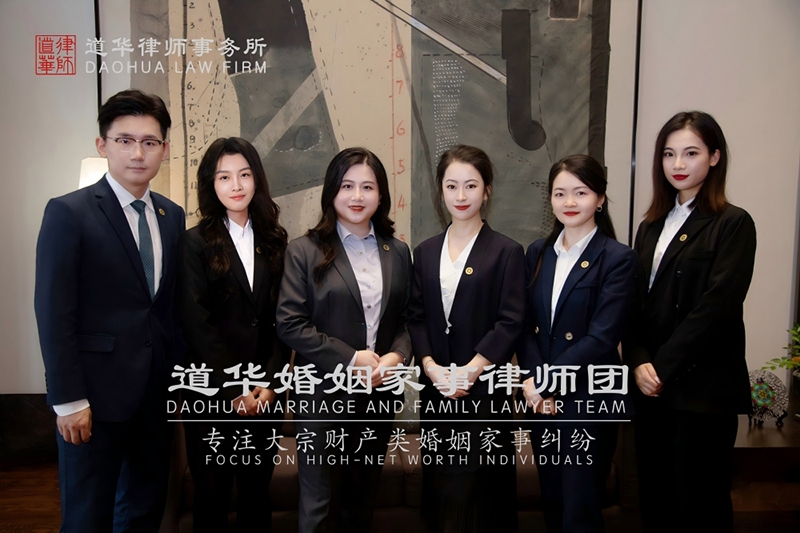
Daohua Family Law and Matrimonial Lawyers TeamTen years focused on major property marriage and family legal services, expert in marriage inheritance and family disputes (mediation/trial), one of the influential brands of marriage inheritance and wealth management legal services in [Shenzhen].
The team has handled over 1000 cases related to marriage inheritance, and has extensive experience in dispute resolution fields such as complex marriage and family matters, inheritance disputes, will drafting, and family property distribution. Utilizing local wisdom, the team is skilled in dealing with difficult divorce property division cases involving Shenzhen's small property rights houses, village committee shares, will drafting and notarization, and inheritance disputes, winning unanimous praise from clients.
Adhering to the philosophy of "securing property safety, preventing legal risks, and empowering wealth appreciation," we gather experts from industries such as law, banking, insurance, and finance and taxation. With a wealth of successful cases, we provide a comprehensive package of solutions for high-net-worth individuals (including those from Hong Kong, Macau, and foreign nationals) in marriage, family affairs, and wealth inheritance, to achieve the beautiful vision of risk prevention and control, debt isolation, and family wealth inheritance.
Asset types include: real estate (commercial housing, small property rights housing, land use rights, etc.), various property rights (equity, debt, relocation compensation, copyright, invention patents, etc.).
The team has completed the compilation of "A Collection of Successful Cases of Dao Hua Marriage and Inheritance" and "Legal Practice of Family Wealth Transmission," achieving remarkable achievements in both legal practice and theoretical research.
No registration required, quick appointment, expert lawyers provide customized legal service solutions
 Consultation Appointment:400-829-6880
 Private Space:18126123723
 Law Firm: Guangdong Daohua Law Firm
 Email:DAOHUALAWMF@163.com
 Address:810, Rongchao Economic & Trade Center, 4028 Jintian Road, Futian District, Shenzhen (Next to Civic Center)

18126123723
Follow us anytime, anywhere


