
Navigation
Author: Dao Hua Marriage and Family Law FirmDate: 2025-03-06Reads:times
One, Case Review
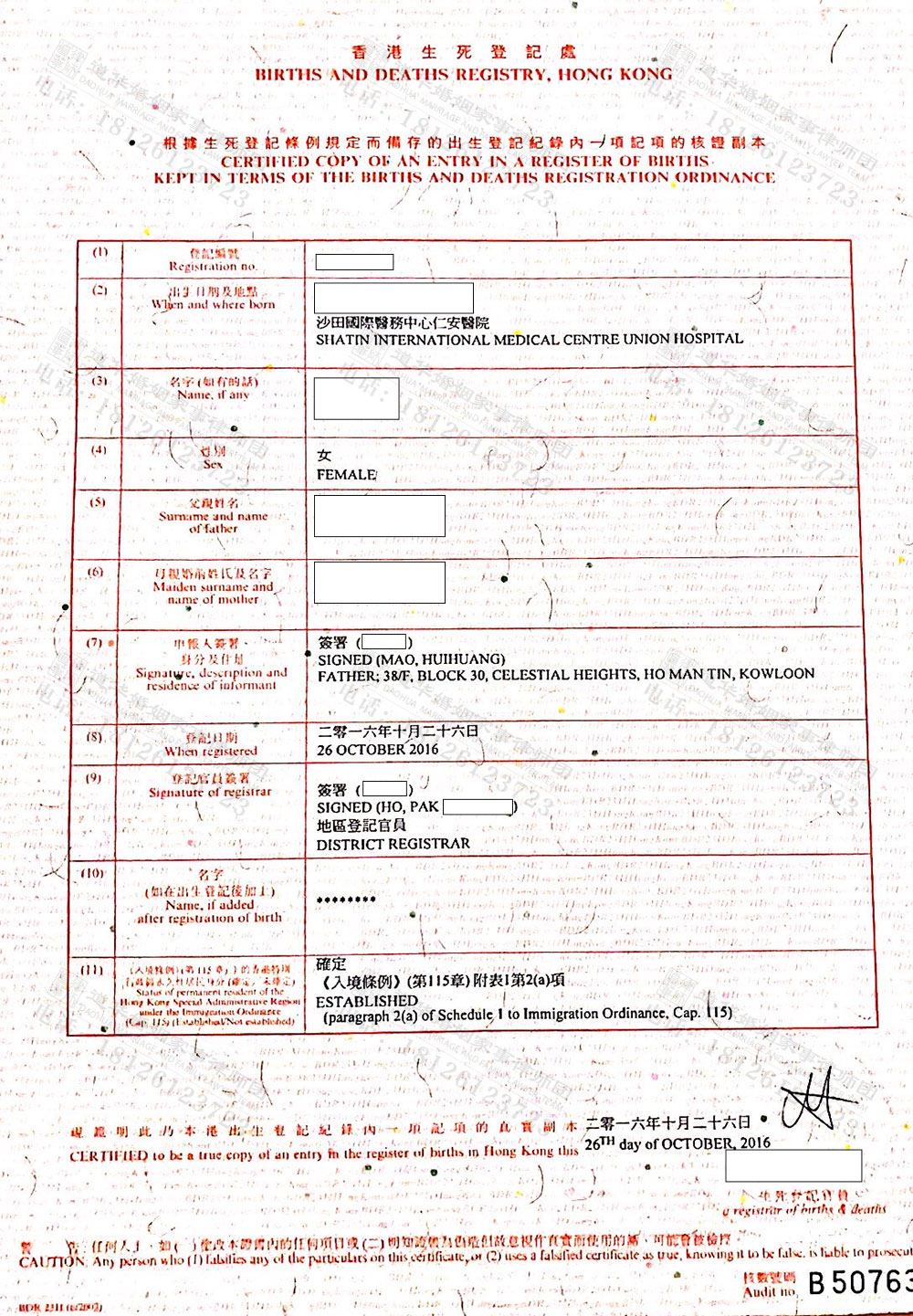
In 2008, after a short time of knowing each other, Ms. Wei and Mr. Zhang registered their marriage at a marriage registration office in Hong Kong, China. After marriage, Mr. Zhang ran a business outside, while Ms. Wei resigned to take care of the family at home and assist Mr. Zhang with the business during her free time. Later, they each had a daughter in 2011 and 2016, but as time went by, the initial happiness and sweetness of their marriage no longer existed. Instead, the trivial matters of the family gradually eroded the already shaky foundation of their marriage. By 2018, Ms. Wei moved back to Longgang District, Shenzhen with their two daughters, while Mr. Zhang remained settled in Hong Kong, and they have been separated since then.
As the long-term separation life could not repair the feelings between the two, Ms. Wei repeatedly approached Mr. Zhang to propose handling the divorce procedures, but Mr. Zhang always delayed and never positively responded to the divorce matter. In order to quickly conclude this unhappy marriage, Ms. Wei actively sought a way out. After learning that the Daohua Family Law Firm is skilled in handling divorce disputes, she decided to entrust the matter entirely to Attorney Tang Yunhong, who handled the divorce matter on her behalf. After fully understanding the facts of Ms. Wei's case, Attorney Tang proposed a strategy of "mediation as the main approach, litigation as the auxiliary," and made every effort to properly resolve Ms. Wei's divorce difficulties.
Secondly, Dao Hua lawyer accepted theentrustment, comprehensively analyzed the case, and quickly identified the focal points of the case dispute:
1. Both parties registered their marriage in Hong Kong, and Mr. Zhang currently resides in Hong Kong. To which court should Ms. Wei file for divorce proceedings?
2. Have the two parties now met the legal conditions for divorce?
How should the joint property and debts of married couples during the marriage be handled?
How should the custody and child support for the two legitimate daughters be allocated and assumed?
Three, Dao Hua lawyer analyzed the case, sought strategies to address the focal points of the appeal one by one, and laid a solid foundation for subsequent negotiations and communication with Mr. Zhang, ultimately reaching a consensus on the divorce mediation.
1In accordance with the place of residence of Ms. Wei, namely Longgang District People's Court, as the court with jurisdiction over the divorce lawsuit.
In accordance with Article 22 of the Civil Procedure Law of the People's Republic of China, "Civil lawsuits against citizens shall be heard by the people's court at the defendant's place of residence; if the place of residence and the place of habitual residence of the defendant are not the same, the people's court at the place of habitual residence shall have jurisdiction," the lawsuit against the citizen must be filed with the people's court at the defendant's place of residence. As Mr. Zhang is a resident of Hong Kong, if the provisions of this article are applicable, the lawsuit in this case must be filed with the Hong Kong court.
In fact, although Mao is a resident of the Hong Kong Special Administrative Region and the two were married at a marriage registration office in Hong Kong, Wei's current place of habitual residence is in Longgang District, Shenzhen. According to Article 22 of the Civil Procedure Law of the People's Republic of China...The following civil lawsuits shall be under the jurisdiction of the people's court at the plaintiff's place of residence; if the plaintiff's place of residence is not consistent with the place of habitual residence, the people's court at the plaintiff's place of habitual residence shall have jurisdiction: (i) lawsuits concerning personal status matters initiated against individuals who do not reside within the territory of the People's Republic of China:"The provisions of Article 15 of the 'Interpretation of the Supreme People's Court on the Application of the Civil Procedure Law of the People's Republic of China' state that 'where one party of a Chinese citizen resides abroad and the other party resides domestically, regardless of which party files a divorce lawsuit with the people's court, the people's court at the place of residence of the domestic party has jurisdiction'."The plaintiff is a Shenzhen resident or has Shenzhen as their habitual place of residence, the defendant is a Hong Kong citizen, and whether they are registered to marry in Hong Kong or on the mainland, the plaintiff wishes to file for divorce in Shenzhen, and the Shenzhen court can accept the case.Therefore, this case may be filed in the People's Court of the habitual residence of Ms. Wei, namely Longgang District People's Court.
2Since 2018, Ms. Wei and Mr. Zhang have been separated for two years, which meets the legal conditions for divorce.
According to Article 1079 of the Civil Code of the People's Republic of China, "In any of the following circumstances, where mediation is ineffective, divorce shall be granted: ... "(4) Separated due to incompatibility for more than two years……” In this case, since 2018, Ms. Wei has left Hong Kong and resided in Longgang District, Shenzhen. Therefore, Attorney Dao Hua guided Ms. Wei to obtain her "Shenzhen Special Economic Zone Residence Registration Inquiry Form." By applying through the "Shenzhen Public Security" official account, she successfully obtained the inquiry form, which clearly states that Ms. Wei has been residing in Longgang District, Shenzhen since 2018 to the present. Mr. Zhang is a resident of the Hong Kong Special Administrative Region and is still running a business in Hong Kong. This can preliminarily prove that the two have been separated for more than two years and the separation is not due to unavoidable reasons such as work. Both parties have met the legal conditions for divorce due to incompatibility in feelings, which requires separation for two years.
3How to handle joint property of husband and wife and debts incurred during the marriage:
Over the more than ten years of their marriage, the main joint property of the couple was a residential property purchased in 2010 in a certain community in Longgang District, Shenzhen. The property is registered in the name of Ms. Wei, and the monthly mortgage payments are transferred from a bank account in her name; the debt includes a HKD 5 million loan taken by Mr. Zhang in his personal name from a bank in 2019, as well as the housing loan under Ms. Wei's name.
For the property: As the property is a joint debt of the couple, it needs to be divided. Since the property is registered in Ms. Wei's name, both the purchase contract and the loan contract were signed in her name, and the monthly mortgage payments were paid from the bank account in her name. Therefore, for this property, if both parties are fighting for ownership of the property, the court is likely to rule that the property belongs to Ms. Wei, but Ms. Wei needs to compensate Mr. Zhang for the paid mortgage amount and the corresponding increase in property value.
Regarding the debt: Since the debt under Mr. Zhang's name was incurred during the marriage, the court may possibly determine that both parties bear half of the debt. However, this debt was incurred in 2019, i.e., after the two had separated, and there has been no financial transaction between them since then. It is particularly difficult to discern whether this debt was used for the daily needs of the couple. Ms. Wei has a certain winning space for not bearing the debt. As for the housing loan under Ms. Wei's name, generally speaking, it will be borne by the owner of the property.
4Maternal rights and child support matters for legitimate daughters:
Article 1084 of the Civil Code of the People's Republic of China stipulates that "After divorce, children under two years of age shall be primarily cared for by the mother. For children who are two years of age or older, if the parents cannot reach an agreement on custody, the People's Court shall decide according to the specific circumstances of both parties, in accordance with the principle that is most beneficial to the minor children. For children who are eight years of age or older, their true wishes shall be respected. "In this case, the two parties' elder daughter has already reached the age of eight, and the court will inquire about her preference for living with either party and respect her true wishes. The younger daughter has reached the age of five, and the court will make a judgment in accordance with the principle that is most beneficial to her life, in accordance with the law.
Two daughters have been living with Ms. Wei in Longgang District, Shenzhen since 2018, and have long been accustomed to Ms. Wei's lifestyle and that of the Shenzhen area. Moreover, the elder daughter is willing to live with Ms. Wei, so it is highly likely that Ms. Wei will win the custody of the two children. As for child support, the court will make a judgment after comprehensively considering both parties' economic conditions and living areas.
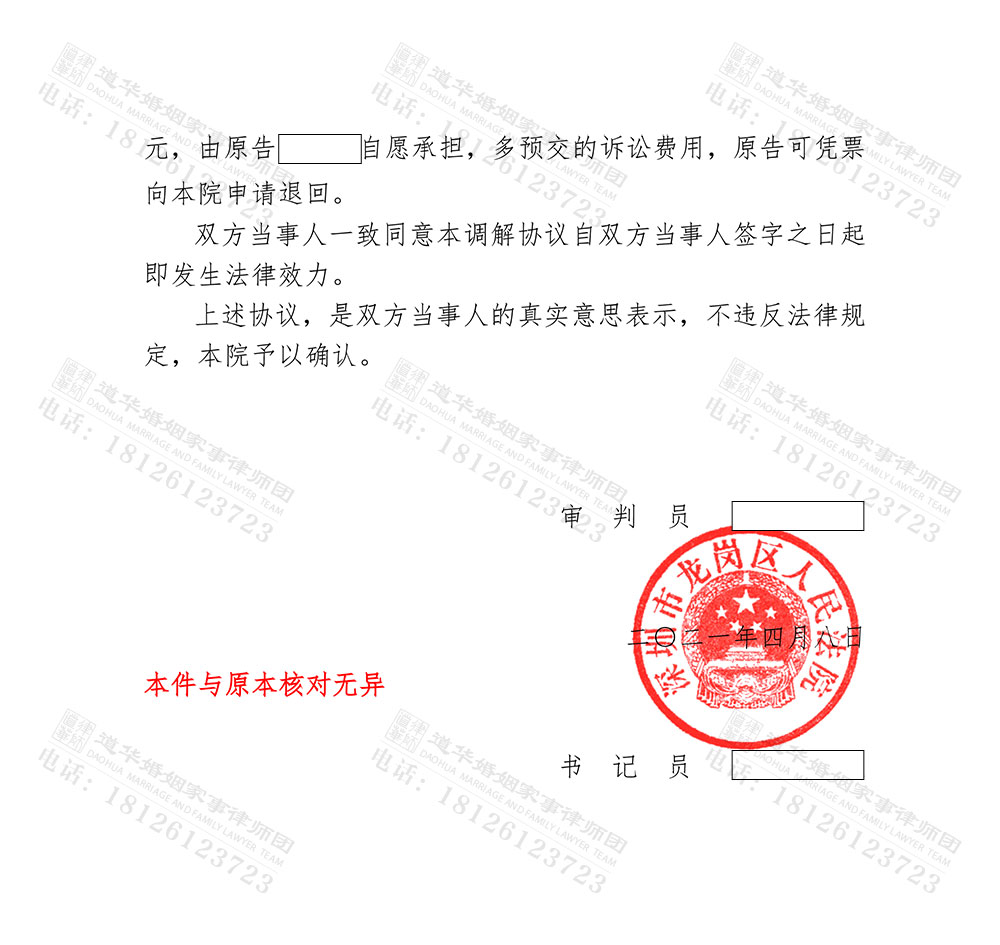
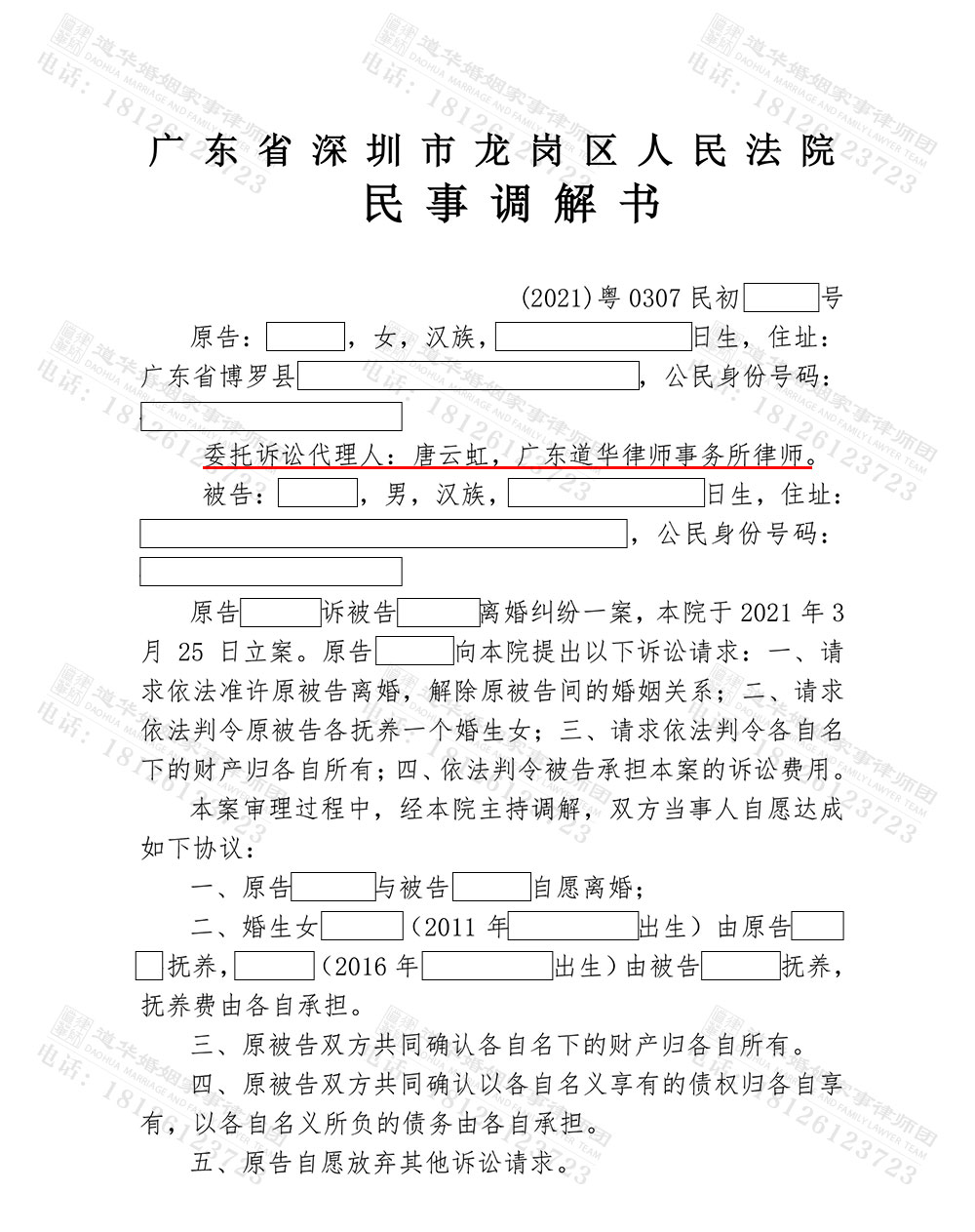
Four, Dao Hua lawyer has always adhered to the litigation strategy of "mediation as the main approach, litigation as a supplement." While filing a lawsuit with the Longgang Court, he actively communicated and negotiated with Mr. Zhang. After several rounds of communication and negotiation, both parties successfully reached an agreement, and the court issued a civil mediation document, and the dispute was smoothly resolved within three months.
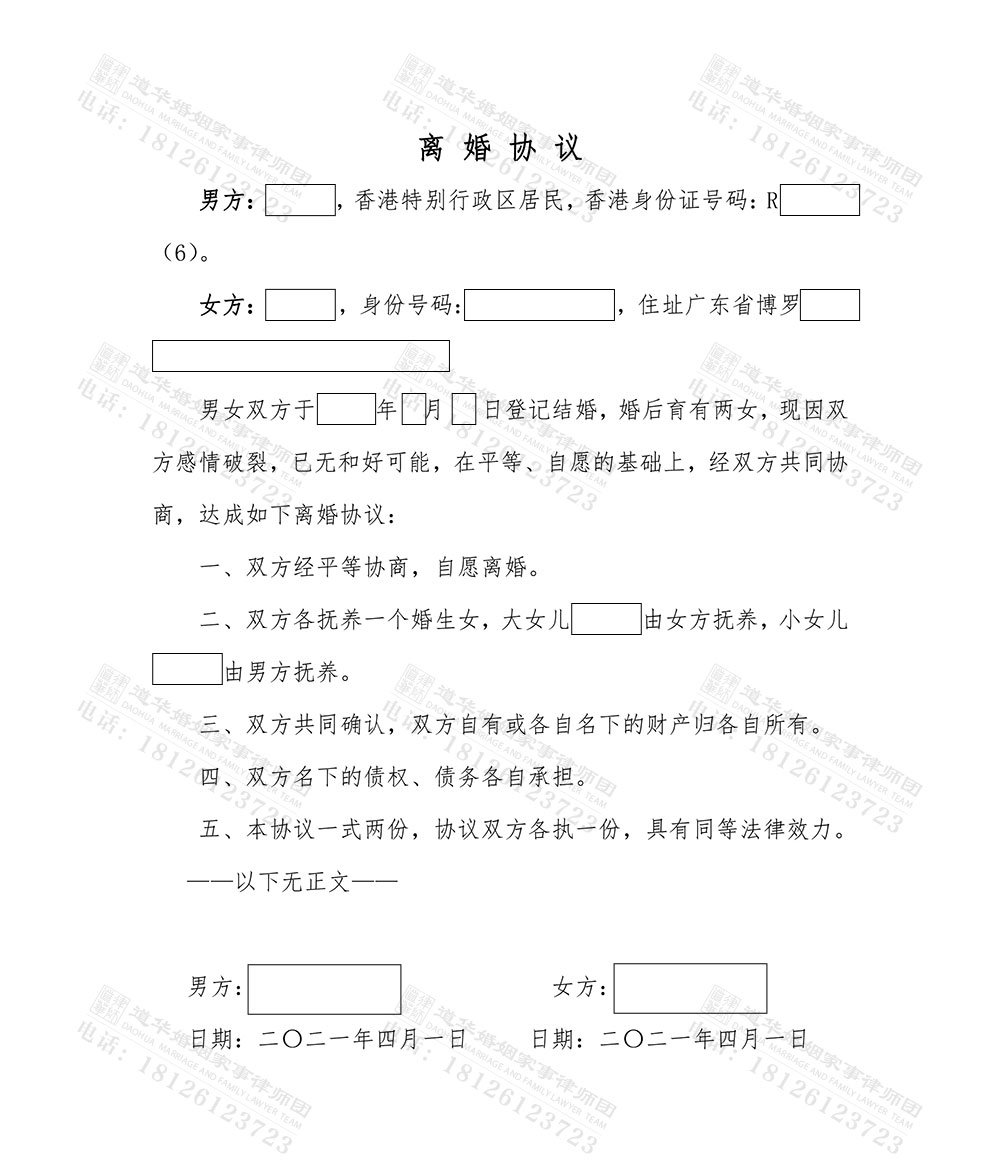
After accepting Ms. Wei's entrustment, Dao Hua lawyer, with rich experience in resolving marital and family disputes, comprehensively analyzes and evaluates the focal points of the case, and proposes countermeasures accordingly, thus gaining the initiative in the communication and negotiation process with Mr. Zhang. Through multiple negotiations with Mr. Zhang, they successfully reached an agreement on issues such as the division of property and debts, as well as custody of the child.
The property registered in Ms. Wei's name belongs to Ms. Wei, and the subsequent housing loan is borne by Ms. Wei herself. Ms. Wei is not required to pay any compensation to Mr. Zhang. As for the HKD 5 million loan taken by Mr. Zhang in 2019, it was not used for the joint marital life and was not paid to Ms. Wei. There were no financial transactions between the two parties after 2018. Therefore, the debt is borne by Mr. Zhang himself and is unrelated to Ms. Wei. Regarding the two legitimate daughters, the two parties have agreed that Ms. Wei will raise the elder daughter, while Mr. Zhang will raise the younger daughter, with each party bearing their respective child support.
In simple terms, the property under each person's name belongs to them, the debts owed in their name are their responsibility, and the debts incurred in their name are their responsibility. Since then, Miss Wei's divorce case was resolved quickly, and Lawyer Dao successfully secured the maximum rights and interests for Miss Wei, exceeding her expectations for the lawsuit.
V. The Tang Code Interpretation
In marriage and family cases, what is handled is not just the relationship between husband and wife, but more often involves various issues such as marital property, debts and liabilities, custody of children, and the past affection between the couple, which often cannot be contained in a single legal document. Therefore, the Daohua Marriage and Family Law Firm has always adhered to the principle of "mediation as the main approach, litigation as a supplement," and strives to promote mediation and divorce between the husband and wife. After all, marriage is not easy, and we should cherish it as we go along. However, if divorce is inevitable, it is better for both parties to take a step back, and there will be a vast sky.
In this case, after a comprehensive assessment, the Daohua Family Law Firm believed that there was a possibility of mediation, and therefore, in the capacity of an agent for Ms. Wei, they engaged in multiple negotiations and communications with Mr. Zhang. They clearly explained the potential risks that both parties might face in the lawsuit, as well as Ms. Wei's own thoughts and considerations for the future of her children, etc. They successfully persuaded Mr. Zhang to accept mediation and, during the negotiation of the mediation plan, fully utilized their experience in handling family law disputes to successfully secure the maximum benefits for Ms. Wei, exceeding her litigation objectives.
Attorney Tang believes that divorce is the result of the breakdown of marital feelings, involving multiple legal relationships such as property division, debt allocation, and child custody. The mediation, as a flexible way to resolve conflicts, not only allows for a deep understanding of the other party's demands but also peacefully resolves the couple's contradictions, allowing this imperfect relationship to end with a perfect conclusion. The successful mediation of this case also smoothly resolved the divorce issue that has troubled Ms. Wei for many years, quickly handling this issue, and also enables Ms. Wei and Mr. Zhang to move on to a new life, actively pursuing their own happy lives.
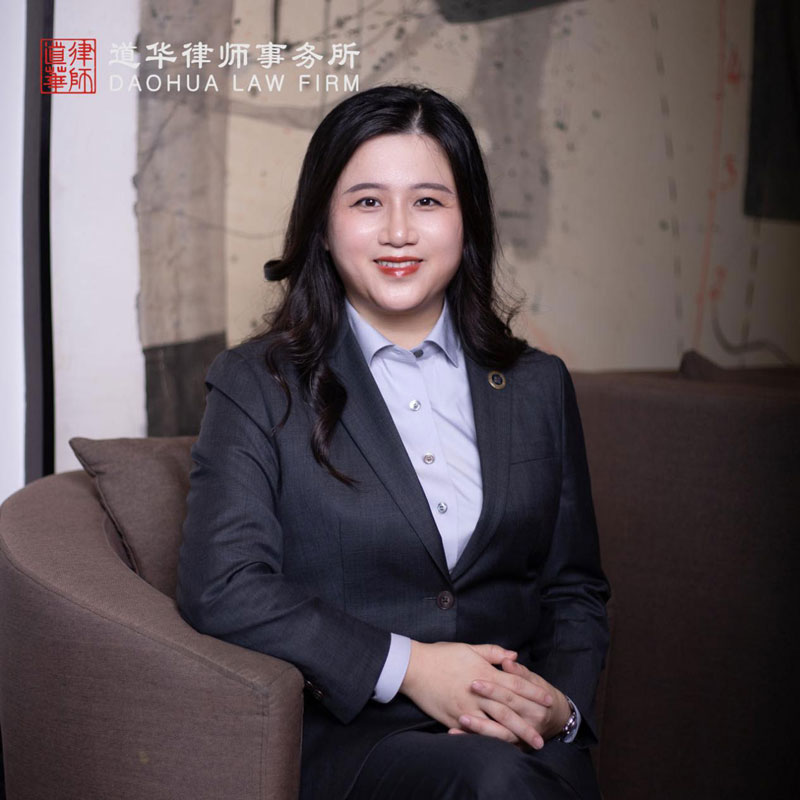
(Tang Yunhong, lawyer)
Article 6: Legal Provisions Guidance
1Civil Code
Article 22 The following civil lawsuits shall be under the jurisdiction of the people's court at the plaintiff's place of residence; if the plaintiff's place of residence is not consistent with the place of habitual residence, the people's court at the plaintiff's place of habitual residence shall have jurisdiction:
(1) Litigations concerning identity relationships initiated against individuals who do not reside within the territory of the People's Republic of China.
(L) Litigation concerning identity relationships initiated against individuals who are missing or declared missing.
(3) Litigation against individuals subject to mandatory educational measures.
(L) Litigation against persons in custody.
2Civil Code
Article 1079: If one party of a married couple requests a divorce, mediation can be conducted by relevant organizations or a divorce lawsuit can be directly filed with the People's Court.
The People's Court shall mediate in divorce cases; if the marriage has indeed broken down and mediation is ineffective, the divorce shall be granted.
If any of the following situations occur, mediation shall be ineffective and divorce shall be granted:
(1) Bigamy or cohabitation with another person;
(2) Committing domestic violence or mistreating, deserting family members;
(3) Persistent in bad habits such as gambling and drug abuse despite repeated correction.
(4) Separated due to incompatibility in feelings for more than two years.
(Five) Other situations leading to the breakdown of the couple's feelings.
If one party is declared missing and the other party files for divorce, the divorce should be granted.
After the People's Court has ruled that the divorce is not allowed, if both parties have been separated for a full year and one party files a divorce lawsuit again, the divorce should be granted.
3Judicial Interpretation of the Supreme People's Court on the Application of the Civil Procedure Law of the People's Republic of China
Article 15: Where one party of a Chinese citizen resides abroad and the other party resides domestically, regardless of which party files a divorce lawsuit with the People's Court, the People's Court at the domestic party's place of residence has jurisdiction.
4Civil Code
Article 1084 The child under two years of age shall be primarily under the custody of the mother after divorce. For children who are two years of age or older, if the parents fail to reach an agreement on custody, the People's Court shall make a judgment based on the specific circumstances of both parties, in accordance with the principle that is most favorable to the minor child. For children who are eight years of age or older, their true wishes shall be respected.
No registration required, quick appointment, expert lawyers provide customized legal service solutions
 Consultation Appointment:400-829-6880
 Private Space:18126123723
 Law Firm: Guangdong Daohua Law Firm
 Email:DAOHUALAWMF@163.com
 Address:810, Rongchao Economic & Trade Center, 4028 Jintian Road, Futian District, Shenzhen (Next to Civic Center)

18126123723
Follow us anytime, anywhere


