
Navigation
Author: Dao Hua Marriage and Family Law FirmDate: 2025-07-22Reads:times
In the activities of the market economy, the act of transferring shares frequently occurs, and when the transfer of shares is intertwined with marital relationships, it is easy to trigger disputes about the ownership of shares, the validity of the transfer, and the assumption of debts. This article takes a specific case as an example and discusses issues such as the validity of the share transfer agreement, whether the shares belong to the joint property of the couple, and whether the relevant debts are joint debts of the couple. Through sorting out and analyzing the case, it deeply analyzes the legal application rules of share transfer disputes under the background of marital relationships.
The plaintiff Liu Wei and the defendant Su Wei were registered as married in October 2008, separated in 2011, and the same year, the plaintiff Liu Wei filed for divorce. Subsequently, the divorce was settled through court mediation, and it was clearly stated in the divorce lawsuit that both parties had no children and no joint debts, with individual debts and liabilities to be borne by the individual.
Subsequently confirmed by the plaintiff, for a certain trading company in Shenzhen, the company was established in 2009. The business registration shows that Su Mou holds 90% of the equity, with Su Mou Hua, Su Mou's sister, holding 30% of the equity. The capital verification report shows that the 450,000 yuan used by Su Mou for the contribution was transferred out of his personal account. On April 18, 2011, Su Mou and Su Mou Hua signed the "Share Transfer Agreement," transferring his 90% equity in the company to Su Mou Hua for 180,000 yuan, and the change of shareholders was subsequently registered.
The plaintiff Liu Youming believes that Su Mou, with Liu Youming's consent, transferred the joint property of the couple arbitrarily, and that Su Mouhua obtained it maliciously. Liu Youming claims that the equity transfer agreement is invalid and has filed a lawsuit with the court.
Second, the judgment result
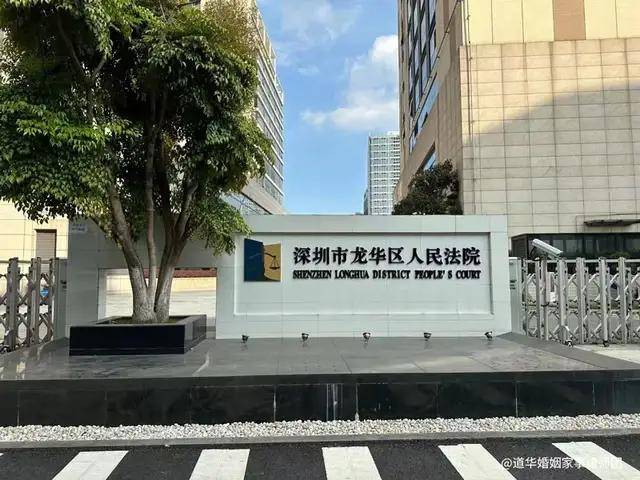
The court, after hearing the case, found that:
The court determined that 90% of the equity of a certain trading company in Shenzhen, owned by Su Mou, belongs to the couple's joint property. Because the company's business registration and capital verification report both show that Su Mou invested with funds from his account, Su Mou did not submit other evidence to prove that the investment came from pre-marital earnings; the company was established during the marriage, and there was no evidence to prove that the investment was from Su Mou's pre-marital income and no property agreement between the two; Su Mou transferred the equity during a tense period in the marriage relationship, and there were contradictions in the statements of Su Mou and Su Mou Hua regarding the payment of the transfer of the above equity, and there was no evidence to prove their claims.
The court finally ruled: The "Share Transfer Agreement" signed between Su Mou and Su Mouhua is invalid.

III. Analysis of Daohua Law Firm Cases
Attorney Tang Yunhong from the Dao Hua Family Law Firm pointed out:
What are the criteria for recognizing the joint property attribute of equity as a couple's common property?
During the existence of the marriage relationship, shares acquired by either spouse should be regarded as common property unless there is evidence to prove that one party used pre-marital property for the investment. In this case, a certain trading company in Shenzhen was established during the marriage of the couple. Since the party holding the shares failed to prove that the shares originated from pre-marital personal property, and there was no evidence showing that the couple had made special property agreements, the shares held were therefore identified as common property of the couple.
When one party claims that the equity contribution originates from pre-marital personal property, they must bear strict evidence responsibility, which also reflects the law's protection of the legitimate rights and interests of both spouses, avoiding one party arbitrarily attributing property acquired during the marriage to pre-marital personal property, thereby infringing upon the other party's property rights.
The property agreement between the husband and wife has priority in law. If both parties have a clear written agreement on property during the marriage and the agreement meets the valid requirements stipulated by law, the property shall be allocated according to the agreement. In this case, there is no property agreement between Liu Wei and Su Mei, therefore, the statutory rules for recognizing the joint property of the husband and wife shall apply.
2. After mediation for divorce, if one party has engaged in malicious transfer of property, how should it be regulated through the law?
In this case, during the tense period of Su's marriage with Liu, Su transferred the equity he held, and the transferee was a relative, suspecting a malicious transfer of the couple's joint property. The court consequently ruled the equity transfer agreement invalid. According to the relevant provisions of the Marriage Chapter of the Civil Code, the law holds a negative attitude towards the act of maliciously transferring the couple's joint property, aiming to protect the legitimate property rights and interests of one party of the couple. Even if the marriage relationship is in crisis, if one party unilaterally disposes of significant joint property of the couple, damaging the interests of the other party, the other party has the right to request the invalidation of the disposal act.

Chapter 4: Legal Index
Article 1062 of the Civil Code of the People's Republic of China stipulates: The following property acquired by husband and wife during the continuance of their marriage relationship shall be the joint property of the husband and wife, jointly owned by them: (1) Salaries, bonuses, and remuneration for labor; (2) Profits from production, operation, and investment; (3) Profits from intellectual property rights; (4) Property inherited or gifted, except for the third item of Article 1063 of this Law; (5) Other property that should be jointly owned.
Article 1092 of the Civil Code of the People's Republic of China stipulates: If one spouse conceals, transfers, sells, destroys, or squanders the joint property of the couple, or forges joint debts of the couple to attempt to appropriate the other spouse's property, the court may allocate less or no property to that spouse during the division of joint property in divorce. After divorce, if the other spouse discovers the aforementioned behavior, they may file a lawsuit with the People's Court to request a redivision of the joint property.
No registration required, quick appointment, expert lawyers provide customized legal service solutions
 Consultation Appointment:400-829-6880
 Private Space:18126123723
 Law Firm: Guangdong Daohua Law Firm
 Email:DAOHUALAWMF@163.com
 Address:810, Rongchao Economic & Trade Center, 4028 Jintian Road, Futian District, Shenzhen (Next to Civic Center)

18126123723
Follow us anytime, anywhere


