
Navigation

Daohua Marriage & Family Lawyers Team
Practice Expert in Marriage & Family Disputes (Medigation/Litigation)
Ten Years of Focus · Large-Property Marriage & Family Legal Services
Guangdong Daohua Law Firm, Daohua Marriage & Family Lawyers Team, Attorney Tang Yunhong, Recommended Top 10 Divorce Lawyers in Shenzhen, Recommended Top 10 Inheritance Lawyers, Professional Divorce Litigation and Inheritance Litigation Lawyer in the Guangdong‑Hong Kong‑Macao Greater Bay Area, Renowned Lawyer for Large‑Property Family Matters, with Numerous Successful Cases. Specializing in: Complicated Property Division/Court Litigation, Division of Listed Company Equities/Funds/Stocks, Real Estate, Shenzhen Small‑Property‑Right Houses/Farmers’ Houses, Land, Factories, Cryptocurrency Assets, Hong‑Kong‑related Divorce Property Division, Marital/Divorce Property Agreements, Tax Planning, Debt Isolation, Divorce Property Transfer, Foreign‑related Inheritance by Foreign Nationals, Will Notarization, Will/Statutory Inheritance Dispute Litigation, Will Drafting and Validity Determination, Old‑City Renovation and Demolition, Civil‑Criminal Cross‑boundary, Cross‑border Coordination, etc. Service Areas: Guangdong, Shenzhen, Futian, Hong Kong, Macao, Overseas, Guangzhou, Zhongshan, Zhuhai, Foshan, Huizhou, Dongguan.

I. Basic Facts
The plaintiff, Zhou, and the defendant, Ye Jia, met through introduction in 1998 and cohabited, subsequently giving birth to two sons, and later went through the formal marriage registration. In the early years of marriage, they got along well, but after marriage, the defendant worked away from home for years, rarely assuming family responsibilities, and conflicts accumulated over time. In 2009, the defendant Ye Jia was sentenced to 14 years in prison for robbery and is incarcerated at Sihui Prison. Since the defendant’s imprisonment, the plaintiff has been solely caring for and raising the two children for a long period, and the couple have lived apart for a long time with no normal communication or coexistence, rendering the marriage nominal.
In October 2014, the plaintiff Zhou filed a divorce petition with the court, requesting: (1) a decree of divorce; (2) that the elder son be placed under the defendant’s custody and the younger son under the plaintiff’s own custody; (3) equitable division of the jointly owned self‑built house and settlement of marital loan debts. During the trial, the defendant Ye Jia was still in prison and, after lawful summons, did not appear in court; the court applied default proceedings. [Case No.: (2014) Maohua Fa Min Yi Chu Zi No. 400]
II. Case Outcome
The court of first instance, considering the marriage certificate, household registration materials, criminal judgment, trial statements and other evidence on record, found that the defendant’s long‑term imprisonment had caused the marital relationship to break down irretrievably, and granted the divorce. Taking into account that the defendant lacked the objective conditions to raise the children, both sons were placed under the plaintiff Zhou’s direct custody, with the plaintiff bearing the child support costs.
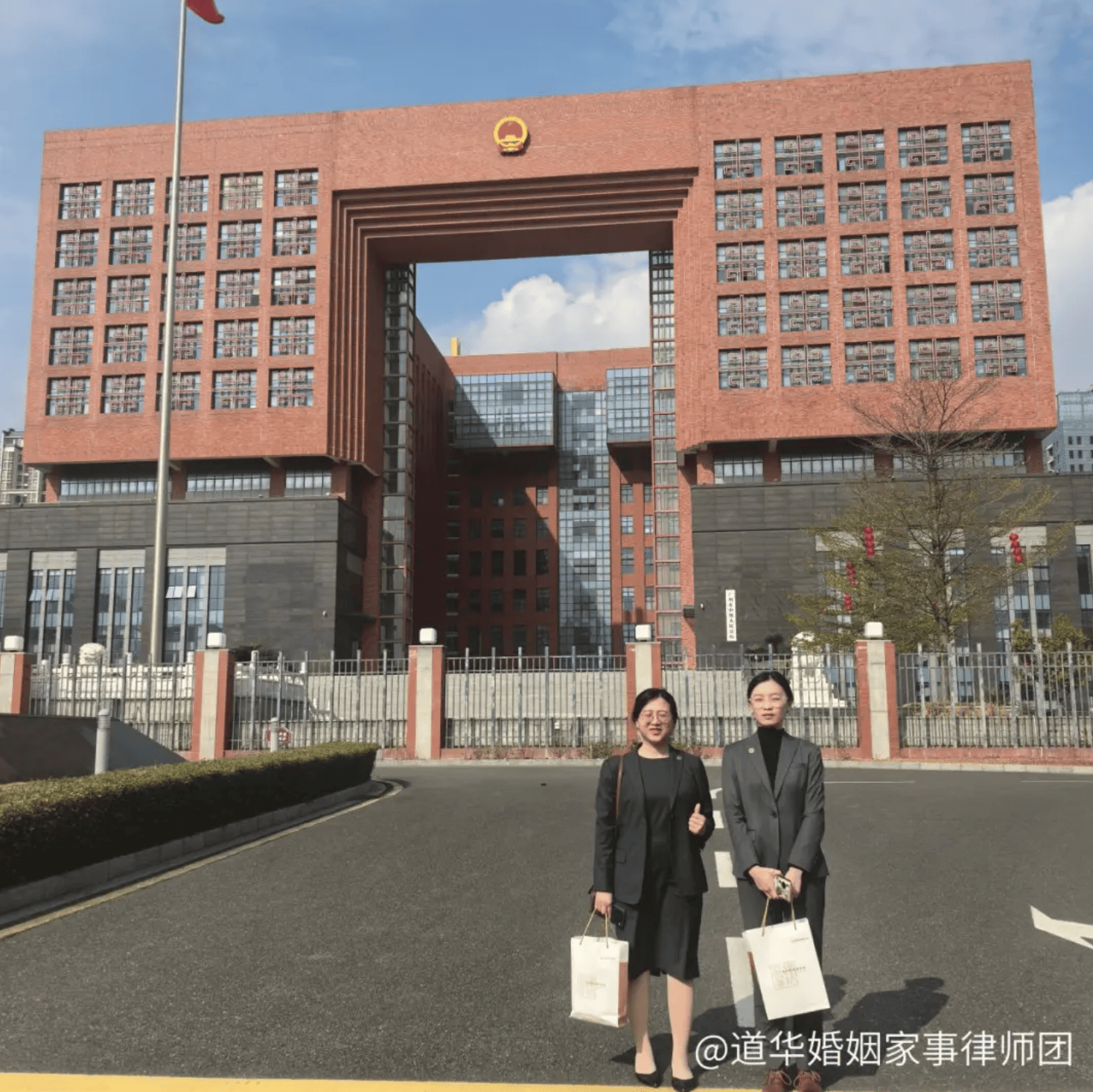
III. Daohua Lawyer’s Analysis
(1) Daohua Lawyer’s Opinion
In divorce cases, where one spouse is convicted of a criminal offense and sentenced to long‑term imprisonment, it is a relatively special type of family dispute. This case fully demonstrates the court’s adjudicative logic and discretionary standards in handling divorce cases involving imprisoned persons, which serves as a valuable reference for parties in similar situations.
The core standard for a People’s Court to decide whether to grant a divorce is whether the marital affection has indeed broken down. Article 1079 of the current Civil Code enumerates four typical grounds for breakdown, and also includes a catch‑all provision covering other circumstances that undermine the marital relationship. The continuation of a marriage is built on the foundation of mutual cohabitation and support. If one party is sentenced to a long term of imprisonment due to a criminal offense, his/her personal liberty is restricted for a long period, making it objectively impossible to perform spousal and parental duties. Normal emotional communication and shared life between the spouses are completely interrupted. In light of the Supreme People’s Court’s guidance on family trial work, a sentence of long‑term imprisonment can be recognized as causing marital affection breakdown, falling under the catch‑all provision of the Civil Code. Unlike ordinary divorce cases, the plaintiff has a higher probability of obtaining a divorce decree on the first filing.
The allocation of child custody always follows the core principle of being conducive to the healthy growth of minors. In this case, the plaintiff proactively proposed placing the elder son under the custody of the imprisoned defendant, but the court did not support that. Even if both parties reach a consensual agreement on custody, the court will still take the child’s best interests as the primary standard and comprehensively examine the custody conditions. A prisoner lacks personal liberty and does not have stable accommodation or objective conditions to care for children, and thus lacks the actual ability to personally supervise and raise them. Only when the imprisoned party’s parents have sufficient support conditions, make a written commitment to care on behalf, and the other party fully agrees, may the court consider adopting such an arrangement. In this case, neither party submitted any supporting materials regarding grandparent care, so the court, based on the reality that the children had long been cared for by the plaintiff, adjusted the custody arrangement and placed both children under the plaintiff’s custody.
As for the division of community property and community debts, if the parties merely verbally acknowledge the existence of real estate and loans without written evidence such as property ownership certificates, loan agreements, or repayment records, the court will not address the division of such property and debts in the current divorce proceedings. If a party wishes to resolve divorce, property division, and debt clarification in one proceeding, it is necessary to collect all relevant ownership and loan documents before filing. Once evidence is missing, the party can only file a separate partition action or debt confirmation lawsuit after the divorce judgment becomes effective, which inevitably prolongs the overall维权 timeline. Moreover, there are objective obstacles for imprisoned persons to appear in court; in practice, the court may arrange video hearings to safeguard their right to make statements. If online hearing is not possible, after completing service procedures, the court may render a default judgment based on the criminal judgment, custody records, and other evidence submitted by the plaintiff.
Long‑term imprisonment of one spouse directly affects the normal order of family life. For the party who is solely raising children and bearing all family pressures, the situation is special. The court will fully consider such practical difficulties when adjudicating such cases, and the relevant adjudicative standards can serve as a reference for all parties whose spouse is imprisoned and who plan to file for divorce.
(2) Daohua Lawyer’s Reminder
In practice, divorce disputes arising from a spouse’s criminal conviction and imprisonment are increasing year by year. The jurisdiction, evidence production, and hearing procedures for such cases differ significantly from ordinary divorce cases, and there are many hidden difficulties in protecting rights. Many parties are unfamiliar with the practical details, resulting in failure to obtain the desired custody rulings, inability to divide property simultaneously, and repeated trips. In addition, it is necessary to distinguish between two categories of debts: fines, disgorgement of illegal gains, and other payments arising from the spouse’s crime are personal illegal debts and do not constitute community debts, and the other party does not need to bear them jointly. Before formally filing, parties should fully organize and retain the marriage certificate, the other party’s criminal judgment, proof of imprisonment, children’s school records and daily expense records, and relevant documents regarding real estate, deposits, and loans, so as to build a complete chain of evidence to support their claims.
Ordinary parties find it difficult to clarify the jurisdictional rules for divorce involving imprisonment; they are prone to making unreasonable claims, omitting key evidence, and missing the opportunity to resolve all issues in one proceeding. Marriage and family lawyers who have long‑term experience in similar cases are familiar with the practical points of the entire process for divorce cases involving imprisoned persons. They can compile a complete set of filing materials according to the party’s situation, formulate targeted litigation strategies for child custody and property division, assist the court in coordinating with the prison to arrange online hearings, efficiently advance case processing, and comprehensively protect the property and personal rights and interests of the party and minor children.
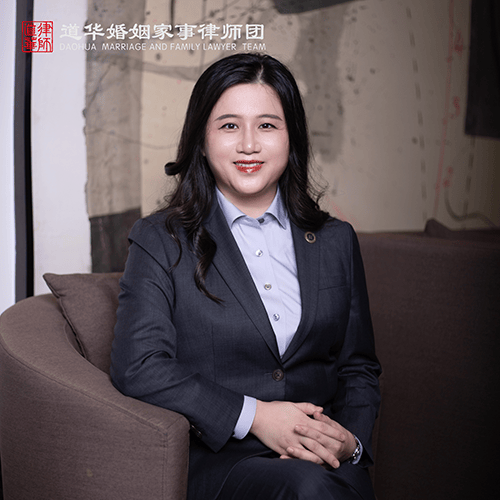
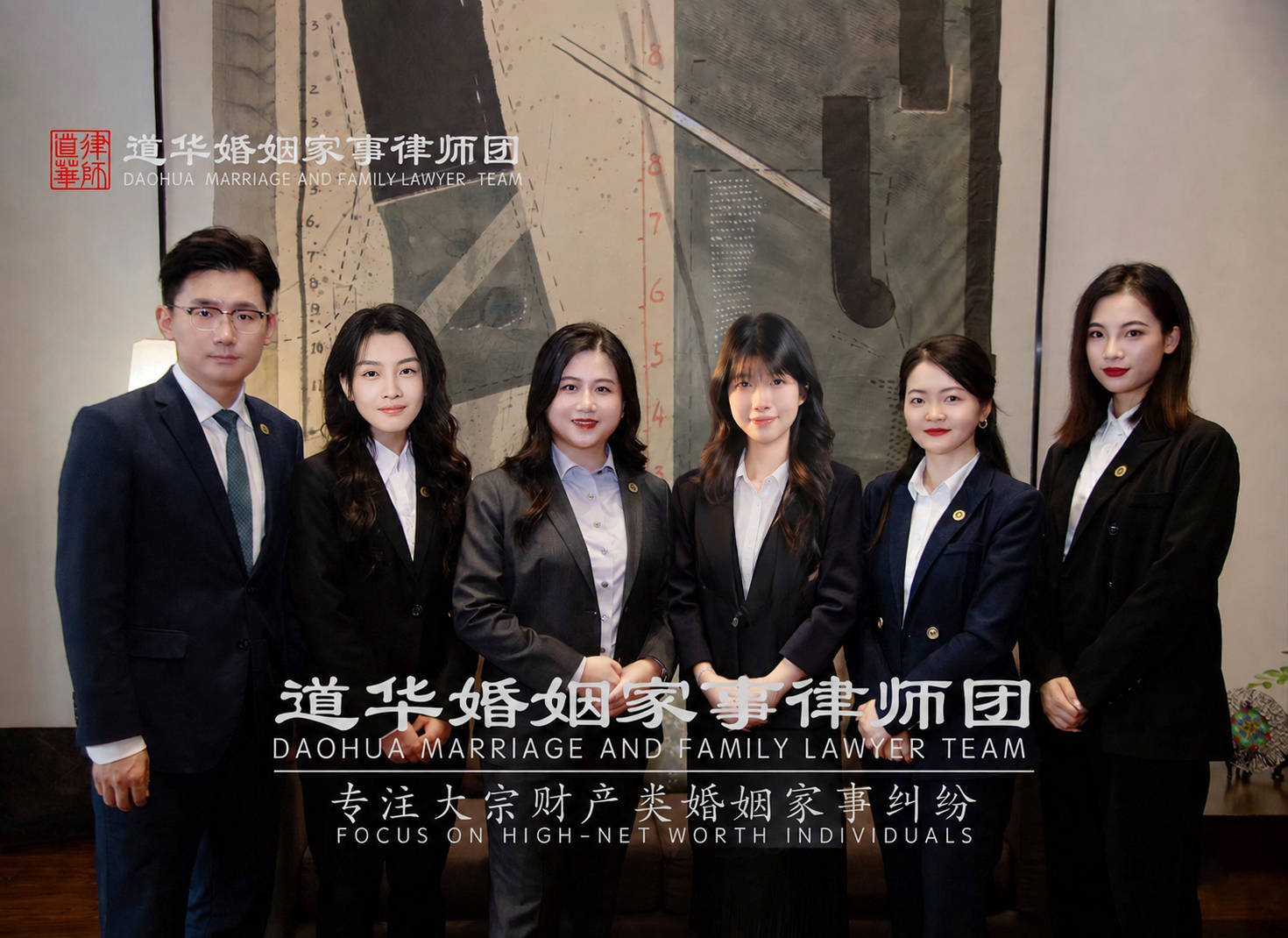
Daohua Marriage & Family Lawyers Team (Guangdong Daohua Law Firm) – Ten Years of Focus on Large‑Property Marriage & Family Legal Services, Practice Expert in Divorce and Inheritance Family Disputes (Mediation/Litigation). It is one of the influential brands of professional legal services in the Guangdong‑Hong Kong‑Macao Greater Bay Area [Shenzhen local], and a benchmark team in cross‑border divorce and inheritance mediation and litigation.
Attorney Tang Yunhong’s team has handled over 1,000 marriage and inheritance cases, involving amounts totaling billions of yuan. They have extensive successful litigation experience in the division of large properties such as listed company equity, Shenzhen small‑property‑right houses, land, and factories, inheritance dispute litigation, will drafting and family property succession, and are particularly skilled in handling cross‑border and foreign‑related divorce and inheritance disputes, resolving various complex family property conflicts with local practical wisdom, earning high praise from clients and industry reputation.
Adhering to the philosophy of “Securing Property, Controlling Legal Risks, Empowering Wealth Growth,” the team brings together experts in law, banking, insurance, taxation, and finance. With rich experience in civil and commercial litigation, arbitration, civil‑criminal cross‑boundary cases, and tax planning, they provide high‑net‑worth clients (including residents of Hong Kong, Macao, and foreign nationals) with comprehensive solutions for marriage, family, and wealth succession, aiming to achieve risk control, debt isolation, and the vision of family wealth succession.
Asset types cover: real estate (commercial housing, small‑property‑right houses, land, factories, etc.), movables (vehicles, antiques, calligraphy, gold, jewellery, etc.), and various property rights and interests (cash deposits, equity, creditor’s rights, demolition compensation, fund investments, virtual property, intellectual property, etc.). The team has systematically compiled professional works such as the “Daohua Marriage & Inheritance Success Case Compilation” and “Family Wealth Succession Legal Practice,” safeguarding clients’ property rights with utmost professionalism and protecting family wealth inheritance with meticulous service.
Disclaimer: The information or articles published on this website are for communication purposes only. The names/company names mentioned in this article are pseudonyms, and amounts/dates and other case information have been anonymized for confidentiality. The content of the article is created by the author and does not represent legal opinions or advice of Guangdong Daohua Law Firm or other lawyers. The information contained herein is provided as general information only, and Guangdong Daohua Law Firm does not undertake to update or revise this article for timeliness. Any decisions made by readers based on all or part of the content of this article in relation to their own cases, and the consequences arising therefrom, are the sole responsibility of the actors. The author and Guangdong Daohua Law Firm assume no liability. If you wish to reprint or quote any content of these articles, please indicate the source. If you need relevant legal advice or legal services, you are welcome to contact our firm’s lawyers.
```
No registration required, quick appointment, expert lawyers provide customized legal service solutions
 Consultation Appointment:400-829-6880
 Private Space:18126123723
 Law Firm: Guangdong Daohua Law Firm
 Email:DAOHUALAWMF@163.com
 Address:810, Rongchao Economic & Trade Center, 4028 Jintian Road, Futian District, Shenzhen (Next to Civic Center)

18126123723
Follow us anytime, anywhere


