Daohua Marriage & Family Law Team
Practicing Experts in Marriage and Family Disputes (Mediation / Litigation)
Ten Years of Focus · Premium Property-Related Marriage and Family Legal Services
Guangdong Daohua Law Firm — Daohua Marriage & Family Law Team. Lead attorney Tang Yunhong. Recommended among Shenzhen's top divorce lawyers and top inheritance lawyers. A professional team in the Guangdong–Hong Kong–Macao Greater Bay Area specializing in divorce litigation and inheritance proceedings, and a well-known family law firm for high-value asset cases with an extensive track record of successful wins.
Particular expertise includes: complex property division / court litigation; division of listed-company equity, funds, and stocks; real estate; Shenzhen limited-property-right housing / farmer housing; land; factory buildings; virtual-currency assets; Hong Kong-related divorce property division; marital and divorce property agreements; tax planning; debt isolation; concealment of divorce assets; foreign-national inheritance; will notarization; will / statutory inheritance disputes; will drafting and validity challenges; urban renewal and demolition compensation; civil–criminal crossover; and cross-border coordination.
Service areas: Guangdong — Shenzhen (Futian), Hong Kong, Macau, overseas, Guangzhou, Zhongshan, Zhuhai, Foshan, Huizhou, Dongguan.

01 Case Facts
Plaintiff Shi and defendant Yang registered their marriage in 1996 and were divorced by court judgment in 2018. During the marriage, Yang invested RMB 1 million in 2013 to become a partner in Shanghai Luntian Investment Management Partnership (Limited Partnership); the contribution was made from community marital property. The enterprise was a limited partnership, with Chuangfeng Company serving as the general partner and Yang as a limited partner. The partnership agreement provided that the admission of a new partner required review and approval by a partners' meeting, and that when a limited partner transferred its partnership interest externally, the other partners enjoyed a right of first refusal on equal terms.
The partnership interest was not dealt with in the parties' divorce proceedings. After the divorce, Shi filed a post-divorce property dispute action, alleging that Yang had concealed community marital property. Shi sought to directly join the partnership as a partner, arguing that even if internal partnership restrictions existed, marriage law should prevail and support her admission request.
Yang defended that no agreement had been reached on transfer of the interest, that the other partners had expressly refused to admit the plaintiff, and that they were prepared to exercise their right of first refusal. He further argued that the partnership agreement and private-equity industry rules restricted partition of the partnership interest, and asked the court to dismiss the plaintiff's claims.
During the proceedings, the remaining partners issued a "Partners' Declaration" expressly refusing to admit Shi and stating that they would exercise their right of first refusal if any transfer occurred. The partnership issued a statement clarifying that the investment returns at issue could not be distributed until the project reached maturity and that neither principal nor returns were guaranteed.
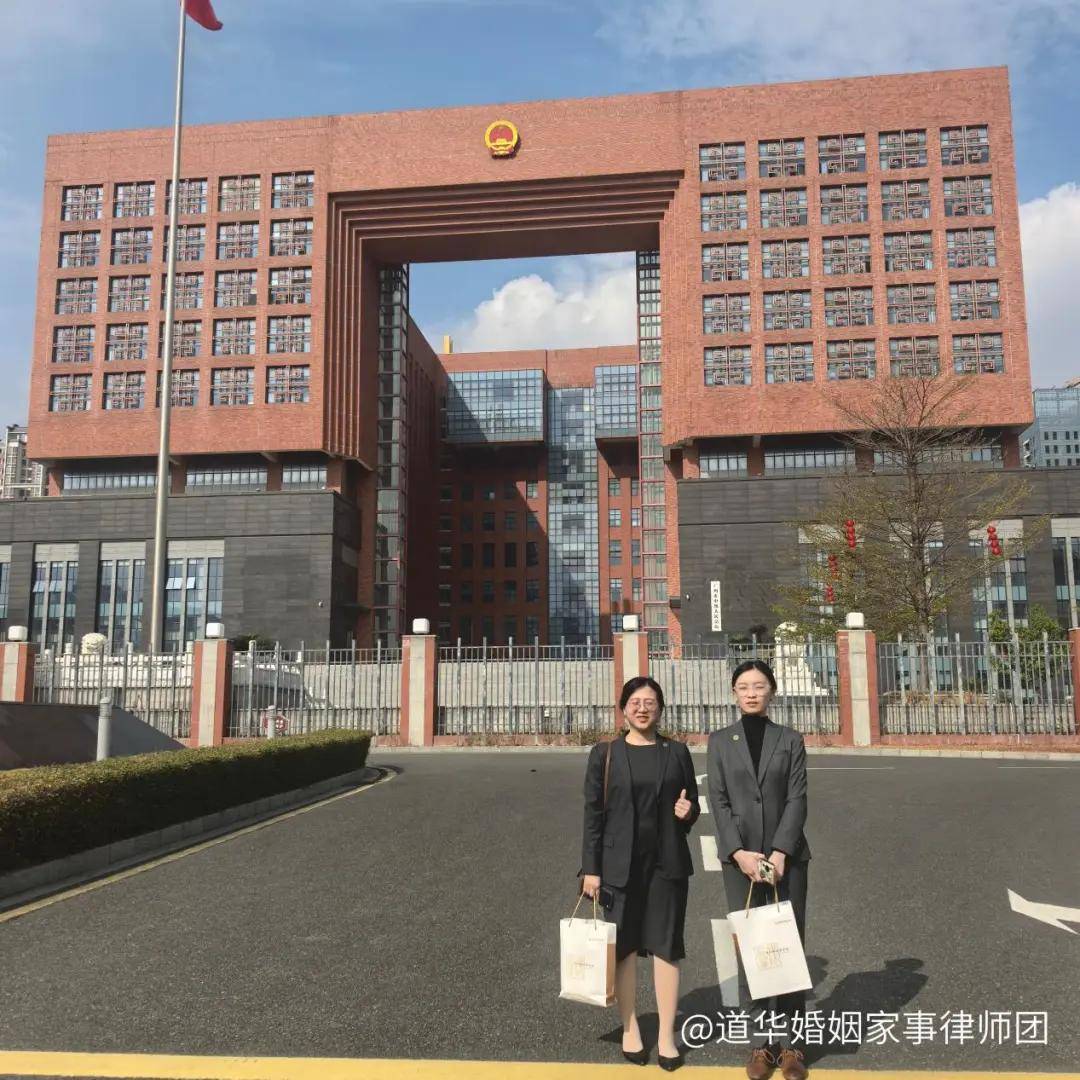
Case No.: (2018) Hu 0112 Min Chu No. 32120
02 Issues in Dispute
(1) Where one spouse, during the marriage, has contributed capital to obtain a partnership interest in a limited partnership, may the other spouse directly acquire partner status through a post-divorce property dispute action?
(2) In resolving disputes over the division of a partnership interest upon divorce, should marriage law be applied preferentially, or should commercial partnership law and the terms of the partnership agreement also be given concurrent effect?
3 Outcome
The court held that the partnership interest in question, acquired by Yang through contributions made during the marriage, constituted community marital property. However, a partnership is a body of high personal trust (fuis societatis). For a spouse to acquire partner status, not only must the spouses reach agreement, but the admission conditions under the Partnership Enterprise Law and the partnership agreement must also be satisfied.
In this case, the spouses had not reached any agreement on transfer of the partnership interest, and the other partners had expressly refused to admit the plaintiff. The court therefore declined to support Shi's claim that she be directly admitted as a partner. The court further held that marriage law could not be applied in isolation to the exclusion of other law; the division of divorce property must also take into account the personal-trust rules governing commercial entities. Accordingly, the court dismissed all of the plaintiff Shi's claims and ordered the plaintiff to bear the court acceptance fee.
4 Attorney Tang's Commentary
Attorney Tang Yunhong, from the Marriage and Family Team at Guangdong Daohua Law Firm, has dedicated ten years to marriage and family legal services involving high-value assets. She specializes in complex, high-stakes divorce property division and family inheritance / partition disputes through litigation and mediation, having handled more than 500 marriage and family cases involving billions of yuan in dispute value, with extensive winning practical experience. Drawing on this case—a precedent on "division of a partnership interest in divorce property"—she sets out the corresponding adjudication rules and key legal points.
(A) In dividing a partnership interest upon divorce, a court cannot directly order that the spouse acquire partner status.
Under the Partnership Enterprise Law and Article 74 of the Supreme People's Court Interpretation (I) on the Application of the Marriage and Family Book of the Civil Code of the People's Republic of China, when dividing, upon divorce, a partnership contribution registered in one spouse's name, the preconditions for the other spouse to acquire partner status are: (i) agreement between the spouses, and (ii) unanimous consent of the other partners. The judicial interpretation sets out four paths: where the other partners consent to transfer, the spouse is admitted as a partner; where they object to transfer but exercise the right of first refusal, the transfer proceeds are divided; where they object to transfer but consent to withdrawal, the withdrawal refund is divided; only where they refuse transfer, refusal of purchase, and refusal of withdrawal in all respects is the transfer deemed consented to.
In this case, plaintiff Shi directly sued for admission, but the spouses had not reached agreement on transfer of the interest, and the other partners were expressly opposed—so the statutory conditions were not met. Even though the partnership interest itself was community marital property, that does not mean the spouse can bypass the partnership's voting procedures and become a partner. Community marital property refers to property-value interests; it does not equal the identity-based right of directly acquiring partner status.
Moreover, this was a private-equity-type limited partnership whose partnership agreement imposed strict restrictions on admission and interest transfer; the personal-trust (fuis) and closed nature of commercial partnerships must be respected. When a spouse cannot be admitted, the available remedy is not forced admission but rather, after the interest is purchased under the right of first refusal or after a withdrawal refund, to divide the corresponding monetary property value.
(B) In handling partnership property in divorce, family law and commercial law must be applied concurrently; marriage law cannot be given exclusive priority.
The plaintiff argued that, because this was a post-divorce property dispute, marriage law should be applied preferentially to the exclusion of the Partnership Enterprise Law. The court did not accept that view. Divorce property disputes involving commercial-entity assets must both protect community marital property rights and preserve the operating rules of commercial organizations. Marriage law resolves ownership of property; the Partnership Enterprise Law resolves the procedural requirements for partnership status and interest transfer. The two apply in parallel; there is no principle that family law automatically excludes commercial law.
In other words: first confirm that the property value of the partnership interest is community marital property, then handle the transfer of the interest under the rules of the Partnership Enterprise Law. If transfer and admission cannot in fact be completed, only the property consideration corresponding to the partnership interest can be divided.
(C) Practical takeaways: operational guidance for divorce cases involving partnership-contribution division
In divorce proceedings, do not directly ask the court to order that you be made a partner of the enterprise. Structure the claims in layers: first seek division of the compensatory value corresponding to the partnership interest; only when conditions permit, seek to handle the transfer of the interest.
Before filing, fully obtain the partnership agreement and the other partners' positions, verify in advance whether the other partners are willing to purchase or to admit the spouse, and predict how the case will likely develop.
If the partnership has not yet matured and withdrawal or transfer is impossible, ask the court to confirm that all property rights under the partnership interest are community marital property, so that when future conditions are met—distribution of partnership profits, withdrawal, or transfer of the interest—the resulting proceeds can be separately divided.
Spouses may, through a marital property agreement, make advance written arrangements regarding the property interests corresponding to the partnership interest held in one spouse's name and the method of value compensation, thereby reducing obstacles to later litigation.

5 Legal Provisions Cited
Partnership Enterprise Law of the People's Republic of China, Article 22: Unless otherwise agreed in the partnership agreement, where a partner transfers all or part of its property interest in the partnership to a person other than a partner, the transfer must be unanimously consented to by the other partners.
Supreme People's Court Interpretation (I) on the Application of the Marriage and Family Book of the Civil Code of the People's Republic of China, Article 74: In trying a divorce case involving division of community marital property consisting of a contribution made in one spouse's name to a partnership, where the other spouse is not a partner of that enterprise, if the spouses agree to transfer all or part of the partnership interest to the other spouse, the matter shall be handled according to the following circumstances:
(1) where the other partners unanimously consent, the spouse acquires partner status in accordance with the law;
(2) where the other partners do not consent to the transfer but exercise the right of first refusal on equal terms, the property obtained from the transfer may be divided;
(3) where the other partners do not consent to the transfer and do not exercise the right of first refusal, but consent to the partner's withdrawal or to the return of part of the property interest, the returned property may be divided;
(4) where the other partners neither consent to the transfer nor exercise the right of first refusal, and also do not consent to the partner's withdrawal or to the return of part of the property interest, the transfer is deemed consented to by all partners, and the spouse acquires partner status in accordance with the law.Civil Code of the People's Republic of China, Article 1062: The following property acquired by either spouse during the continuance of the marriage relationship constitutes community marital property owned by both spouses:
(1) wages, bonuses, and remuneration for labor;
(2) income from production, operation, and investment;
(3) income from intellectual property rights;
(4) property inherited or given as a gift, except as provided in item (3) of Article 1063 of this Code;
(5) other property that shall be owned jointly. The spouses have equal rights to dispose of community property.
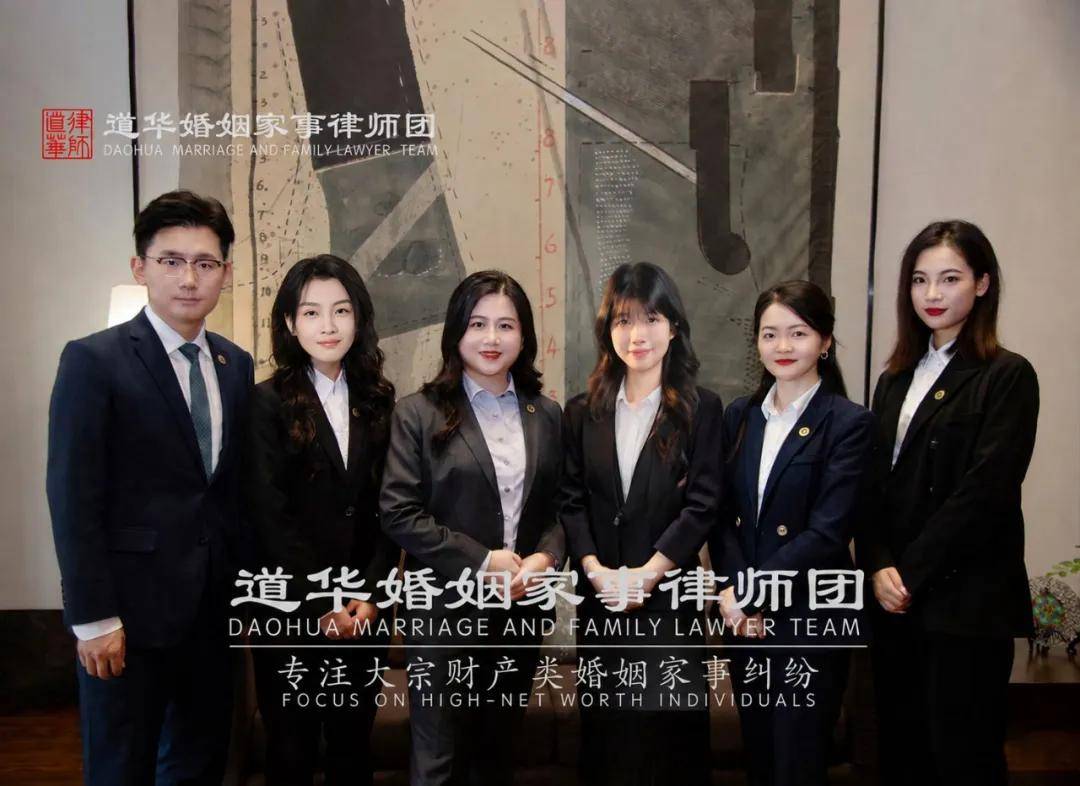
Daohua Marriage & Family Law Team (Guangdong Daohua Law Firm) — Ten Years of Focus · Premium Property-Related Marriage and Family Legal Services. Practicing experts in marriage, divorce, and inheritance disputes (mediation / litigation). We are one of the most influential professional legal-service brands in the Guangdong–Hong Kong–Macao Greater Bay Area [Shenzhen-rooted], and a benchmark team in cross-border divorce and inheritance mediation and litigation.
Attorney Tang Yunhong's team has handled more than 1,000 marriage and inheritance cases involving billions of yuan in dispute value. We have an extensive record of successful wins in resolving disputes over high-value assets such as listed-company equity, Shenzhen limited-property-right housing, land, and factory buildings in divorce property division; inheritance litigation; will drafting; and family wealth succession. We are particularly known for tackling industry-wide hard problems in foreign-related and cross-border property divorce litigation and inheritance proceedings, using local case-handling expertise to overcome complex family property disputes and earning high client praise and industry recognition.
Grounded in the philosophy of "safeguarding property security, controlling legal risk, and enabling wealth growth," we bring together experts in law, banking, insurance, and tax and finance, supported by rich experience in civil and commercial litigation and arbitration, civil–criminal crossover matters, and tax planning. For high-net-worth clients (including those from Hong Kong, Macau, and foreign nationals), we provide comprehensive marriage, family, and wealth-succession solutions to achieve risk prevention and control, debt isolation, and the long-term vision of family wealth succession.
Asset types covered include: real property (commercial housing, limited-property-right housing, land, factory buildings, etc.); movable property (vehicles, antiques and calligraphy/paintings, gold and jewelry, etc.); and various property-type rights (cash deposits, equity, creditor's rights, demolition compensation, funds and wealth-management products, virtual property, intellectual property, etc.). The team has systematically compiled professional works including the Daohua Compendium of Successful Marriage and Inheritance Cases and Legal Practice in Family Wealth Succession, guarding clients' property rights with extreme professionalism and safeguarding family wealth succession with dedicated service.
Disclaimer: The information or articles published on this website are for exchange purposes only. All names and enterprise names mentioned herein are pseudonyms, and case details such as amounts and dates have been treated to preserve confidentiality. The articles are authored and do not represent legal opinions or advice issued by Guangdong Daohua Law Firm or any other lawyer. The information contained herein is provided as general information only, and Guangdong Daohua Law Firm undertakes no obligation to update it for timeliness. Any decisions readers make based in whole or in part on this article in connection with their own cases, and any consequences arising therefrom, are the reader's own responsibility. Neither the authors nor Guangdong Daohua Law Firm shall bear any liability. If you wish to reprint or cite any content of these articles, please indicate the source. Should you require relevant legal advice or legal services, please contact our firm's lawyers.
 Consultation Appointment:400-829-6880
 Private Space:18126123723
 Law Firm: Guangdong Daohua Law Firm
 Email:DAOHUALAWMF@163.com
 Address:810, Rongchao Economic & Trade Center, 4028 Jintian Road, Futian District, Shenzhen (Next to Civic Center)