
Navigation
Daohua Marriage & Family Lawyer Team
Practical Expert in Marriage & Family Disputes (Medigation/Litigation)
Ten Years of Focus · Large‑Asset Marriage & Family Legal Services
Guangdong Daohua Law Firm, Daohua Marriage & Family Lawyer Team, Lawyer Tang Yunhong, recommended among the top ten divorce lawyers in Shenzhen and top ten inheritance lawyers, a professional divorce litigation and inheritance litigation lawyer in the Guangdong‑Hong Kong‑Macao Greater Bay Area, known for handling large‑asset family cases with numerous successful precedents. Particularly skilled in: complex property division / court litigation, listed company equity / fund / stock division, real estate, Shenzhen small‑property‑rights houses / farmers’ houses, land, factories, virtual currency assets, Hong‑Kong‑related divorce property division, marital / divorce property agreements, tax planning, debt isolation, divorce property transfers, foreign‑national inheritance disputes, will notarisation, will / statutory inheritance dispute litigation, will drafting and validity determination, old‑city redevelopment and demolition, cross‑border coordination between civil and criminal matters, etc. Service areas: Guangdong, Shenzhen, Futian, Hong Kong, Macao, overseas, Guangzhou, Zhongshan, Zhuhai, Foshan, Huizhou, Dongguan.

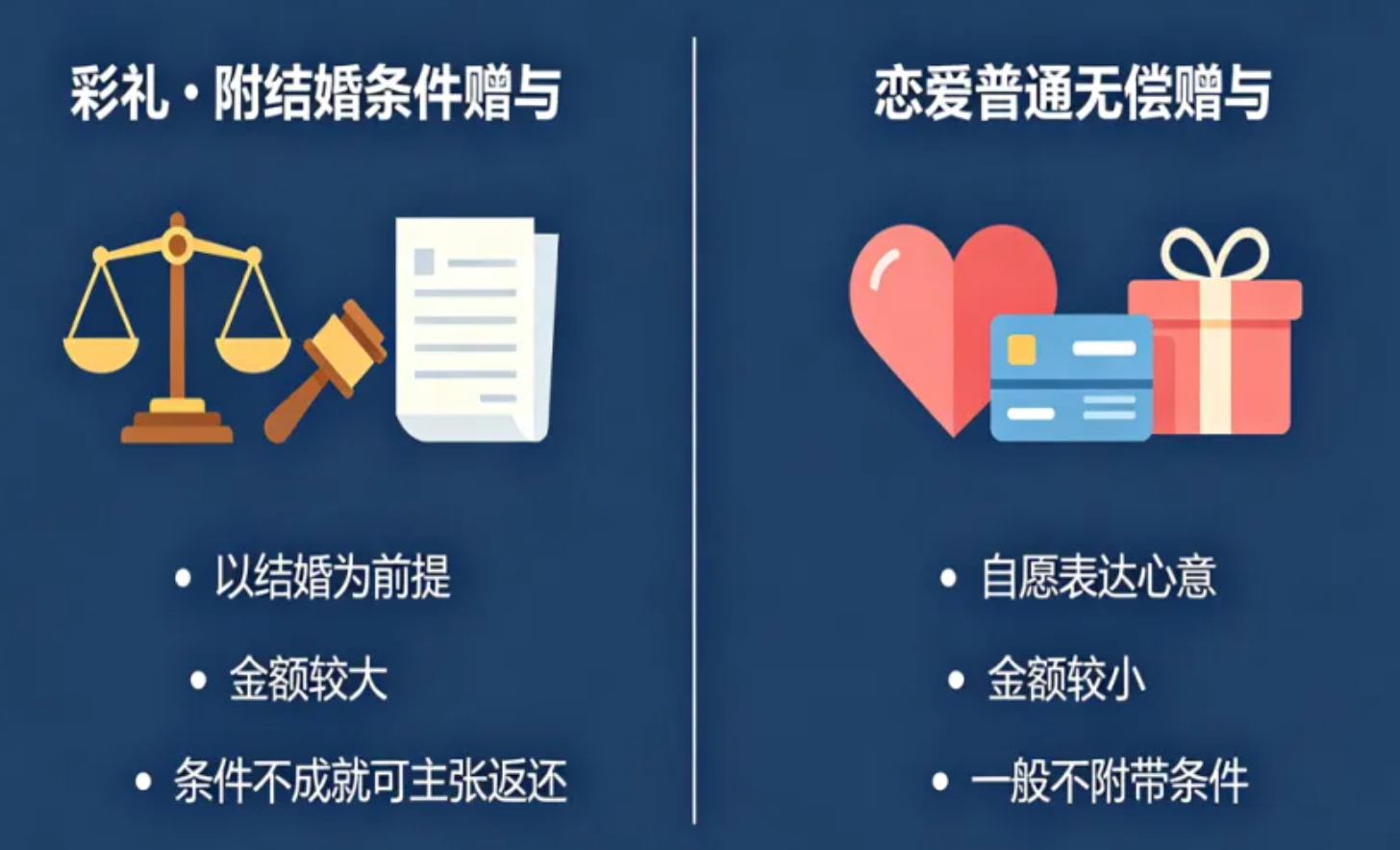
Abstract: Recently, the case in which post‑90s entrepreneur Sun Yuchen sued renowned actress Jing Tian and her parents for the return of more than 30 million yuan in bride price has sparked heated discussion across the internet. The two had been in a relationship and were discussing marriage, but never registered their marriage. During their relationship, substantial funds changed hands. After their relationship broke down and they parted ways, the former lovers went to court. The characterisation and return of the more than 30 million yuan in funds has become the core dispute in the case.
This dispute, interwoven with public attention and law, reveals a major legal pain point in real‑life dating and engagement: emotional expectations during the courtship and engagement phase do not equate to legal rights and obligations. Without the backing of a marriage certificate, the consequences of large property transfers must be entirely judged by legal rules.
Lawyer Tang Yunhong from Guangdong Daohua Law Firm has been deeply engaged in the field of marriage and family law for ten years, having handled nearly 1,000 marriage and family cases with total disputed amounts exceeding 6 billion yuan. Her practice covers the whole country, and she has accumulated extensive practical experience in litigation and mediation, earning wide recognition from clients for her effectiveness. In this commentary, she combines the provisions of the Civil Code’s Marriage and Family Book and its judicial interpretations to unpack the legal blind spots and real‑world risks concerning betrothal property and romantic gifts in this case.
I. Case Review
On 27 August 2026, Sun Yuchen’s attorney, Zhang Qihuai, issued a statement of facts confirming that Sun had filed a lawsuit over a property dispute, with the amount in dispute exceeding 30 million yuan. The case has been lawfully docketed, and the plaintiff simultaneously applied for property preservation. After the case was accepted, Jing Tian’s side lawfully raised a jurisdictional objection, which is currently under court review; the case has not yet entered the substantive hearing stage.
Around the same time, Sun Yuchen published a long post on social media titled “My Girlfriend Jing Tian,” revealing many details of their romantic relationship, with the post ending with the note “This article is purely fictional.” Jing Tian later responded: “I have never, and will never, sell my love for money, nor will I sell my soul. I still believe in love, I still have poor judgment, and I still lack wisdom. But I believe in the law, I believe in kindness, and I believe that justice and fairness will ultimately prevail.” Jing Tian’s studio issued a solemn statement saying: “Reputation is an artist’s life, and also an artist’s weakness. But we have the courage to say no to those who use an artist’s reputation as a threat to stir up trouble. Upholding our belief in the law and following due legal procedures, we do not intend to occupy public resources and will leave everything to the court.”
On one side are former intimate lovers who had discussed marriage; on the other is a huge property claim exceeding 30 million yuan. Public sentiment is divided: some believe that large sums given for the purpose of marriage should be returned after a breakup; others argue that voluntary transfers and gifts made during a relationship should not be reclaimed after a breakup. From a legal perspective, however, the determination of ownership cannot be based solely on morality or sentiment, nor can one simply apply the folk belief that “without marriage, a full refund is mandatory.” Everything must revert to legal elements and evidentiary facts.
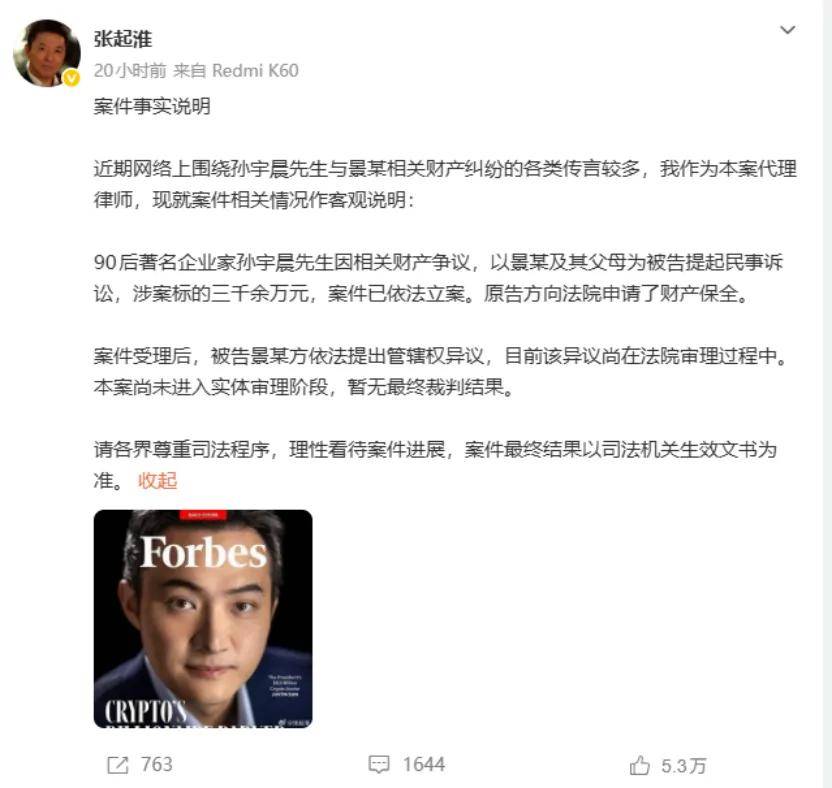
II. Legal Analysis: The Legal Nature of Bride Price and Rules for Its Return
The public often understands similar disputes as “romantic gifts” or “breakup compensation,” but under current Chinese law, this is a typical misconception. The core legal issue in the “30‑million bride price dispute” is precisely the legal characterisation of bride price and the rules for its return.
(1) The Legal Nature of Bride Price: A Conditional Gift for the Purpose of Marriage
According to the Provisions of the Supreme People’s Court on Issues Concerning the Application of Law in the Trial of Disputes over Bride Price, disputes arising from the return of bride price given in accordance with custom for the purpose of marriage are governed by these provisions. In law, bride price is characterised as a “conditional gift for the purpose of entering into marriage” – when the marriage does not take place, the condition fails, and the giver may claim return in accordance with the law.
(2) Statutory Conditions for the Return of Bride Price
Article 5 of the Interpretation (I) of the Supreme People’s Court on the Application of the Marriage and Family Book of the Civil Code of the People’s Republic of China provides three circumstances for the return of bride price: (1) where the parties have not gone through the marriage registration formalities; (2) where the parties have gone through the marriage registration formalities but have not actually lived together; and (3) where the bride price was given before marriage and causes the giver to experience hardship in living. In this case, the parties did not register their marriage, which falls under the first statutory circumstance for return.
If the court determines that the more than 30 million yuan constitutes bride price, and given that the parties did not register their marriage, the court would support the return, but that does not necessarily mean a full refund. Under Article 6 of the Provisions of the Supreme People’s Court on Issues Concerning the Application of Law in the Trial of Disputes over Bride Price, where the parties have not gone through marriage registration but have lived together, the people’s court shall, based on the actual use of the bride price and the dowry, comprehensively consider the circumstances of cohabitation and childbearing, the fault of both parties, and local customs, to determine whether to return the bride price and the specific proportion to be returned.
III. Core Legal Differences Between Bride Price and Romantic Gifts
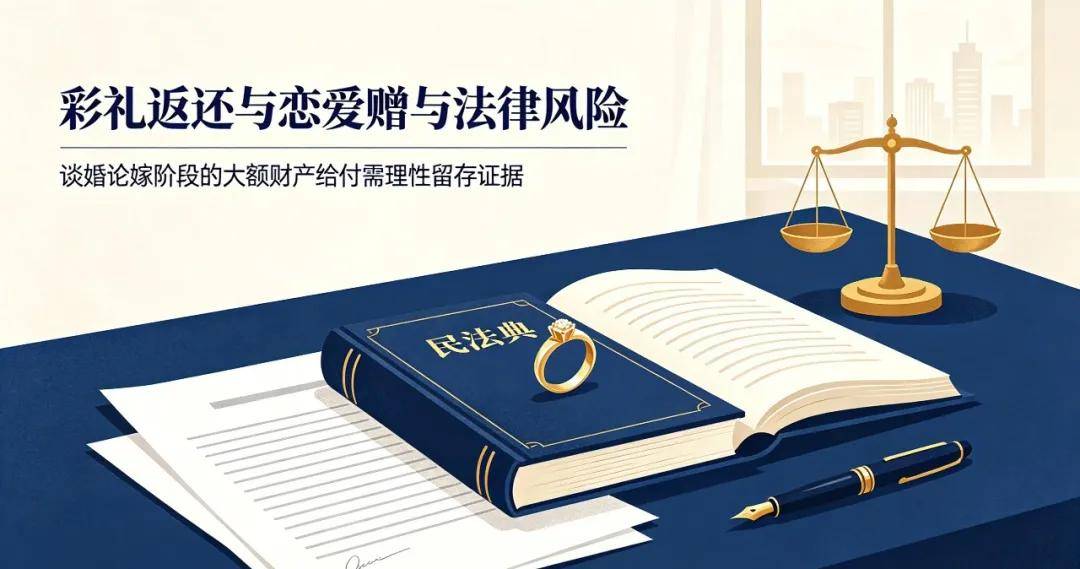
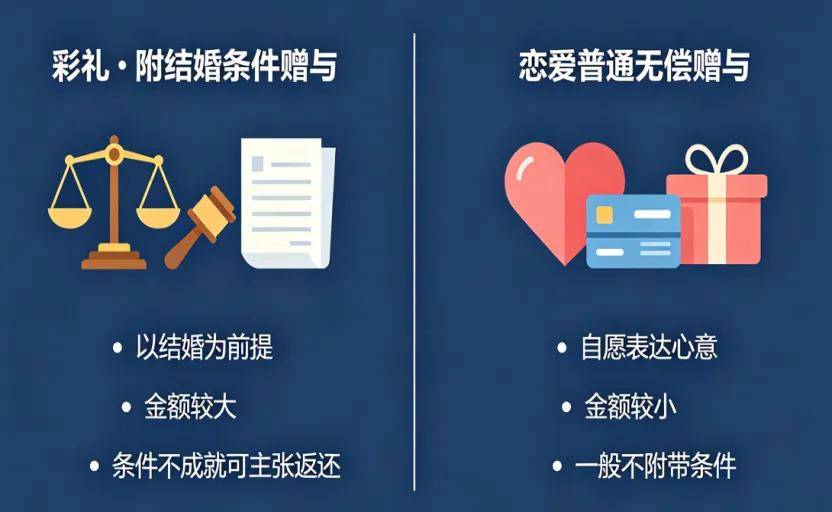
During romantic relationships, when one party voluntarily transfers money or gives gifts to the other out of affection, without expressly linking them to the condition of marriage, such acts constitute ordinary gift contracts. Under Article 657 of the Civil Code, once the gifted property is delivered, the gift takes effect, and the giver has no right to demand its return after a breakup. In this case, if the defendant can prove that the more than 30 million yuan was an unconditional gift of affection during the relationship and not bride price, then Sun Yuchen’s claim for return would lack a legal basis. The core dispute in this case is essentially a battle of evidence: the plaintiff must prove that the money was a conditional gift for the purpose of marriage (i.e., bride price), while the defendant may prove that it was an unconditional romantic gift. Since the case has not yet gone to trial, which party’s evidence is accepted by the court will directly determine the outcome.
IV. Practical Legal Guidance: How to Avoid Legal Risks in Large‑Value Property Transfers During the Engagement Phase
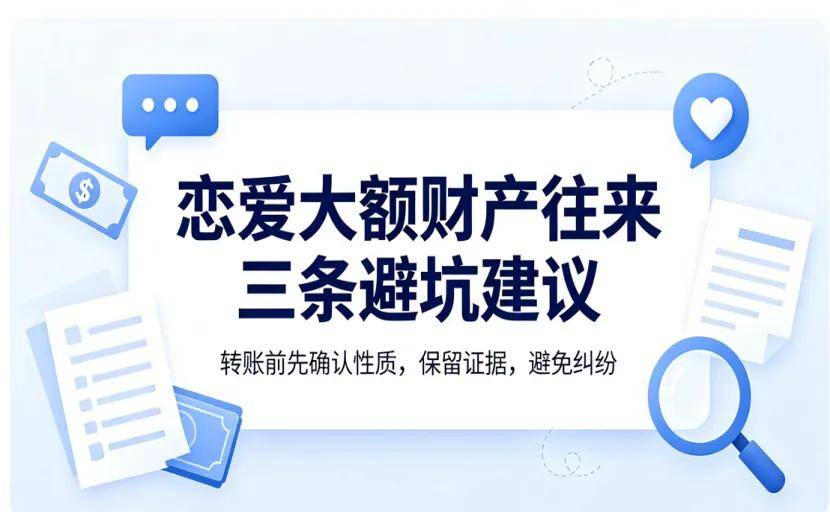
This sky‑high engagement property dispute serves as a legal wake‑up call for all those who are dating or discussing marriage. Love can be purely emotional, but large‑value property transactions must be managed with legal risk controls. In her practice, Lawyer Tang Yunhong consistently advocates that legal risks should be managed proactively – preventing disputes through advance planning is far better than resorting to litigation after a conflict erupts. Therefore, based on the current Civil Code provisions concerning marital property, gifts, and betrothal, Lawyer Tang has summarised three practical risk‑prevention tips for the general public who have property exchanges during romantic relationships:
(1) Distinguish between bride price and ordinary gifts, and keep thorough written evidence for significant payments
If the nature of the transferred funds is bride price, the transfer memo can directly state “bride price,” while also preserving chat records discussing engagement and marriage, and keeping transfer receipts. For ordinary gifts during the relationship, the chat records can also clarify that the payment is an unconditional gift without any marriage condition.
Never rely solely on oral agreements or trust in the relationship as a substitute for written evidence. If the relationship later sours, chat records, transfer memos, and recordings become the most important basis for the court to ascertain the facts.
(2) For large‑value transfers, sign a written property agreement
For transactions involving large sums, the parties may sign a written agreement specifying the amount, purpose, and clearly stating whether the funds are bride price (conditional upon marriage, with provisions for what happens if the engagement is called off) or an unconditional gift. Both parties should sign and retain copies to avoid future disagreements.
Even if the couple has a good relationship, signing an agreement is not a sign of distrust; rather, it sets clear property boundaries in advance, reducing the likelihood of litigation and mutual recrimination after a breakup.
(3) Rationally view property transfers during romantic relationships: distinguish between unconditional gifts and conditional gifts
Unconditional gifts usually refer to ordinary daily consumption expenditures made during a relationship to express or enhance affection, as well as gifts of small value given on special commemorative occasions. Examples include transfers with special meanings like “520” or “1314,” or ordinary expenses such as treating to meals or buying everyday clothing. Such transfers are voluntary dispositions made to maintain the relationship; once the property is delivered, the gift is completed, and the giver has no right to demand its return after a breakup.
In contrast, conditional gifts refer to large‑value property transfers made with the explicit purpose of entering into marriage, such as bride price, house purchase funds, or substantial amounts paid by relatives. These amounts often far exceed the reasonable scope of ordinary emotional expression and carry an implicit expectation of future shared life. Legally, this is a gift with a resolutive condition: when the parties ultimately fail to marry and the purpose of entering into marriage is defeated, the condition is not fulfilled, and the recipient’s continued possession of the funds lacks legal basis, so the funds should be returned in accordance with the law.
Furthermore, once a dispute arises, the judicial process must be respected. In civil litigation, before the court renders a final and binding judgment, unilateral statements by either party do not constitute legal facts. One should not use online public opinion to pressure the other party or disclose private information, nor should public opinion be used as a substitute for court trial; otherwise, there may be legal risks of defamation or infringement of the right to reputation.
V. Lawyer Tang’s Commentary
The dispute between Sun Yuchen and Jing Tian over more than 30 million yuan in property is a family law case that, beneath the noise of public attention, offers highly practical legal lessons. Love may be free from concerns about gain or loss, but property must adhere to rules. Whether ordinary citizens or public figures, during the courtship and engagement phase, one must recognise the reality: love and engagement do not equal marriage. Without marriage registration, there is no protection under the statutory property regime between spouses.
Emotional promises cannot replace legal safeguards. Preserving evidence and clarifying property characterisation in advance is far more important than litigating after a relationship has broken down. Only by committing property arrangements to writing and retaining evidence can we allow emotions to remain emotional, and prevent former lovers from ending up as adversaries in court.
VI. Legal References
1. Article 5 of the Interpretation (I) of the Supreme People’s Court on the Application of the Marriage and Family Book of the Civil Code
Where a party requests the return of bride price given in accordance with custom, if the following circumstances are found, the people’s court shall support the request:
(1) the parties have not gone through the marriage registration formalities;
(2) the parties have gone through the marriage registration formalities but have not actually lived together;
(3) the bride price was given before marriage and causes the giver to experience hardship in living.
The application of the provisions in items (2) and (3) above shall be conditional upon the parties’ divorce.
2. Article 6 of the Provisions of the Supreme People’s Court on Issues Concerning the Application of Law in the Trial of Disputes over Bride Price
Where the parties have not gone through marriage registration but have lived together, and one party requests the return of bride price given in accordance with custom, the people’s court shall, based on the actual use of the bride price and the dowry, comprehensively consider the circumstances of cohabitation and childbearing, the fault of both parties, and local customs, to determine whether to return the bride price and the specific proportion to be returned.
3. Article 657 of the Civil Code of the People’s Republic of China
A gift contract is a contract whereby the donor gives his or her property to the donee gratuitously, and the donee expresses acceptance of the gift.
Daohua Marriage & Family Lawyer Team (Guangdong Daohua Law Firm) – ten years of focus on large‑asset marriage and family legal services, practical experts in divorce and inheritance family disputes (mediation/litigation). It is one of the influential professional legal service brands in the Guangdong‑Hong Kong‑Macao Greater Bay Area (Shenzhen‑based), and a renowned benchmark team for mediation and litigation in cross‑border divorce and inheritance matters.
Lawyer Tang Yunhong’s team has handled over 1,000 marriage and inheritance cases, with disputed amounts totalling billions of yuan. They have extensive successful litigation experience in resolving disputes involving large‑asset divisions such as listed company equity, Shenzhen small‑property‑rights houses, land, and factories, as well as inheritance disputes, will drafting, and family wealth succession. They are particularly adept at handling foreign‑related and cross‑border divorce and inheritance litigation, addressing industry pain points with localised practical wisdom, and have won high praise from clients and professional recognition.
Adhering to the philosophy of “protecting property security, preventing legal risks, and empowering wealth appreciation,” the team brings together experts from law, banking, insurance, taxation, and other fields. With rich experience in civil and commercial litigation, arbitration, civil‑criminal cross‑over cases, and tax planning, they provide comprehensive solutions for high‑net‑worth individuals (including those from Hong Kong, Macao, and overseas) in marriage and family matters and wealth succession, aiming to achieve risk control, debt isolation, and the smooth transmission of family wealth.
Asset types covered include: immovable property (commercial housing, small‑property‑rights houses, land, factories, etc.), movable property (vehicles, antiques, calligraphy and paintings, gold and jewellery, etc.), and various property rights and interests (cash deposits, equity, creditor’s rights, demolition compensation, fund investments, virtual property, intellectual property, etc.). The team has systematically compiled professional outputs such as the “Daohua Marriage and Inheritance Successful Cases Compilation” and “Legal Practice in Family Wealth Succession,” protecting clients’ property rights with utmost professionalism and safeguarding family wealth inheritance with dedicated service.
Disclaimer: The information or articles published on this website are for communication purposes only. The names of individuals/enterprises mentioned in this article are pseudonyms, and details such as amounts and dates have been anonymised. The content is created by the author and does not represent legal opinions or advice from Guangdong Daohua Law Firm or any other lawyer. The information contained herein is provided as general information only, and Guangdong Daohua Law Firm does not undertake to update or revise it for timeliness. Any decisions made by readers based on all or part of this article and the consequences arising therefrom are the sole responsibility of the actors. The author and Guangdong Daohua Law Firm assume no liability. If you wish to reprint or quote any content from these articles, please indicate the source. If you require relevant legal opinions or services, you are welcome to contact the firm’s lawyers.
No registration required, quick appointment, expert lawyers provide customized legal service solutions
 Consultation Appointment:400-829-6880
 Private Space:18126123723
 Law Firm: Guangdong Daohua Law Firm
 Email:DAOHUALAWMF@163.com
 Address:810, Rongchao Economic & Trade Center, 4028 Jintian Road, Futian District, Shenzhen (Next to Civic Center)

18126123723
Follow us anytime, anywhere


