
Navigation
Author: Dao Hua Marriage and Family Law FirmDate: 2026-05-25Reads:times
Practical Expert in Marriage and Family Affairs Dispute (Mediation/Litigation)
Ten years of focus on; marriage and family legal services for bulk property matters
Guangdong Dao Hua Law Firm, Dao Hua Marriage and Family Law Team, Tang Yunhong Lawyer, Top Ten Divorce Lawyers in Shenzhen, Top Ten Inheritance Lawyers, Professional Divorce and Inheritance Litigation Lawyers in the Guangdong-Hong Kong-Macau Greater Bay Area, Renowned Lawyers for Large Family Properties, Numerous Successful Case Wins, Particularly Skilled in Handling: difficult property division/court litigation, listed company equity/fund/share division, real estate, Shenzhen small property rights houses/farmer houses, land, factories, virtual currency assets, Hong Kong divorce property division, marital/divorce property agreements, tax planning, debt isolation, divorce property transfer, cross-border inheritance, will notarization, will/inheritance disputes litigation, will drafting and validity determination, old city renovation and demolition, civil and criminal overlap, cross-border collaboration, etc. Service Areas: Guangdong, Shenzhen, Futian, Hong Kong, Macau, Overseas, Guangzhou, Zhongshan, Zhuhai, Foshan, Huizhou, Dongguan.

Abstract:After the dissolution of a marriage relationship, if one party discovers that certain property benefits such as equity and dividends were not handled during the divorce, it often leads to further property disputes. Especially the dividends from virtual restricted shares of the company and employee incentive shares, due to their characteristics of personal dependence, delayed distribution periods, and unclear handling at the time of divorce, become frequent points of contention in property disputes after divorce.
Guangdong Dao Hua Law Firm lawyer Tang Yunhong combined with a typical post-divorce property dispute case, focusing onThe core issues of virtual restricted shares dividend recognition, division timing, and calculation standards after divorce.Analyze the reasoning of the court's judgment, providing practical references for the handling of similar cases.
One, Case Review
The plaintiff, Ms. Sun, and the defendant, Mr. Chen, registered their marriage on June 7, 2010, and later, due to the breakdown of their relationship, Ms. Sun filed for a divorce lawsuit. The case went through first-instance and second-instance trials, and the Shenzhen Intermediate People's Court made a final judgment on September 29, 2021, granting the divorce to both parties. The divorce judgment also divided the property, including the house, vehicle, savings, securities account funds, and the virtual restricted shares of a company under the defendant's name. The divorce judgment took legal effect on October 13, 2021.
In the divorce judgment, the court only divided the defendant's dividend from the company in 2019, without involving the corresponding dividends for 2020 and 2021. Ms. Sun believes that the dividends for the whole year of 2020 and from January 1, 2021, to October 13, 2021, are the common property of the couple that should have been divided during the marriage, and therefore she filed a lawsuit again, requesting the division of the dividends during the above period totaling 4,844,294.4 yuan, and for the defendant to bear the litigation costs.
The plaintiff claims that, according to the company's public information and accounting methods, the defendant's post-tax dividend for the year 2020 was 2,906,374.99 yuan, and the corresponding post-tax dividend for the year 2021 was 1,937,919.41 yuan. The total of both should be divided equally in accordance with the law.
The defendant, Mr. Chen, argues that the shares involved and related rights have been settled in the divorce case, and the plaintiff's lawsuit in this case violates the principle of "no double handling of the same matter"; the calculation method of the dividends claimed by the plaintiff is unclear, and the amount has no basis; the plaintiff is at fault in the marriage, has already obtained a large amount of property through the divorce, the defendant is not at fault and is burdened with debt and unemployed, and if there is to be a distribution, reasonable expenses should be deducted first, and the litigation costs should be borne by the plaintiff.
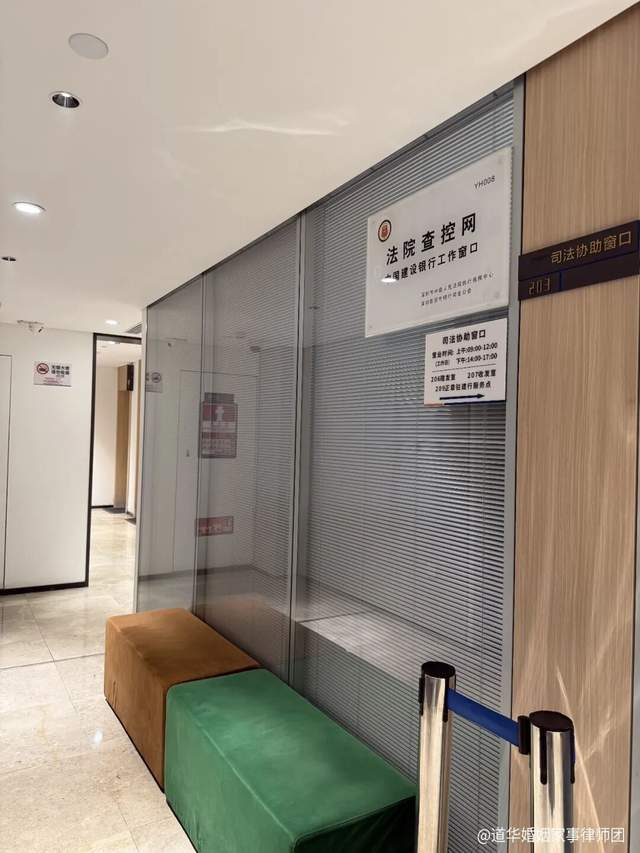
The court further found that the defendant, Mr. Chen, resigned from Company A on August 7, 2020, and held 19,532,09 shares of restricted virtual shares as of October 31, 2020. According to the reply from Company A, the defendant actually received a post-tax dividend of 2,906,374.99 yuan for the year 2020 from January 1, 2021, to October 13, 2021; the corresponding dividend for the year 2021 was distributed in 2022, at which time the marital relationship between the two parties had been dissolved, and they had been living separately and had not lived together or consumed together. [The case number is (2023) Yue 0307 Minchu 9702]
Two, focal points of the dispute
1. Whether the plaintiff's current lawsuit for the division of dividends violates the principle of "no double jeopardy," and whether it constitutes a repeated lawsuit.
2. Whether the dividends corresponding to the defendant's virtual restricted shares during the 2020 and 2021 marriage period belong to the common property of the couple that was not handled during the divorce.
3. Whether the amount of dividends claimed by the plaintiff and the calculation method have factual and legal basis, and whether they should be supported.
4. Whether reasonable expenses should be deducted during the dividend distribution and how the distribution ratio should be determined.

Paragraph three, the court's judgment
(1) The court believes that
1. Property identification and division:During the marriage, the production, business, and investment income obtained by the couple shall be considered as joint property. In case of divorce, if such property is not involved, either party has the right to file a separate lawsuit for division, which does not constitute a repeated lawsuit. The division of the virtual restricted shares' dividends in this case should be based on the core standards of "actual acquisition time" and "marital status," with the amount being the confirmed post-tax dividend amount by the company. In the absence of special circumstances, the principle of equal division shall be applied.
2. Dividend handling:The dividend for the year 2020 was actually received during the marriage period in 2021, in an amount of 2,906,374.99 yuan, which is a jointly owned property not settled at the time of divorce. The defendant should pay the plaintiff 50% thereof, i.e., 1,453,187.50 yuan. As for the dividend corresponding to the period from January 1, 2021, to October 13, 2021, since it was actually distributed in 2022 (after the divorce), and considering that both parties had already been separated and had no joint living expenses, in view of the actual circumstances of this case, the plaintiff's claim for this item is not supported.
(2) Judgment result
In accordance with Article 1062, Article 1087 of the Civil Code of the People's Republic of China, and Paragraph 25, Paragraph 83 of the Interpretation (I) of the Supreme People's Court on the Application of the Marriage and Family Article of the Civil Code of the People's Republic of China, the judgment is as follows:
One, the defendant Mr. Chen should pay the plaintiff Ms. Sun the property division amount of 1,453,187.5 yuan within seven days from the date when the judgment takes effect.
Secondly, reject the other litigation requests of the plaintiff, Ms. Sun.
If the obligation to pay money is not fulfilled within the period specified by this judgment, the debt interest for the period of delayed performance shall be doubled in accordance with Article 264 of the "Civil Procedure Law of the People's Republic of China" (amended in 2023).
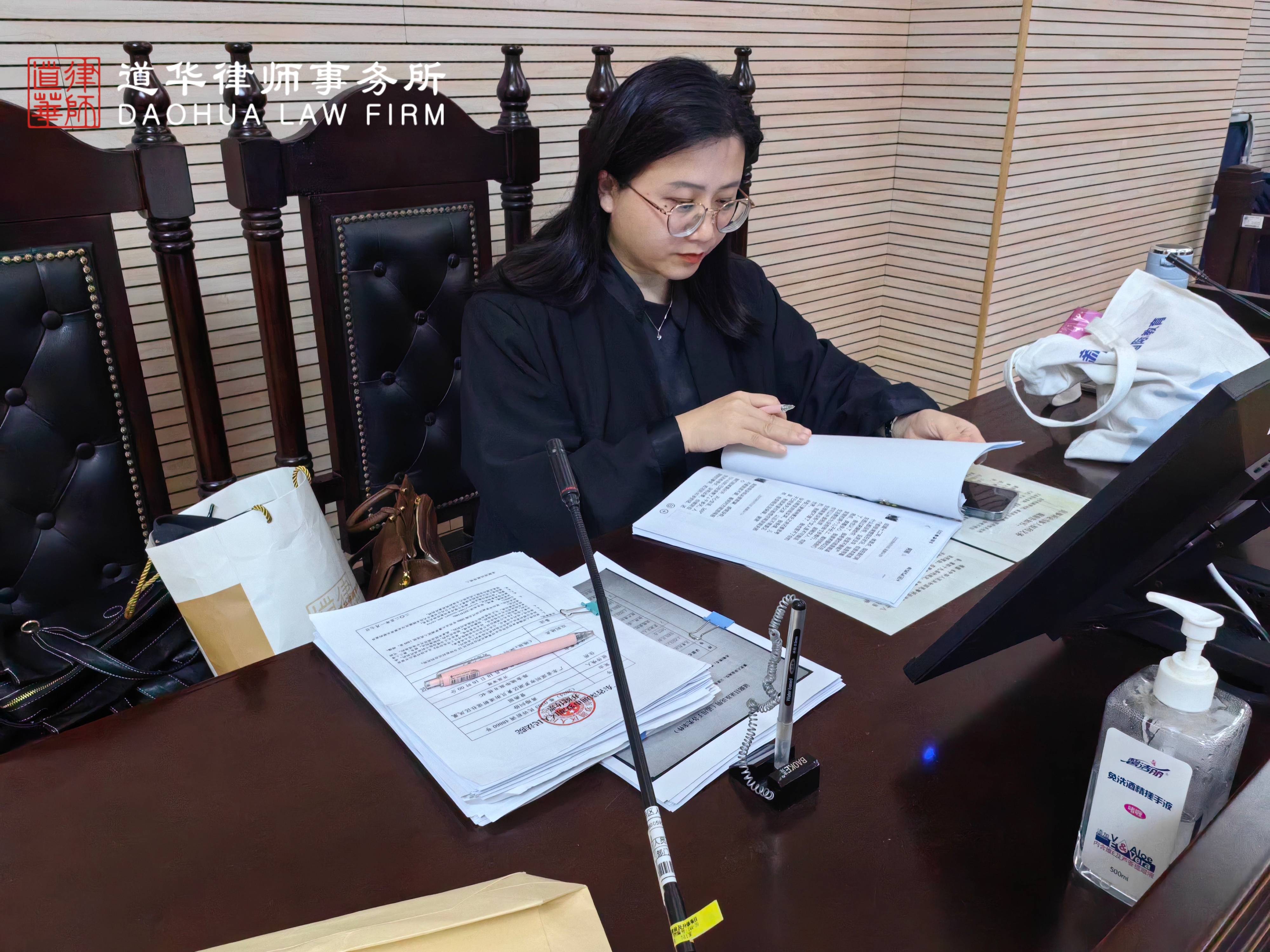
Four, Tang Yunhong lawyer says
1. Legal Analysis of Dividend Dispute in Equity Incentive Case
From the perspective of the judgment logic of this case and the relevant provisions of the "Civil Code" on marriage and family, the identification rules for the omission of property division after divorce are clear and explicit. In combination with the current effective legal provisions and judicial practice, the specific analysis is as follows:
In the aspect of recognizing marital joint property, Article 1062 of the Civil Code of the People's Republic of China is the core judicial basis for this case. The provisions are clear, stating that the production, business, and investment income obtained by the couple during the marriage is considered joint property. The dividends involved originate from the virtual restricted share incentive rights obtained during the marriage, although they are attached to the individual's position and have a personal dependency attribute. However, the dividends were generated within the marriage and are considered property income corresponding to the joint operation and family life, and should be included in the scope of joint property. They should not be owned separately just because the rights are registered in one party's name.
After divorce, the Supreme People's Court's Interpretation (I) on the Application of the "Civil Code of the People's Republic of China" on the Family and Marriage Article, Paragraph 83, makes clear provisions. Unhandled joint property of the couple at the time of divorce, one party may file a separate lawsuit to request division, which does not constitute a repeated lawsuit. In this case, the court distinguishes between the period of income formation and the actual payment time, taking the amount after tax issued by the company as the basis for division, only supporting the division of dividends corresponding to the marital period, not protecting the income generated after the dissolution of marriage, and the logic of judgment is highly consistent with the application of law.
2. Practical experience in case handling
Combining the case at hand and local experience in handling domestic cases, the core difficulties in the disposal of hidden assets such as virtual restricted shares and deferred dividends lie in the determination of ownership of benefits and the fixation of evidence. Most parties tend to overlook such hidden assets during divorce, leading to the need for litigation to resolve property disputes after divorce. In this case, if the objective evidence such as the company's reply letters and transaction records are not fully fixed, it will be impossible to clearly define the period of dividend ownership, which may affect the judgment outcome. Therefore, the primary task in handling such cases is to lock in the time nodes of benefits, improve the evidence chain, which is also the key to ensuring fair property division and avoiding subsequent disputes.
3. Key points for practical risk avoidance
Relying on Daohua's extensive practical experience in local cases, we have summarized key points for avoiding pitfalls in family property matters that are tailored to the reality of Shenzhen and can be directly implemented, helping everyone avoid risks from the source.
In the face of virtual restricted shares and property related to corporate incentive dividends, a comprehensive investigation of relevant marital rights is required, accurately defining the time nodes of income, strictly distinguishing between joint income of the couple and personal exclusive property; at the same time, properly keep written evidence such as shareholding agreements, dividend records, and bank statements, and do not rely on oral agreements to avoid the inability to support claims due to the lack of evidence.
When involved in property division in divorce or pursuing omitted gains after marriage, it is necessary to rationally calculate amounts and reasonably claim rights, and avoid blind disposal or hasty signing of confirmation documents; when encountering difficult issues such as rights identification and evidence improvement, it is recommended to sort out the situation and supplement materials under professional guidance, pre-emptively resolve potential risks, and reduce the costs of disputes and litigation.
4. Professional assistance guidance
From the trial process of this case, it can be seen that the outcome of the divorce property dispute over virtual restricted shares dividends hinges on the definition of income ownership, the completeness of evidence, and the comprehensiveness of property investigation, among other easily overlooked details. Any oversight may lead to passive claims and increase the cost of rights protection. Domestic property disputes intertwine emotions with legal principles, and the new type of property disposal requires precise legal cognition and meticulous practical ability. It is necessary to clarify property boundaries in advance and standardize the preservation of evidence to resolve disputes at the source.
After accumulating extensive experience in new types of domestic property and post-divorce recovery cases, Dao Hua has formed a mature handling logic, excelling in decomposing complex property legal relationships and perfecting the evidence chain. It adjusts the approach to handling cases based on local practices in the Greater Bay Area. Whether it is sorting out divorce property, investigating hidden assets, dividing equity dividends, or pursuing omitted post-marital property, it can rely on solid practical experience, tailor-made case solutions, and provide rigorous and prudent legal control to properly mediate domestic conflicts, stabilize property rights and interests, and offer solid and reliable legal protection for the safety and security of the parties' family properties.
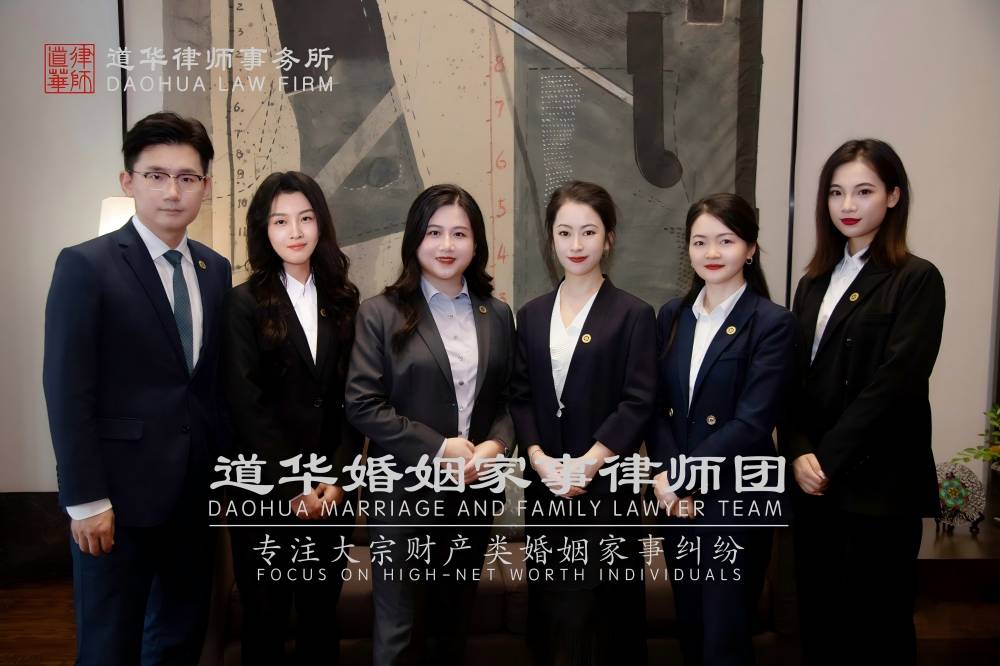
Daohua Family Law Firm (Guangdong Daohua Law Firm), with ten years of focus on major property marriage and family legal services, divorce inheritance family disputes (mediation/trial) practical experts, one of the influential brands of professional legal services in the Guangdong-Hong Kong-Macau Greater Bay Area [Shenzhen local], and even a benchmark lawyer team for mediation and trial in the well-known cross-border divorce inheritance field.
The Tang Yunhong Law Firm has handled over 1000 cases related to marriage and inheritance, involving tens of billions of yuan in amounts. The firm has a wealth of successful trial cases in the fields of dispute resolution, including divorce and division of large properties such as listed company equity, Shenzhen small property rights houses, land, and factories, as well as inheritance disputes, will drafting, and family property inheritance. It is particularly skilled in dealing with industry difficult and painful points such as cross-border property divorce lawsuits and inheritance lawsuits, using localized legal wisdom to overcome various complex domestic property disputes, winning high praise from clients and industry reputation.
Adhering to the philosophy of "securing property safety, preventing legal risks, and empowering wealth appreciation," we gather experts from industries such as law, banking, insurance, and finance and taxation. With rich experience in civil and commercial litigation and arbitration, as well as civil and criminal crossover and tax planning, we provide a comprehensive package of solutions for high-net-worth individuals (including those from Hong Kong, Macau, and foreign nationals) in marriage, family affairs, and wealth inheritance. This is to achieve the beautiful vision of risk prevention and control, debt isolation, and family wealth inheritance.
Asset types include: real estate (residential properties, small property rights houses, land, factories, etc.), movable property (vehicles, antiques, paintings, gold jewelry, etc.), various property rights (cash deposits, equity, debts, relocation compensation, fund investments, virtual property, intellectual property rights, etc.). The team systematically compiles professional achievements such as "Compilation of Successful Cases of Dao Hua Marriage and Inheritance" and "Legal Practice of Family Wealth Transmission", to meticulously protect clients' property rights and interests, and to safeguard the inheritance of family wealth with meticulous service!
Statement:The information or articles published on this website are for exchange purposes only. The names of individuals/companies mentioned in this article are pseudonyms, and the amounts/dates of case information have been processed for confidentiality. The content of the article is created by the author and does not represent legal opinions or suggestions issued by Guangdong Daohua Law Firm or other lawyers. The information contained in this article is provided for general information purposes only, and Guangdong Daohua Law Firm does not make any timeliness modifications or updates to this article. Decisions made by readers based on all or part of the content of this article and the consequences arising therefrom are solely the responsibility of the individuals involved. The author and Guangdong Daohua Law Firm assume no responsibility. If any content of these articles is to be reproduced or cited, please indicate the source. If you need legal advice or legal services, please contact our lawyers.
No registration required, quick appointment, expert lawyers provide customized legal service solutions
 Consultation Appointment:400-829-6880
 Private Space:18126123723
 Law Firm: Guangdong Daohua Law Firm
 Email:DAOHUALAWMF@163.com
 Address:810, Rongchao Economic & Trade Center, 4028 Jintian Road, Futian District, Shenzhen (Next to Civic Center)

18126123723
Follow us anytime, anywhere


