
Navigation
Author: Dao Hua Marriage and Family Law FirmDate: 2026-01-04Reads:times
Marriage inheritance domestic disputes (conciliation/trial) expert
Ten years of focus on; marriage and family legal services for bulk property matters
Guangdong Dao Hua Law Firm, Tang Yunhong, Dao Hua Marriage and Family Law Team, Shenzhen's renowned divorce litigation lawyer, professional inheritance and succession dispute lawyer, Guangdong and Shenzhen's top ten marriage and family law firms, specializing in handling: major and difficult divorce mediation/court litigation, property small property division, will and inheritance disputes, will notarization, divorce property division, post-divorce property disputes, divorce/marital agreement, custody disputes, will inheritance disputes, statutory inheritance disputes, land and property inheritance, rural house demolition inheritance, will drafting, will validity determination, etc., non-litigation and disputes. Service area: Futian, Nanshan, Luohu, Longgang, Bao'an, Longhua, Guangming, Pingshan, Dapeng, Yantian.

Introduction:The case is a dispute over child custody in a cohabitation relationship. After cohabiting and having a child without registering a marriage, the couple separated and had disputes over custody, child support, and retroactive fees. The man filed a lawsuit to claim custody and requested the woman to pay child support and retroactive fees. The woman entrusted the Tang Yunhong legal team at the Guangdong Daohua Law Firm to respond to the lawsuit. The Daohua marriage and family law team adopted a dual strategy of "defending and counterclaiming," building a complete evidence chain from multiple dimensions. Through litigation defense and flexible negotiation, they ultimately successfully secured direct custody of the child for the woman, rejected the man's unreasonable claim for retroactive child support, and comprehensively protected the legitimate rights and interests of the minor children and the parties, achieving the unity of legal and social effects.
Keywords:Joint residence relationship child custody; Illegitimate child custody; Principle of the best interests of the child; Child support disputes; Retroactive child support
One, Case Summary
Ms. Xu and Mr. Zhou fell in love due to work, and later began to live together and had a son together. However, due to objective reasons, they never registered their marriage. As the time of cohabitation went on, conflicts caused by personality differences gradually intensified, and the two eventually parted ways.
After the breakup, the two parties have been unable to reach an agreement on the custody of the child, and the child has been moving between their homes. Subsequently, the child was taken back to the hometown by Mr. Zhou and entrusted to the care of his grandparents. During her visit, Ms. Xu found that there is a significant gap between the living environment and educational resources in the hometown and Shenzhen. In order to provide better guarantees for the child's growth, she brought the child back to Shenzhen and arranged for the child to attend school properly.
However, this action caused dissatisfaction with Mr. Zhou, who filed a lawsuit with the court, claiming direct custody of the child, demanding that Ms. Xu pay child support, and seeking compensation for the child's living expenses during the period when the child lived with her.
Faced with the sudden lawsuit, Ms. Xu fell into anxiety. In order to safeguard her legitimate rights and interests and her child's growth, Ms. Xu sought out the Guangdong Daohua Law Firm by reputation and entrusted the Tang Yunhong legal team to handle the case in full.
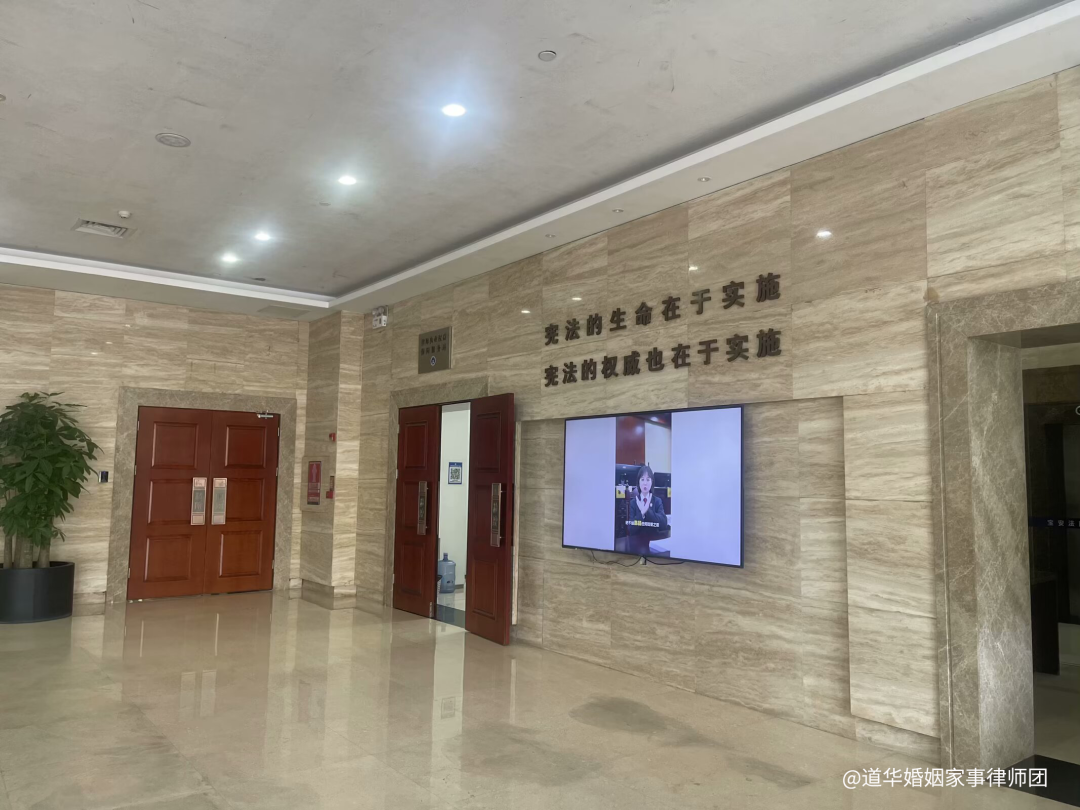
Case core keywords
Shenzhen cohabitation relationship child custody lawyer, Shenzhen custody dispute lawyer, Longgang Court case agency, cohabitation child custody agency, Tang Yunhong marriage and family lawyer, non-marital child custody disputes, child support standard disputes, child support retroactive disputes, Shenzhen visitation rights defense, protection of minors' rights and interests, cohabitation child custody victory, Shenzhen family case agency, Dao Hua Law Firm marriage team, evidence sorting lawyer

Chapter 3: The Process of Handling the Case
(1) Comprehensive review of case details: lock in core disputes, establish a "litigation + counter-suit" dual strategy
After accepting the entrustment, Lawyer Tang Yunhong further communicated with Ms. Xu, sorted out the timeline and key facts of the case background, and then clarified the three core focal points of the case:The determination of custody for illegitimate children, the standards for child support, and whether the claim for retroactive child support is valid.。
In response to Mr. Zhou's lawsuit, the Daohua Family Law Firm did not fall into the conventional mindset of passive litigation. Instead, based on the precise control of the initiative in the case, and in line with Ms. Xu's core needs of "striving for custody and refuting unreasonable child support claims," the firm formulated a dual strategy of "active litigation + proactive counterclaim." It plans to precisely refute the unreasonable claims of the other party through litigation and proactively propose claims for custody and child support through counterclaim, thereby firmly holding the initiative in the rights to safeguard, and avoiding the neglect of core demands due to passive response.
(2) Formulate evidence strategy: construct a closed-loop through hierarchical evidence presentation and target-specificly break through the focal points of disputes
To ensure the implementation of the "counterclaim + counterclaim" strategy, the Daohua Family Law Firm has formulated an "hierarchical classification and precise matching" evidence collection plan, ensuring that each claim is supported by solid evidence and forming a complete evidence loop:
1. Evidence system for "custody attribution"Mr. Tang Yunhong lawyer knows that the core of custody disputes lies in the implementation of the principle of "what is best for the minor child," therefore, he focuses on the three dimensions of "stability of living environment, custody ability, and resources of living place" to build a custody advantage evidence chain.
2. Evidence system for "child support disputes."The Daohua Family Law Firm's team focuses on key points such as "actual needs of the children + financial capabilities of both parents + the actual living standards in Shenzhen," accurately calculates and fixes key evidence. Lawyer Tang Yunhong guided Ms. Xu in categorizing and organizing receipts for the child's education and care expenses, food expenses, medical examinations, and other expenses in the past 6 months, providing a quantitative basis for the reasonable alimony claim in the counter-suit; at the same time, after initially understanding Mr. Zhou's income situation, the firm applied to the court to obtain his income and social security payment records, providing sufficient factual support for the alimony claim in the counter-suit.
3. Evidence system for "retroactive child support."Based on the understanding of the case in the early stage, during the period when the child was directly cared for by the male party, although Ms. Xu did not directly pay child support to the male party, she purchased daily necessities for the child, undertook medical expenses, and handled enrollment matters. Her contributions to the child were not only monetary but also emotional companionship. The Daohua Family Law Firm team was keen to capture this key point, comprehensively collecting Ms. Xu's online shopping orders, shopping mall invoices, child medical insurance payment records, and enrollment procedure receipts during the period when the child was directly cared for by the male party, arguing that she had always actively fulfilled her parental responsibilities. Secondly, the Daohua Family Law Firm team carefully reviewed the chat records between Ms. Xu and Mr. Zhou, confirming that neither party had reached any written or oral agreement on child support previously. By combining the principle of fairness, the team argued the unreasonableness of the party with direct custody demanding the other party to make up for the child support. Additionally, they provided judicial opinions as support through case search.
(3) Courtroom offensive and defensive strategies and counterclaim claims: Professional confrontation controls the rhythm, flexible negotiation takes into account practical effectiveness
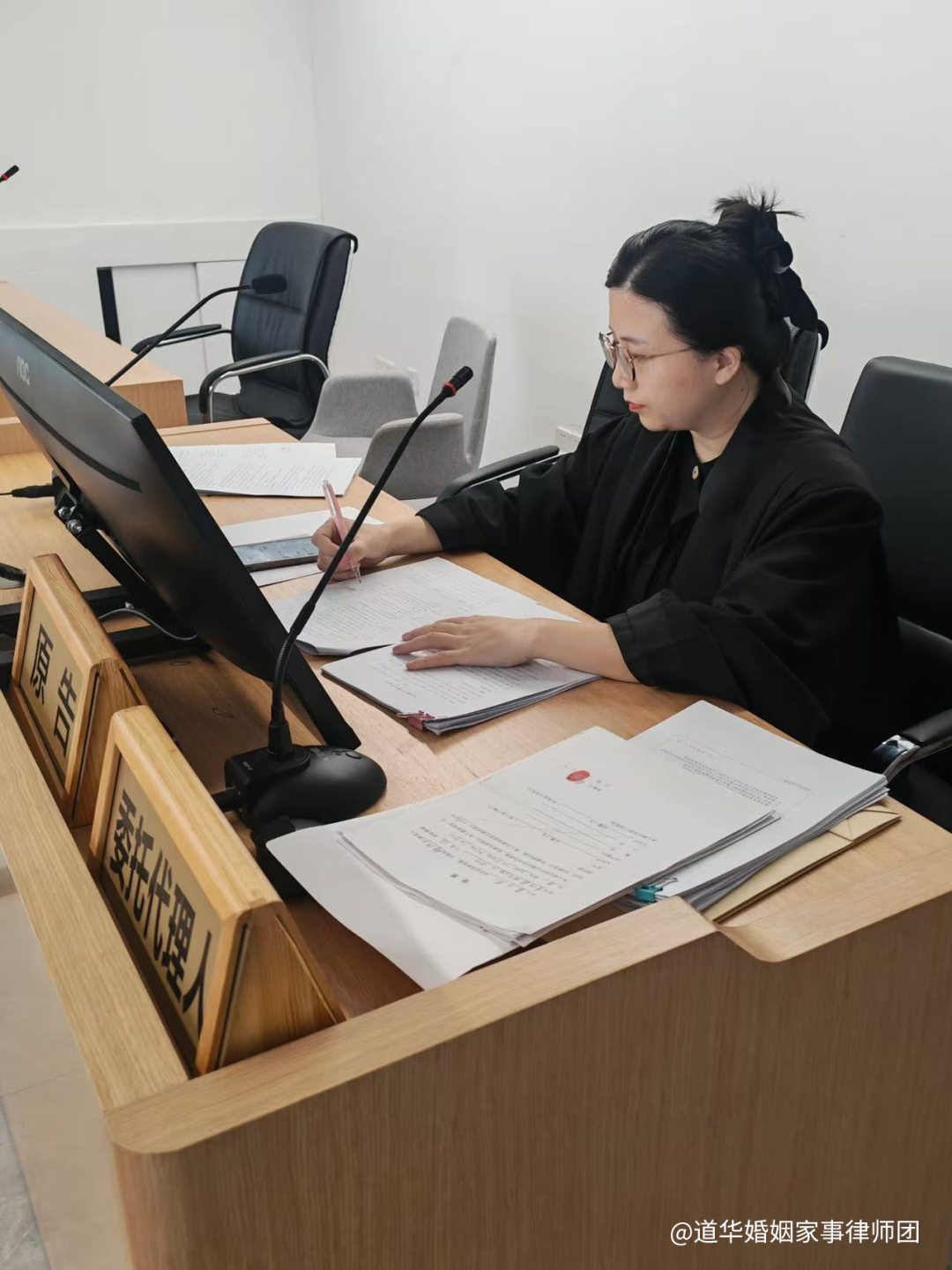
In the trial, Tang Yunhong, lawyer, with solid legal foundation and rich trial experience, accurately controlled the pace of the trial, simultaneously advancing the defense and counterclaim, demonstrating a high level of professional quality:
At the early stage of the trial, Tang lawyer first clearly put forward the counterclaim request, logically elaborating on the core advantages of Ms. Xu in raising the child based on the principle of "most favorable to the minor child." Through a step-by-step argumentation, the lawyer allowed the judge to directly recognize the core view that "it is more beneficial for the child to live with Ms. Xu," occupying a favorable position from the beginning of the trial. By presenting the detailed monthly expenses of the child and the living cost data in Shenzhen on the spot, the lawyer used objective facts to prove that the amount claimed by Mr. Zhou is insufficient to cover the child's basic needs and lacks rationality. In response to Mr. Zhou's lawsuit request, Tang lawyer responded one by one with the evidence chain, refuting with reasonable arguments and hitting the core: when refuting the custody claim, the lawyer highlighted Mr. Zhou's disadvantages of "being busy with work, having plans to remarry, and being unable to guarantee companionship time," forming a sharp contrast with Ms. Xu's stable companionship and professional child-rearing abilities; when refuting the alimony retroactive claim, the lawyer systematically presented evidence of Ms. Xu's fulfillment of the custody obligations, combining legal provisions and the principle of fairness to effectively refute this claim.
(Four) Follow-up on judgment execution: Professional escort to ensure rights and interests are realized, long-term guarantee to avoid future problems
After the court judgment was issued, the Tang Yunhong legal team did not stop at the judgment result but, from the perspective of long-term protection, provided targeted legal advice to Ms. Xu, sorted out the execution details, and ensured that her rights and interests were actually implemented: This included assisting Ms. Xu in establishing a "child support payment ledger," specifying the amount, deadline, and subsequent monthly payment time for Mr. Zhou's child support payments, reminding her to timely collect evidence such as payment records and bank statements; reminding Ms. Xu to regularly keep records of large educational and medical expenses for the child, so that she can claim an increase in child support in the future according to the law; and assisting Ms. Xu in negotiating with Mr. Zhou to formulate a specific and feasible visitation execution plan, specifying the specific time and handover method for video visits and face-to-face visits, to avoid new disputes arising from visitation issues in the future.
Four, judgment result
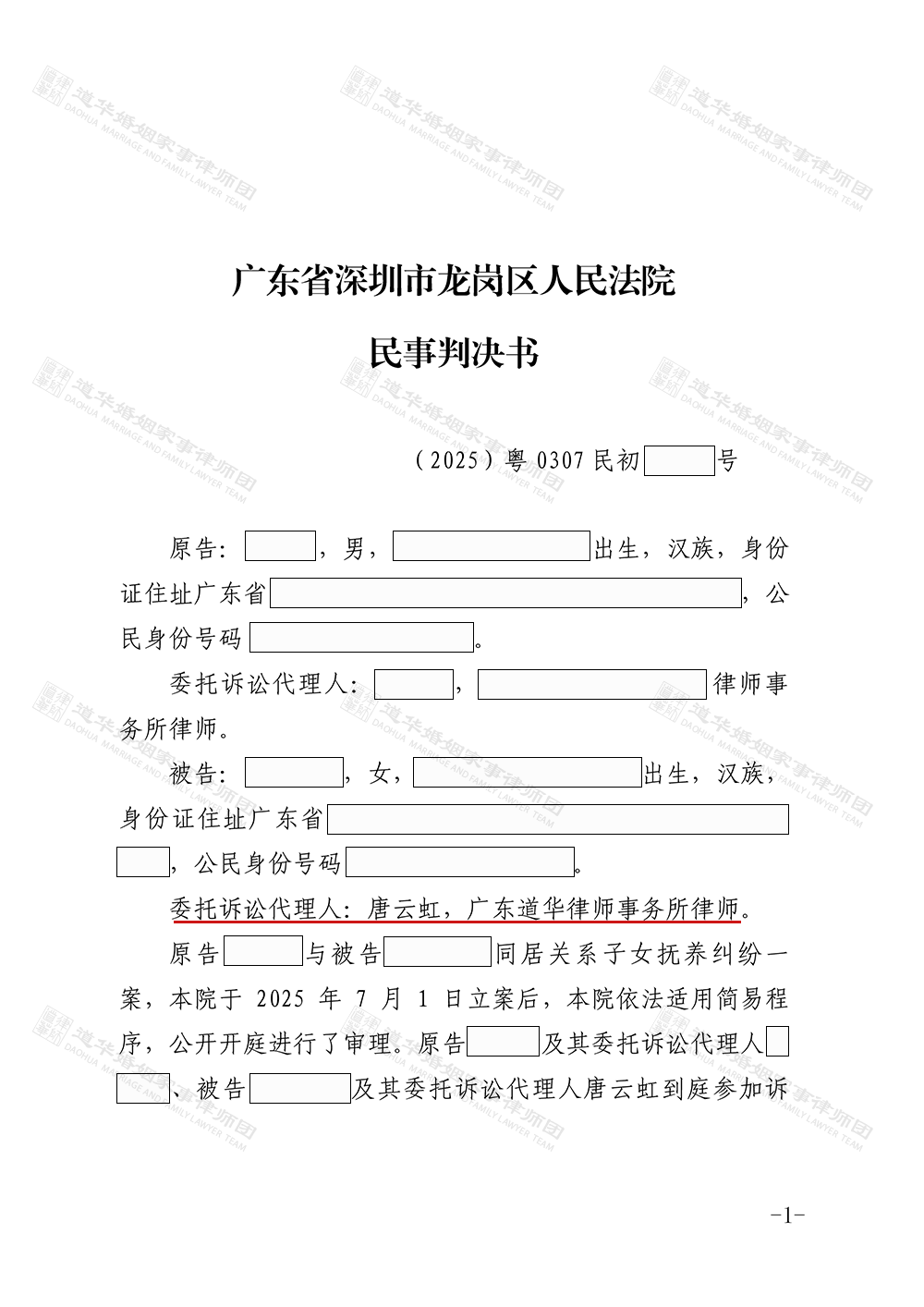
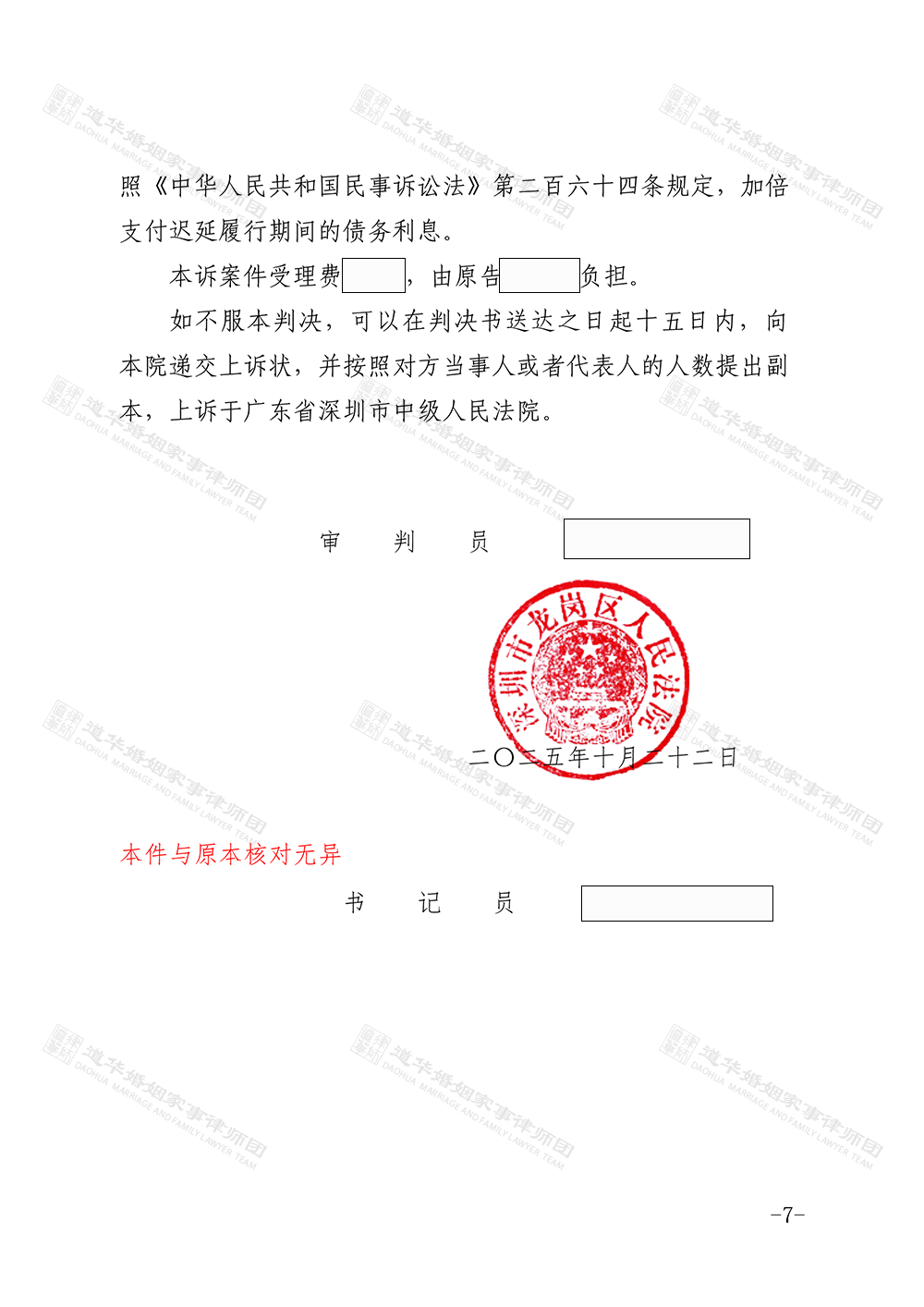
After hearing the case, the court fully adopted the counterclaim and defense opinions of the Tang Yunhong legal team and made clear judgments focusing on the three major controversial issues:
In this case, both the plaintiff and the defendant have the intention of direct custody. Considering factors such as the guardian's ability to care, the continuity and stability of life, and the planning for both parties' future lives, the court believes that maintaining the existing custody relationship is most in line with the principle of maximizing the interests of the minor. Therefore, it is more appropriate for the child to continue to be directly cared for by the defendant. Regarding the amount of child support, the court, based on the actual needs of the child, the financial burden of both parents, and the local standard of living, determines that the child should receive 3,000 yuan in child support per month. The plaintiff shall pay 3,000 yuan in child support per month starting from September 2025 until the child reaches the age of 18. Regarding the plaintiff's claim for child support from May 2024 to August 2025, considering that no agreement was made regarding child support issues after the separation, and both parties had periods of direct custody of the child, from the perspective of fairness, the court believes it is not appropriate to support the previous child support.
V. The Tang Code Interpretation
Tang Yunhong, lawyer, pointed out that there are significant differences between disputes over child custody in cohabitation relationships and disputes over child custody under marital relationships, with the core characteristic being...Lack of legal constraints on marriage registration, unclear property and custody agreements, and the stability of children's lives often affected.Therefore, handling such cases requires a close focus on their particularity,Following the fundamental principle of "what is most beneficial to the minor children," while also taking into account the legitimate rights and interests of the parties, achieving the organic unity of "empathy, reason, and law."。
The core characteristics and coping logic of child custody disputes in cohabitation relationships
1. The equal rights of illegitimate children are the legal bottom line:Although there is no marital relationship between the two parties, the children born out of wedlock enjoy equal rights in terms of custody, education, inheritance, and so on. This legal principle is the core basis for the protection of rights. Lawyers must clearly inform the parties of the boundaries of these rights during the handling of cases, and at the same time, ensure through professional strategies that the quality of life and educational resources of the children are not affected by the dissolution of the cohabitation relationship between the parents.
2. The principle of being most favorable to the child is the key to custody disputes:The principle of being most beneficial to the children is the core criterion for considering the custody of the children. When there is a conflict between the rights of the parents and the interests of the children, the fundamental rights of the children, such as the right to survival and the right to development, should take precedence. Therefore, in the construction of evidence, the "most beneficial to the children" evidence chain can be established through the combination of "stability of living and learning environment + custody ability and conditions," to prove the fact that it is more beneficial for the children to live with the party.
3. The lack of agreements is the main pain point:Both parties in cohabitation usually do not make clear written agreements on issues such as child custody and property distribution. Once they separate, disputes are likely to arise over the standards for child support, payment methods, and retroactive periods. This requires lawyers to focus ondigging into "actual performance" evidence in handling cases, such as records of child custody and expense receipts, to fill the gap of missing agreements and provide factual evidence for the judgment.
(2) Professional advice to the parties
At the same time, Lawyer Tang reminds that in a cohabitation relationship where children are born, both parties should strive to make clear written agreements on custody issues, including the ownership of custody, the standards of child support, the payment methods, and visitation rules, to avoid disputes in the future. If a dispute has already arisen, the following three points should be noted:
1. Timely fix key evidence:Including birth certificates of children, residence records, educational and medical proof, records of self-care behavior (such as expense receipts, accompanying photos), and income proof of the other party, providing factual support for the rights protection.
2. Avoid frequent changes in the living environment of children:Strive to maintain the stability of the children's residence and education, and if a change is indeed necessary, reasonable reasons and relevant evidence should be retained to avoid disputes over custody due to changes in the environment.
3. Prioritize professional legal assistance:The legal application and evidence requirements for disputes over the custody of cohabiting children are special. Professional lawyers can formulate targeted strategies based on the characteristics of the case, through professional operations such as counter-suits, evidence construction, and trial offensive and defensive tactics, to maximize the protection of the legitimate rights and interests of the parties and children, and avoid rights and interests being damaged due to self-handling.
Chapter 6, Index of Relevant Laws and Regulations
1. The Civil Code of the People's Republic of China
Article 1071:Illegitimate children enjoy equal rights with legitimate children, and no organization or individual may harm or discriminate against them. The father or mother who does not directly care for the illegitimate child shall bear the child support for the minor child or the adult child who cannot live independently.
Article 1084, third paragraph:Children who are over two years old, if the parents cannot reach an agreement on custody issues, the People's Court shall make a judgment according to the specific circumstances of both parties, in accordance with the principle that is most favorable to the minor children. For children who are over eight years old, their true wishes should be respected.
Article 1085:After divorce, if the child is directly cared for by one party, the other party shall bear part or all of the child support. The amount of the support and the duration shall be agreed upon by both parties; if they cannot reach an agreement, the People's Court shall decide. The agreement or judgment specified in the preceding paragraph shall not prevent the child from reasonably requesting an amount exceeding the original agreed or judged amount from either parent when necessary.
Article 1086:After divorce, the parent without direct custody of the child has the right to visit the child, and the other party has the obligation to assist. The methods and time for exercising the right to visit are agreed upon by the parties; if they cannot reach an agreement, the People's Court shall decide. If the parent's visitation is detrimental to the child's physical and mental health, the People's Court shall, in accordance with the law, suspend the visitation; after the reasons for the suspension are eliminated, the visitation shall be resumed.
2.The Interpretation (I) of the Supreme People's Court on the Application of the Marriage and Family Article of the Civil Code of the People's Republic of China
Article 46:For minors over two years of age, if both parents demand direct custody, priority may be given to one party under the following circumstances: (1) has undergone sterilization surgery or lost the ability to reproduce for other reasons; (2) the child has lived with the party for a longer period of time, and changing the living environment would be obviously detrimental to the child's healthy growth; (3) has no other children, while the other party has other children; (4) living with the party is beneficial to the child's growth, while the other party has incurable infectious diseases or other serious illnesses, or has other circumstances that arenot favorable to the child's physical and mental health, and is not suitable to live with the child.
Article 49:The amount of child support may be determined based on the actual needs of the child, the financial capacity of both parents, and the local standard of living. For those with a fixed income, child support is generally paid at a percentage of 20% to 30% of their monthly total income. For those responsible for supporting two or more children, the ratio may be appropriately increased, but generally should not exceed 50% of the monthly total income. For those without a fixed income, the amount of child support may be determined based on the total income of the year or the average income in the same industry, and referred to the aforementioned ratio. In special circumstances, the aforementioned ratio may be appropriately increased or decreased.
3.The Civil Procedure Law of the People's Republic of China
Article 54:The plaintiff may abandon or alter the claims. The defendant may admit or dispute the claims, and has the right to file a counterclaim.
The team has handled over 1000 cases related to marriage inheritance, and has extensive experience in dispute resolution fields such as complex marriage and family matters, inheritance disputes, will drafting, and family property distribution. Utilizing local wisdom, the team is skilled in dealing with difficult divorce property division cases involving Shenzhen's small property rights houses, village committee shares, will drafting and notarization, and inheritance disputes, winning unanimous praise from clients.
Adhering to the philosophy of "securing property safety, preventing legal risks, and empowering wealth growth," we gather experts from industries such as law, banking, insurance, and finance and taxation. With a wealth of successful cases, we provide a comprehensive package of solutions for high-net-worth individuals (including those from Hong Kong, Macau, and foreign nationals) in marriage, family affairs, and wealth inheritance, to achieve the beautiful vision of risk prevention and control, debt isolation, and family wealth inheritance.
Asset types include: real estate (commercial housing, small property rights housing, land use rights, etc.), various property rights (equity, debt, relocation compensation, copyright, invention patents, etc.).
The team has completed the compilation of "A Collection of Successful Cases of Dao Hua Marriage and Inheritance" and "Legal Practice of Family Wealth Transmission," achieving remarkable achievements in both legal practice and theoretical research.
Statement:The information or articles published on this website are for exchange purposes only. The names of individuals/companies mentioned in this article are pseudonyms, and the amounts/dates of case information have been processed for confidentiality. The content of the article is created by the author and does not represent legal opinions or suggestions issued by Guangdong Daohua Law Firm or other lawyers. The information contained in this article is provided for general information purposes only, and Guangdong Daohua Law Firm is not responsible for making timely modifications or updates to this article. Decisions made by readers based on all or part of the content of this article and the consequences arising therefrom are solely the responsibility of the individuals involved. The author and Guangdong Daohua Law Firm assume no responsibility. If any content of these articles is to be reproduced or cited, please indicate the source. If you need legal advice or legal services, please contact our lawyers.
No registration required, quick appointment, expert lawyers provide customized legal service solutions
 Consultation Appointment:400-829-6880
 Private Space:18126123723
 Law Firm: Guangdong Daohua Law Firm
 Email:DAOHUALAWMF@163.com
 Address:810, Rongchao Economic & Trade Center, 4028 Jintian Road, Futian District, Shenzhen (Next to Civic Center)

18126123723
Follow us anytime, anywhere


