
Navigation
Author: Dao Hua Marriage and Family Law FirmDate: 2025-03-06Reads:times
One, Case Review
At the end of 2022, a 70-year-old father had an unexpected ten-year-old illegitimate child, which caused a huge stir within the family, with all the children unable to believe this fact. Moreover, the appearance of the illegitimate child was also very sensitive, as the Liang family was discussing the distribution of a small property house under the father's name located in Bao'an District, Shenzhen at the time. The appearance of the illegitimate child undoubtedly cast a shadow over the family. As the eldest son, Mr. Liang had initially reached an agreement with the family members, and normally, the house should have belonged to him and his younger brother and sister. However, the appearance of the illegitimate child meant that the distribution process and shares of the house would have to be redistributed again. Mr. Liang also knew that illegitimate children have the same inheritance rights as legitimate children, which means that in the future, if inheritance occurs, the share of the house will include a portion for the illegitimate child, facing the risk of losing the house. Mr. Liang felt unable to accept this and had been supporting his parents all along. Now, facing the sudden appearance of his father's illegitimate child, Mr. Liang was at a loss. Moreover, the complexity of the case is further compounded by the fact that the involved house is a small property house, which cannot be registered as real property and cannot be legally traded. Mr. Liang has entrusted the handling of the case to the Dao Hua Marriage and Family Law Firm.
Two, Dao Hua Lawyers' Intervention, Comprehensive Summary of Dispute Focuses as Follows
1、Inheritance Rights of Legitimate and Illegitimate Children?
According to Article 1270 of the Civil Code of our country, illegitimate children enjoy the same rights as legitimate children, and no organization or individual may harm or discriminate against them.
Tang Lawyer points out that this provision of the law explicitly states that illegitimate children and legitimate children enjoy equal rights, which means that after the death of Mr. Liang's father, the illegitimate child will have the same inheritance rights as the legitimate children. Therefore, from a general inheritance perspective, it is difficult to fundamentally circumvent the inheritance rights of the illegitimate child and ultimately achieve Mr. Liang's诉求. At the same time, according to Article 1223 of the Civil Code, inheritance shall be handled in accordance with the statutory succession; where there is a will, it shall be handled in accordance with the testamentary succession or donation; where there is a donation and support agreement, it shall be handled in accordance with the agreement. This provision of the law also clearly states that inheritance shall be based on the distinction between statutory succession and testamentary succession, which also provides another solution for solving Mr. Liang's troubles.
2、The Nature of Small Property Houses, Can Normal Inheritance and Distribution Procedures Be Implemented?
After two rural urbanization transformations in 1992 and 2004, all rural collective land in Shenzhen has been converted to state-owned land. Therefore, from the perspective of land occupation, Shenzhen no longer has the concept of "small property houses" in the usual sense. However, due to historical legacy and the slow progress of old city reconstruction, a large number of lands in Shenzhen are still held by villagers and village collectives, and the term "small property houses" is often widely used. This includes illegal constructions without legal construction permits and without property registration, as well as legal construction permits for farmer houses, fund-raising houses, and affordable houses, etc.
While in this case, the property owned by Mr. Liang's father is a private house of a historical illegal building that has been upgraded through the declaration of the historical legacy of illegal buildings, and in view of the characteristics of the house, the People's Court usually rejects the claim for the confirmation of the sale and transfer of the house due to the lack of final confirmation of ownership by the administrative authorities. Therefore, in this case, in order to avoid the inheritance of a natural child, it is necessary to sever the connection between the natural child and the property through legal means. The characteristics of the house involved make it difficult for a series of ordinary economic contracts, including sales and gifts, to take effect, and it is impossible to avoid the possibility of the natural child inheriting the house through property transfer. To avoid the inheritance of a natural child, legal measures must be taken to sever the connection between the natural child and the property. The characteristics of the house involved make it difficult for a series of ordinary economic contracts, including sales and gifts, to take effect, and it is impossible to avoid the possibility of the natural child inheriting the house through property transfer.III. Comprehensive Analysis and Judgment, Daohua Family Law Attorneys Seek Breakthrough Points in the Case
1. From the perspective of marital and family contracts, draft marital agreements to clarify property ownership and legally block the inheritance path of a natural child.
It can be clearly seen from the aforementioned analysis that both the natural child and the legitimate child have equal inheritance rights to Mr. Liang's property, and due to the characteristics of the house involved, it is difficult to avoid the inheritance issue of the natural child through ordinary contracts such as sales and gifts. Therefore, based on his understanding of the small property rights policy and his extensive experience in resolving disputes related to small property rights, Tang Lawyer believes that although small property rights are prohibited from sales and gifts, they do not restrict marital agreements. The house involved was jointly built by Mr. Liang and his wife, Mrs. Feng, after marriage, and belongs to the joint property of the married couple. Since there is no ownership registration and it cannot be transferred, it is proposed to use the marital and family contract as a stepping stone to change the small property rights house owned by the couple into Mrs. Feng's personal property through a marital agreement, thereby severing the connection between the natural child and the property, and effectively preventing the possibility of the natural child seizing the property as Mr. Liang's son.
This method through the conclusion of a marital agreement, Tang Lawyer cleverly achieved the transfer of ownership of the small property rights house involved, and the clear content of the agreement also successfully blocked the inheritance path of the natural child for the house involved. Moreover, the issuance of the marital agreement did not disrupt the current rental management matters of the house involved by Mr. Liang's family, nor did it destroy the stability and harmony of the family. Daohua Lawyers took a different approach, resolving the issue of property division through marital contracts, thereby solving the difficult problem that plagues countless lawyers. Thanks to Daohua Lawyers' extensive professional knowledge and thorough case research, they successfully developed the solution of marital agreements, laying the foundation for the subsequent drafting of wills and the smooth division of property in this case.
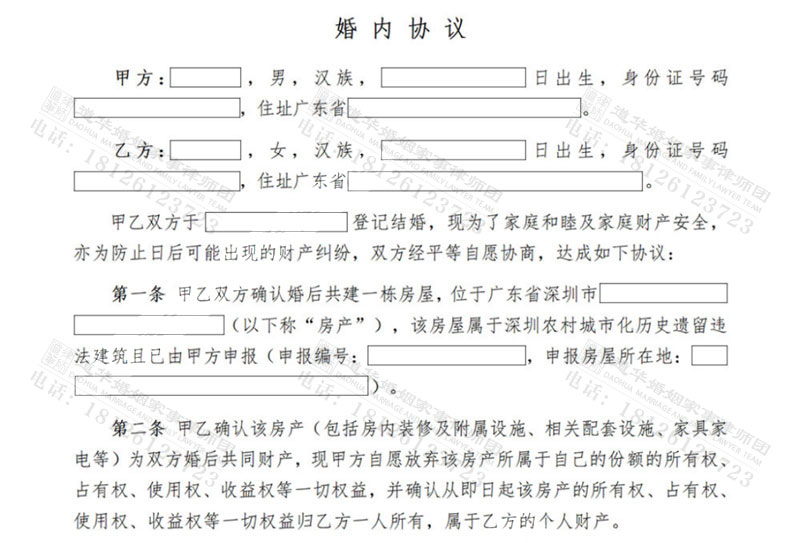
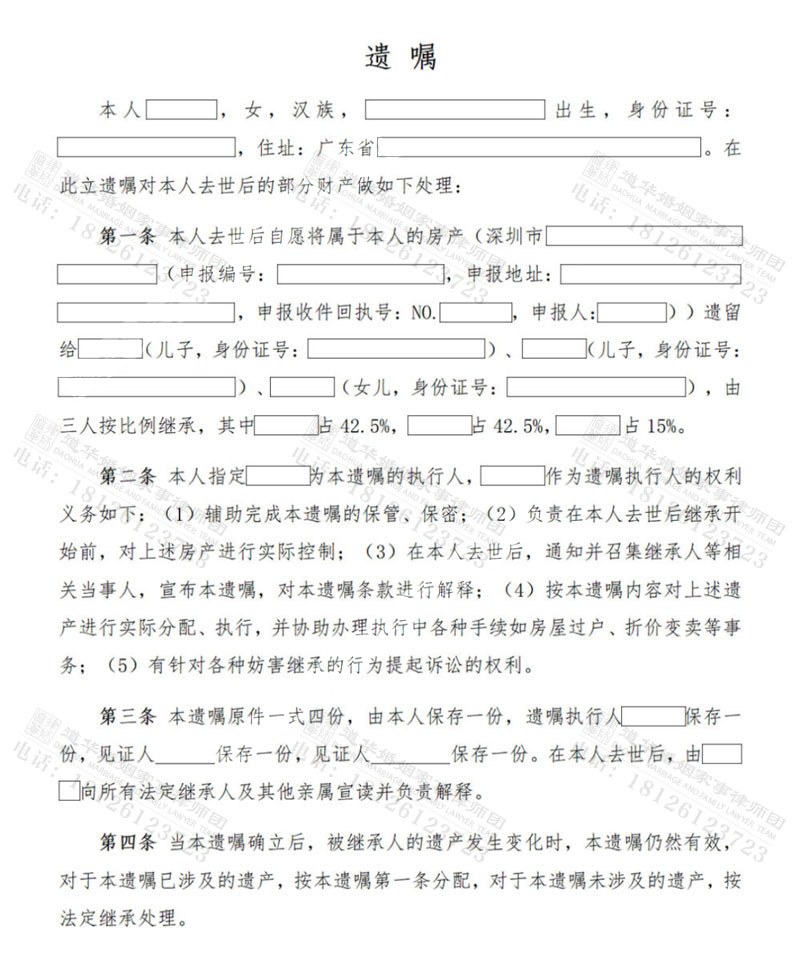
2. Ms. Feng establishes a will to distribute the inheritance share of the house involved, perfectly achieving Mr. Liang's request.
By entering into a marital agreement, successfully separating the private child of Mr. Liang's from the inheritance of the small property rights house involved in the case, but for Mr. Liang, the issue of the distribution of the house involved in the case has not been finally resolved. Therefore, Tang Lawyer took advantage of the momentum, taking advantage of the high attention of the family to the house involved in the case and the absence of disputes in the distribution, through the form of a will by Ms. Feng, the small property rights house allocated by the marital agreement was distributed through a will. Under the premise of putting other property disputes on hold, a will was separately made for the house involved in the case. On the one hand, it successfully achieved Mr. Liang's诉求, and on the other hand, it also preserved the autonomy of the parties. The remaining property was handled internally by the family. This concept of Tang Lawyer also reflects the consistent philosophy of the Daohua Family Law Firm, that is, mediation as the main strategy and litigation as the auxiliary strategy. In the field of marriage and family law, it cannot be emphasized that litigation is the only solution. It is necessary to find multiple breakthroughs based on the characteristics of marriage and family law. Therefore, in this case, after the property rights of the house involved in the case changed from the joint property of the couple to Ms. Feng's personal property, the Daohua lawyers only distributed the will for the house. For the rest of the property, it was negotiated and confirmed internally by the family. While achieving the client's诉求, it also fully guarantees the autonomy of the parties.
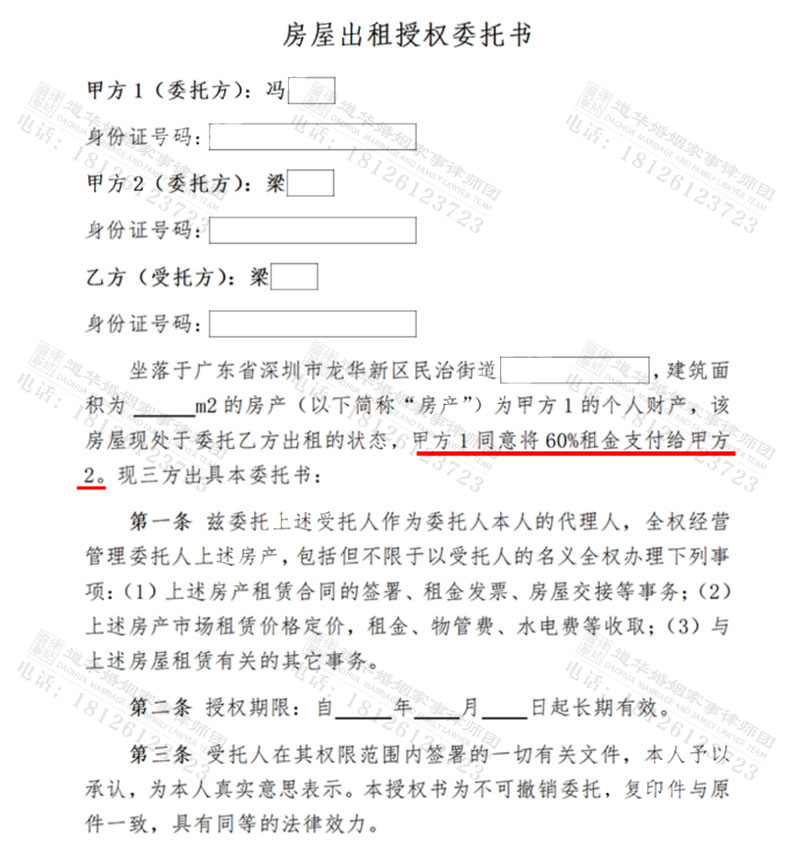
Four, concerns during the process of signing the agreement, Mr. Liang's father worried about being left without support in old age and having no one to support him, so the Daohua lawyers communicated with the parties and again resolved the issue of elderly support through the signing of a rental agency agreement.
After drafting the marital agreement, the originally cooperative Mr. Liang suddenly changed his attitude and refused to sign the marital agreement. The Daohua lawyers patiently communicated with Mr. Liang, understanding his concerns about not signing the marital agreement. It turned out that this house has always been in a rented state, and the monthly rent has been the main source of income for Mr. Liang. However, now if Mr. Liang signs the marital agreement with his wife, he will no longer have a share of this house, which will belong to his wife, Ms. Feng. In this way, his source of income will be guaranteed, and the over-seventy-year-old Mr. Liang worries about facing the situation of being left without support in the future.
Although Mr. Liang and Ms. Feng are married, without the regulation of a legal contract, Mr. Liang dared not take this risk. After understanding Mr. Liang's concerns, the Daohua lawyers quickly discussed solutions, at the same time informed Ms. Feng and the client of Mr. Liang's concerns. Through the tireless efforts of the Daohua lawyers, repeated communication with the client's family, continuous coordination of interests, and easing the relationship between the client and Mr. Liang, constructive solutions were proposed to promote a win-win situation for all parties. Ultimately, the client expressed understanding and agreed to pay the rent to Mr. Liang as alimony. With the help of the Daohua lawyers, both parties reached an agreement on the rent share, agreeing that the client would act as the agent for renting and that the rent collected must be distributed to Mr. Liang according to the authorization letter for renting the house, which he holds during his lifetime. In this way, both the risk of the private child fighting over the property and Mr. Liang's concern about being left without support in old age were resolved. The Daohua lawyers successfully resolved Mr. Liang's concerns by actively communicating with the parties, drafting the authorization letter for renting the house, and perfectly satisfying the demands of both parties, ensuring their interests, and avoiding legal risks.
Five, insights from the case handling
Shenzhen, due to its special historical reasons, has a large number of private rural houses. In response to this type of architecture, the Shenzhen Housing and Urban-Rural Construction Bureau and the Shenzhen Planning and Natural Resources Bureau jointly issued the "Notice on Strengthening the Investigation and Handling of Transactions of Residential Historical Illegal Buildings," which contains several points related to residential historical illegal buildings. The core content includes four points: community stock cooperation companies shall not affix their official seal or issue relevant proof for the transaction documents of residential historical illegal buildings; notary institutions and law firms shall not provide notarization or witnessing services for illegal transaction activities.
Lawyer Tang Yunhong believes that the legal relationship between the two parties in this case is not complicated, but the handling of the controversial property subject is very complex. The situation of Shenzhen's small property houses is complex, with various situations such as "green books," "two certificates and one document," and "historical legacy receipt." Green book houses, based on their non-market commercial housing attributes, although they belong to a type of small property houses, are consistent with commercial houses with real estate certificates in inheritance, and the house ownership can be inherited by will/legacy or by legal inheritance; while for small property houses such as "historical legacy receipt" that have not been registered for property rights, because they do not have a legal ownership certificate, the general practice is to directly inherit the ownership of the house, but the usufruct can be inherited.
Lawyer Tang Yunhong points out that the small property house in this case was transferred to the name of Grandma Feng through a marital agreement to prevent the inheritance of the illegitimate child. At the same time, as a marriage and family case, it is important to avoid the seizure of property by the illegitimate child through contracts, but it is equally important to mediate the family conflicts between the parties. Balancing money and human feelings is the key to a perfect resolution of this case. For the legal team, drafting the small property house contract requires a strong professional level, and communication between parents and children requires the lawyer to have sufficient wisdom to resolve disputes.
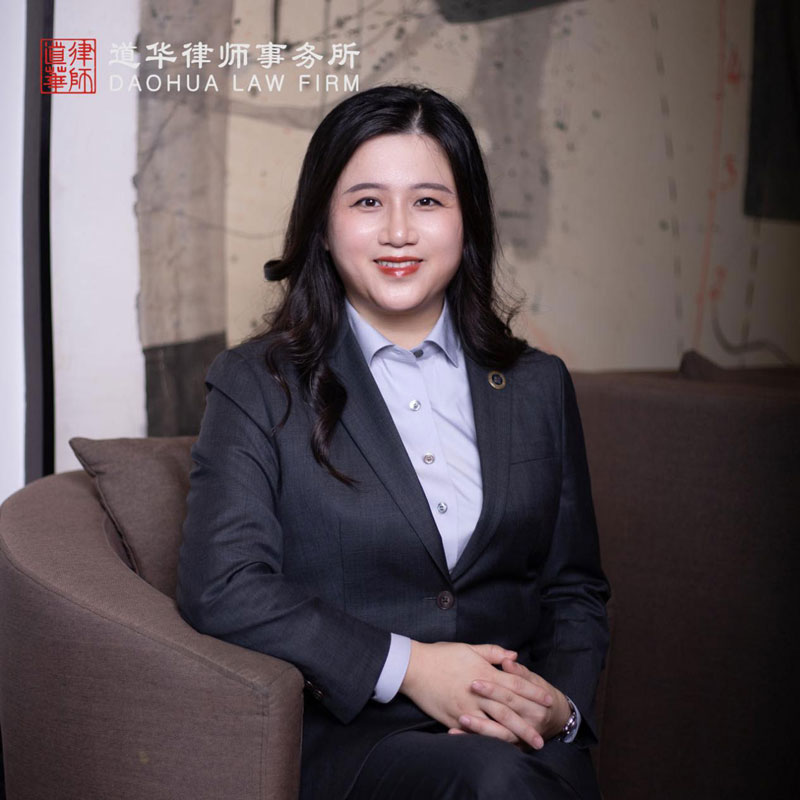
(Lawyer Tang)
Sixth, Index of Relevant Laws and Regulations
1. Article 1071 of the Civil Code of the People's Republic of China: "Non-marital children have the same rights as marital children, and no organization or individual may harm or discriminate against them."
2. Article 1127 of the Civil Code of the People's Republic of China: "The term 'children' in this Code includes marital children, non-marital children, adopted children, and stepchildren with foster care relations."
3. Article 216 of the Civil Code of the People's Republic of China: "The real estate registration book is the basis for the ownership and content of property rights. The real estate registration book is managed by the registration authority."
4. Article 12 of the "Land Management Law of the People's Republic of China" stipulates: "The registration of land ownership and use rights shall be implemented in accordance with relevant laws and administrative regulations on real property registration. The land ownership and use rights registered in accordance with the law shall be protected by law, and no unit or individual may infringe upon them."5. Article 2 of the "Notice on Strengthening the Investigation and Handling of Transactions of Illegal Buildings of Historical Heritage in Residential Areas" provides: "Notary offices and law firms shall not provide notarization or witness services for the transaction of illegal buildings of historical heritage in residential areas. The judicial administrative department shall strengthen the supervision over the notarization and witness services of notary offices and law firms, and resolutely investigate and handle the acts of providing notarization and witness services in violation of laws and regulations."
6. Article 1 of the "Decision of the Standing Committee of the Shenzhen Municipal People's Congress on Resolutely Investigating and Handling Illegal Buildings" defines: "Illegal buildings refer to buildings and structures constructed without the approval of the planning and natural resources department, without obtaining a construction planning permit or a temporary construction permit, and constructed arbitrarily."
7. Article 4 of the "Measures for the Acquisition of Complete Ownership and Listing of Economic Applicable Housing in Shenzhen" provides: "For the right holder of economic applicable housing to apply for the acquisition of complete ownership or listing for trading, it is required to meet the following conditions simultaneously: (1) The applicant is the right holder of the "Real Estate Certificate" or "Real Property Certificate" (non-market commercial housing) registered for economic applicable housing, and has been agreed upon in writing by other right holders; (2) The sales contract has been signed for 5 years; (3) If a mortgage loan is taken out and a mortgage is set up to purchase this set of economic applicable housing, the written consent of the mortgagee is required; (4) There are no circumstances that may not be accepted for the application for the acquisition of complete ownership of housing or listing for trading as stipulated by laws, regulations, and contractual agreements; (5) Other conditions stipulated by laws, regulations, and normative documents."
Seven, Team Introduction
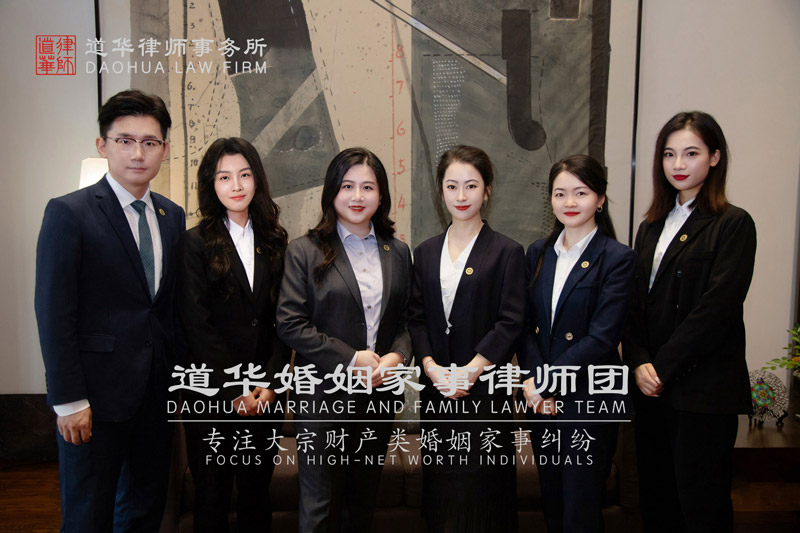
Dahua Marriage and Family Law Firm, focusing on ·marriage and family legal services for large-scale property for ten years, is a实战 expert in marriage inheritance and family disputes (mediation/court litigation), and one of the influential brands in marriage inheritance and wealth management legal services in [Shenzhen local].
The team has handled over 1000 cases of marriage inheritance, and has rich practical experience in mediation and litigation in complex and difficult marriage and family disputes, inheritance disputes, will drafting, and family property distribution. The team is skilled in handling difficult divorce property division cases involving Shenzhen small property rights houses, village committee shares, will drafting and notarization, and inheritance disputes, winning unanimous praise from clients.
Adhering to the concept of “guaranteeing asset security, preventing legal risks, and empowering wealth growth,” the team gathers experts from the legal, banking, insurance, and tax industries, has rich successful cases, and provides a comprehensive one-stop solution for marriage and family and wealth inheritance for high-net-worth individuals (including Hong Kong, Macau, and foreign nationals), to achieve the beautiful vision of risk prevention and control, debt isolation, and family wealth inheritance.
Asset types cover: real estate (commercial housing, small property rights houses, land use rights, etc.), various property rights and interests (equities, debts, relocation compensation, copyrights, invention patents, etc.).
The team has completed the compilation of Dahua Marriage and Inheritance Successful Case Compilation and Legal Practice of Family Wealth Inheritance, and has made outstanding achievements in both legal practice and theoretical research.
No registration required, quick appointment, expert lawyers provide customized legal service solutions
 Consultation Appointment:400-829-6880
 Private Space:18126123723
 Law Firm: Guangdong Daohua Law Firm
 Email:DAOHUALAWMF@163.com
 Address:深圳市福田区金田路4028号荣超经贸中心810(市民中心旁)

18126123723
Follow us anytime, anywhere


