
Navigation
Author: Dao Hua Marriage and Family Law FirmDate: 2025-02-27Reads:times
In 2015, Ms. Qian and Mr. Xie met and fell in love freely in their hometown in Hubei. Later, they decided to go to Shenzhen for work and entrepreneurship, and they got married in 2018. After marriage, they had a daughter. However, due to various frictions in life and disharmony in family relationships, the two eventually divorced. Both parties had no objections to the divorce, but there were significant differences in the division of property, and they were unable to divorce through agreement. Ultimately, Ms. Qian entrusted the lawyer Tang Yunhong of Guangdong Daohua Law Firm to mediate and file a lawsuit.
II. Dispute Focus and Case Handling Process
(I) After accepting the委托, Lawyer Tang sorted out the controversial issues between the two parties and judged whether there was a possibility of mediation.
The ultimate outcome of the divorce for both parties is essentially about property, debt, and custody. Therefore, after understanding the story between Ms. Qian and Mr. Xie, Lawyer Tang initially painted a portrait of Mr. Xie's personality based on Ms. Qian's description and felt that both parties still had a certain emotional foundation. The biggest source of conflict was just the僵化恶劣 relationship between the two families.
(II) Synchronize litigation and mediation to help the client achieve their demands as soon as possible.
After understanding the character of the man during the preliminary discussion stage, Lawyer Tang completed the preparation of the lawsuit materials within a week based on the case materials provided by Ms. Qian. On the day Ms. Qian signed the lawsuit materials, she submitted the application for filing a divorce dispute lawsuit to the court. After the court approved the application, Lawyer Tang called Mr. Xie to communicate. During the communication, she understood and clarified Mr. Xie's thoughts, which is the focus of this case:
1. How to divide the property purchased with part of the parents' investment and joint repayment by both parties?
2. The custody of the legitimate child and the amount of child support?
3. How to handle the situation where one party claims that the loan taken out to purchase the house has been repaid while the other party claims that it has not been repaid?
(III) In response to the focus of the case, quickly sort out the bank statements and submit an application for investigation and evidence collection.
In the divorce dispute involving the division of property, the composition of the down payment for purchasing the house includes loans, parents' investment, and personal investment. Therefore, before dividing the property, it is necessary to clarify the detailed composition of the house investment funds and calculate the proportion of property division by understanding the market price of the case-related property through multiple channels.
III. Case Outcome
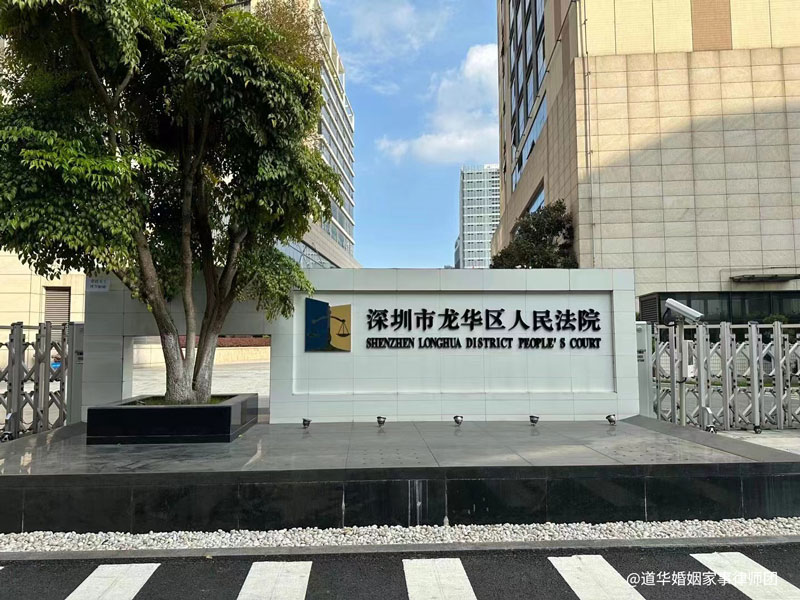
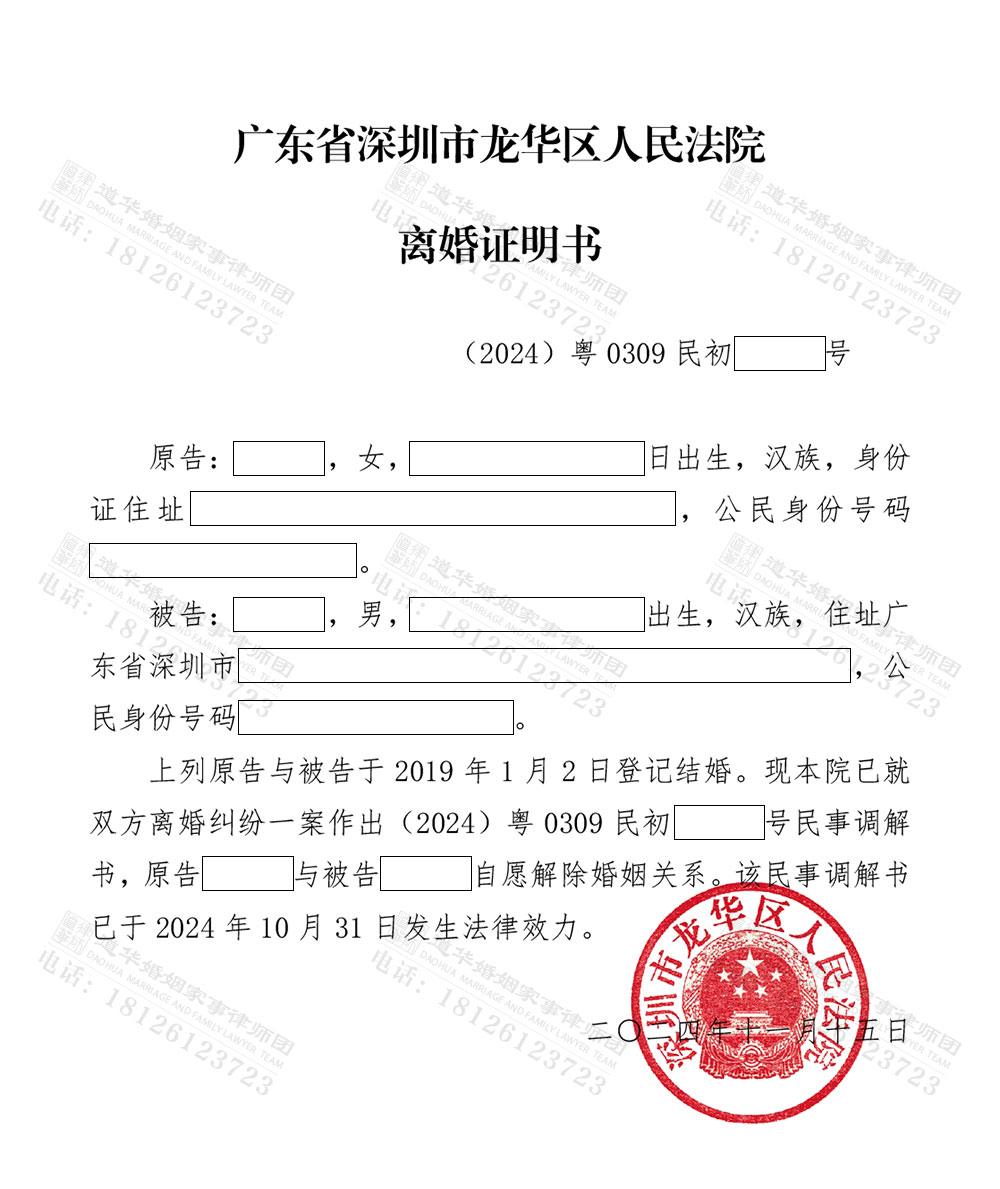
After the trial by the Longhua District People's Court of Shenzhen, the two parties ultimately reached a mediation agreement:
1. Ms. Qian obtained custody of the child, and Mr. Xie will pay child support of 1500 yuan per month;
2. Agree to split the proceeds from the sale of the house, with each party selling it independently and retaining half after deducting the portion of the outstanding loan;
3. The joint debts of the couple shall be borne by Mr. Xie personally.
Four, Case Experience
Marital cases are different from other types of cases, as they often carry more emotional weight. To become a couple is already a profound connection, and therefore, the mediation rate for divorce disputes is higher. Issues such as property division, child custody, and debt assumption are unavoidable disputes in divorce cases. Only by fully understanding the points of conflict between the couple and conducting corresponding character portraits can one more accurately grasp the needs of both parties and conduct point-to-point mediation or targeted defense in court.
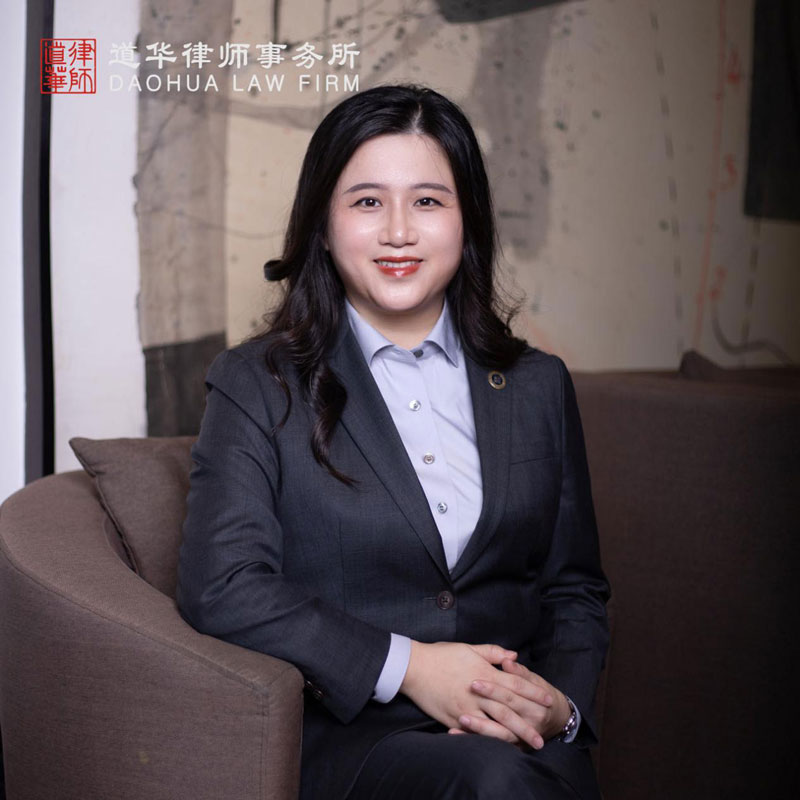
(Attorney Tang)
Five, Legal Regulations
1. Child Custody
1.
(1) Article 1085: After divorce, if the child is directly cared for by one party, the other party shall bear part or all of the child support. The amount and duration of the support shall be agreed upon by both parties; if they cannot reach an agreement, the People's Court shall decide.
(2) Article 1086: After divorce, the parent who does not directly care for the child has the right to visit the child, and the other party has the obligation to assist. The methods and time for exercising the right to visit the child shall be agreed upon by the parties; if they cannot reach an agreement, the People's Court shall decide.
2.
(1) Article 49: The amount of child support may be determined based on the actual needs of the child, the financial burden capacity of both parents, and the actual living standards of the local area.
(2) Article 50: Child support shall be paid regularly, and may be paid in a lump sum under certain conditions.
(3) Article 51: If one parent has no income or is missing, child support may be offset by their property.
2. Property Division
1.
(1) Article 1062: The following property acquired by the couple during the marriage relationship is jointly owned by the couple:
Wages, bonuses, and remuneration for labor services;
Profits from production, operation, and investment;
Profits from intellectual property rights;
Property inherited or gifted, except as provided in paragraph 3 of Article 1063 of this Law;
Other property that should be jointly owned.
(2) Article 1063: The following property shall be the personal property of one spouse:
Property owned by one spouse before marriage;
Compensation or compensation received by one spouse for personal injury;
Property that is designated to be solely owned by one spouse in a will or gift contract;
Property used exclusively by one spouse for personal use;
Other property that should be solely owned by one spouse.
(3) Article 1087: At the time of divorce, the joint property of the couple shall be disposed of by mutual agreement between the parties; if the agreement cannot be reached, the People's Court shall make a judgment according to the specific circumstances of the property, in accordance with the principle of taking into account the interests of the children, the female party, and the party without fault.
2. "Interpretation (I) of the Supreme People's Court on the Application of the Marriage and Family Article of the Civil Code of the People's Republic of China"
(1) Article 71: When dividing the joint property of stocks, bonds, fund shares, and other securities as well as shares of unlisted joint-stock companies, if the parties cannot reach an agreement or it is difficult to distribute according to market value, the People's Court may distribute them in proportion to the number according to the circumstances.
(2) Article 72: When the value and ownership of the house in the joint property of the couple cannot be agreed upon, the People's Court shall handle the following situations separately: if both parties claim ownership of the house and agree to bid for it, it shall be permitted; if one party claims ownership of the house, the evaluation agency shall appraise the house at the market price, and the party obtaining ownership of the house shall compensate the other party accordingly; if neither party claims ownership of the house, the house shall be auctioned according to the application of the parties, and the proceeds shall be divided.
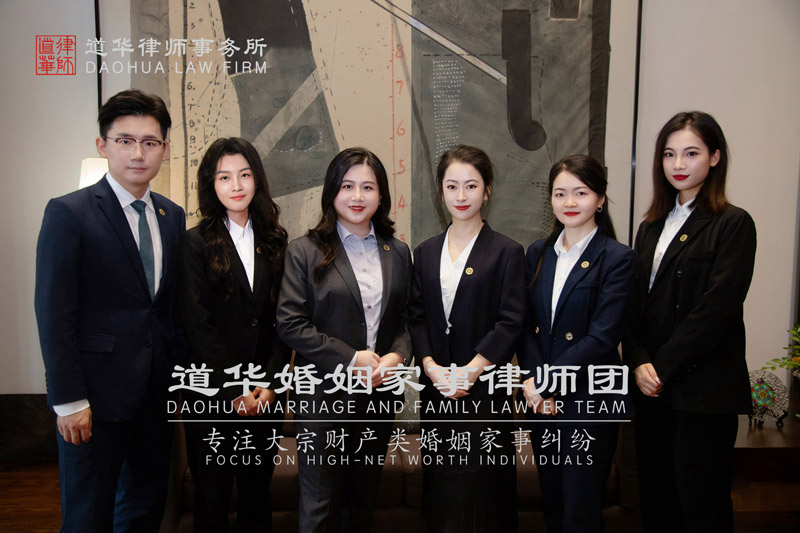
Dahua Family Law Firm, ten years of focus on ·major property marriage and family legal services, expert in marriage inheritance and family disputes (mediation/suit), is one of the influential brands in [Shenzhen local] - marriage inheritance and wealth management legal services. The team has handled over 1000 cases of marriage inheritance, and has rich experience in mediation and litigation in major and difficult marriage and family disputes, inheritance disputes, will drafting, and family property distribution. The team is adept at handling difficult divorce property division, will drafting and notarization, inheritance disputes cases, and has won unanimous praise from clients.
Adhering to the philosophy of "securing property safety, preventing legal risks, and empowering wealth appreciation," we have gathered experts from industries such as law, banking, insurance, and finance and taxation. With a wealth of successful cases, we provide a comprehensive package of solutions for high-net-worth individuals (including those from Hong Kong, Macau, and foreign nationals) for marriage, family affairs, and wealth inheritance, aiming to achieve the beautiful vision of risk prevention and control, debt isolation, and family wealth inheritance. Asset types cover: real estate (residential housing, small property rights housing, land use rights, etc.), various property rights and interests (equity, debt, relocation compensation, copyright, invention patents, etc.). The team has completed the compilation of "Daohua Successful Cases in Marriage and Inheritance" and "Legal Practice of Family Wealth Inheritance," and both legal practice and theoretical research have achieved remarkable results.
No registration required, quick appointment, expert lawyers provide customized legal service solutions
 Consultation Appointment:400-829-6880
 Private Space:18126123723
 Law Firm: Guangdong Daohua Law Firm
 Email:DAOHUALAWMF@163.com
 Address:深圳市福田区金田路4028号荣超经贸中心810(市民中心旁)

18126123723
Follow us anytime, anywhere


