
Navigation
Author: Dao Hua Marriage and Family Law FirmDate: 2024-10-22Reads:times
Introduction: Since 2020, the client, Mr. Wang, and Ms. Chen have been in a passionate love affair. They were so close that they soon considered the marriage issues that might arise later in their relationship. Therefore, in 2022, they jointly invested in purchasing a property, which was registered in Ms. Chen's name. They believed that they were about to embark on a beautiful marital life. However, after purchasing the property, they had constant disputes, and due to their work-related issues, they spent less time together, and their feelings were no longer as intense as before. Eventually, they inevitably reached the point of separation. Although the separation was simple, the issue of how to divide the property purchased during the passionate love affair has remained unresolved between the two. Multiple arguments and suspicions have made the client, Mr. Wang, increasingly exhausted. Therefore, in 2023, Mr. Wang sought the help of the Dao Hua Family Law Firm. After understanding the case, the Dao Hua lawyers quickly intervened, combined with their previous experience in handling similar cases, and adopted the "mediation first, litigation as a supplement" approach, ultimately successfully mediating a reconciliation between the two. The property in question was confirmed to be owned by Ms. Chen, and the corresponding housing and renovation expenses were accurately divided. In the end, Mr. Wang and Ms. Chen ended the situation with dignity, each facing a new life.
Keywords: Shenzhen Family Lawyer, Cohabitation Property Division Dispute, Cohabitation Property Division, Notarization of Agreement
One, Case Review
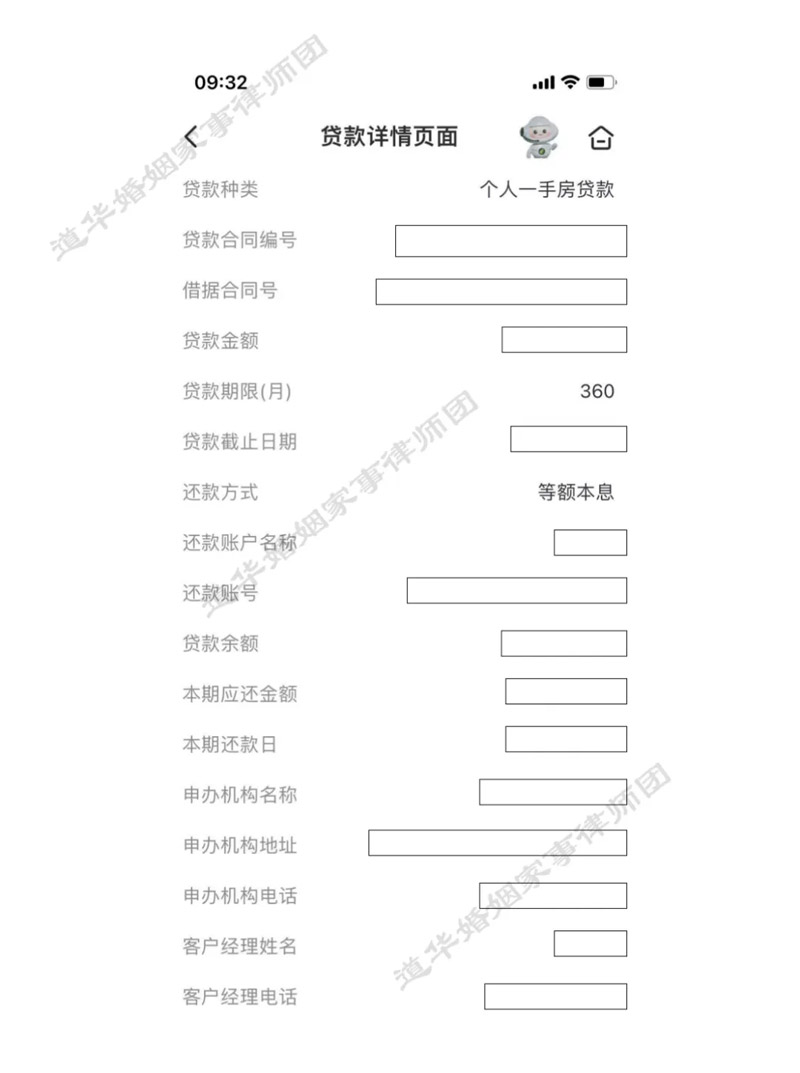
In 2023, the client, Mr. Wang, contacted the Dao Hua Family Law Firm through an introduction, seeking legal assistance for the distribution of the property purchased during his passionate love affair with Ms. Chen and other properties when facing separation. During their romantic cohabitation, both parties contributed half of the down payment for the house, purchasing a property in Shenzhen, which was registered in Ms. Chen's name. The mortgage loan for the house was jointly undertaken by both parties, and Mr. Wang alone funded the renovation of the house. After the two parties ended their relationship due to incompatibility, they were unable to reach an agreement on how to dispose of the target property. Ms. Chen believed that the down payment supported by Mr. Wang was a gift during the romantic period and that Mr. Wang had no right to demand a refund after the separation. Regarding the renovation, it had already been used for the renovation of the target property and therefore could not be returned. After multiple unsuccessful communications, Mr. Wang sought the help of the Dao Hua Family Law Firm. After the Dao Hua lawyers received Mr. Wang, they summarized his legal consultation, created a timeline of their relationship, and categorized the nature of the property, purchase time, corresponding contribution ratio, and registered rights holder information. They provided different solutions for different properties, helping Mr. Wang solve the property distribution problem after cohabitation.
Two, Dao Hua Lawyers' Intervention, Comprehensive Sorting of Dispute Focuses as Follows
1. How to correctly identify the relevant rights holder for real estate purchased during cohabitation?
Although the parties have not established a marital relationship, how to correctly identify the rights holder for real estate purchased during cohabitation directly affects whether they can smoothly end this romantic and economic relationship. According to the past experience of the Dao Hua Family Law Firm, when purchasing a house for the purpose of marriage during the romantic period, one party pays the full down payment, the house ownership is registered in the name of the other party, and the loan is processed in the name of the other party, and the two parties do not marry and separate, in such cases, generally based on the facts of the case, it can be confirmed that although the ownership is registered in one party's name, the romantic couple has the intention of jointly purchasing a house for the purpose of marriage. It should be identified as common property, and the property should be divided according to the contributions of both parties.
Dr. Tang points out that the distinction of how to differentiate between houses purchased during cohabitation and dating relationships at the time of separation, as well as different ways of purchasing houses and the registered rights holders, will have different effects on the final distribution of the property. Common situations include: (1) The house is fully funded by one party and registered in the name of the other party. In this case, the Daohua Marriage and Family Law Firm, based on past practical experience, analyzes that different courts will make different judgments according to the different claims of the parties. The relevant courts will consider that in this situation, the provisions of the law on bride price should be referred to. After one party pays the bride price, the two parties ultimately did not actually register for marriage and live together, so the registered rights holder of the house should return the house to the other party. (2) Another common situation is that both parties co-fund the purchase of a house during the period of dating and cohabitation, and the house ownership is registered in both parties' names. In this case, the general courts will recognize that the co-funding by the dating parties is for the purpose of marriage, and thus will co-fund the purchase of houses. According to Article 308 of our "Civil Code": "If the co-owners of immovable property or movable property do not agree on joint ownership or common ownership, or the agreement is unclear, except when the co-owners have family relations, etc., it shall be deemed as joint ownership." And Article 309 provides: "If the co-owners do not agree on the share of immovable property or movable property they own, or the agreement is unclear, it shall be determined according to the amount of contribution; if the amount of contribution cannot be determined, it shall be deemed as equal share." In the absence of an agreement on the method of dividing the house, it is determined that the co-funding purchased by the two parties is joint ownership.
2. How to correctly distinguish the nature of "general expenses" and "large expenses" during the dating period?
For ordinary couples, during the dating period, expenses incurred for daily life or leisure and entertainment are necessary expenses for maintaining and developing feelings, and cannot be proven to be conditional on marriage. Even if one party claims a refund after the separation, the People's Court will not support it based on the above reasons. However, it needs to be clarified that large asset expenditures for the purpose of marriage are conditional gifts, and when the condition for marriage cannot be realized, the gift is invalidated, and the giver has the right to demand a refund. In this case, Mr. Wang and Ms. Chen purchased the relevant house in 2023, and the subsequent chat records between the two parties can also prove that they had the intention to marry (planning the wedding, choosing the wedding hotel, etc.), indicating that at this stage, the two parties had reached an agreement to marry in the future. Therefore, in this case, Mr. Wang's contribution to the house purchase, repayment of the mortgage, and payment of the house renovation expenses were all conditional gifts based on the premise of marriage. Now that the two have finally separated, Mr. Wang has the right to require Ms. Chen to return the large expenses made for the purpose of marriage.
Three, comprehensive analysis and judgment, Daohua Marriage and Family Lawyers seek breakthrough points in cases
1、Prepare a timeline of the case, sorting out the expenses and real estate investment amounts during the two individuals' romantic cohabitation. Based on the practical experience from a large number of past cases, Attorney Dao Hua first lists and analyzes the financial expenditures of Mr. Wang and Ms. Chen during their romantic cohabitation, particularly the down payment, loan repayment, and renovation costs related to the immovable property involved in this case. Secondly, according to the background of the above expenditure amounts and the payment conditions, Attorney Dao Hua verifies each item with Mr. Wang one by one, combines past case experience, and distinguishes the expenditures during Mr. Wang's romantic period into general expenditures and expenditures aimed at marriage, fundamentally confirming the final return amount and return ratio. Finally, according to the dispute between Mr. Wang and Ms. Chen regarding the purchase price of the target property, a payment amount table is prepared to clarify the actual expenditures of all parties, while summarizing the focal points of the dispute, facilitating subsequent mediation and litigation procedures.2、Understand the claims and tailor a "mediation-first" strategy. During the process of organizing the materials, Attorney Dao Hua keenly sensed Mr. Wang's desire for an dignified breakup. After thorough argumentation, Attorney Dao Hua decided to adopt a "mediation-first" litigation strategy. After handling all the expenditures, the property expenditures during the romantic cohabitation between Mr. Wang and Ms. Chen ultimately focused on the case-related property and the renovation expenses for that property. Regarding the renovation part, Attorney Dao Hua accurately judged that Mr. Wang made the renovation investment with the purpose of marriage, and the value of his investment has been attached to the house through the renovation, forming an accretion phenomenon. Therefore, this part of the renovation expenditure has become a part of the immovable property, and the value form of the house has changed, increasing new economic value. Therefore, in the case of the final breakup of the two, this part of the renovation expenditure should be returned by Ms. Chen. Based on this, Attorney Dao Hua formulated a complete mediation negotiation plan.
Four, Attorney Dao Hua met with the other party's client, combining negotiation as the main method with litigation as a supplement, and employing multiple legal measures to successfully promote a peaceful breakup for the two parties
After the division and confirmation of all the property involved in the case, Attorney Dao Hua met with Ms. Chen for communication after the relevant mediation plan was confirmed by Mr. Wang. Regarding the fact that the property is registered in Ms. Chen's name, Attorney Dao Hua also confirmed in the communication that Ms. Chen's real intention is to continue to hold the property, and she also wants to solve this problem through a reasonable and legal way.
After listing the real team's practical cases and detailed case materials, Attorney Dao Hua formulated a targeted communication negotiation plan for the case, by listing the team's previous successful cases and the precise control of the division of property during the cohabitation period. After completing all the materials, Attorney Dao Hua met with Ms. Chen, and through a heart-to-heart communication, Ms. Chen also expressed a strong desire for a clear separation of this relationship. However, Ms. Chen was initially unwilling to return the investment made by Mr. Wang in the early stage and stated that she wanted it as compensation for herself.
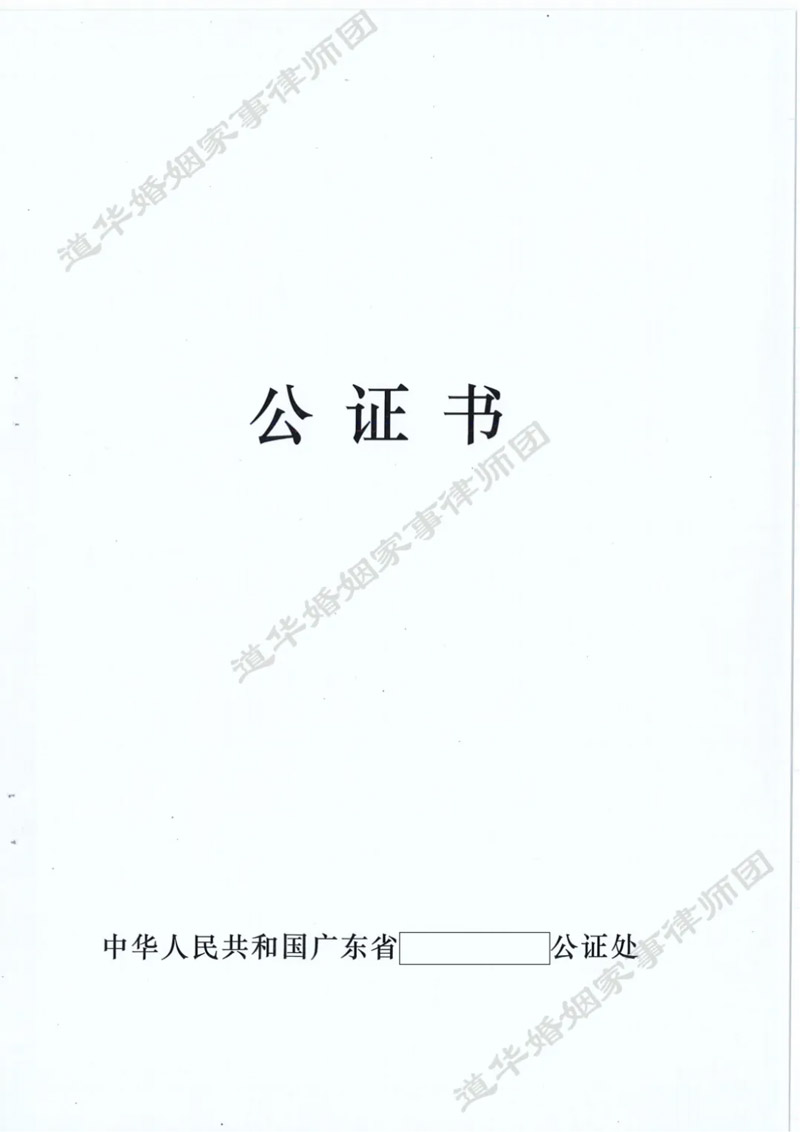
After the first negotiation, the Dahu Law Firm conducted a targeted review of Ms. Chen's statements and intentions, and quickly executed litigation strategies, drafting comprehensive litigation documents, and referred to the team's previous successful cases for reference. After communicating with Mr. Wang, Mr. Wang expressed a desire for another round of communication and was not inclined to initiate litigation directly. After catching the two parties' statements, Tang Lawyer quickly formulated strategies, on one hand, arranging another meeting with Ms. Chen for communication, and on the other hand, fully preparing the litigation documents for submission to the court. During the second communication, Dahu Lawyer again communicated Mr. Wang's latest communication intentions to Ms. Chen and also provided targeted litigation documents for negotiation with Ms. Chen, ultimately prompting Ms. Chen to state her willingness to return a portion of Mr. Wang's housing expenses. Regarding the decoration expenses, she also expressed her willingness to return them. Based on this, Dahu Lawyer customized a "break-up agreement" for the two parties, finally confirming the immovable property purchased during the dating period. Mr. Wang's down payment and decoration expenses were to be fully returned by Ms. Chen. Mr. Wang's six months of mortgage payments would no longer be pursued, and the subsequent mortgage loan repayments would be solely responsible for by Ms. Chen. After both parties signed all the agreements, Dahu Lawyer led the two parties to complete the notarization at the notary office, successfully concluding the case. The two parties peacefully separated, and finally reached an agreement on the large expenses such as property, smoothly concluding the economic relationship involved in this dating, and maximizing the fastest realization of the parties' claims.
V. Tang's Legal Opinions
Although a romantic relationship is different from a formal marriage, how to correctly handle the division of property during cohabitation still requires accurate operation. In this case, it is recommended to determine whether there is a clear agreement between the parties regarding the ownership of the property acquired during the cohabitation period. If there is a clear agreement, it should be handled according to the agreement of the two parties. Of course, most people have not made such an agreement, and when dealing with this situation, various factors should be considered comprehensively, such as whether the property was purchased with the purpose of marriage, whether there is a gift from one party to the other, the proportion of the down payment paid, the repayment ratio and subject of the mortgage loan, and who is responsible for the decoration expenses, etc., to make a comprehensive judgment on whether the property belongs to the joint property or personal property, and the final division of shares.
Tang Lawyer pointed out that when it comes to the issue of returning bride price, local public order and good customs as well as the relevant provisions of China's Civil Code should be considered comprehensively. Especially after the issuance of the "Provisions of the Supreme People's Court on Several Issues Concerning the Application of Law in the Trial of Cases Involving Bride Price Disputes" in February 2024, which clarified the circumstances and principles of returning bride price, Article 5, Paragraph 1 stipulates "If both parties have registered their marriage and lived together, and one party requests the return of the bride price paid according to local customs at the time of divorce, the people's court generally does not support it. However, if the period of cohabitation is short and the amount of bride price is high, the people's court may, based on the actual use of the bride price and the dowry, consider the amount of bride price, the period of cohabitation and childbearing, the fault of both parties, and local customs, determine whether to return it and the specific proportion of return. Although the two parties have not registered their marriage, but there are clear expenditures for bride price and related expenditures for the purpose of marriage during the dating process, the above provisions can be applied for reference, and the actual circumstances of the case should be considered for discretionary determination and final return".
In summary, regarding the issue of how to divide property during the cohabitation period of a romantic relationship, Tang Lawyer suggests:
1. During the period of cohabitation, clarify the ownership of each party's property to avoid unnecessary disputes.
2. During the period of cohabitation, maintain the independence and transparency of property, such as retaining relevant payment vouchers and consulting parents or relatives for opinions on large expenditures, to avoid the mingling of an individual's property with the joint property of the two.
3. During the period of cohabitation, it is recommended to sign a "Cohabitation Agreement" to clearly define through the agreement the parties' expenses during the dating period, the amount of expenditure, property division and shares, and to clarify the economic relationship and identity relationship. Even if there are disputes between the two parties later, the rights and obligations of the parties and the ownership of the cohabitation property can be confirmed based on this agreement.
Sixth, Index of Relevant Laws and Regulations
1. Article 5 of the "Interpretation (I) of the Supreme People's Court on the Application of the Marriage and Family Article of the Civil Code of the People's Republic of China": "If a party requests the return of bride price paid according to custom and it is found that the following circumstances exist, the people's court shall support the request: (i) The parties have not registered the marriage.
2. Article 308 of the "Civil Code of the People's Republic of China": "If the co-owners of a jointly-owned immovable property or movable property have not agreed on the proportional ownership or joint ownership, or the agreement is unclear, except when the co-owners have family relationships, etc., it shall be deemed as proportional ownership."
3. Article 309 of the "Civil Code of the People's Republic of China": "If the proportional co-owners do not have an agreed share in the jointly-owned immovable property or movable property, or the agreement is unclear, the share shall be determined according to the amount of contribution; if the amount of contribution cannot be determined, it shall be deemed as equal shares."
4. Article 655 of the "Civil Code of the People's Republic of China": "A gift contract is a contract where the donor gives his own property to the donee gratuitously, and the donee expresses acceptance of the gift."
5. Article 661 of the "Civil Code of the People's Republic of China": "Gifts may be subject to conditions. If a gift is subject to conditions, the donee shall perform the obligations as agreed."
6. First paragraph of Article 5 of the "Provisions of the Supreme People's Court on Several Issues Concerning the Application of Law in the Trial of Cases Involving Bride Price Disputes": "If both parties have registered the marriage and lived together, and one party requests the return of the bride price paid according to custom at the time of divorce, the people's court generally does not support the request. However, if the period of cohabitation is short and the amount of the bride price is high, the people's court may, based on the actual use of the bride price and the situation of dowry, comprehensively consider the amount of the bride price, the period of cohabitation and the situation of childbearing, the fault of both parties, and local customs, determine whether to return the bride price and the specific proportion of the return."
No registration required, quick appointment, expert lawyers provide customized legal service solutions
 Consultation Appointment:400-829-6880
 Private Space:18126123723
 Law Firm: Guangdong Daohua Law Firm
 Email:DAOHUALAWMF@163.com
 Address:深圳市福田区金田路4028号荣超经贸中心810(市民中心旁)

18126123723
Follow us anytime, anywhere


